Recipe Note
Recipe FAQ
Can I use different Thanksgiving leftovers as filling?
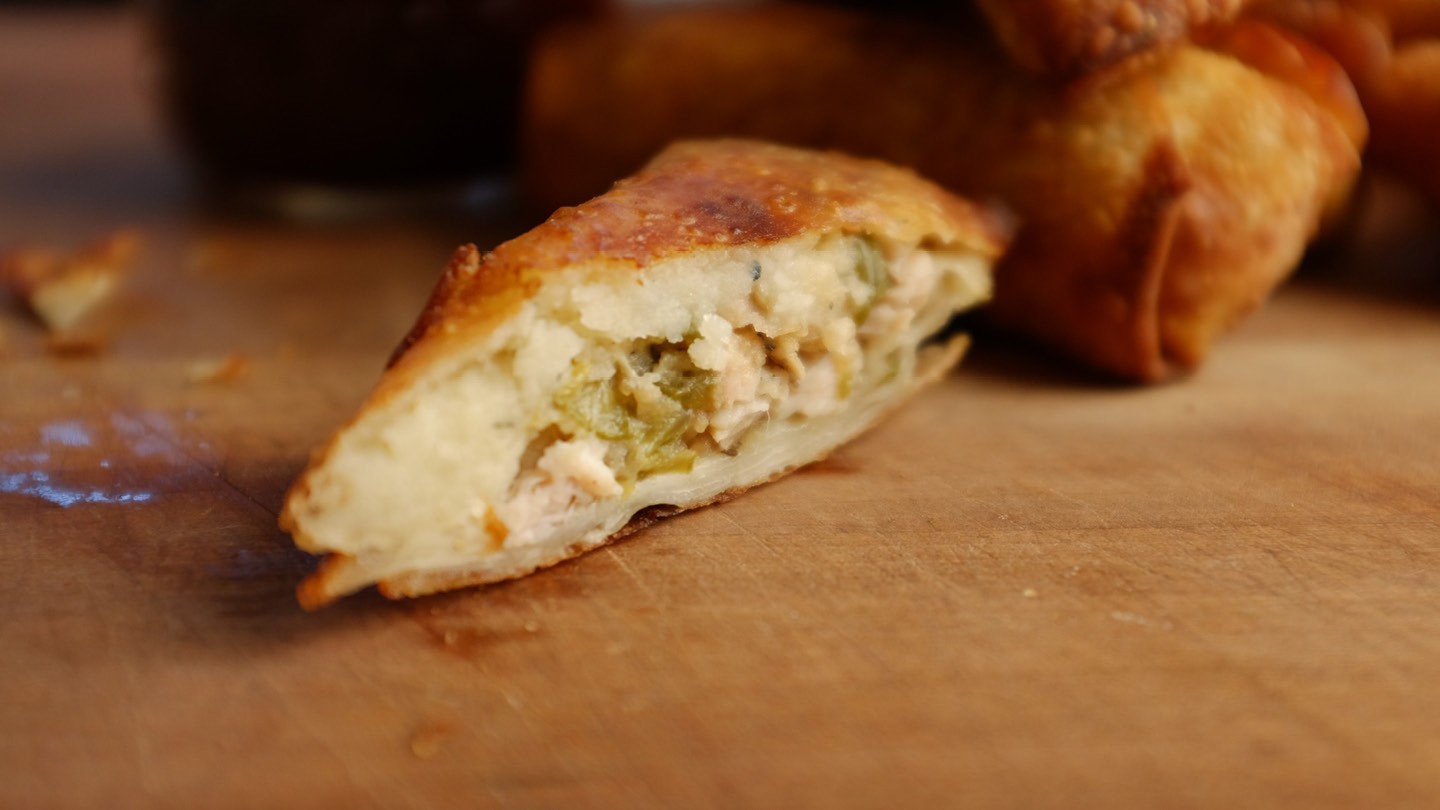
Yes — the egg roll format is flexible. Stuffing is an excellent addition or substitute (it's already seasoned and cohesive). Ham works as a turkey alternative. Sweet potato casserole can replace the mashed potatoes. The key constraint is moisture: very wet fillings (loose gravy, cranberry sauce) will make the wrapper soggy and cause the roll to burst open in the oil. Drier leftovers work best; if your mashed potatoes are very loose, refrigerate them overnight before using so they firm up.
Can I air-fry instead of deep-fry?
Yes — spray the assembled egg rolls generously with cooking oil, air-fry at 400°F for 3 minutes, flip, then continue for 3–4 more minutes until golden and crispy. The result is slightly less golden and uniformly crispy than the deep-fry version, but produces a good egg roll with significantly less oil. Check at 6 minutes total — air fryer wattages vary and some units run hotter.
Can I bake them instead?
Yes — brush assembled egg rolls with vegetable oil on all surfaces, place on a wire rack over a sheet pan, and bake at 375°F for 15 minutes, flipping halfway through. The baked version is less crispy than fried or air-fried but is the lowest-effort method. The wire rack prevents the bottom from steaming and going soft.
Can I assemble them ahead of time?
Yes — assemble, place on a sheet pan with space between each roll, cover loosely with plastic wrap, and refrigerate for up to 24 hours before frying. The wraps may slightly soften in the refrigerator but will crisp properly when fried. For longer storage, freeze assembled rolls in a single layer on a sheet pan until solid, then transfer to a freezer bag; fry from frozen, adding 1–2 minutes per side.
How do I keep the egg roll wrapper from opening during frying?
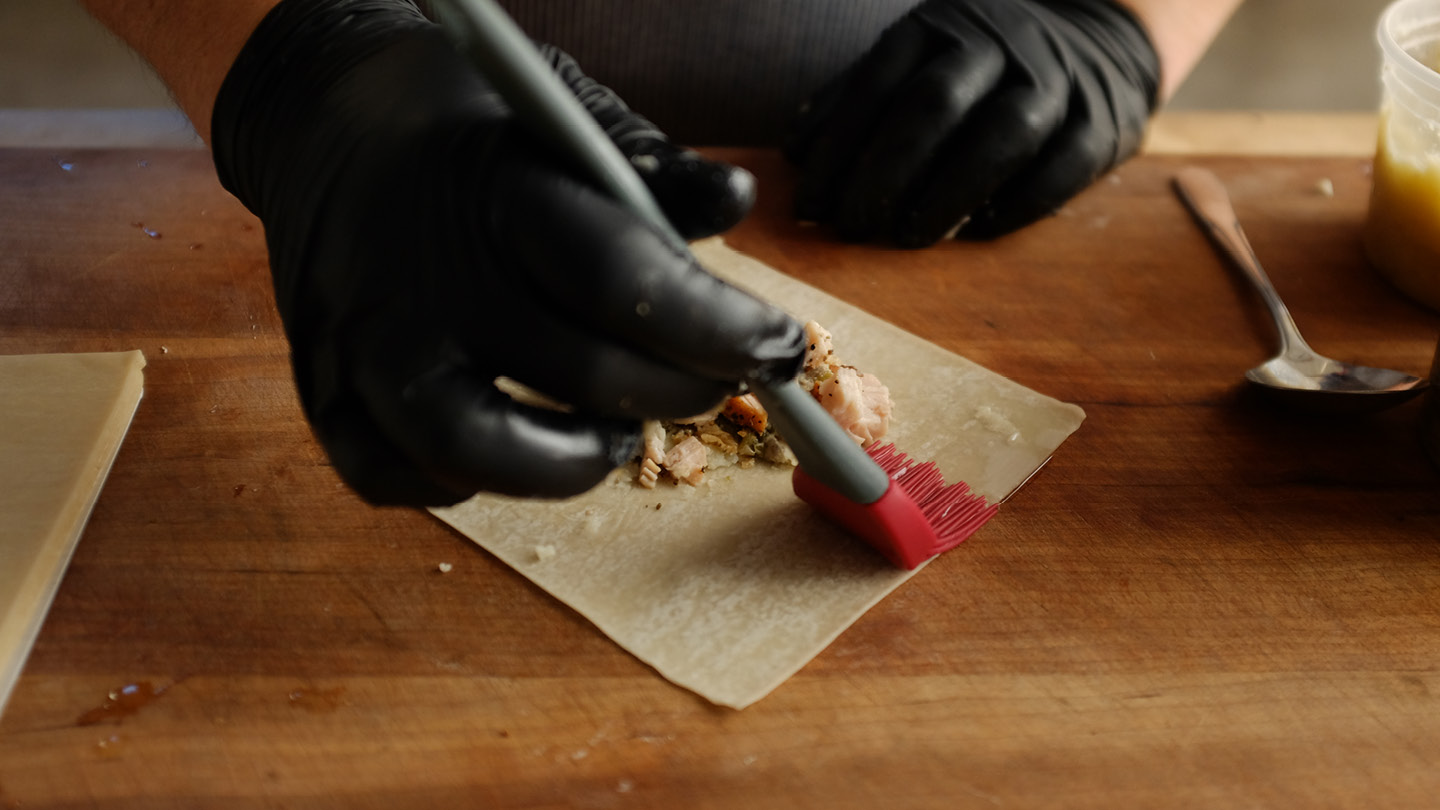
The wet edges of the wrapper are the seal — Direction Step 3 specifies wetting the edges before rolling. Use water or beaten egg on a pastry brush to moisten the edges thoroughly before folding and rolling. Press firmly on the seam after rolling to compress it. Place the egg roll seam-side down when transferring to the hot oil — the initial contact seals the seam in place. Overfilling is the primary cause of bursting; keep the filling conservative.
Can I make this indoors?
5 out of 5 — Perfect for indoor or outdoor cooking. The Napoleon side burner is simply a gas burner; any stovetop with a deep skillet or Dutch oven handles the fry at 400°F identically. Maintain oil temperature with a thermometer and fry in batches of 3–4.
Recipe Highlights
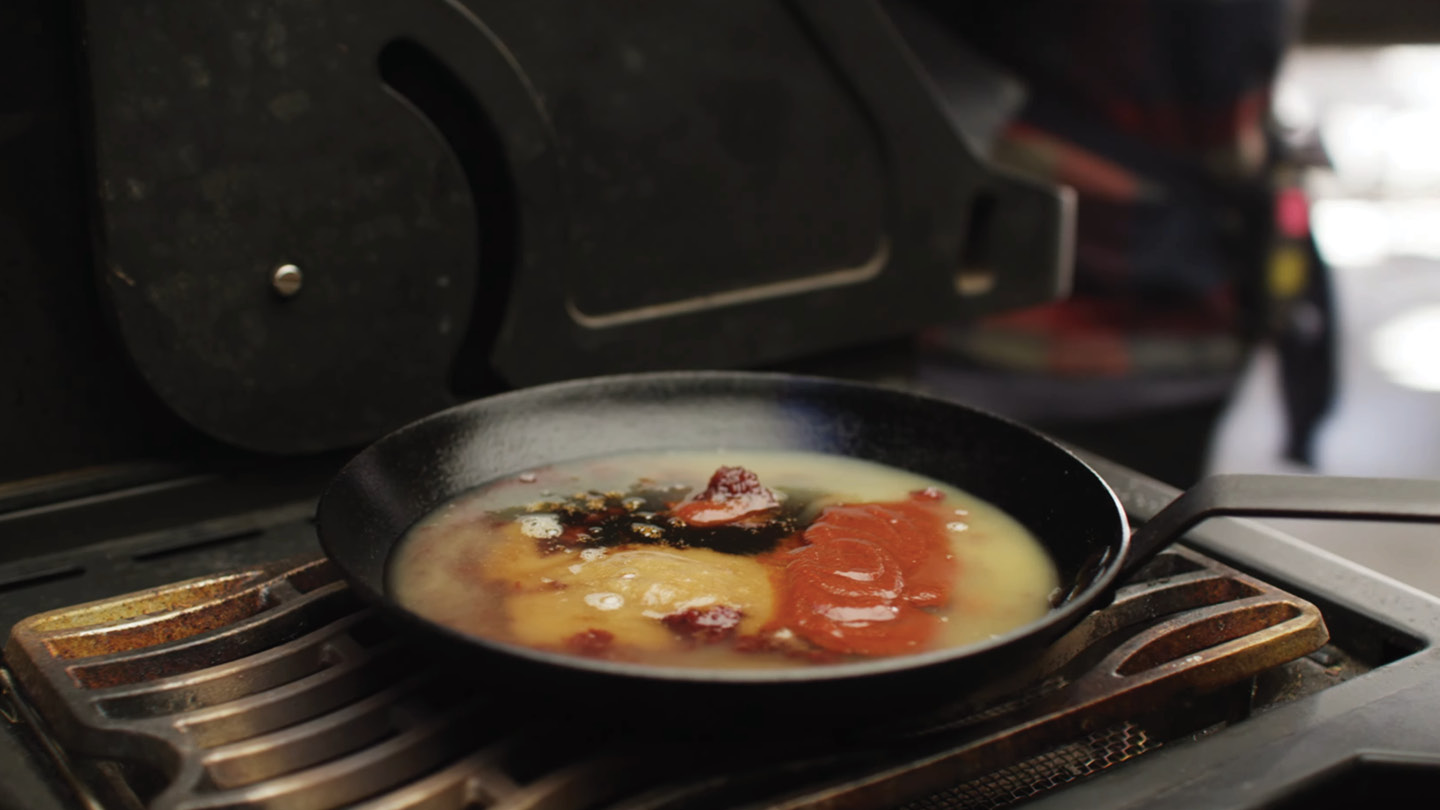
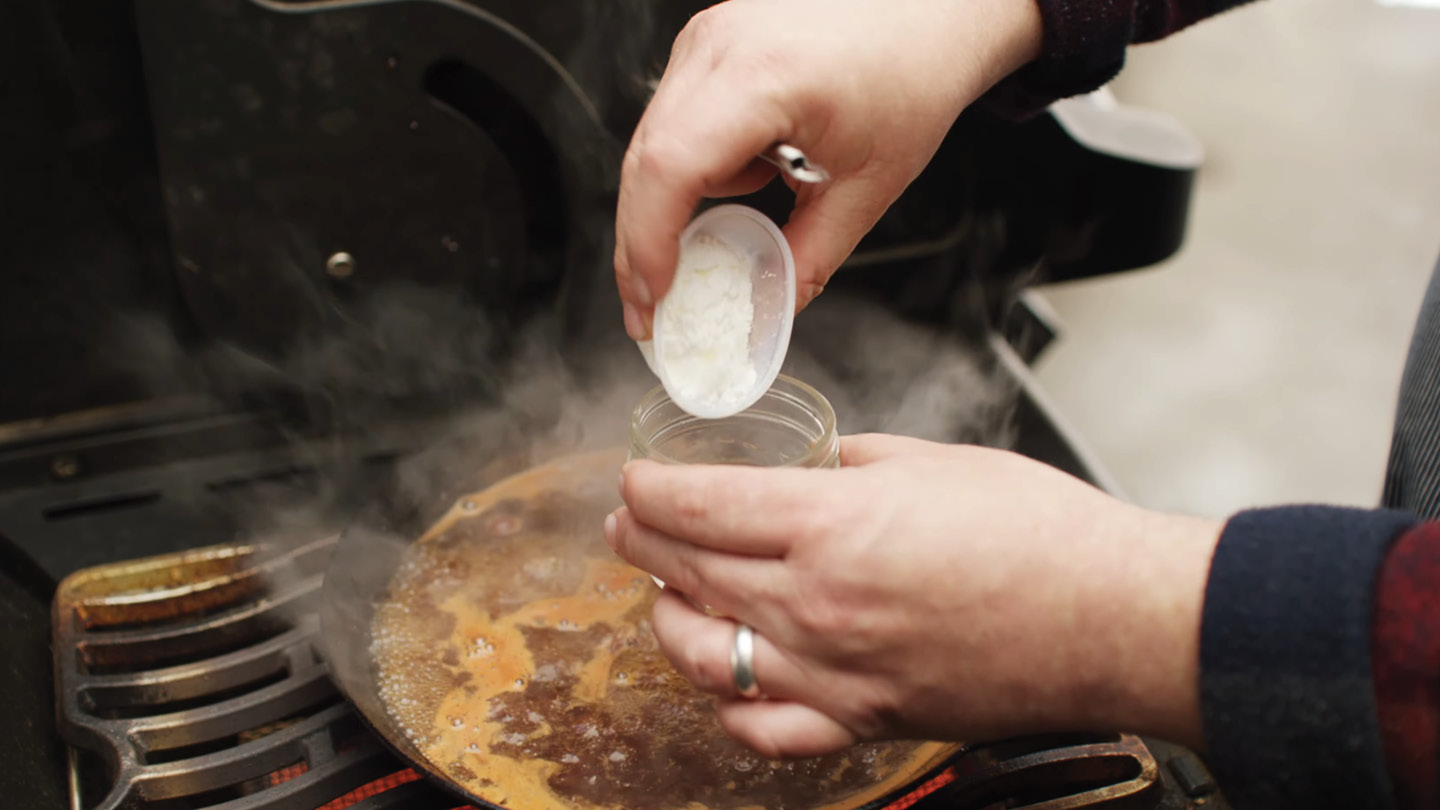
Make the cranberry sweet and sour sauce first — it needs time to cool and thicken: Direction Step 1 makes the sauce, and Direction Step 2 adds the cornstarch slurry to thicken it. The sauce is best served at room temperature or slightly warm — not scalding hot. Making it first allows it to cool to dipping temperature while the egg rolls are assembled and fried. The sauce thickens further as it cools; if it's too thick at serving, add a splash of pineapple juice and stir.
Warm the leftover fillings before assembling — cold fillings won't heat through properly during the quick fry: Direction Step 3 specifies warming your leftover ingredients before spreading them on the wrapper. A cold turkey and mashed potato filling takes significantly longer to heat through at the center than a warm filling, and the egg roll exterior can over-brown before the interior reaches serving temperature. Two minutes in the microwave per component is sufficient.
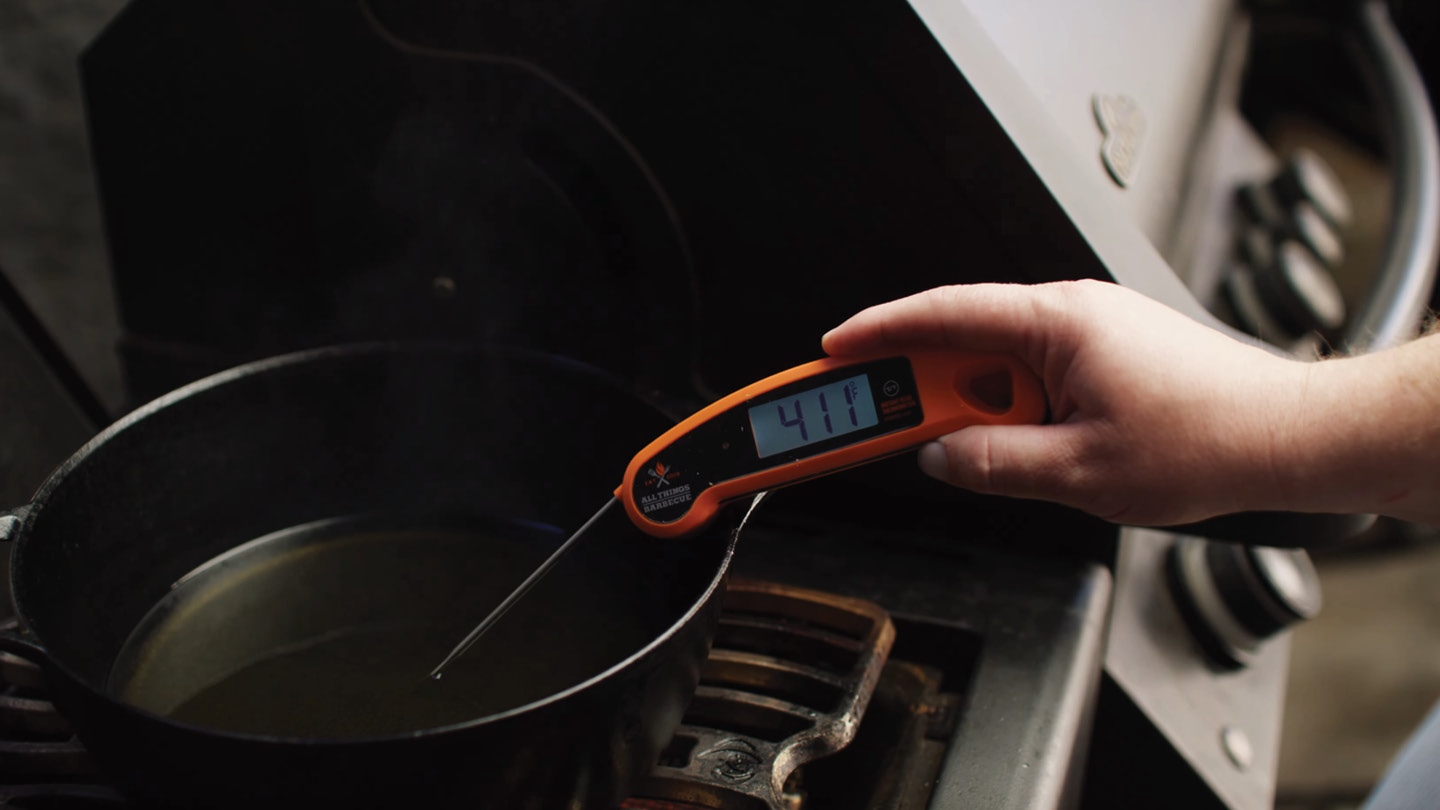
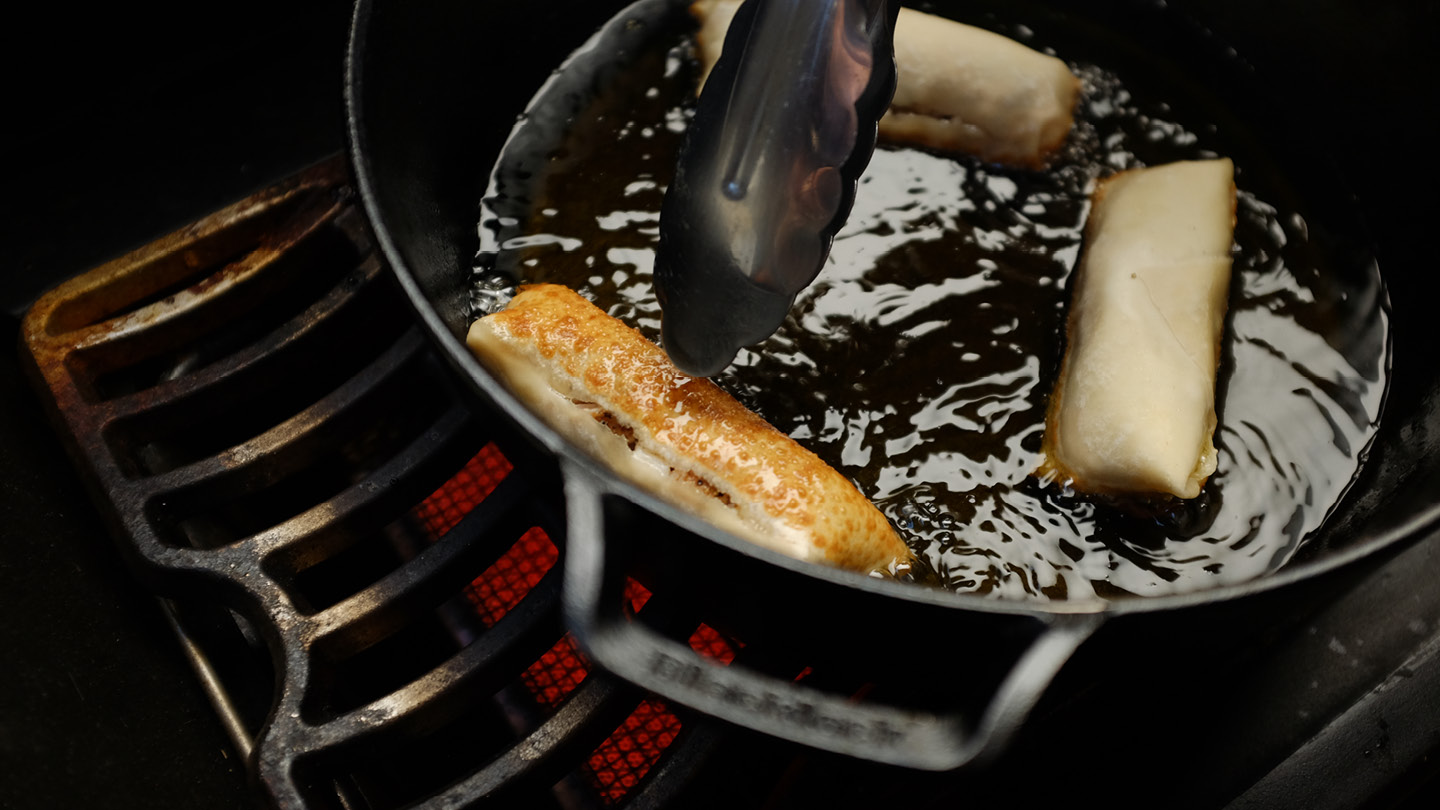
Bring oil to 400°F before adding egg rolls — not before: Direction Step 4 specifies bringing the oil to 400°F before frying. Adding egg rolls to oil that's still heating produces oil-logged, greasy rolls rather than crispy ones. Use a thermometer — a candy or fry thermometer clipped to the side of the Lodge Blacklock Braiser is the reliable approach. At 400°F, a drop of water flicked into the oil should produce immediate sizzling.
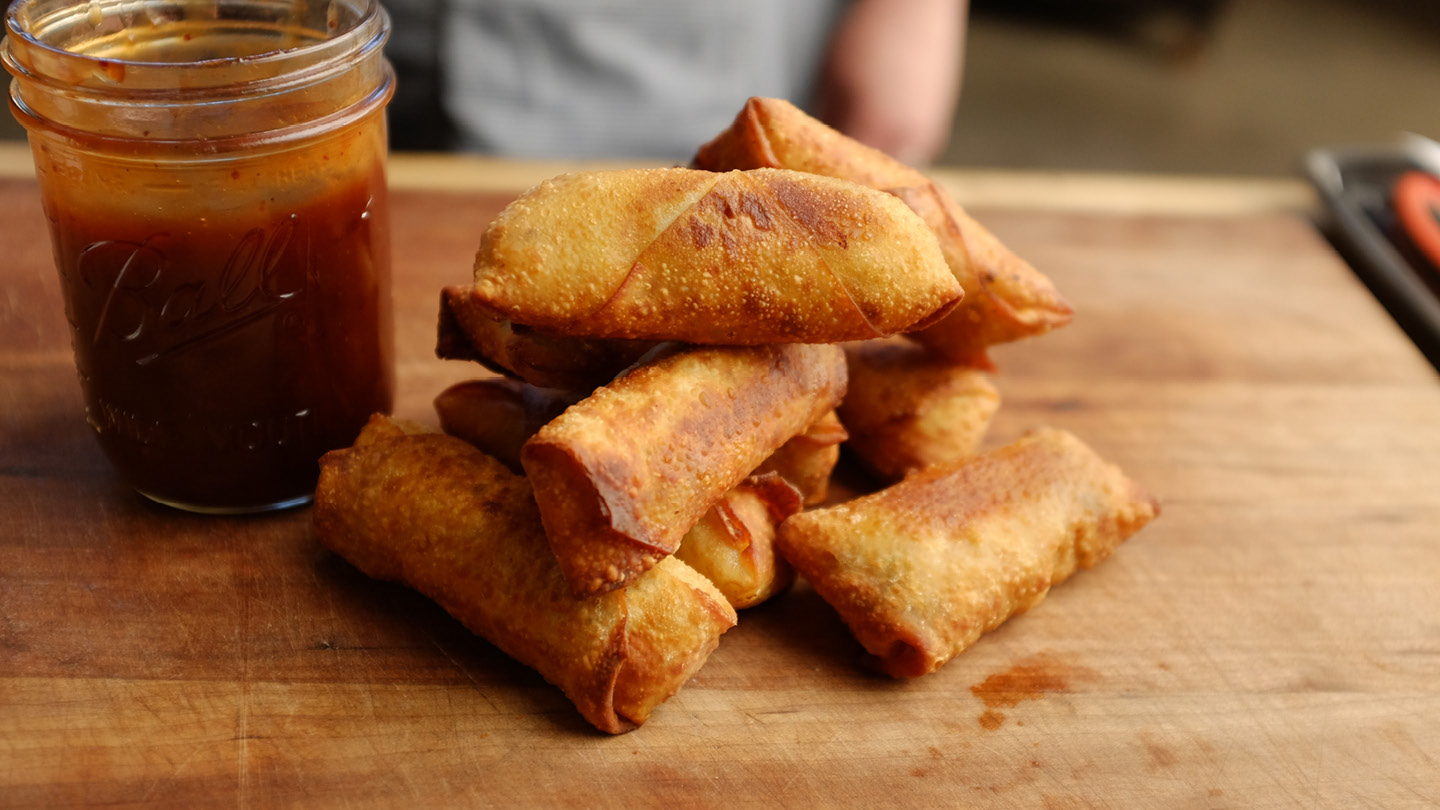
Drain on paper towels immediately — not after they cool: Direction Step 5 specifies removing to paper towels after frying. Placing hot fried egg rolls directly on a plate allows the bottom surface to sit in oil from the fry, softening the crust. Paper towels absorb the surface oil immediately while the crust is still at maximum crispiness. Serve within 5 minutes of frying for the best texture; egg rolls lose crunch quickly as the steam from the filling migrates outward through the wrapper.
Recommended Recipes