Recipe Note
Recipe FAQ
Why use Bear & Burton's W Sauce as a binder instead of mustard or oil?
Bear & Burton's W Sauce is a Worcestershire-style sauce with concentrated umami, savory depth, and a slight sweetness. On lamb shoulder — a cut with a more pronounced, gamey flavor than pork — the W Sauce's complexity complements and rounds out the lamb character rather than competing with it. It also provides excellent adhesion for the Road House Seasoning during the overnight smoke. The W Sauce flavors integrate into the bark during the 8–12 hour low-temperature smoke, adding a subtle savory depth to the exterior that a neutral oil binder doesn't produce.
Why smoke at 190°F overnight rather than starting at a higher temperature?
190°F extends the smoke absorption window dramatically. The smoke ring and deep pellet smoke penetration develop primarily in the early hours of the cook, before the bark fully sets. Starting at 190°F allows 8–12 hours of smoke absorption before the bark formation begins at 160°F internal. Raising to 250°F in the morning accelerates the final bark development and the push toward wrap temperature without sacrificing the depth of smoke character that builds overnight. Starting at 250°F from the beginning compresses this window significantly.
How is lamb shoulder different from other cuts for this technique?
Lamb shoulder is the equivalent of pork shoulder for this low-and-slow pulled technique — it's a heavily worked muscle with significant intramuscular fat and connective tissue that breaks down during the long cook. The collagen converts to gelatin at temperatures above 190°F, producing the tender, moist, pull-apart result. A lamb leg or rack would not work with this technique — leaner cuts dry out and tighten rather than becoming pull-tender. The bone-in shoulder is preferred because the bone conducts heat to the interior of the roast and the marrow enriches the rendered fat during the cook.
When should I wrap, and what am I looking for?
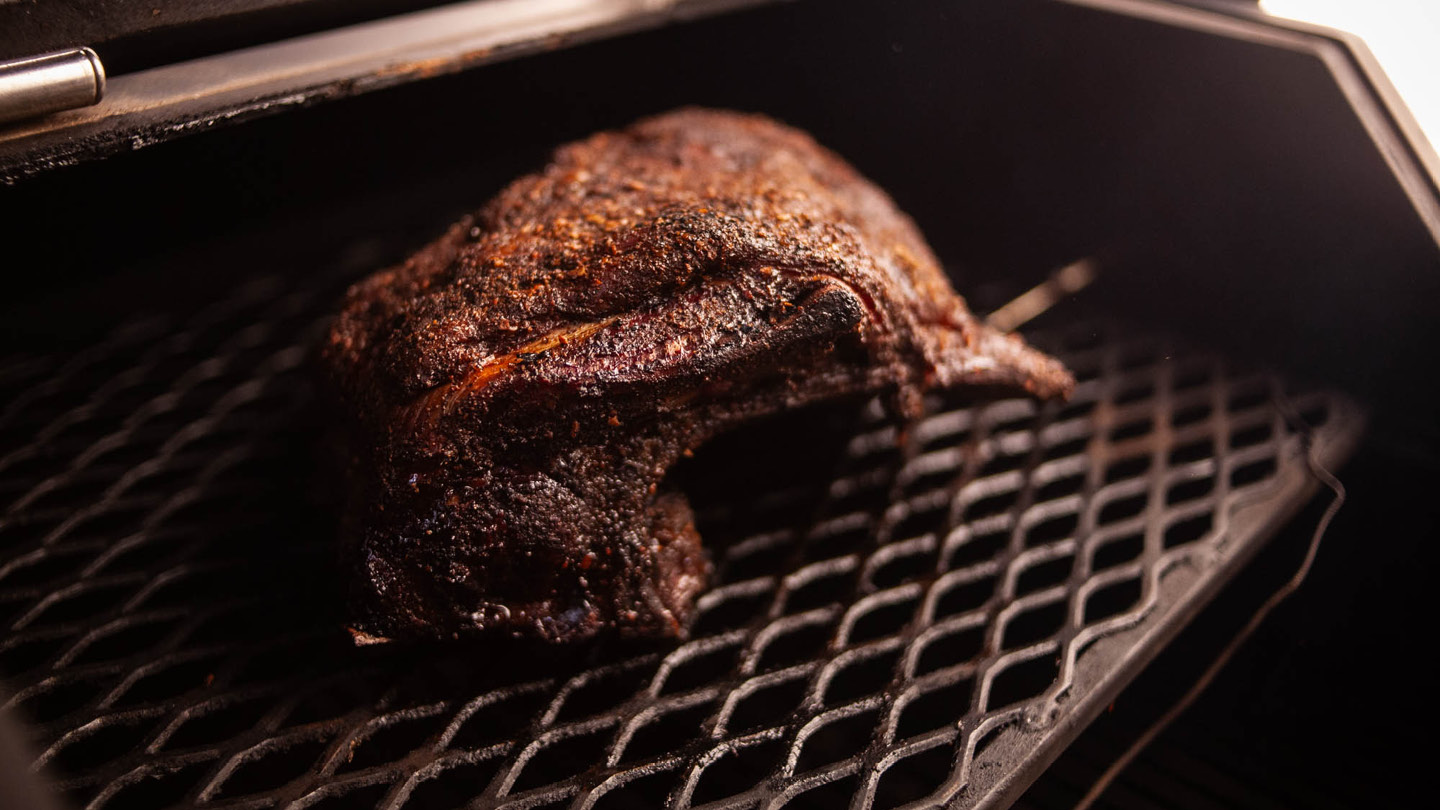
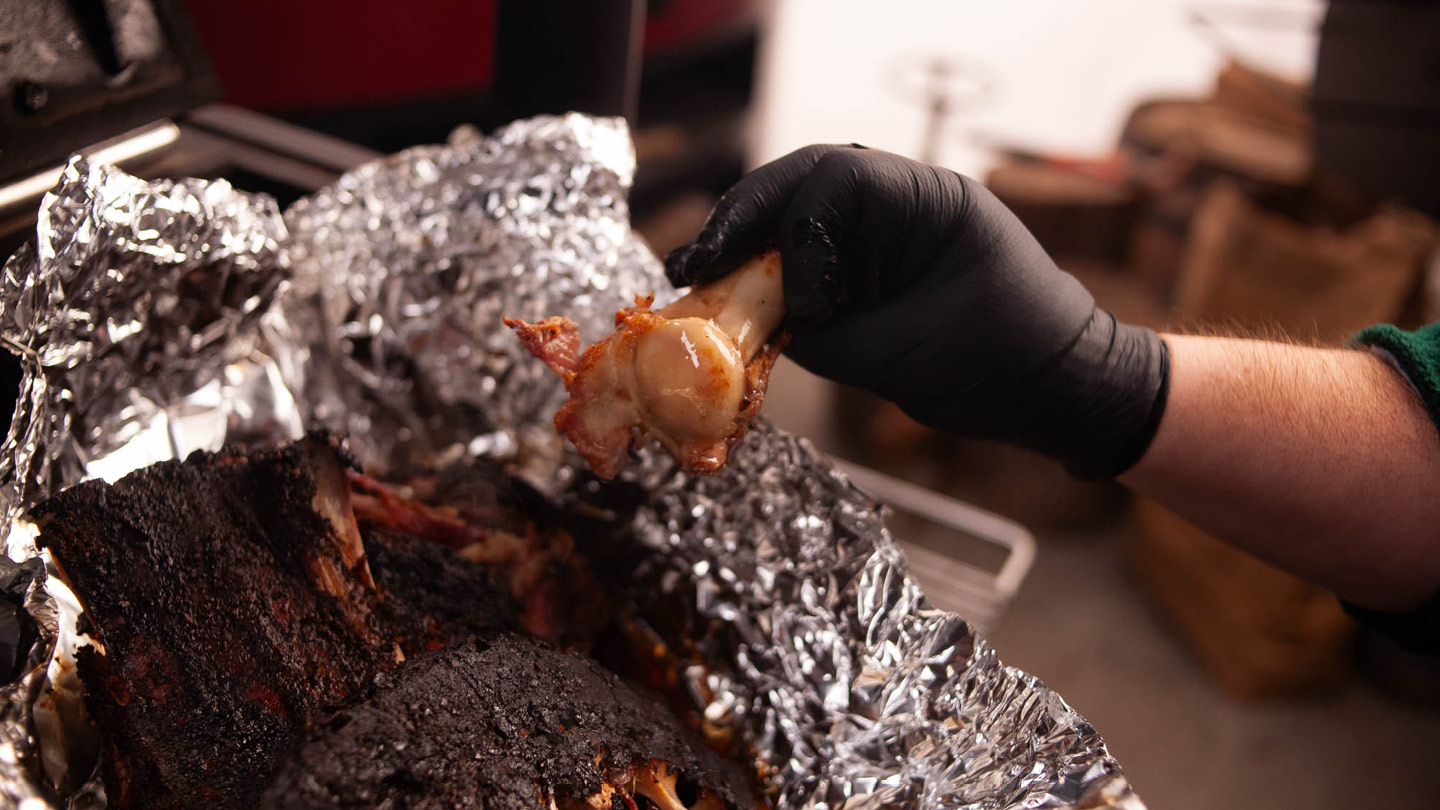
Direction Step 4 specifies wrapping after a "nice dark mahogany bark is formed and the internal temperature is around 160–170°F." The bark visual cue is more reliable than the temperature: the exterior should be a deep reddish-brown to near-black, dry and firm to the touch, not tacky or smearable. An unset bark will dissolve into the foil liquid during the wrap phase. If you're at 165°F but the bark is still soft, leave it unwrapped and give it another 30 minutes at 250°F before checking again.
Why does the chimichurri need refrigerator time before serving?
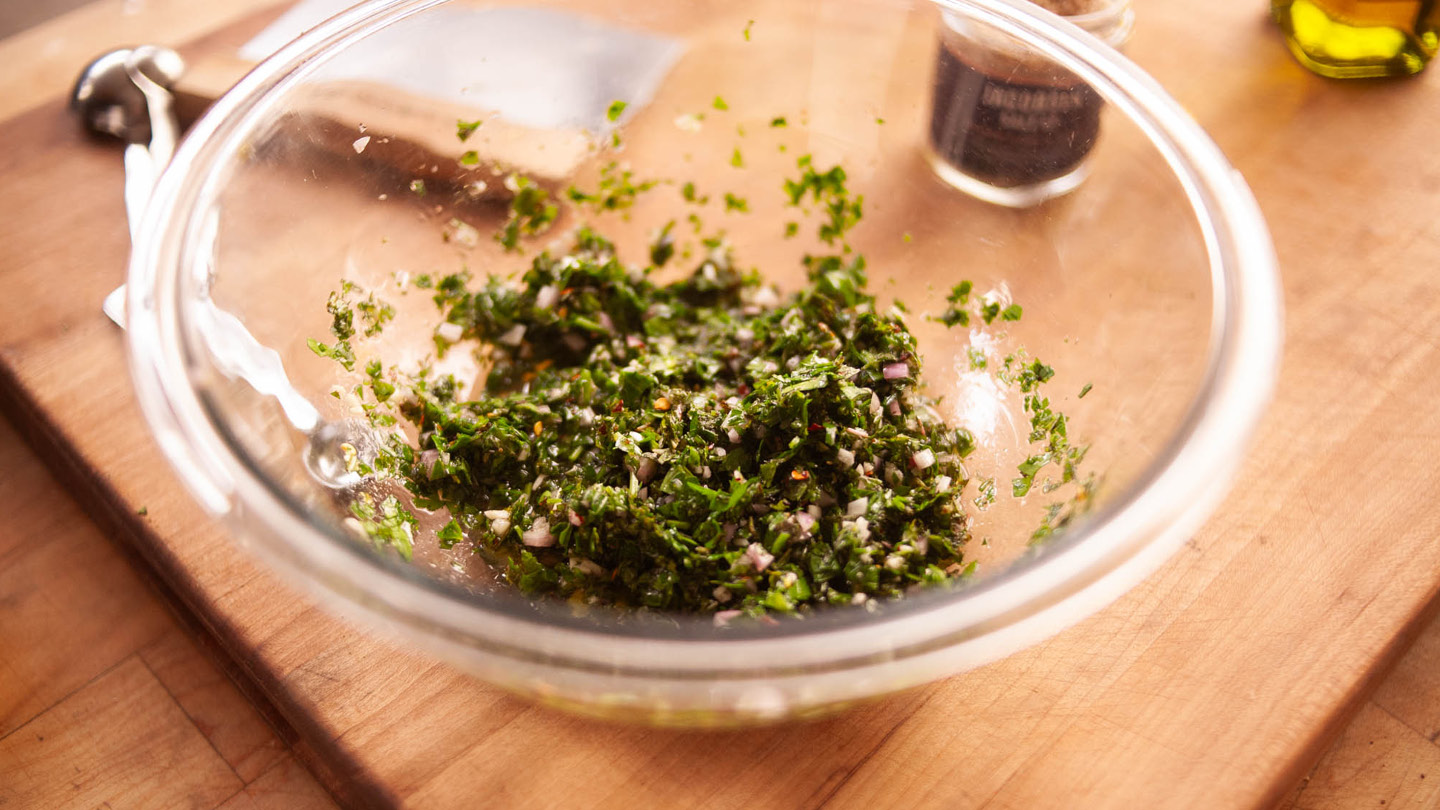
Direction Step 6 says to store in the refrigerator for up to one week but doesn't specify a minimum rest time. At least 30 minutes of refrigeration allows the acid (red wine vinegar) to mellow and the oil to absorb the herb and garlic flavors. Freshly made chimichurri has a sharper, more raw-tasting profile; chimichurri rested 30–60 minutes is more integrated and complex. Make it while the lamb is in the early stages of the smoke — it'll be perfectly ready by the time the lamb is done.
Can I make this indoors?
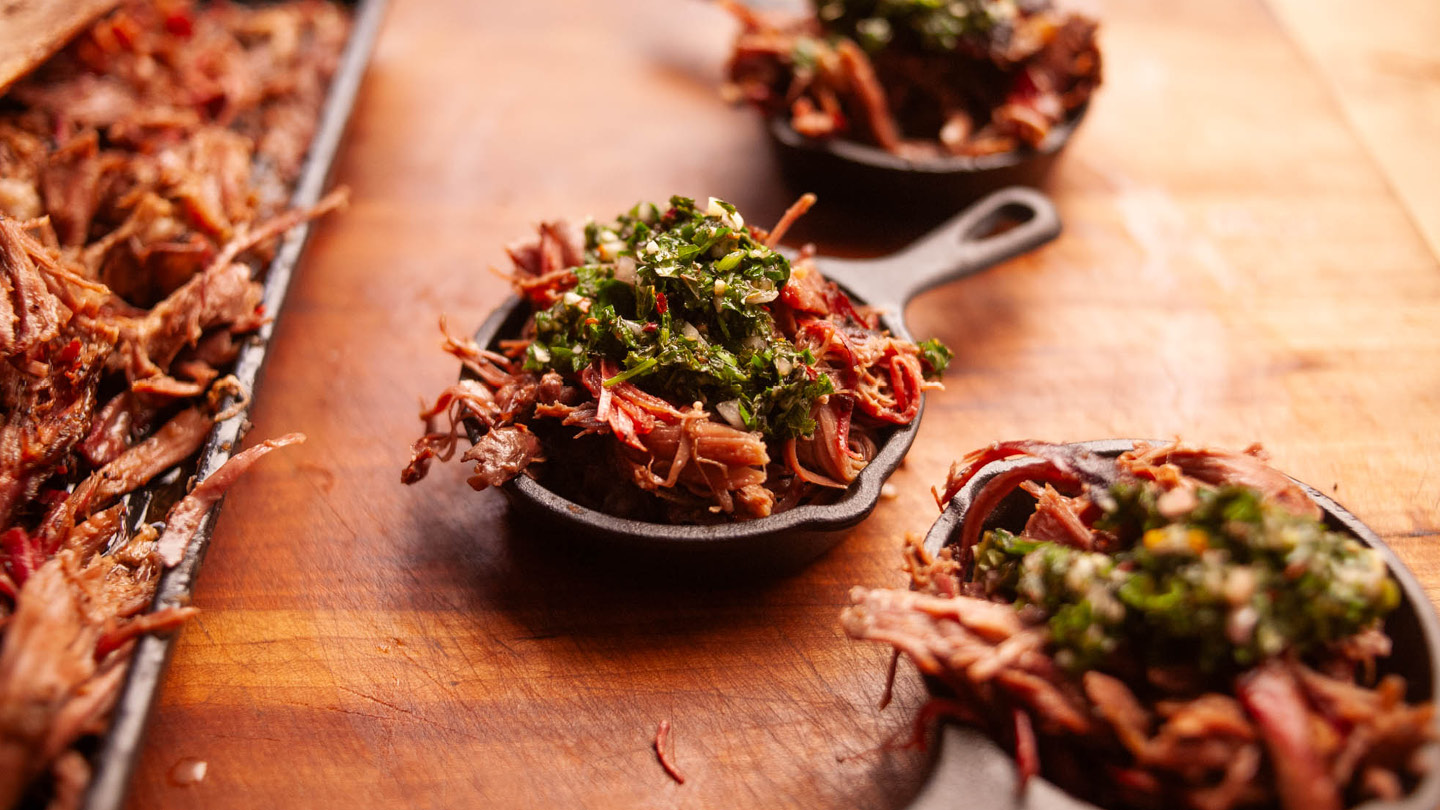
2 out of 5 — Can be done inside, loses key flavor. A Dutch oven in a 275°F oven with the W Sauce-coated, Road House-seasoned lamb shoulder, covered, for 6–8 hours produces excellent pulled lamb. What you lose is the overnight smoke at 190°F — the dark mahogany bark, the deep pellet smoke penetration, and the smoke character that defines the recipe. The mint chimichurri requires no modification indoors.
Recipe Highlights
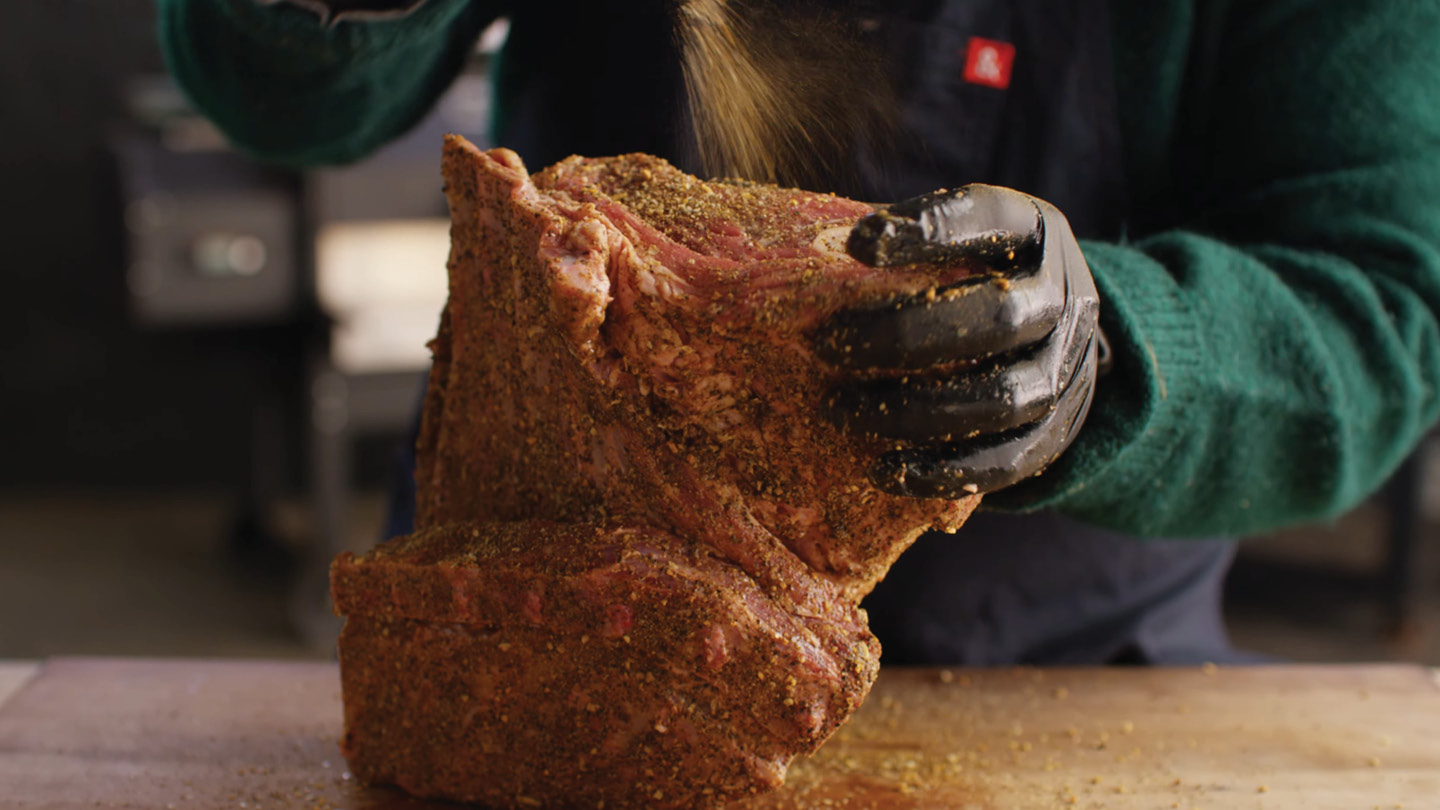
Season generously — lamb shoulder is a large, thick cut and needs assertive seasoning: Direction Step 2 says to slather with W Sauce then season with Road House Seasoning. A generous, even coating of the seasoning is critical — a thin coating will produce sparse bark coverage and uneven crust development during the overnight smoke. Don't be conservative; season every visible surface, including the fat cap and the cavity around the bone.
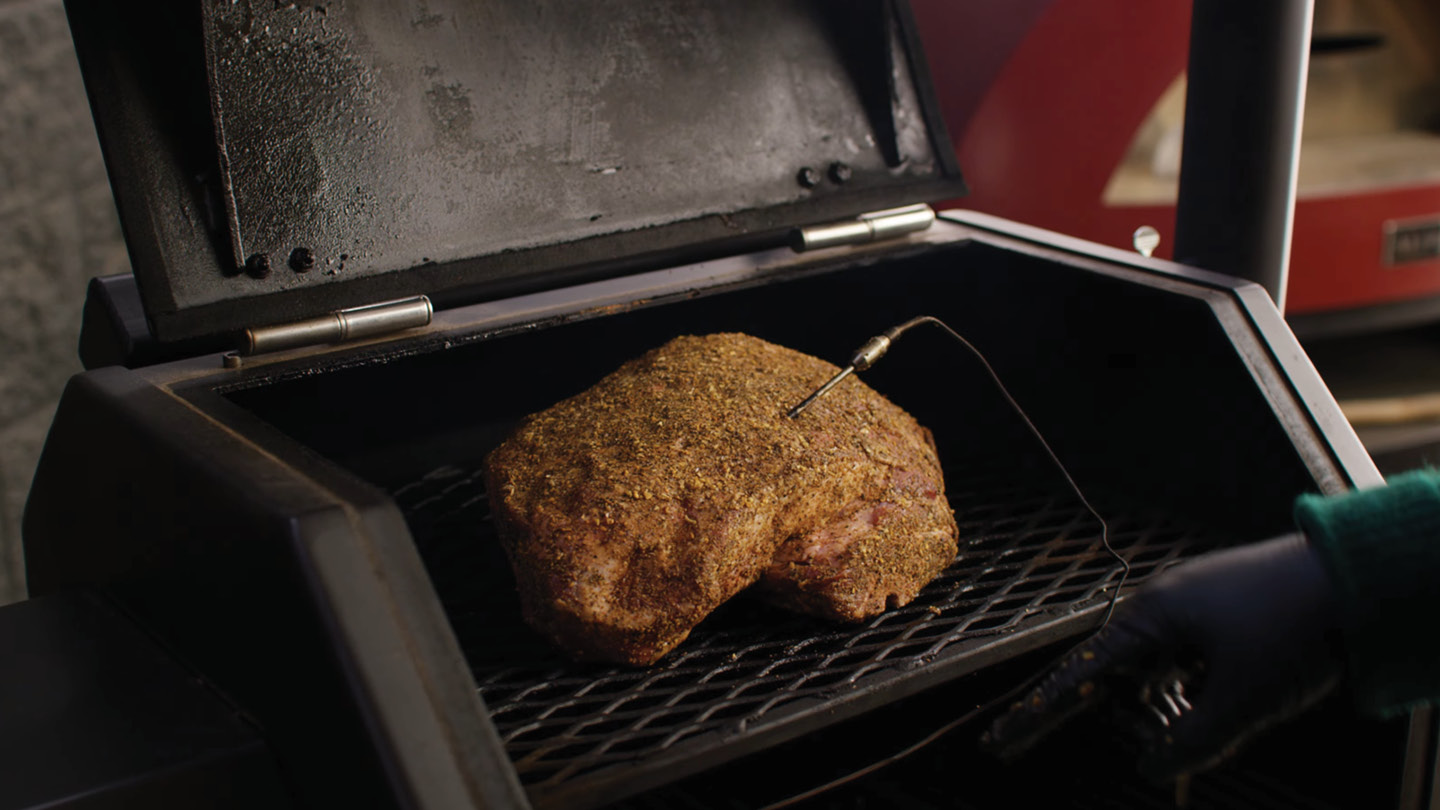
Use the second shelf — not the main cooking grate: Direction Step 3 specifies the second shelf of the YS480s. The second shelf positions the lamb above the main cooking zone and slightly further from the heat source, which is ideal for the gentle 190°F overnight smoke phase. On the main grate, the lamb would be closer to the fire and could develop bark too quickly before the interior has had time to absorb the overnight smoke.
Use two sheets of heavy duty foil — not one: Direction Step 5 specifies two sheets. Bone-in lamb shoulder has sharp bone ends that can puncture a single foil sheet during handling or as the meat shifts on the grill during the wrap phase. A puncture allows the accumulated moisture and rendered fat inside the foil to escape — the lamb will finish without the benefit of the braising environment the wrap creates. Two overlapping sheets provide redundant protection.
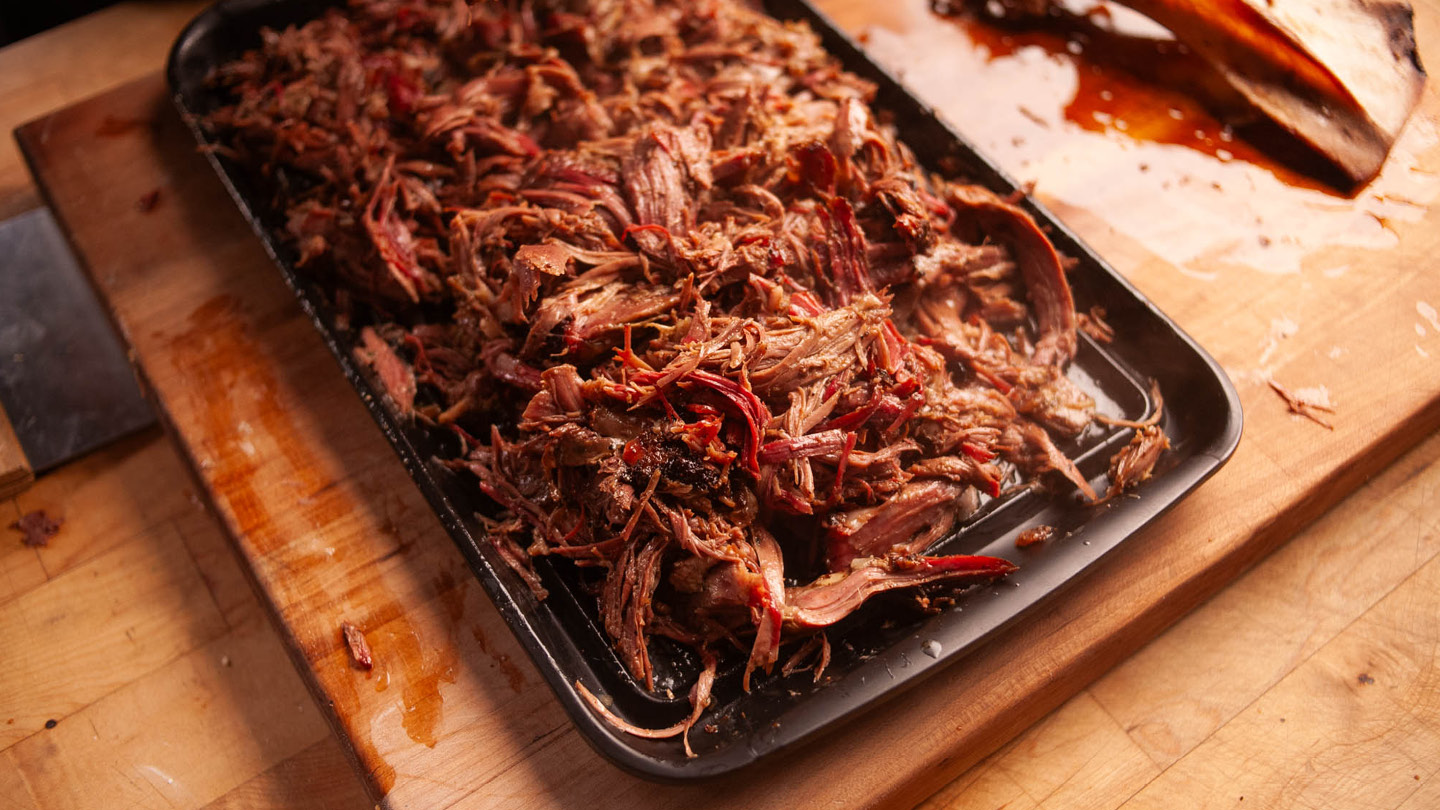
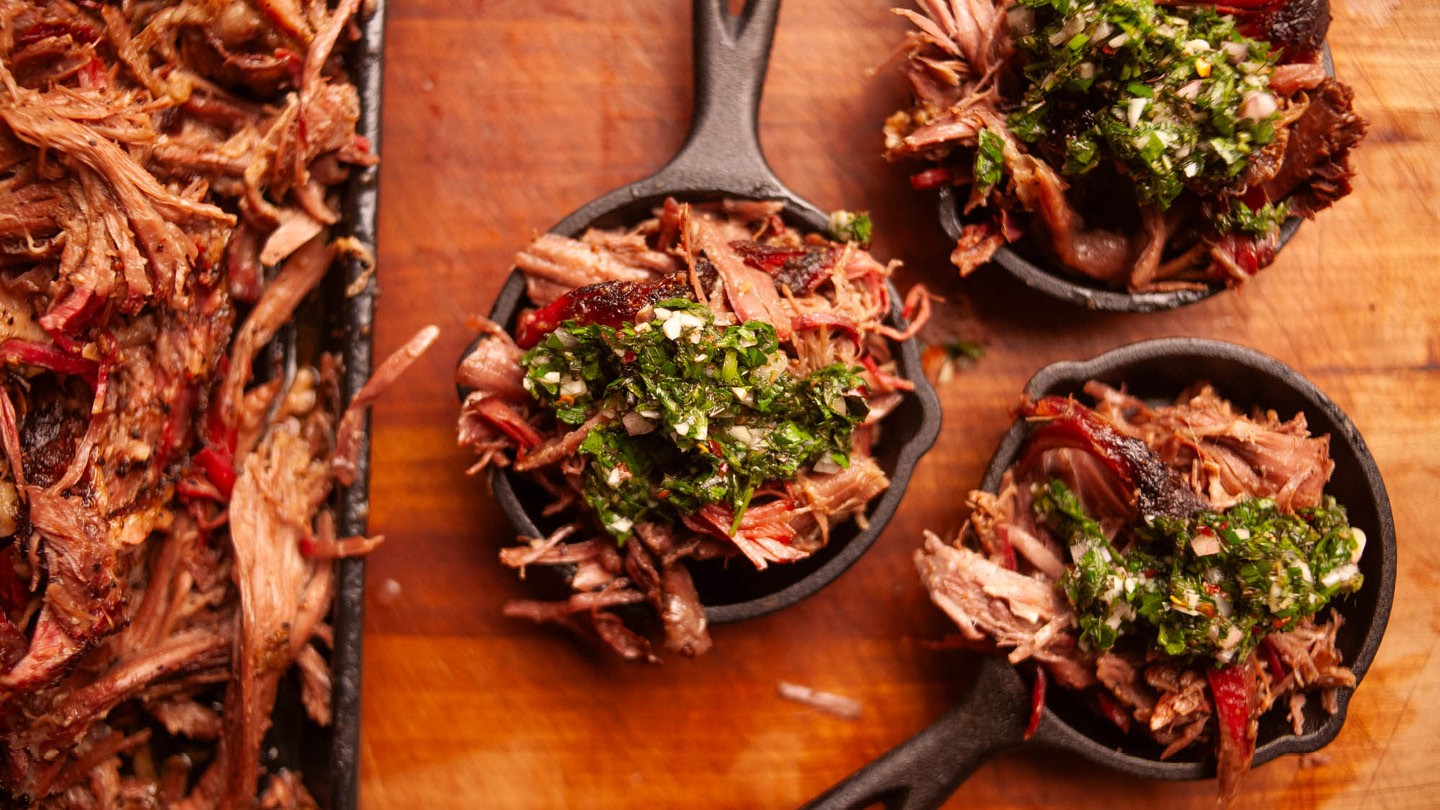
Pull while the lamb is still very warm — not after it cools: Direction Step 7 pulls the meat by hand after removing the bones. Pulled lamb sets as it cools — the rendered fat solidifies and the meat becomes firmer. Pulling while warm (above 150°F) produces long, glossy strands that separate easily and remain moist. Pulling cold produces shorter, drier chunks that require reheating to achieve the same texture. Rest the foil-wrapped shoulder for 20–30 minutes, then pull immediately.
Recommended Recipes