Recipe Note
Recipe FAQ
Why use Dijon mustard as a binder instead of oil or yellow mustard?
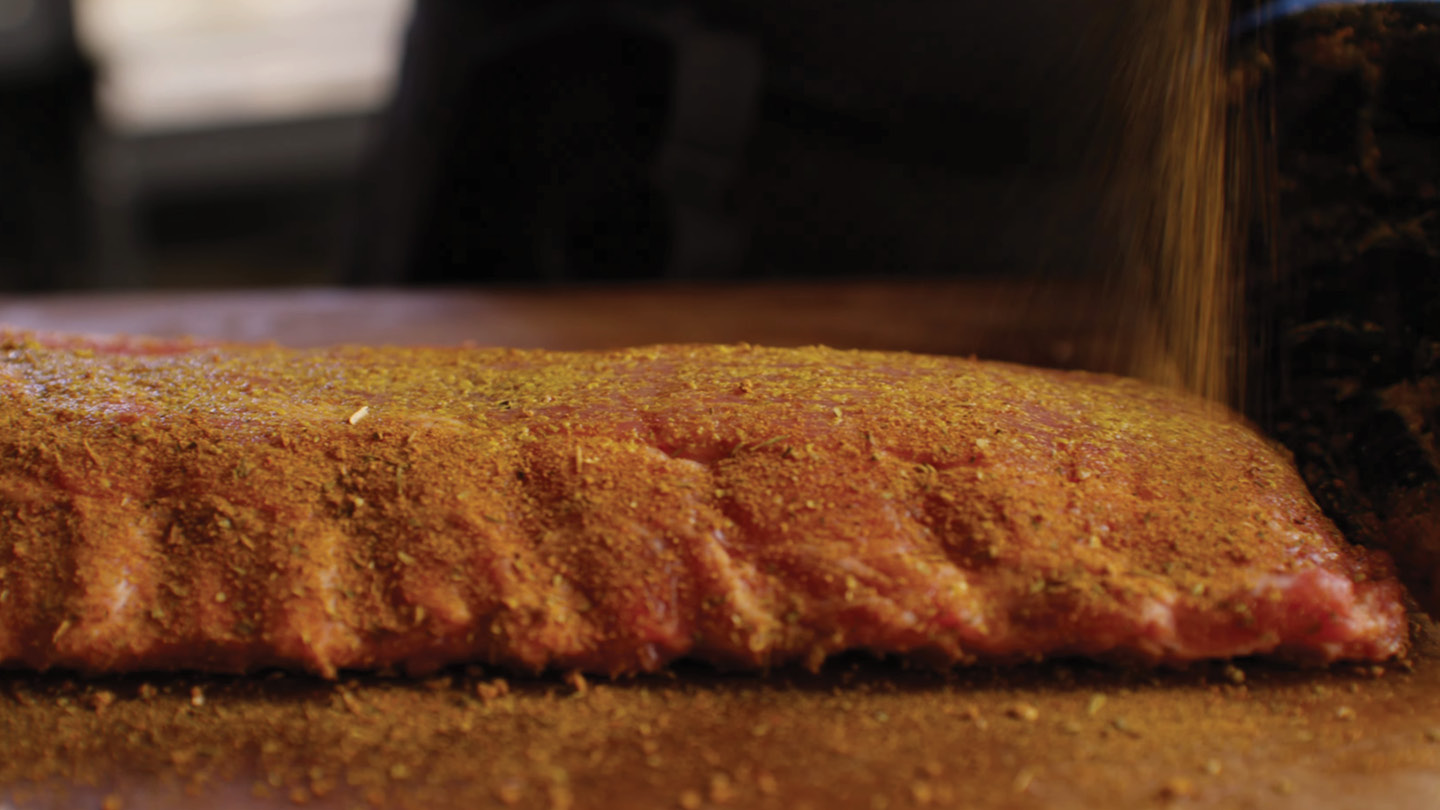
Dijon mustard's acidity and higher moisture content react with the dry rub during the smoke to form a more cohesive, thicker bark than oil or plain yellow mustard. The mustard flavor itself burns off completely during the 3-hour smoke — it contributes nothing to the finished flavor but provides the chemical environment that helps the Cajun Fusion Rub adhere and develop the deep mahogany bark specified in Direction Step 3. Yellow mustard works as a substitute; oil produces a thinner, less developed bark. Kozlik's Dijon Classique is currently out of stock — any quality Dijon mustard is an appropriate replacement.
How do I know when the bark is ready to wrap?
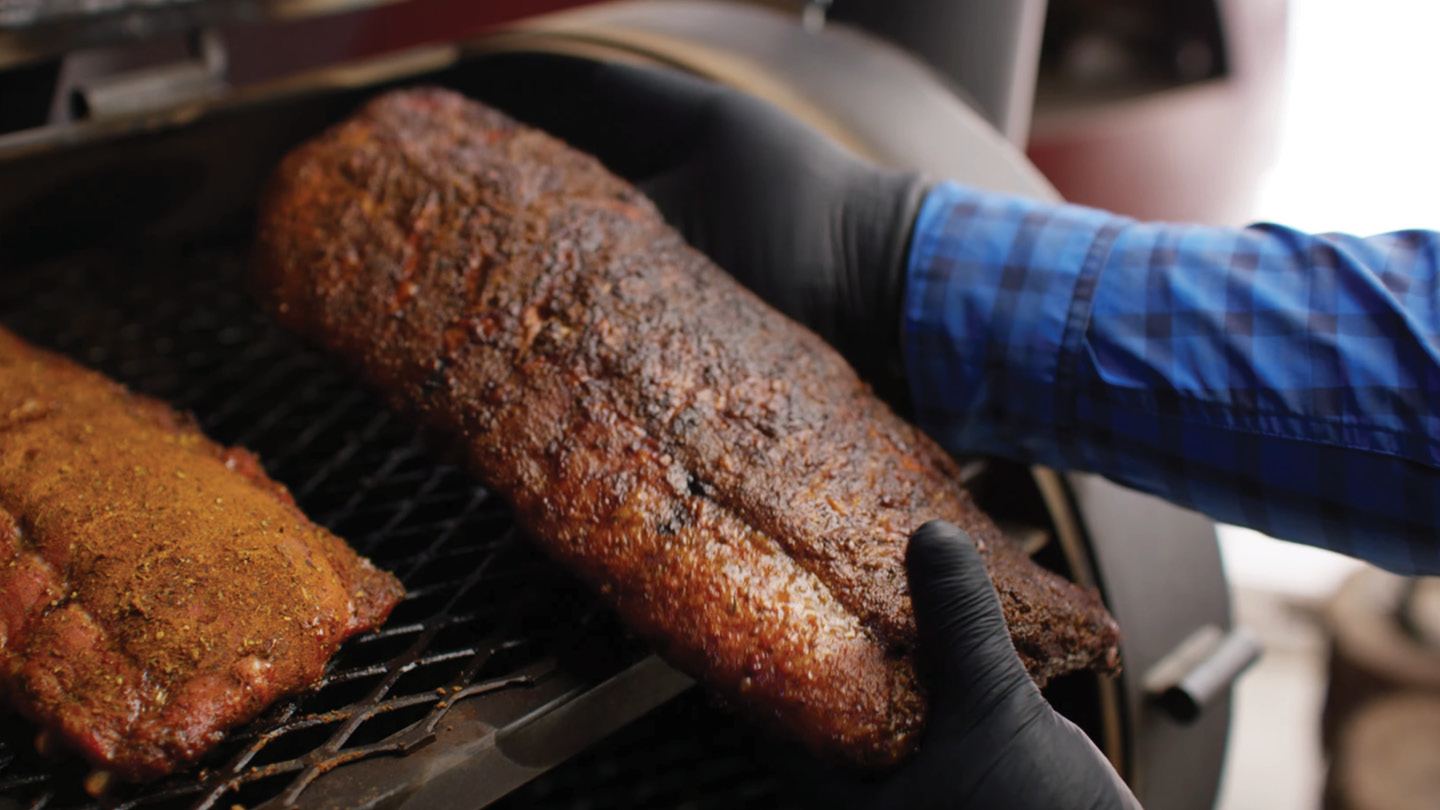
Direction Step 3 specifies "dark mahogany colored bark, about 3 hours." The visual cue is more reliable than the timer: the bark should be deep reddish-brown to near-black on the exterior, dry and firm to the touch, and not tacky or smearable when pressed with a gloved finger. The bark should feel like a dry crust rather than a wet coating. If it smears when you press it, it's not set — give it another 30 minutes before wrapping. An unset bark will dissolve into the wrap liquid and produce a soggy exterior rather than a bark that stays intact through the braise.
Why bring the wrap braise liquid to a simmer before adding it to the foil?
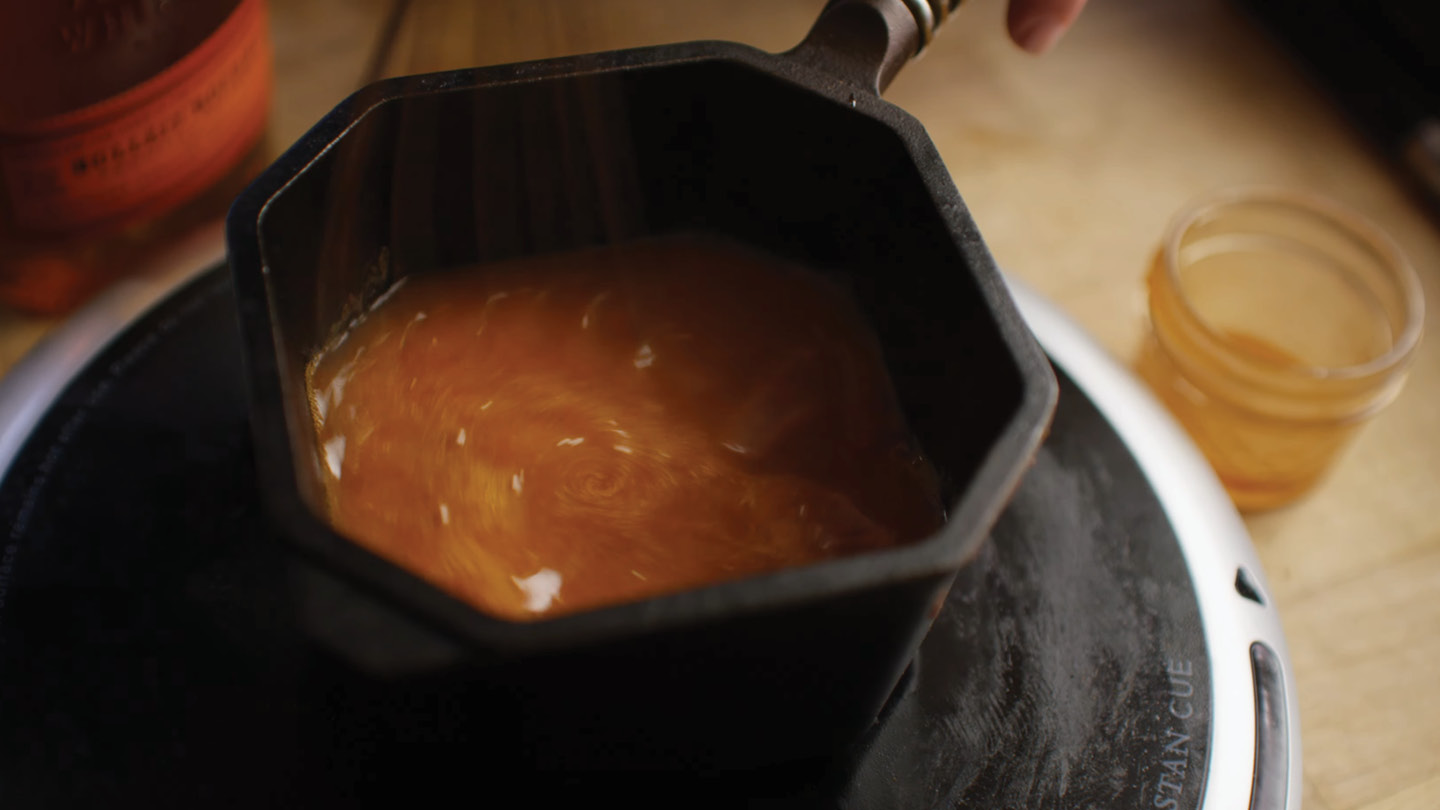
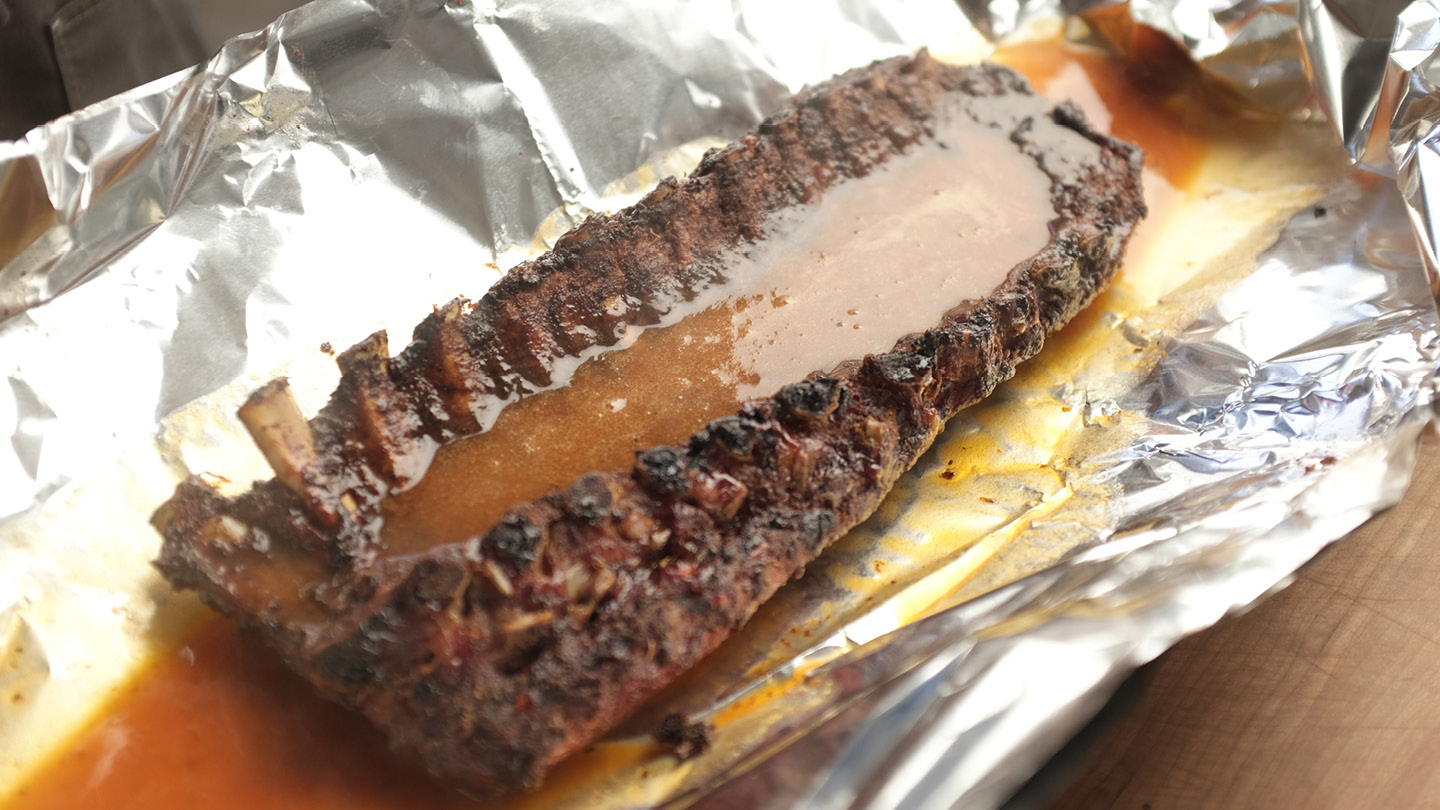
Direction Step 4 specifies bringing the butter, hot sauce, honey, and bourbon to a simmer before pouring into the foil packs. Simmering emulsifies the butter with the other liquid components — cold butter poured over ribs would pool rather than distributing evenly. The heat also evaporates some of the alcohol in the bourbon, mellowing the sharp edge of raw bourbon flavor. Finally, pouring hot liquid into the foil packs immediately brings the braising environment up to temperature rather than requiring the cold liquid to heat up from the ribs' retained heat.
Can I substitute the bourbon?
Yes — apple juice or apple cider is the most common substitute, adding a mild sweetness and acidity without the alcohol. Beer (a lager or amber) works well and adds subtle complexity. The bourbon's primary role is to add a slightly sweet, oaky depth that marries with the pellet smoke; any liquid with similar sweet-savory character works. If omitting entirely, increase the honey by a tablespoon to compensate for the lost sweetness.
How do I know when the wrapped ribs are done?
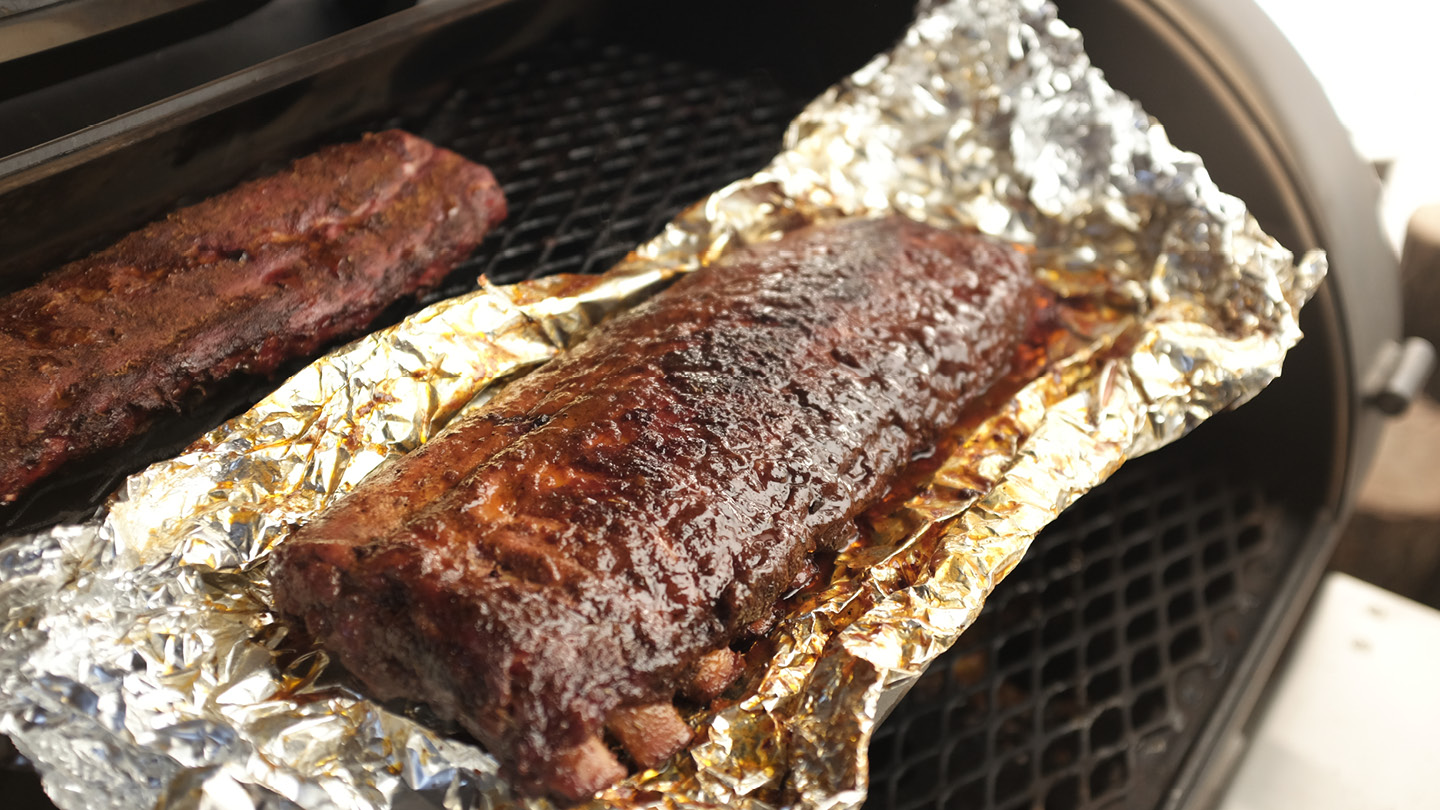
Direction Step 6 specifies "super tender and bones are pulling away from the meat, about one more hour." The bone pull-back is the visual indicator — the ends of the rib bones should be visibly exposed by at least ¼ inch as the meat contracts during the braise. The tenderness test: insert a toothpick between two bones — it should slide through with zero resistance, like warm butter. If it resists at all, wrap tightly and return to the grill for another 15–20 minutes. Avoid the "bend test" for wrapped ribs since opening the foil releases the accumulated braise liquid and steam.
Can I make this indoors?
1 out of 5 — Best on the grill. A home oven at 275°F can produce tender ribs using the wrap braise method, but you lose the 3-hour smoke phase entirely — the mahogany bark that defines the recipe cannot be replicated indoors. Without the bark development, the foil liquid finish also loses its character, since the bark compounds that infuse into the wrap liquid during the braise don't exist. The result would be good braised ribs with a Cajun-flavored sauce, but a fundamentally different dish.
Recipe Highlights
Apply the Dijon mustard generously — don't be conservative: Direction Step 2 says to slather the ribs. A thin coating of mustard produces uneven rub adhesion and patchy bark development; a generous, even coat ensures full coverage of the rub across every surface. Work the mustard into the membrane side as well as the bone-side surfaces — every exposed surface benefits from the bark-development chemistry the mustard provides.
Use two sheets of heavy-duty foil per rack — not one: Direction Step 5 specifies two sheets. Baby back rib bone ends are sharp enough to puncture a single foil sheet during the wrap process or while the ribs shift on the grill during the hour-long braise. A puncture allows the wrap liquid to leak out — the ribs will steam rather than braise and the foil liquid finish won't have enough liquid remaining. Two overlapping sheets provide a redundant barrier against puncture.
Pour the wrap liquid in before sealing — not after: Direction Step 5 specifies placing the ribs on the foil first, then pouring in half the liquid per pack before sealing tight. This sequence ensures the liquid surrounds the ribs from below and the sides as the foil is sealed. Sealing the foil first and trying to pour liquid in through a small opening produces uneven distribution — some areas of the rack will be submerged and others won't.
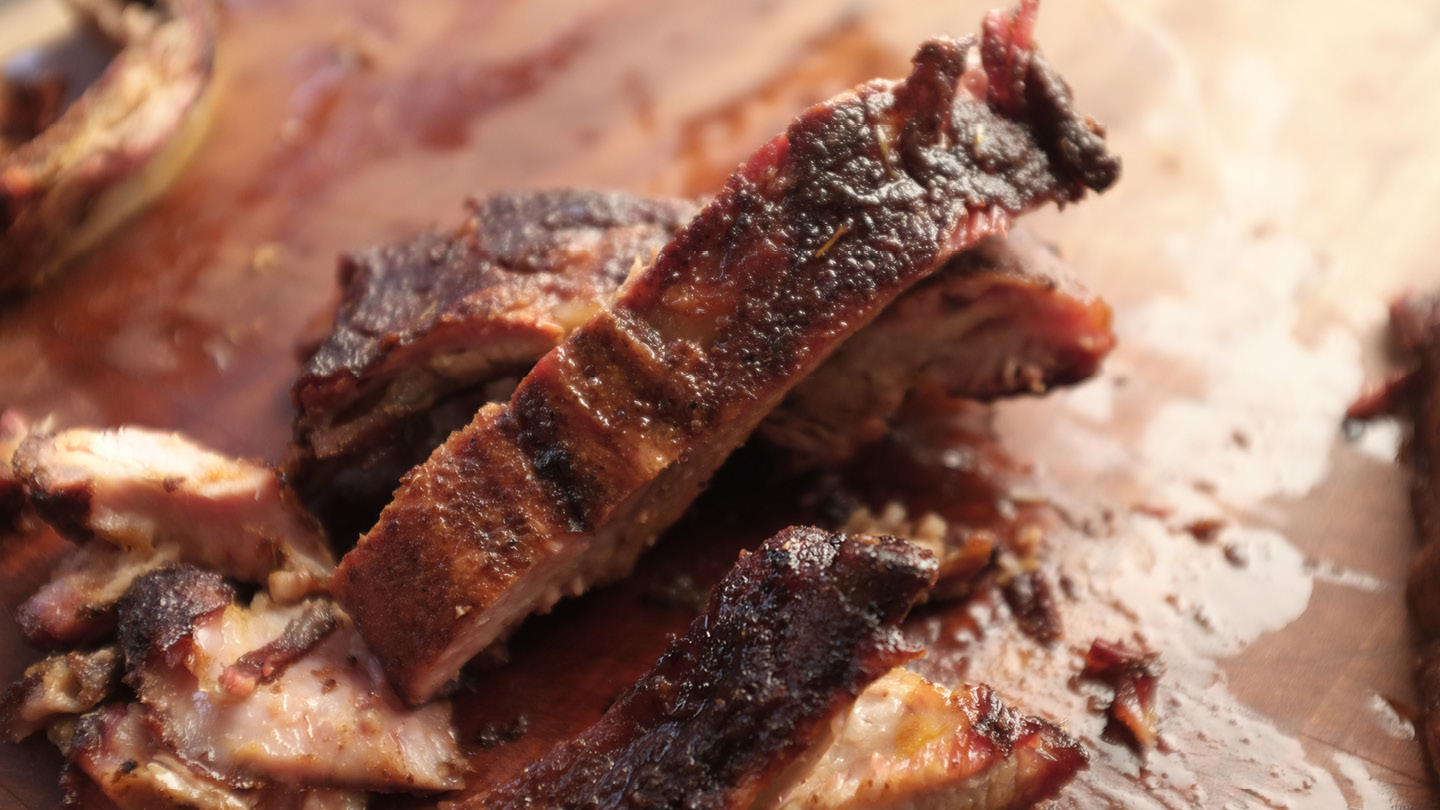
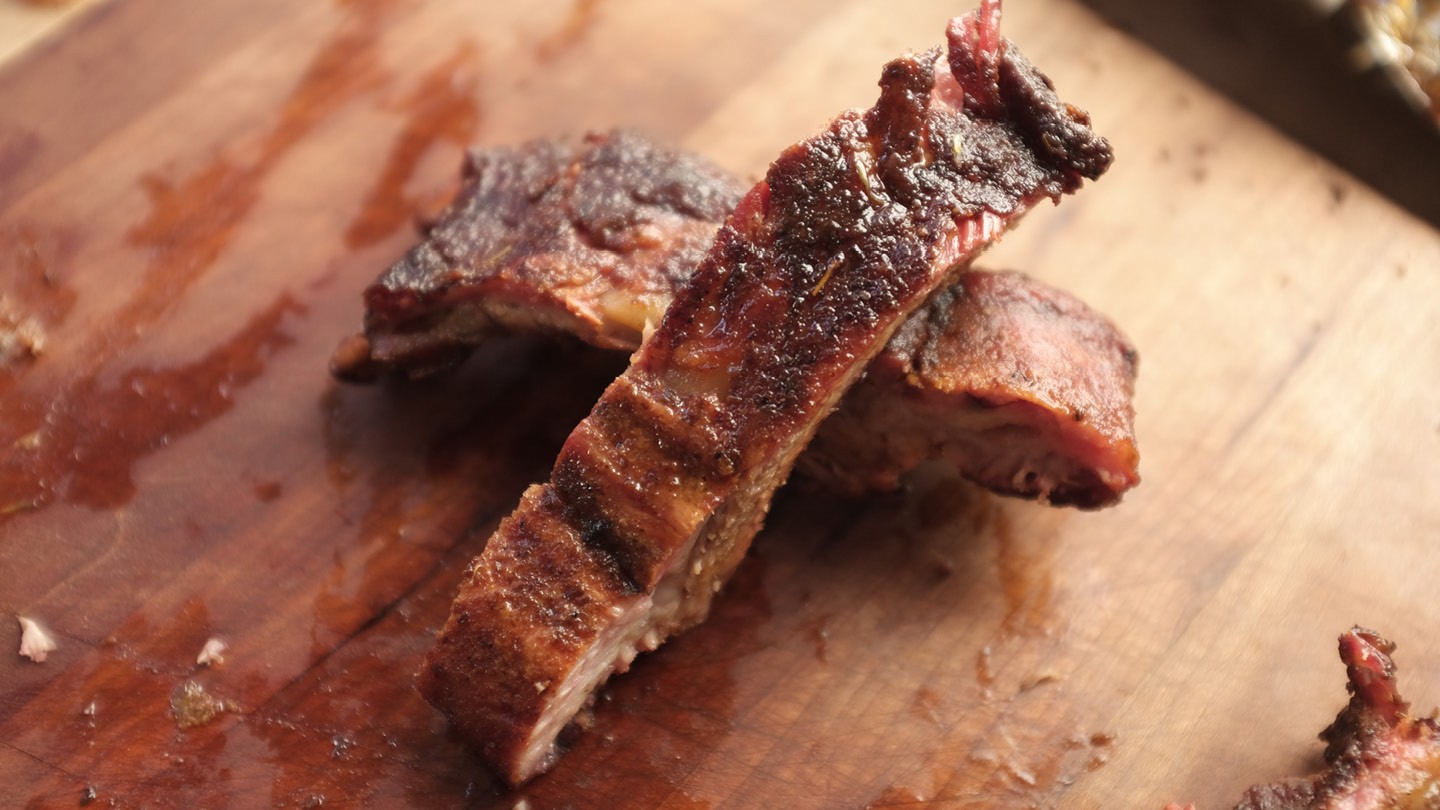
Rest the ribs briefly inside the sealed foil before slicing: Direction Step 7 goes directly from "cook until tender" to "slice and slather," but a 10-minute rest inside the sealed foil allows the residual heat to equilibrate and the juices to redistribute. Slicing immediately after unwrapping allows the juices to run out onto the cutting board. The foil liquid can be poured into a small bowl during the rest and used as the finishing slather — it concentrates slightly as it cools from serving temperature.
Recommended Recipes