Recipe Note
Recipe FAQ
What is a chicken lollipop and why does the prep technique matter?
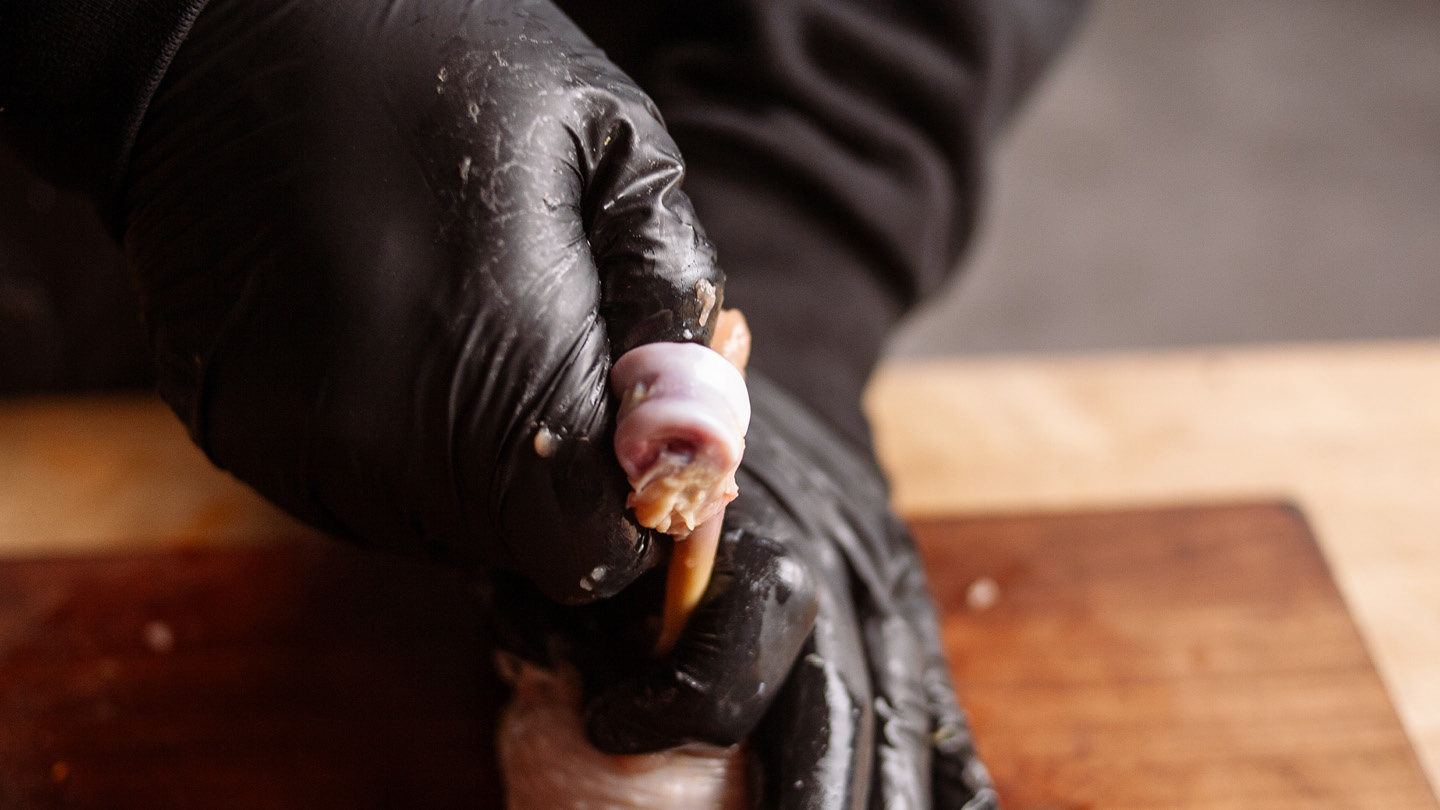
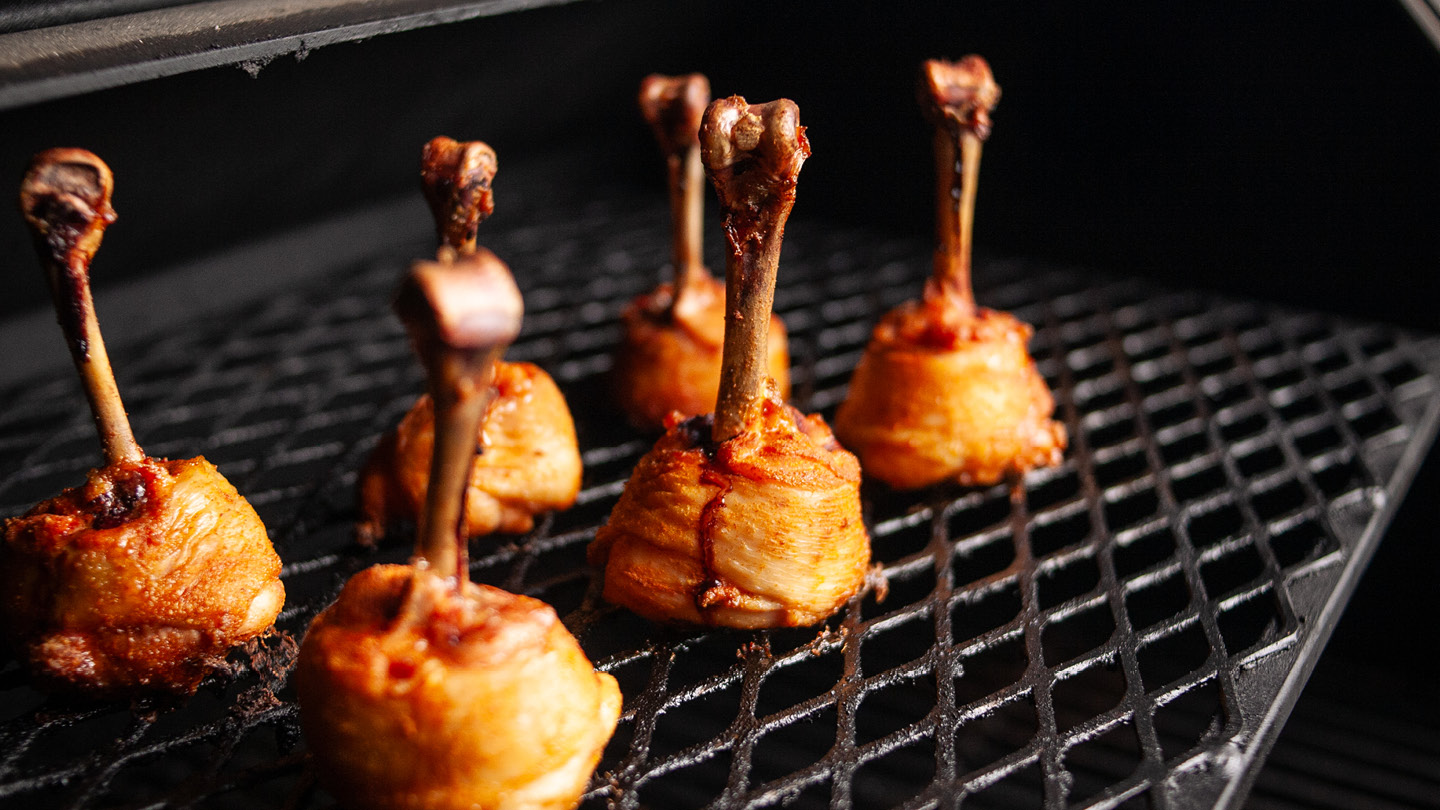
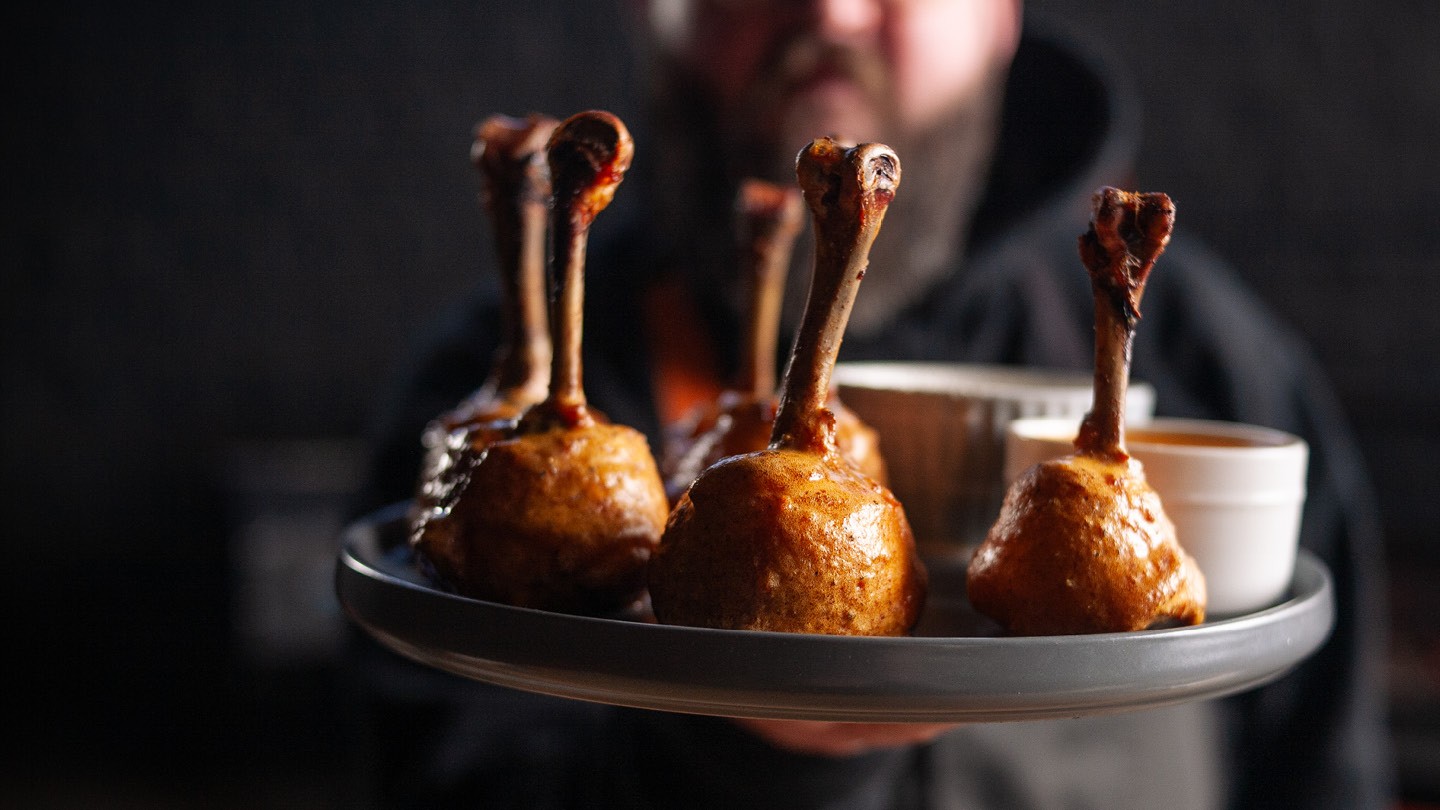
A chicken lollipop is a drumstick that's been French-trimmed: the meat is cut free from the knuckle end, pushed down to concentrate at the fat end, and the cartilage and tendons at the skinny end are removed entirely. The technique matters because standard drumsticks have irregular meat distribution and tendons that make them difficult to eat cleanly. The lollipop prep concentrates all the meat into a uniform ball, creates a clean bone handle, and eliminates the cartilage — turning a drumstick into something that eats more like a short rib, with consistent meat in every bite.
Why use Hardcore Carnivore Amplify as the seasoning?
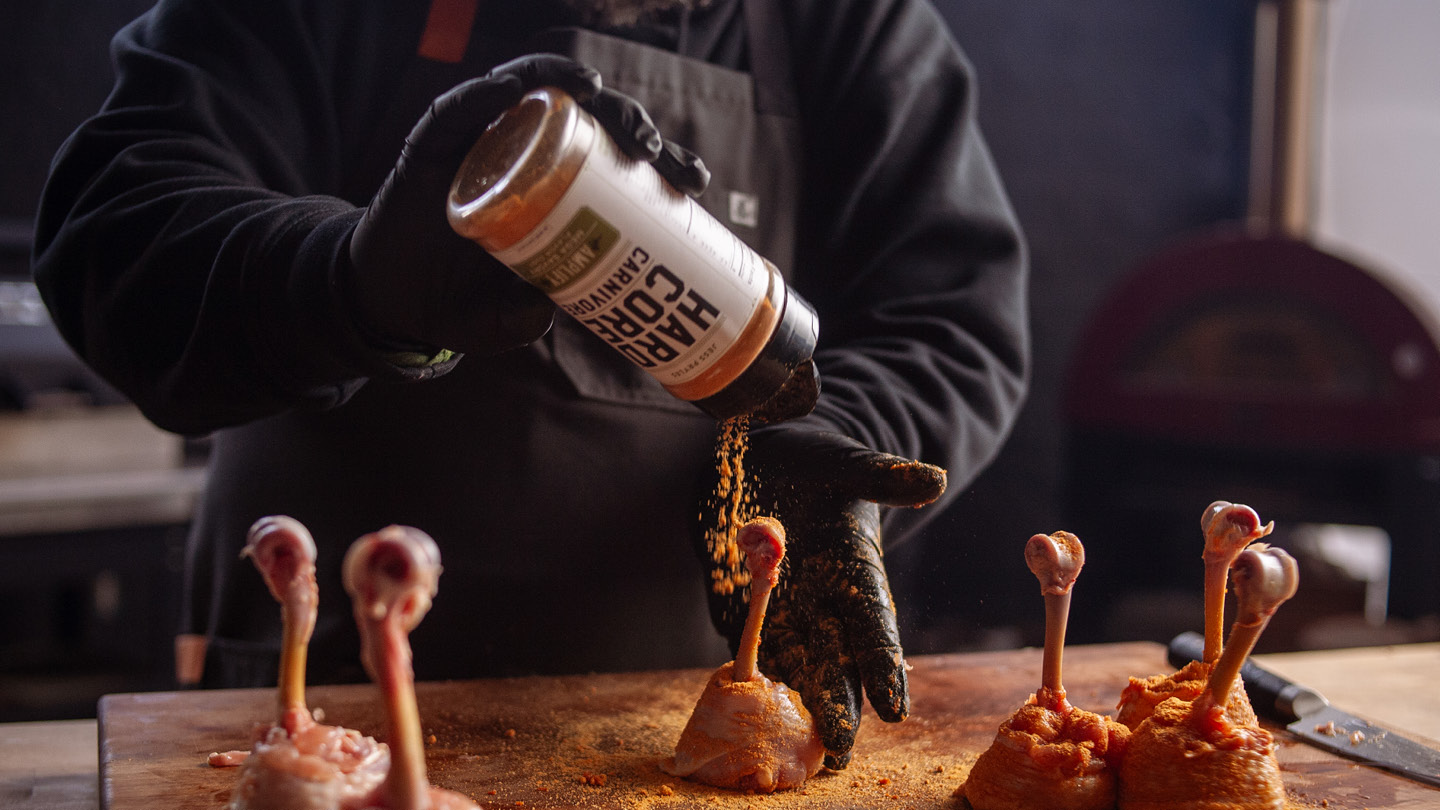
Hardcore Carnivore Amplify is a flavor potentiator designed to intensify the perceived flavor of other seasonings applied alongside it. It contains ingredients including disodium inosinate and disodium guanylate — umami compounds that amplify the capsaicin character of the Pit Fire Hot Sauce binder and the smoke character from the pellet grill. The result is a more intense, more savory flavor profile than a conventional seasoning rub would produce on its own. Amplify doesn't contribute a distinct flavor note — it makes everything else taste stronger.
Why does the buffalo sauce recipe use Lone Star Brisket Rub?
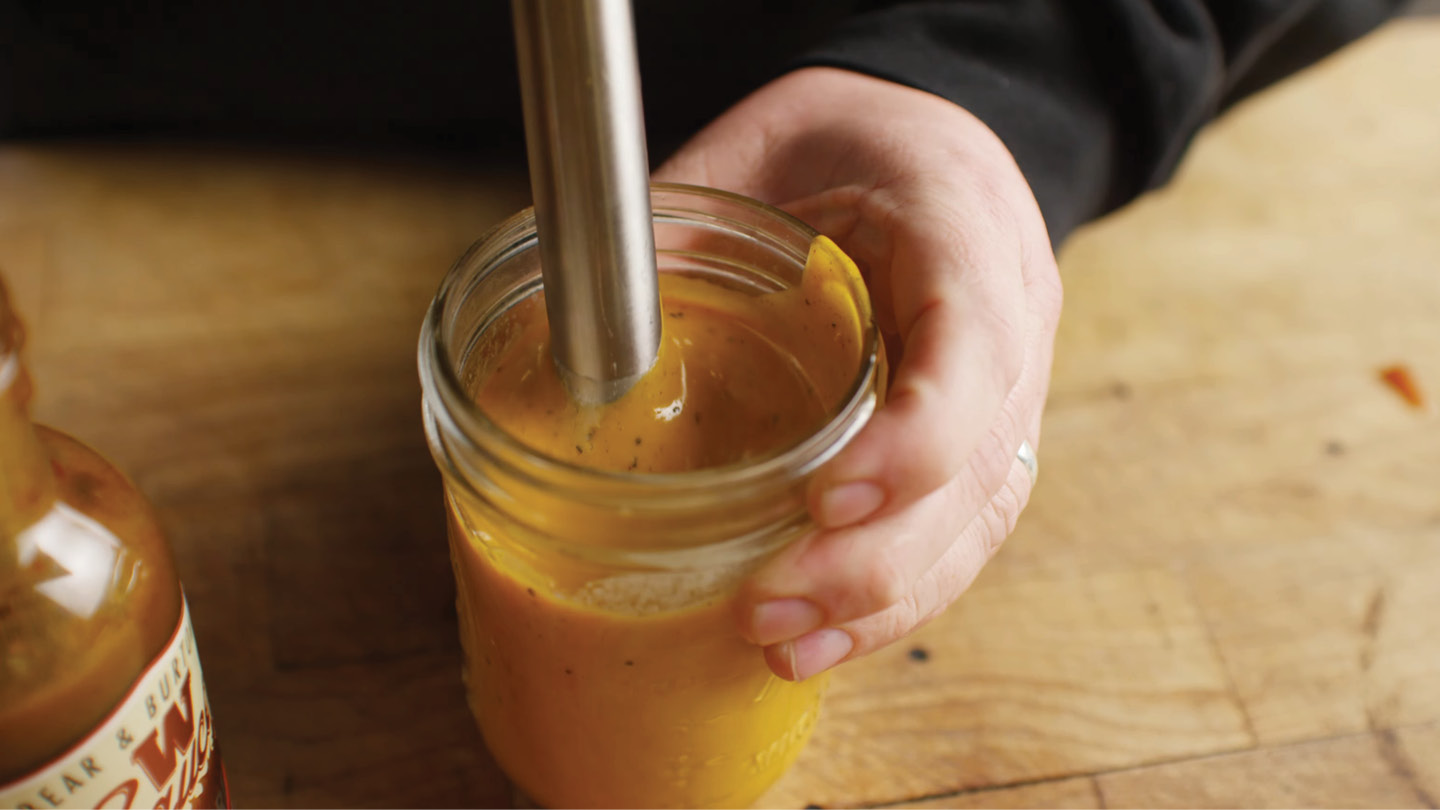
The Cattleman's Grill Lone Star Brisket Rub in the buffalo sauce adds salt, coarse pepper, and garlic complexity to the butter-hot sauce emulsion without tasting like "brisket rub" in the finished sauce. It seasons the butter component of the emulsion in a way that a pinch of plain salt doesn't — the layered spice blend integrates into the sauce during the emulsification step and rounds out the one-dimensional heat of a standard buffalo sauce. The quantity (1 tsp) is intentionally small — it's a background seasoning, not a primary flavor.
Why smoke at 325°F instead of a lower temperature?
325°F is a moderate temperature for indirect chicken — high enough to render the skin and develop color in approximately 45 minutes, low enough to maintain smoke absorption throughout the cook. A lower temperature (225–250°F) would extend the cook significantly and produce more smoke character but at the cost of a softer, less rendered skin. At 325°F, the lollipops develop enough smoke flavor to be distinctly smoky while finishing with a firmer, slightly caramelized exterior that holds the buffalo sauce coating during the 5-minute sauce-set phase.
Why pull at 170°F instead of 165°F?
Direction Step 5 specifies 170°F for dark meat, which aligns with the USDA recommendation for chicken thighs and drumsticks. Dark meat contains more collagen than white meat, which needs higher temperatures to break down and become tender. At 165°F, dark meat is food-safe but can still have a slightly chewy, underdeveloped texture. At 170°F, the collagen has broken down further and the meat pulls away from the bone more cleanly — particularly important for the lollipop format where you want the meat ball to separate easily from the bone handle when eating.
Can I make this indoors?
2 out of 5 — Can be done inside, loses key flavor. A 325°F oven produces fully cooked lollipops and the sauce and blue cheese work identically indoors. What you lose is the 45-minute smoke character from the YS640s — the hickory smoke penetration that defines these as a pellet grill recipe rather than an oven chicken appetizer. For a partial indoor approximation, add 1/2 tsp liquid smoke to the buffalo sauce.
Recipe Highlights
Take your time with the lollipop prep — it's easier than it looks but requires a sharp knife: Direction Step 3 describes cutting down through the meat and cartilage around the bone at the knuckle. The key is a sharp boning knife or paring knife and deliberate cuts rather than forcing through cartilage. Once you've cut all the way around, the skin and cartilage push up to the skinny end in one piece. Practice on the first one slowly — by the third or fourth, the technique becomes fast and intuitive.
Apply the Pit Fire Hot Sauce binder as thinly as possible — just enough to coat: Direction Step 4 specifies "a thin layer." Hot sauce as a binder works because its acidity and moisture help the dry seasoning adhere rather than falling off during the smoke. Too thick a layer of hot sauce and the seasoning sits in a wet slick that prevents direct contact with the meat surface. A thin, even coat gives the seasoning the best surface to adhere to and prevents the hot sauce from pooling at the base of the meat ball.
Make the buffalo sauce while the chicken is smoking — not before: Direction Step 6 specifies making the sauce while the chicken cooks. The immersion blender buffalo sauce is a temporary emulsion — it will begin to separate after 20–30 minutes without agitation. Making it too early means re-blending before dunking. Making it during the last 10 minutes of the smoke ensures the emulsion is fresh and fully cohesive when the lollipops reach 170°F and are ready to dunk.
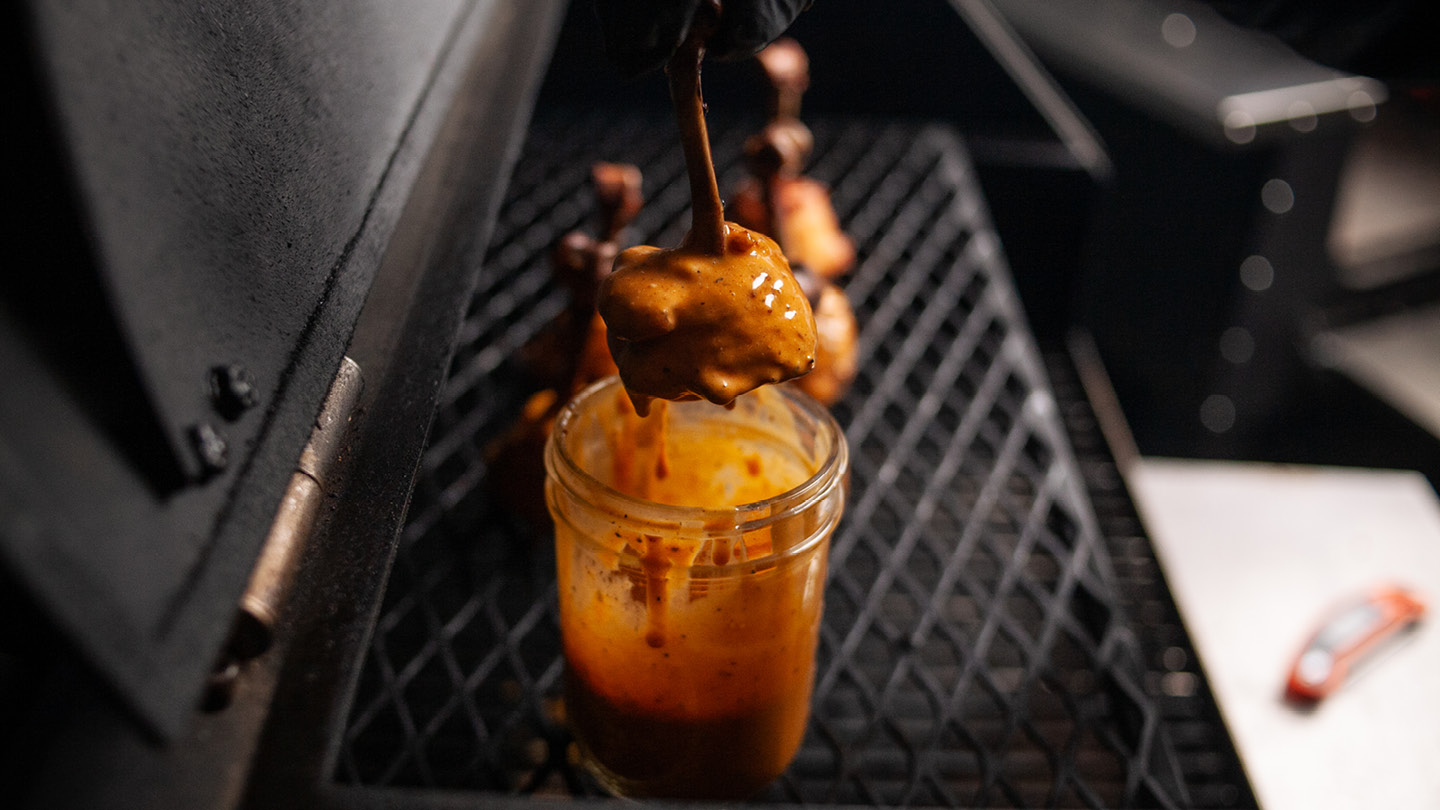
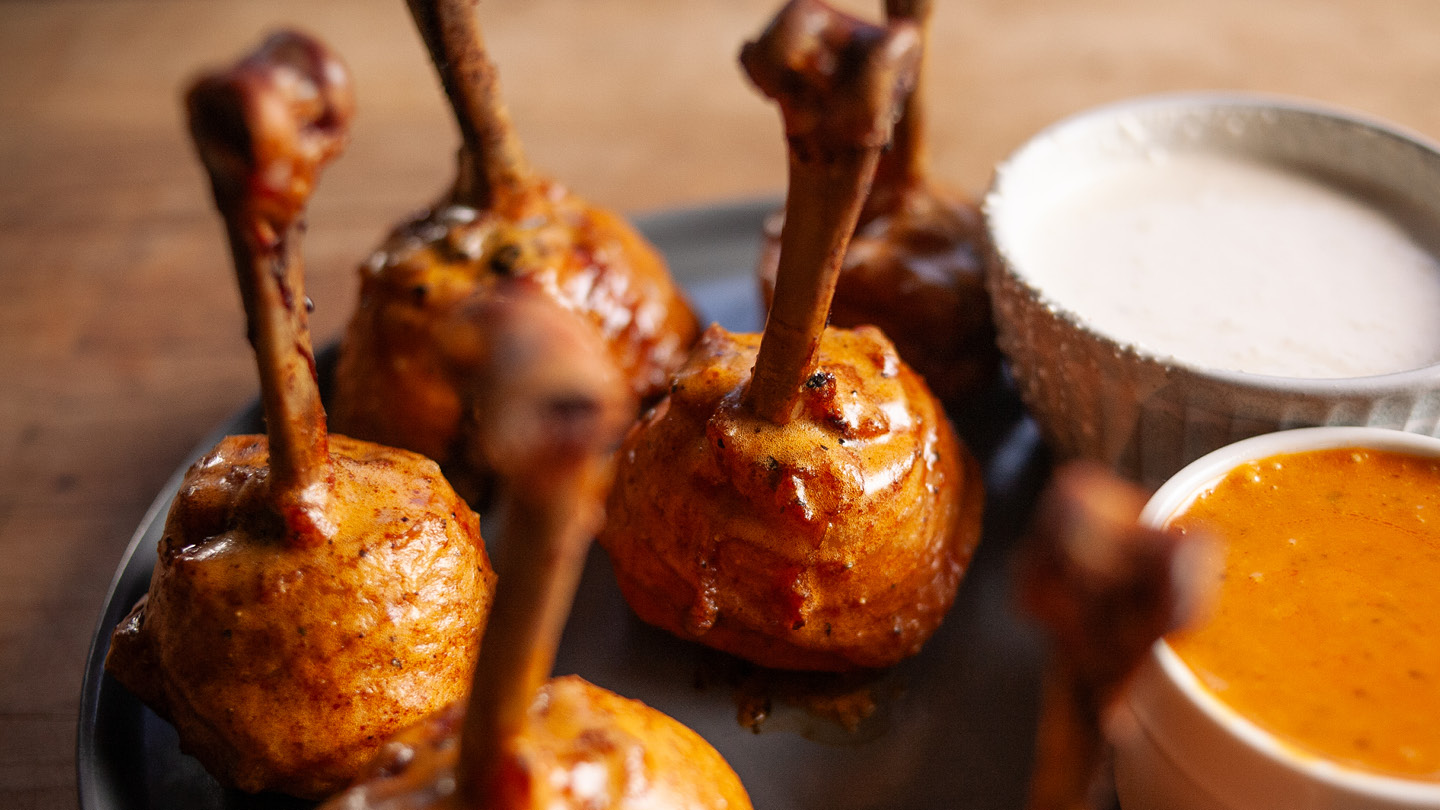
Return to the grill for exactly 5 minutes after dunking — no longer: Direction Step 7 specifies a 5-minute sauce-set time after dunking. The sauce needs heat to caramelize slightly and bond to the chicken surface; without the 5-minute return, the sauce is wet and runs off on contact. More than 5–7 minutes at 325°F risks burning the sugar in the hot sauce and butter, turning the coating bitter. Pull at the visual cue — the sauce should look glossy and slightly tacky, with light caramelization at the edges.
Recommended Recipes