

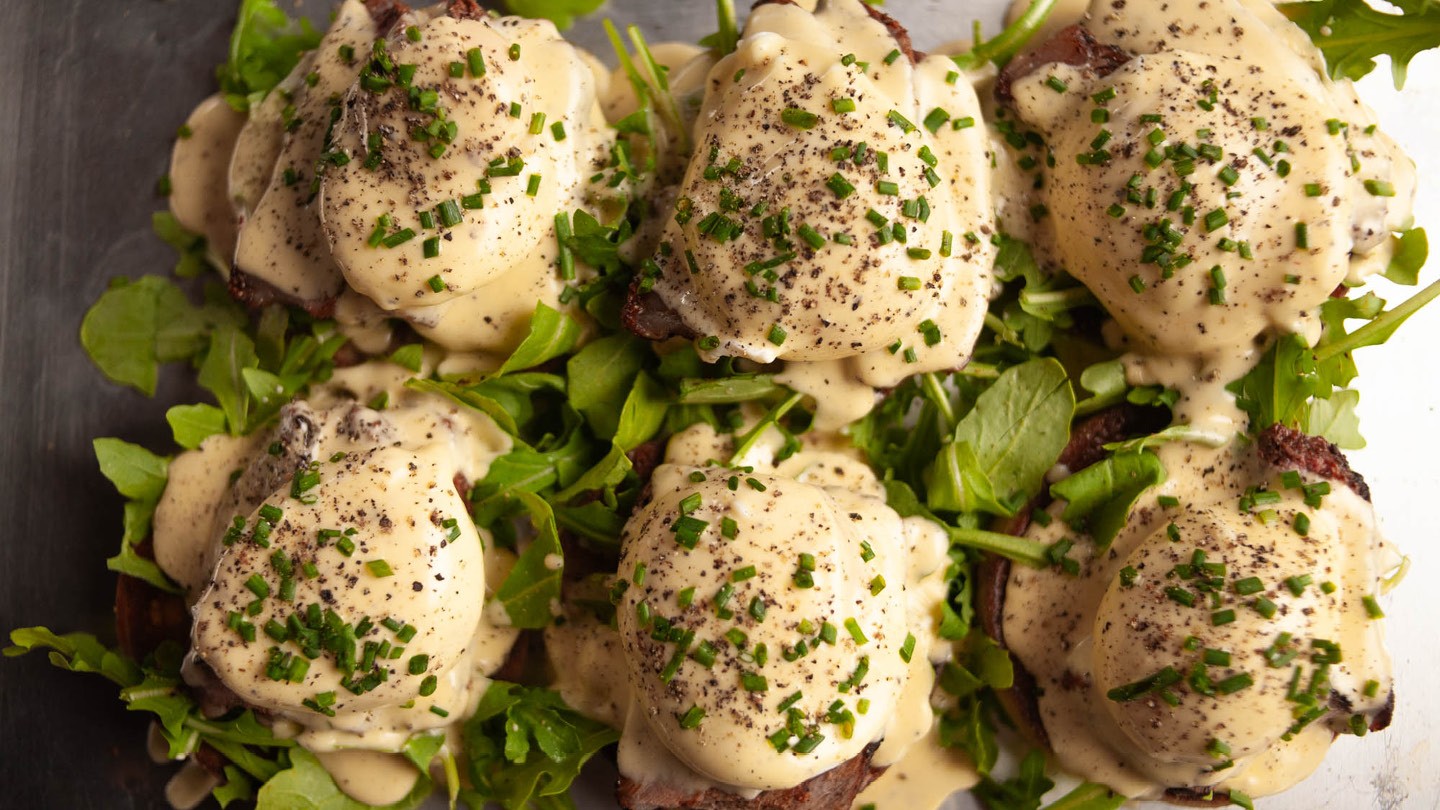
Start your brunch on fire with Steak & Eggs Benedict, where the classic elegance of Eggs Benedict collides with the boldness of blackened steak and zesty hollandaise. Chef Tom replaces traditional ham with a blackened Creekstone Strip Steak, layering flavor and texture in every bite.
WHAT YOU'LL LOVE
- The Napoleon P500RSIB's three cooking zones run simultaneously — griddle for searing, indirect rack for finishing the steak, and infrared side burner for poaching — and that parallel operation is what makes the timing work: The steak sears on the griddle, transfers to the wire rack to finish to 125°F while you make hollandaise on the side burner, and the poached eggs come off simultaneously. On a stovetop, these are sequential operations; on the Napoleon, they're concurrent. The difference in service timing is significant: everything arrives at 130°F internal, fresh-poached, and warm hollandaise all at the same moment.
- Straining the egg whites through a fine mesh strainer before poaching is the professional technique that produces compact, clean poached eggs: Egg whites have two layers — a thin outer white that disperses into the poaching water and becomes wispy, and a thick inner white that sets tightly around the yolk. Pouring the egg through a strainer lets the thin white drain off, leaving only the thick white that produces the tight, tidy poached egg you see in professional kitchens. Without this step, the thin white disperses into the water and produces the ragged "jellyfish" appearance of an unprepared poached egg.
- Blackening seasoning on strip steak produces a crust character that standard steakhouse seasoning doesn't: Cattleman's Grill Blackening Seasoning is built around cayenne, paprika, thyme, and garlic — specifically formulated for high-heat searing. On a beef tallow-slicked cast iron griddle at high temperature, the Blackening Seasoning creates a deeply caramelized, slightly spicy crust that contrasts with the silky hollandaise. A standard salt-and-pepper steak in the same recipe would be good; this version is distinctly different.
- Heat Mavericks Antigravity Hot Sauce in the hollandaise is what makes this a BBQ-brand recipe rather than a French classic: Standard hollandaise uses white pepper and a splash of lemon. Substituting Antigravity — a medium-heat, vinegar-forward hot sauce — for the standard spice additions gives the hollandaise a slightly tangy, warm heat note that complements the blackened steak's spice profile. The two heat registers (cayenne blackening + Antigravity hollandaise) are complementary rather than competing.
Steak & Eggs Benedict
Tom Jackson
Rated 5.0 stars by 1 users
Category
Beef
Cuisine
American
Servings
6
Prep Time
30 minutes
Cook Time
30 minutes
Calories
1440
Using a multi-zone grill setup (or cast iron + indirect heat), he brings together perfectly poached eggs, arugula, Dijon mustard, and a silky, hot-sauce–infused hollandaise to crown toasted muffins and steak. The result is a showstopper brunch dish that elevates the familiar into the exceptional.
Ingredients
- 12 oz Creekstone Farms Prime Strip Steak
-
1 tbsp Kozlik’s Dijon Classique Mustard
-
Cattleman’s Grill Blackening Seasoning
-
2 tbsp Cornhusker Kitchen Beef Tallow
- 6 large eggs
-
3 English muffins
- 3 tbsp unsalted butter, for toasting
- 1 1/2 cups baby arugula
- Chives, for garnish
- 3 egg yolks
- 2 tbsp warm water
- 1 tbsp lemon juice
-
1 tsp Heat Maverick’s Anti Gravity Hot Sauce
- 8 oz unsalted butter
-
Jacobsen Salt Co. Black Garlic Infused Sea Salt
-
Jacobsen Salt Co. Tellicherry Black Peppercorns, fresh ground
Hollandaise:
Directions
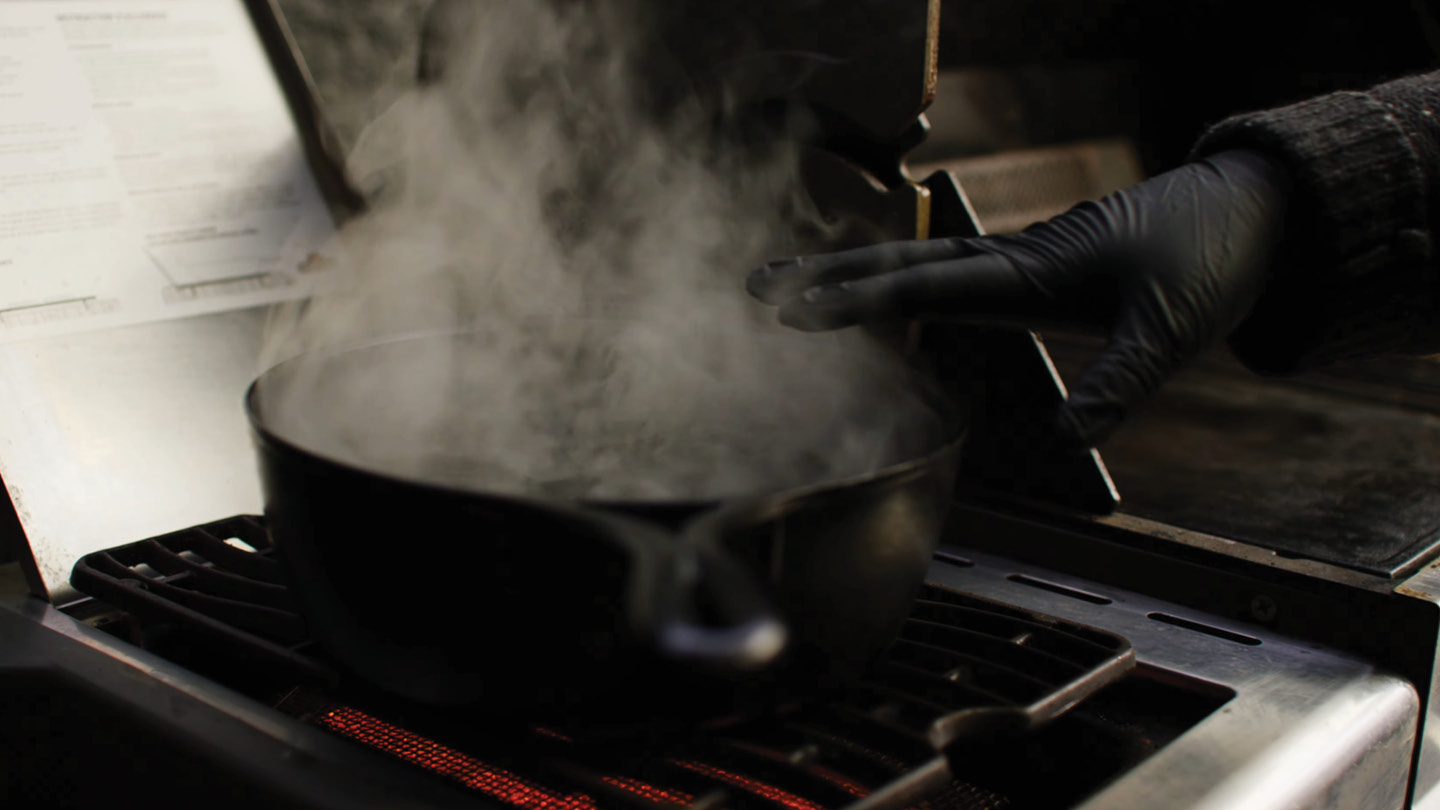
Place a Napoleon Grills Cast Iron Griddle inside your Napoleon P500RSIB-3 Gas Grill. Turn the burners under the griddle to high. Turn the burner on the opposite side to low. Place an ATBBQ wire rack on the side opposite the griddle. Fill a medium sized pot, the wider the better, with water about 3”-4” deep. Cover with a lid. Place on the infrared side burner and turn the heat to high. When it comes to a boil, remove the lid, lower the heat, and stabilize the water temperature around 180ºF.
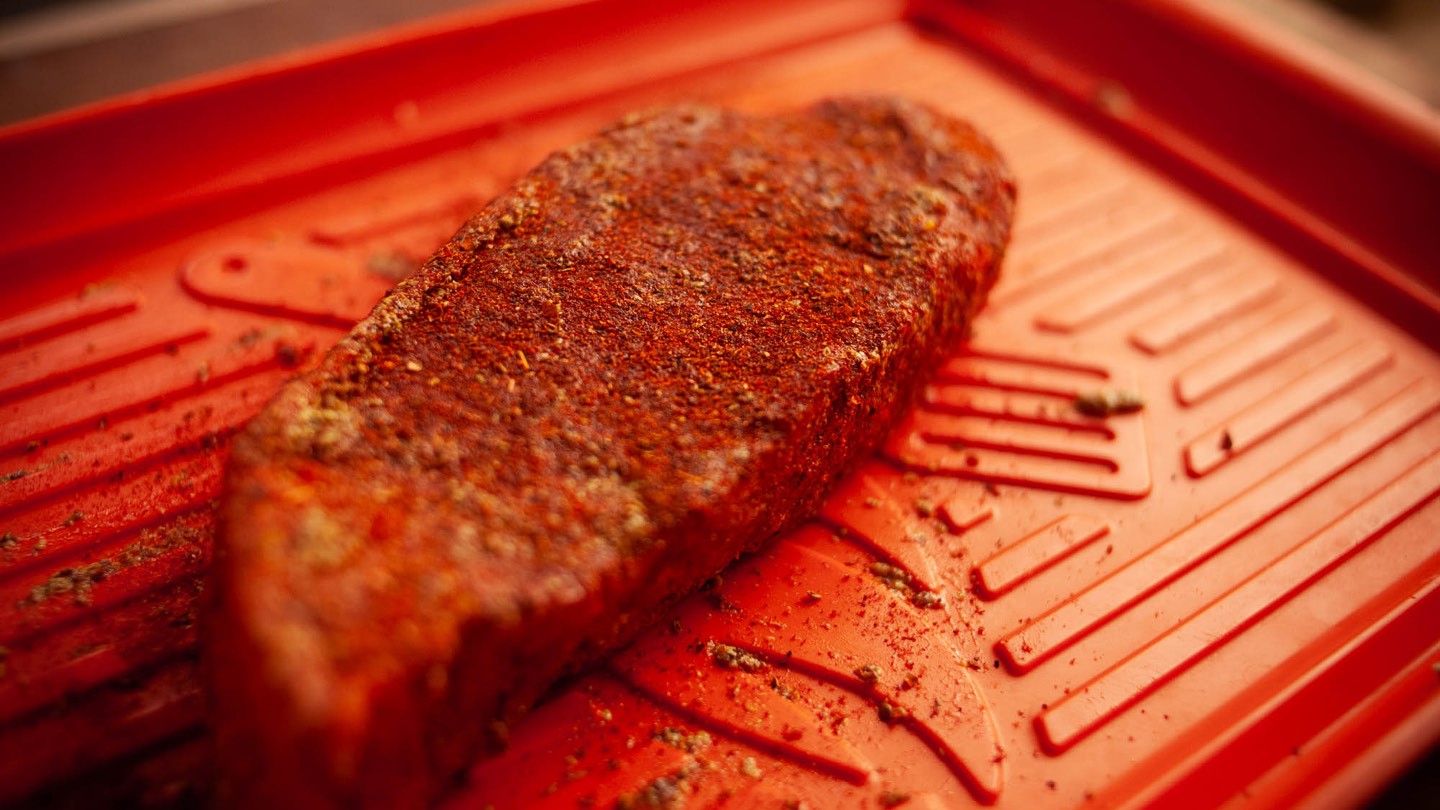
Slather the strip steak on all sides with Kozlik’s Dijon Classique Mustard. Season generously with the Cattleman’s Grill Blackening Seasoning.
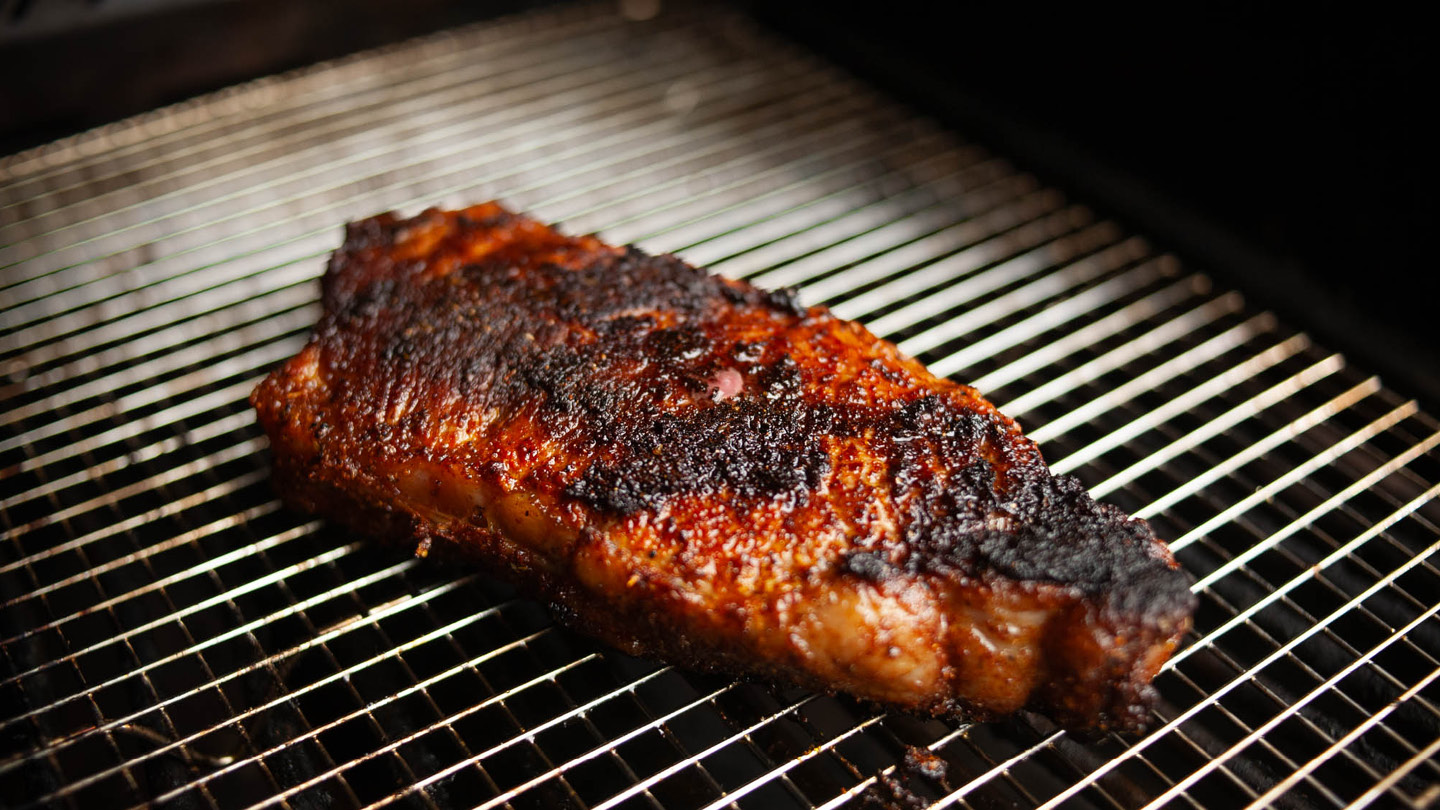
- Melt the beef tallow on the griddle, then place the steak on top. Cook until fully seared, then flip and repeat. When the steak is as seared as you like it, transfer it to the wire rack on the opposite side of the grill, close the lid and let cook to an internal temperature of 125ºF (medium rare). Turn all burners to medium heat.
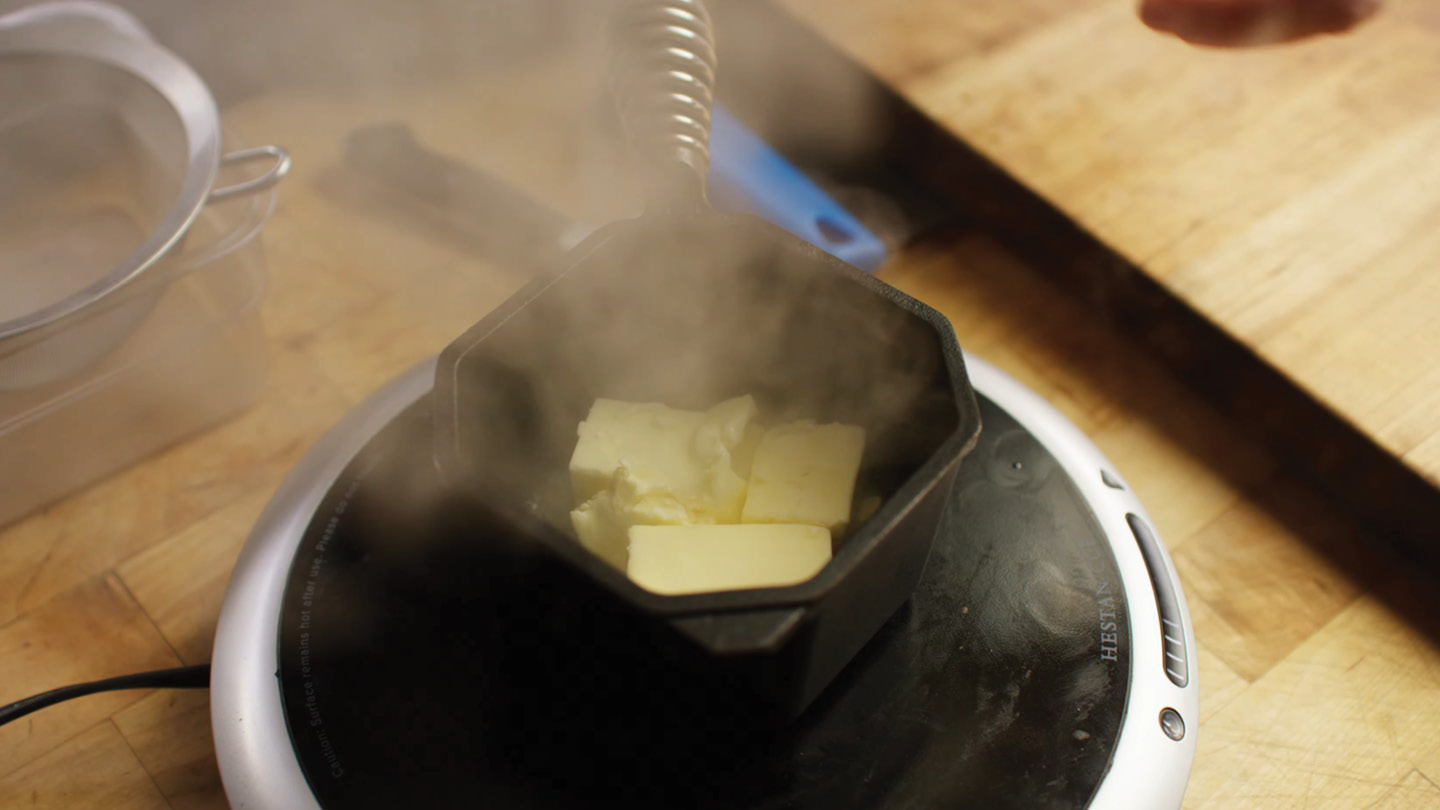
While the steak is cooking, make the hollandaise. First, melt the butter and bring it to 175ºF.
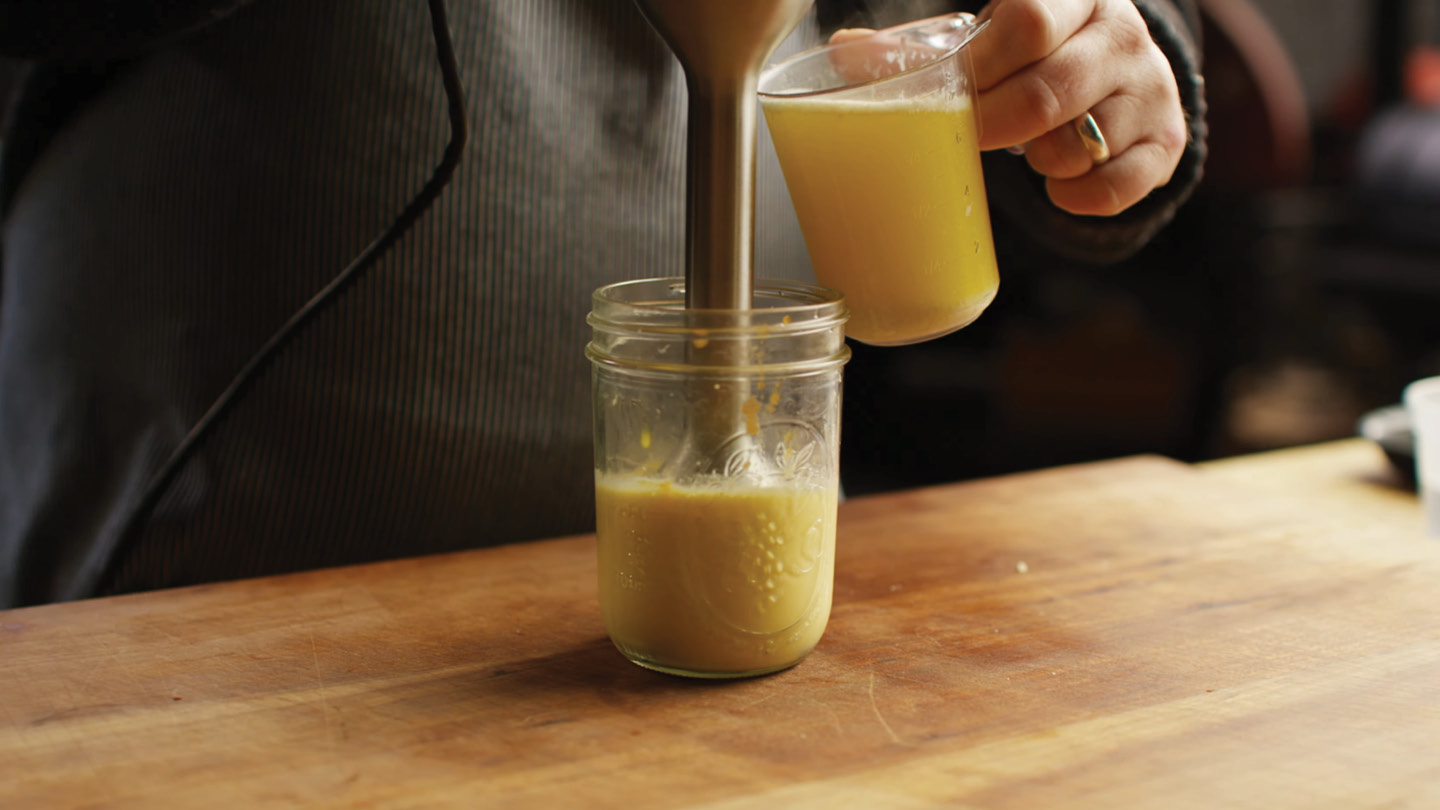
Combine the egg yolks, warm water, lemon juice, and hot sauce in a pint sized mason jar. Blitz with an immersion blender and leave the blender running as you slowly pour a thin stream of melted butter into the yolk mixture until all of the butter is incorporated.
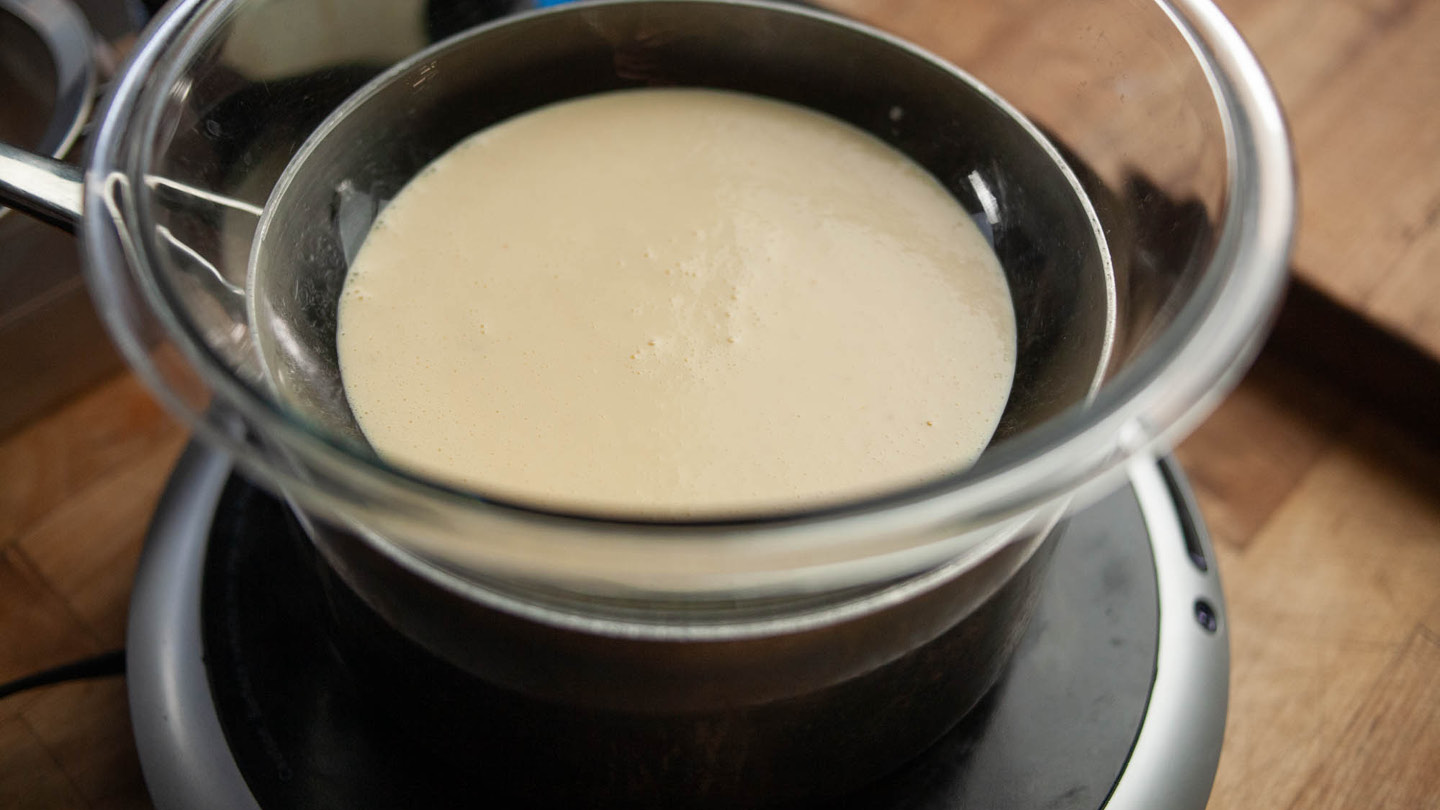
- Transfer the mixture to a bowl. Place the bowl over a pot of warm water to keep the hollandaise warm. The bowl should not be touching the water. Whisk occasionally and thin with more warm water, as needed.
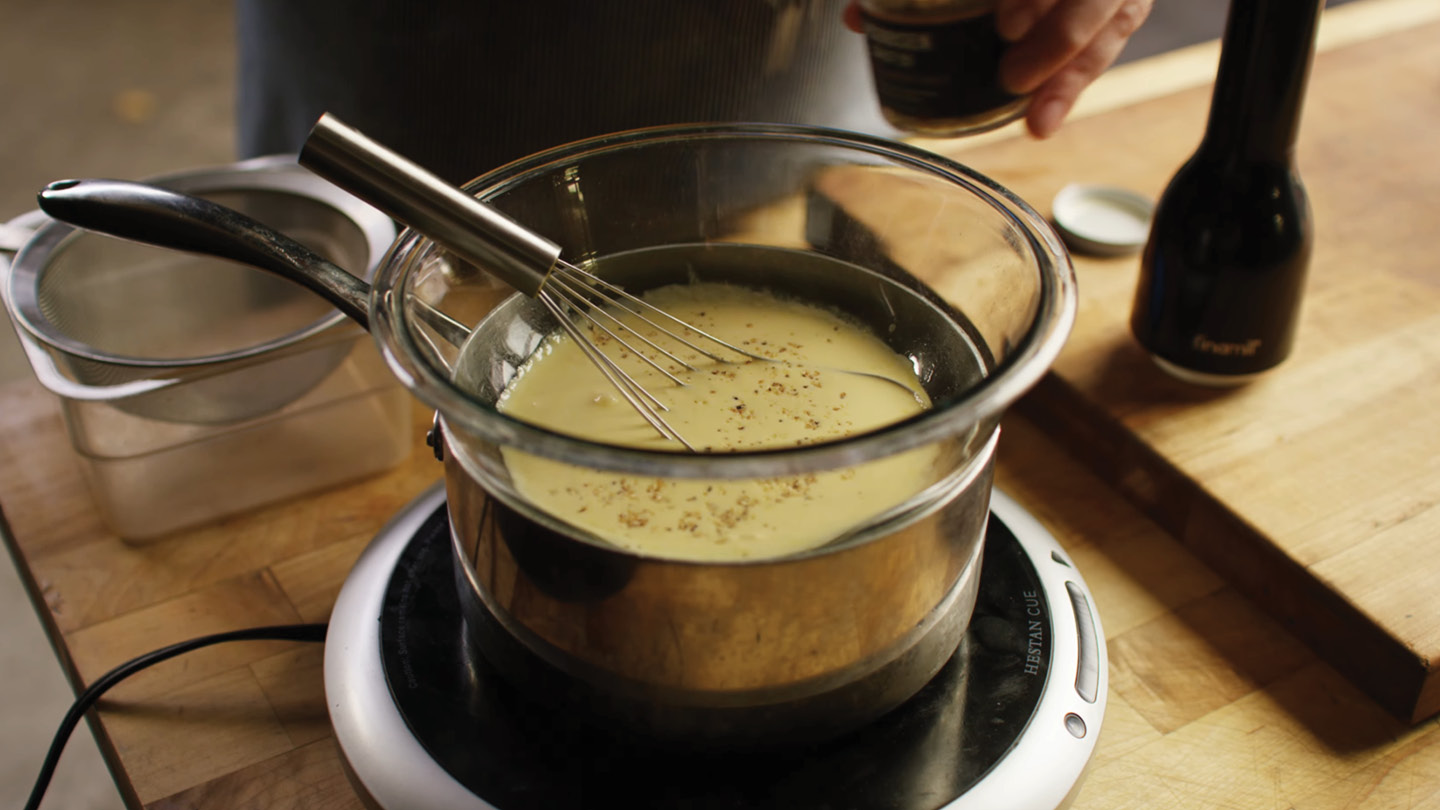
- Season with Jacobsen Salt Co. Black Garlic Infused Sea Salt and fresh ground Jacobsen Salt Co. Tellicherry Black Peppercorns, to taste.
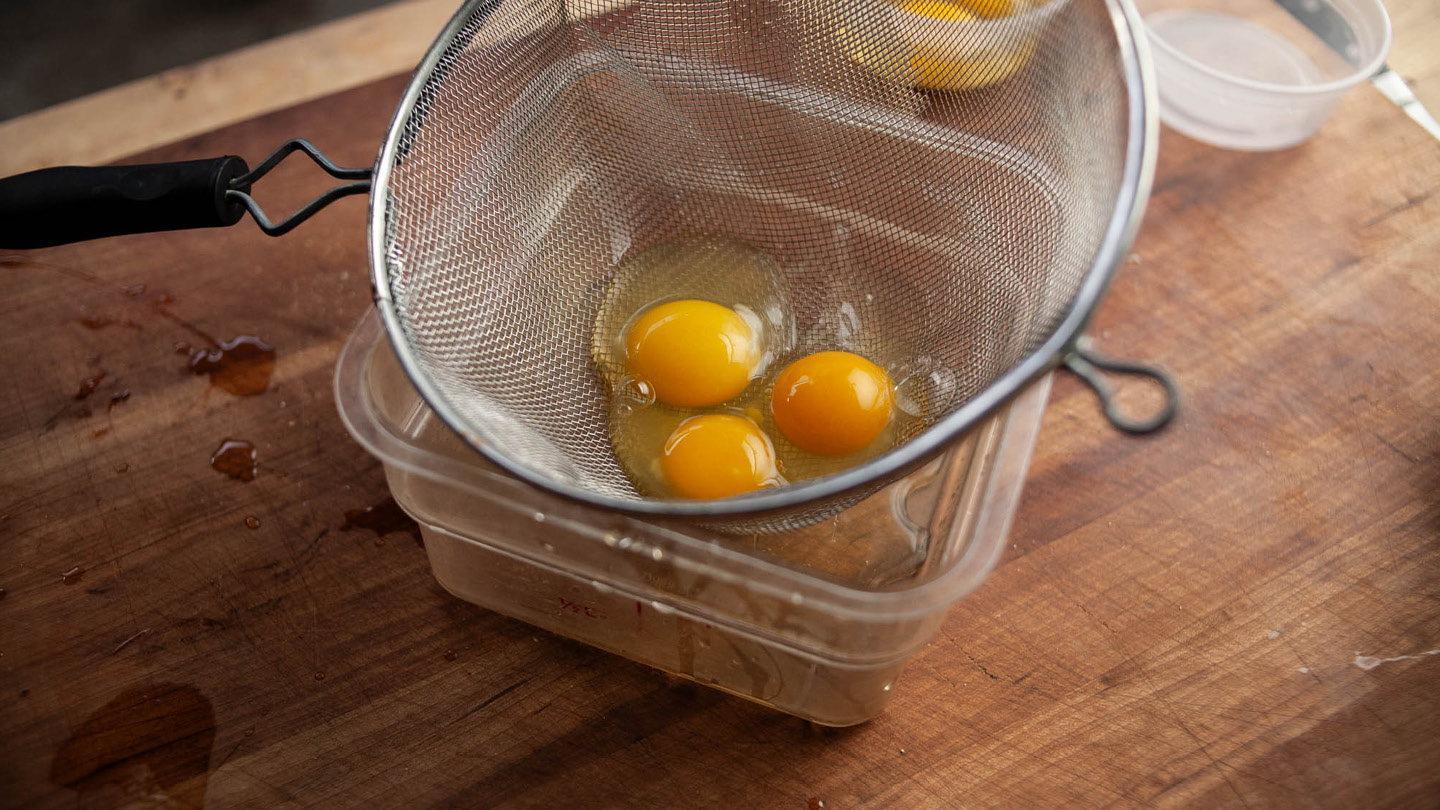
Crack your eggs into a strainer to remove the thin whites. Transfer the thick whites and yolks (intact) to a bowl.
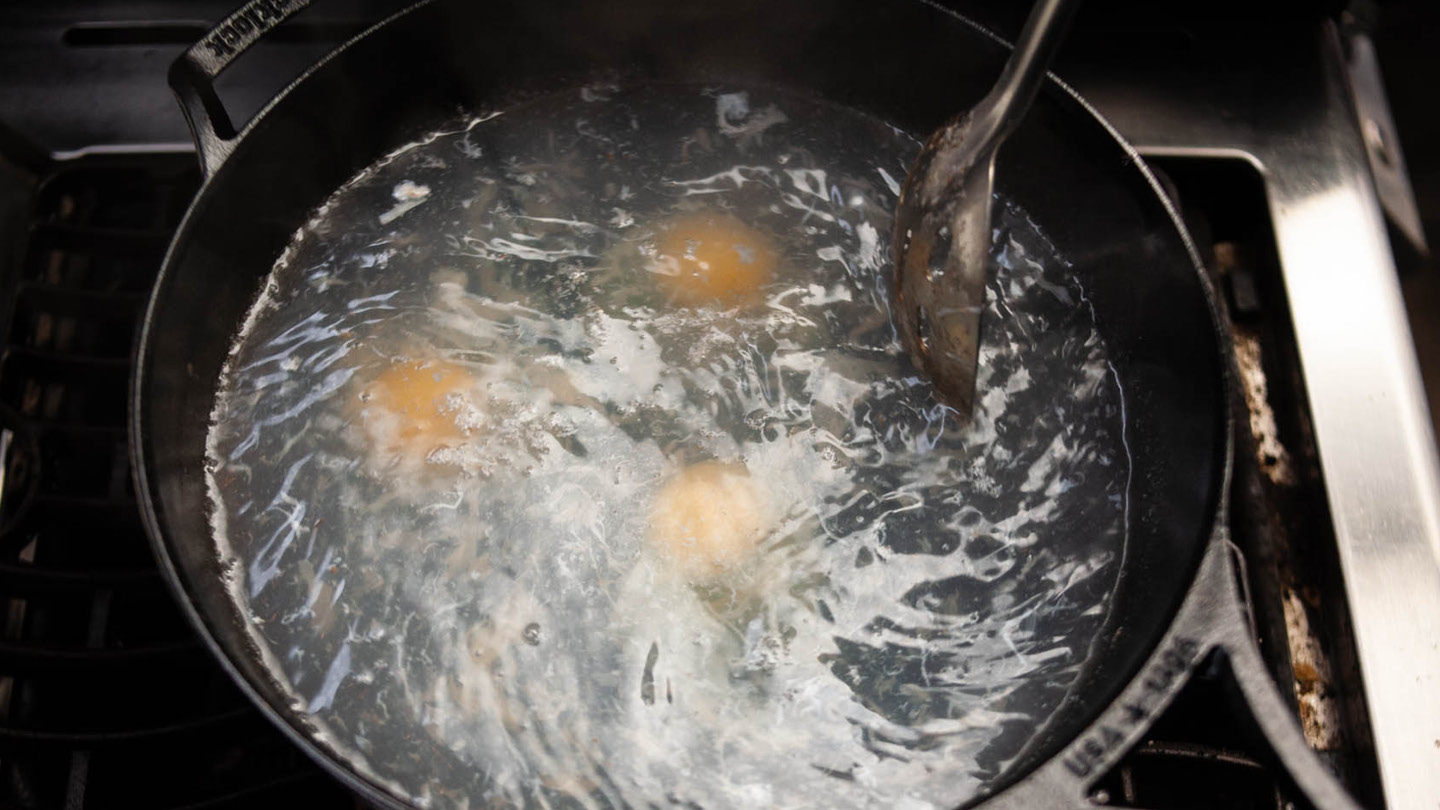
Stir the pot of water with a slotted spoon and keep the water swirling. Drop the eggs into the water one at a time. Keep the water moving as the eggs cook for about three minutes, or until the whites of the eggs feel firm, but the yolks are still soft. Remove from the grill and transfer to a plate.
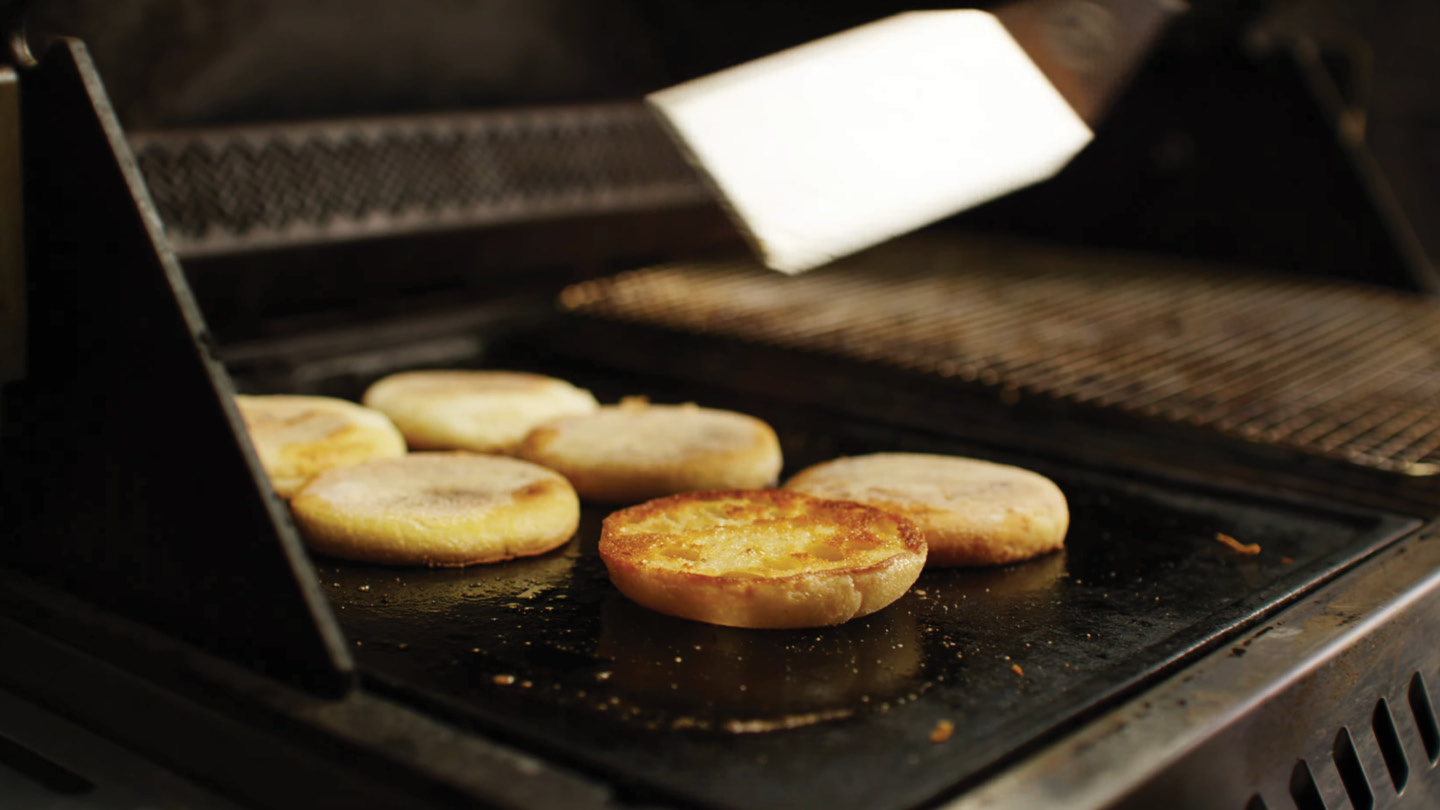
- While the eggs are cooking, toast the English muffins, cut side down, in the butter on the griddle.
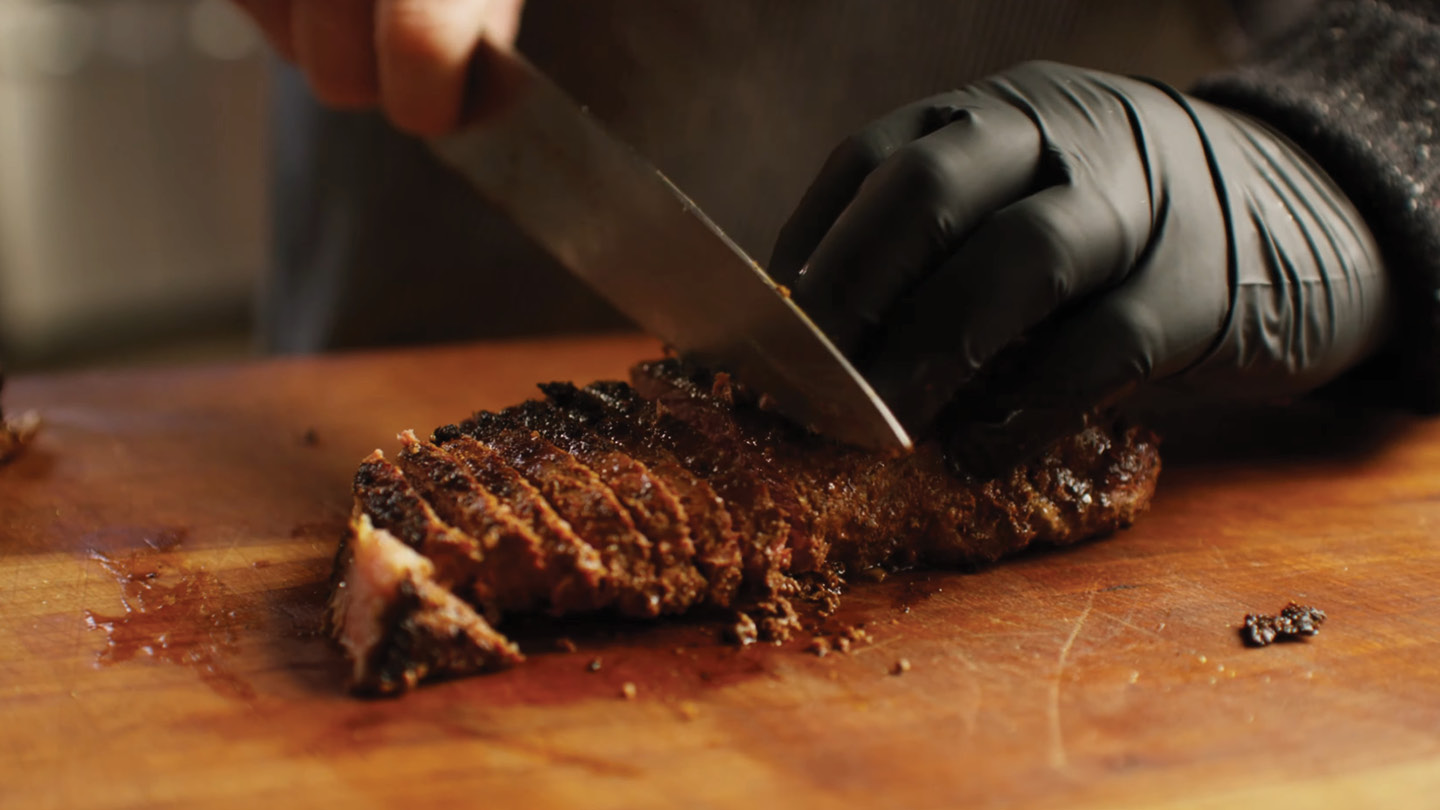
- Slice the steak thin, then build the Benedicts.
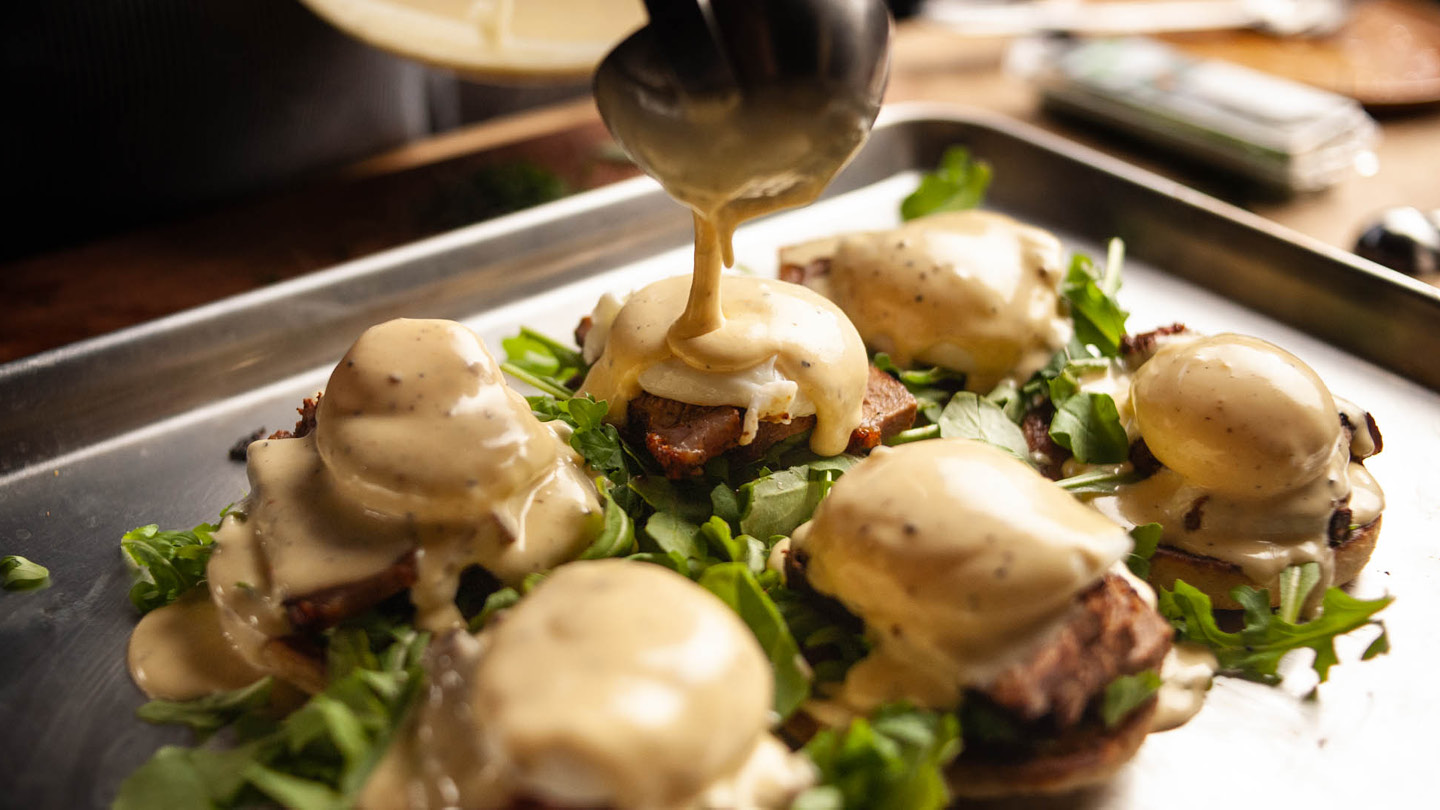
Place about one quarter cup baby arugula on top of each half of the muffins. Top with slices of steak, then the poached egg, and then a spoonful of hollandaise. Top with chives and black pepper to finish.
Recipe Note
Recipe FAQ
Can I use a different steak cut?
Yes — ribeye, filet, or flat iron all work well. Ribeye adds more fat and richness to match the hollandaise; filet produces a leaner, more tender result that pairs elegantly with the poached egg; flat iron is a budget-friendly option with good flavor and tenderness when sliced thin across the grain. Adjust searing time based on thickness. The blackening seasoning and Dijon binder work equally well on any of these cuts.
How do I prevent the hollandaise from breaking?
The immersion blender method (Direction Step 5) is significantly more stable than a traditional whisk-over-double-boiler hollandaise. The key variables: butter temperature at 175°F (hot enough to emulsify, not so hot it scrambles the yolks); a slow, steady pour (the butter stream should take 45–60 seconds); and blender running continuously during the pour. If the sauce breaks, add 1 tsp warm water and blitz again — the fresh water gives the broken emulsion a chance to re-form. Keep the finished hollandaise warm in the bowl over the warm water bath per Direction Step 6; do not reheat directly.
How do I strain the egg whites and why does it matter?
Direction Step 8 specifies cracking each egg into a fine mesh strainer over a bowl. The thin outer egg white — which is watery and disperses into the poaching liquid — drains through the strainer. The thick inner white and intact yolk stay in the strainer; transfer these to a small bowl before poaching. This technique produces compact, tidy poached eggs rather than the wispy, spread-out result of an unstrainer egg. It takes 30 extra seconds per egg and dramatically improves the final appearance.
What if I don't have a multi-zone grill?
A stovetop replicates every step in sequence rather than parallel. Use a cast iron skillet over high heat for the sear, transfer the steak to a 325°F oven to finish to 125°F, and use separate burners for the hollandaise (low) and poaching water (medium-low). The results are equivalent — the multi-zone grill simply allows all three cooking operations to run simultaneously, which is what makes the timing converge at service. On the stovetop, work sequentially and hold finished components warm.
Can I use a different Dijon if Kozlik's is unavailable?
Yes — any quality Dijon mustard works as the steak binder. Kozlik's Dijon Classique is currently out of stock; Grey Poupon, Maille, or a store-brand Dijon all produce equivalent results. The binder's role is functional: it provides a wet surface for the blackening seasoning to adhere and contributes mild acidity to the crust during the sear. The flavor difference between Dijon brands is not perceptible after the blackening seasoning is applied.
How do I know when the poached eggs are done?
Direction Step 9 specifies about three minutes at ~180°F water temperature, until the whites feel firm but the yolk is still soft. The visual cue: the white surrounding the yolk should be fully opaque and set when you gently lift the egg with a slotted spoon. The yolk should still move visibly when the spoon is tilted. Remove from the water immediately — the egg continues to cook from residual heat even after removal.
Can I make this indoors?
4 out of 5 — Great in the kitchen, better on the grill. A cast iron skillet over high stovetop heat replicates the griddle sear; a 325°F oven finishes the steak; a separate pot handles the poaching water; and a second burner on low maintains the hollandaise. The only loss is the Napoleon's parallel multi-zone capacity, which on a stovetop becomes sequential and requires slightly more timing attention.
Recipe Highlights
Preheat the griddle inside the grill for at least 5 minutes before adding tallow: Direction Step 1 and Step 3 require the griddle already hot when the tallow goes in. A properly preheated Napoleon Cast Iron Griddle at high burner heat reaches surface temperatures above 500°F, which is what produces the immediate, even sear the blackening seasoning requires. Tallow added to a cold or warm griddle produces steaming rather than searing. Wait for the griddle surface to be visibly hot before adding fat.
Make the hollandaise before the eggs — not after: The timing sequence is: steak on the grill first, hollandaise second, eggs third, English muffins fourth, assembly fifth. Hollandaise made before the eggs allows it to stabilize in the warm water bath during Direction Step 6. Hollandaise made after the eggs are poaching forces you to rush — an unstabilized hollandaise can break if hurried. The warm water bath keeps it perfect for up to 20 minutes.
Keep the poaching water moving — don't poach in still water: Direction Step 9 specifies stirring the pot with a slotted spoon and keeping the water swirling before and during each egg drop. The moving water wraps the thick white around the yolk as it sets, producing the compact, rounded shape of a well-poached egg. Still water allows the white to spread flat along the bottom of the pot. Maintain the swirl — add each egg into the center of the vortex.
Toast the English muffins cut-side down in butter on the griddle — not in a toaster: Direction Step 10 specifies cut-side down in butter on the griddle. This produces a golden-brown, buttery, slightly crispy face with the interior still soft — the same result you'd get from a buttered cast iron. A toaster produces uniform dryness on both the cut face and the crust; the griddle-butter method produces better texture and flavor that holds up under the steak, poached egg, and hollandaise without becoming soggy immediately.
Recommended Recipes
Nutrition
Nutrition
- Nutrition Serving Size
- 10 oz
- per serving
- Calories
- 1440
- Fat
- 110 grams
- Saturated Fat
- 58 grams
- Cholesterol
- 1266 milligrams
- Sodium
- 1365 milligrams
- Carbs
- 32 grams
- Fiber
- 4 grams
- Sugar
- 5 grams
- Protein
- 78 grams


