Recipe Note
Recipe FAQ
What is corn pudding and how is this version different from traditional corn pudding?
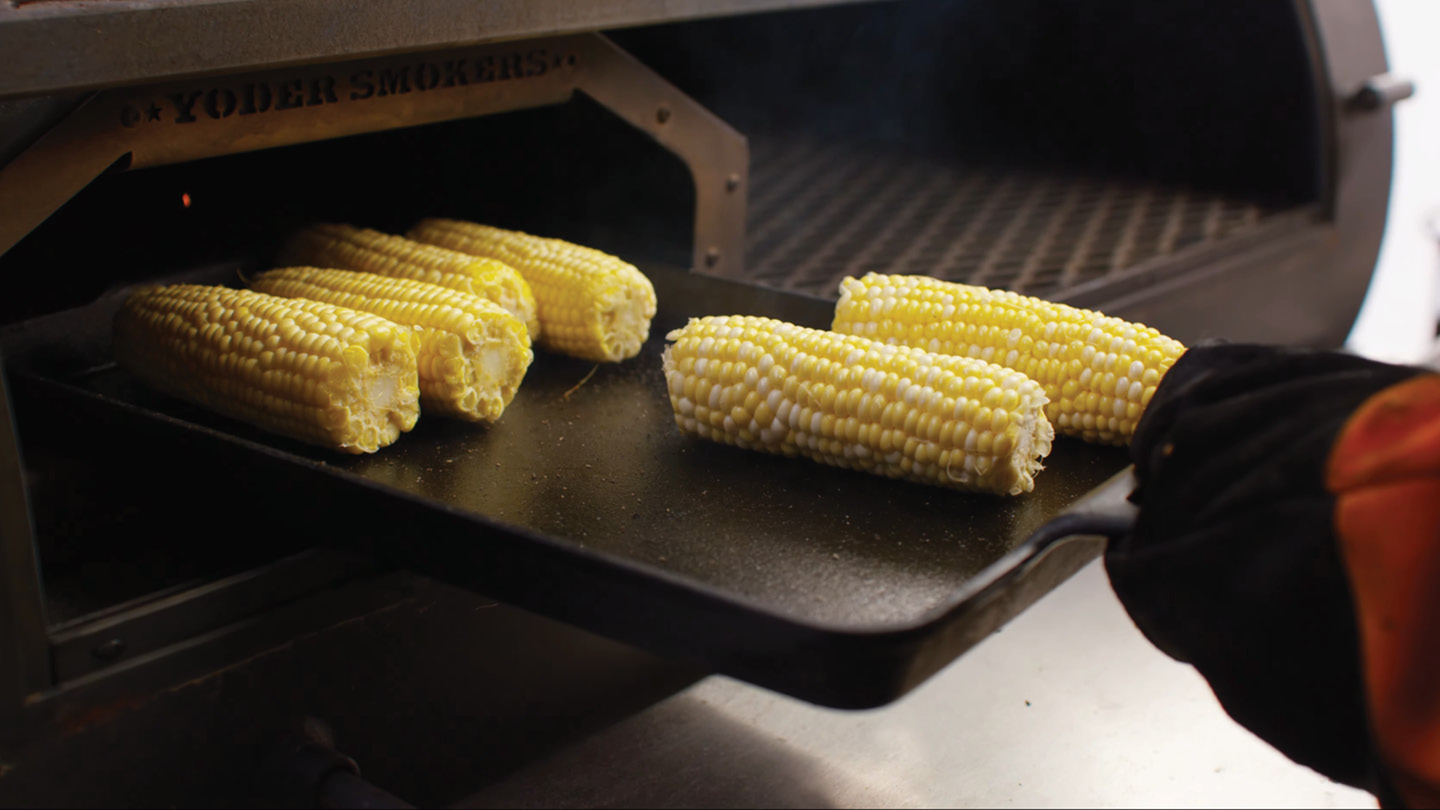
Traditional corn pudding is a Southern American side dish made from creamed corn, eggs, and butter baked until set — essentially a sweet corn custard. This version starts by charring whole corn cobs at 500°F in the Wood Fired Oven, then processes the kernels with eggs, heavy cream, buttermilk, and Cattleman's Grill Lone Star Brisket Seasoning. The charring step adds a smoky, caramelized depth that traditional corn pudding lacks entirely, and the Lone Star Seasoning shifts the flavor profile from purely sweet toward sweet-savory. The result is a BBQ-specific side dish rather than a traditional holiday casserole.
Why char the corn at 500°F instead of roasting at the same temperature as the bake?
500°F is required to develop actual char on the corn kernels — visible dark spots and caramelization — rather than just roasting them through. At lower temperatures (350–400°F), the corn softens and cooks but develops minimal surface browning. The char compounds created at 500°F survive the food processor and the bake, integrating into the pudding as a smoky, complex backdrop. After charring, the grill drops to 350°F for the pudding bake — a two-stage temperature sequence that the YS1500s handles naturally.
What does "broken down but not smooth" mean for the food processor step?
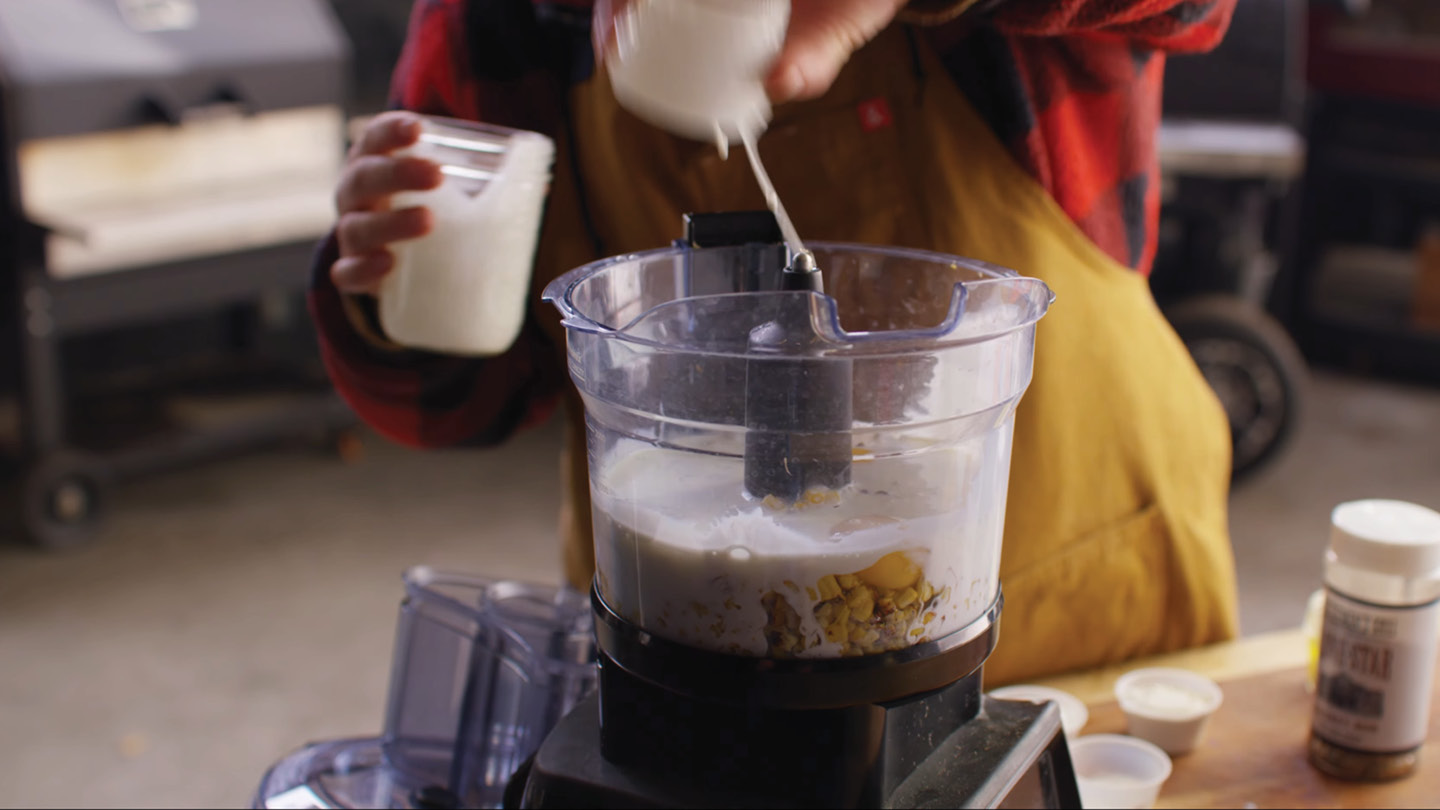
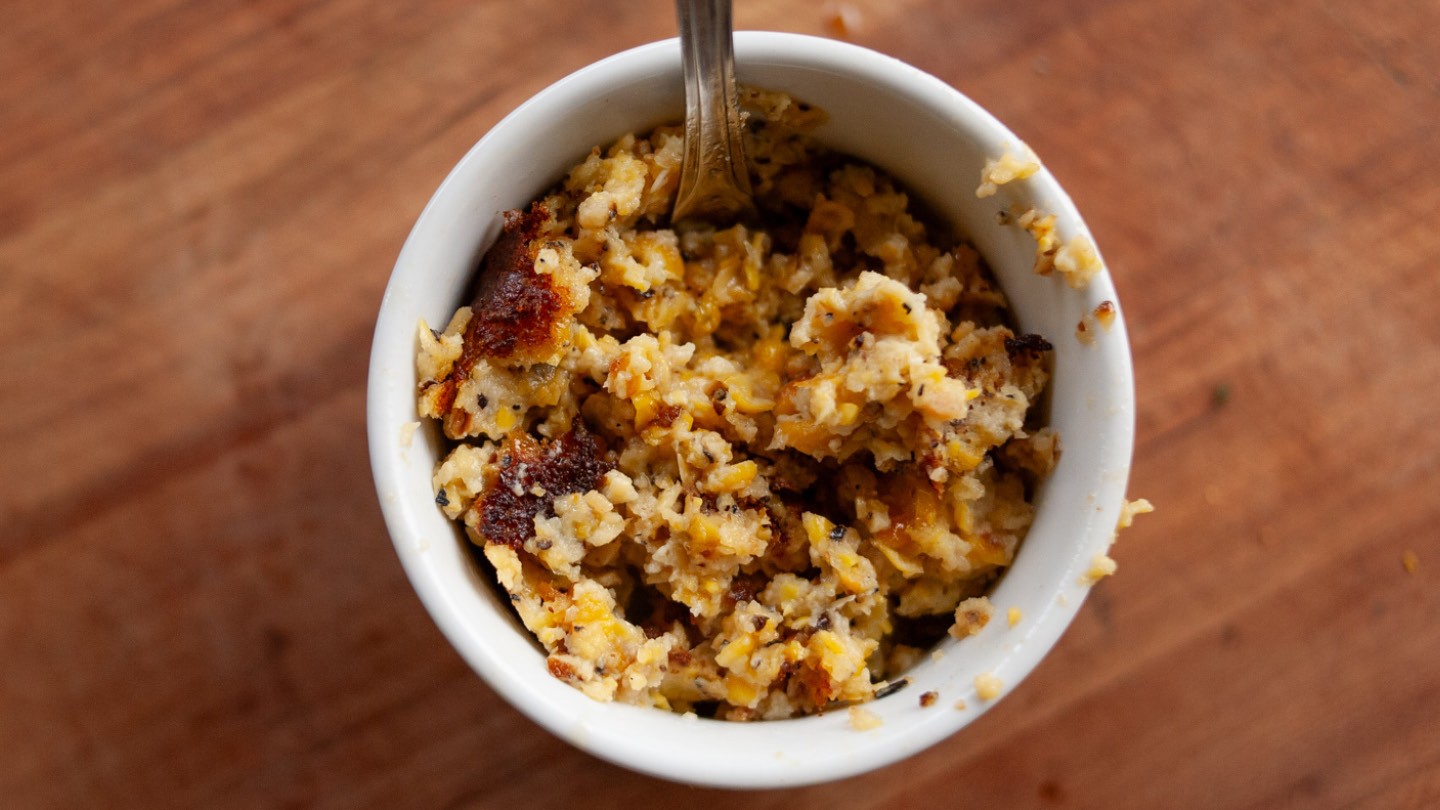
Direction Step 3 specifies blitzing until broken down but not smooth. The visual target: the corn kernels should be fragmented and incorporated into the batter, with no whole kernels remaining, but small corn pieces (roughly 1/8" to 1/4") should still be visible throughout. A smooth blend produces a uniform custard without textural interest; stopping before fully smooth preserves small corn pieces that add texture variation to each bite. About 8–10 one-second pulses in most food processors produces the correct consistency — check after 6 pulses to avoid over-processing.
Can I use frozen or canned corn instead of fresh?
Fresh corn on the cob is strongly preferred because charring whole cobs at 500°F is the foundational technique — frozen or canned kernels can't be charred this way. If fresh corn isn't available: thaw frozen corn kernels completely, spread on the Lodge Cast Iron Baking Pan, and roast at 450°F for 15–20 minutes until lightly browned (not charred). The result is less smoky but still better than using canned corn, which is fully cooked and produces a soft, flat-flavored pudding.
How do I know when the corn pudding is done baking?
Direction Step 5 specifies an internal temperature of 180°F. At this temperature, the eggs and cream are fully set — the pudding should be firm around the edges and have minimal jiggle in the center. A toothpick inserted in the center should come out clean or with only a few moist crumbs. Under-baked corn pudding (below 170°F) will be loose and runny in the center; over-baked pudding (above 190°F) can become grainy as the eggs overcook. Use the ATBBQ Digital Thermometer for accuracy.
Can I make this indoors?
3 out of 5 — Works indoors with adjustments. For charring: place corn cobs on a foil-lined baking sheet under the broiler on the highest rack, turning every 5 minutes until lightly charred on all sides (about 15–18 minutes). Bake the assembled pudding at 350°F for 25–30 minutes until 180°F internal temperature. What you lose is the Wood Fired Oven's dome heat, which produces more even caramelization on the pudding's top surface than a standard oven broiler can replicate.
Recipe Highlights
Roast the corn in the Lodge Cast Iron Baking Pan — not directly on the grates: Direction Step 2 specifies the Lodge Bakeware 15.5" x 10.5" Cast Iron Pan inside the Wood Fired Oven. The cast iron pan retains heat and prevents the kernels from rolling around; more importantly, it catches the liquid that releases from the corn during charring. This liquid is incorporated into the food processor mixture in Step 3 — it carries caramelized corn flavor and shouldn't be discarded. If you roast on the grates, you lose this liquid.
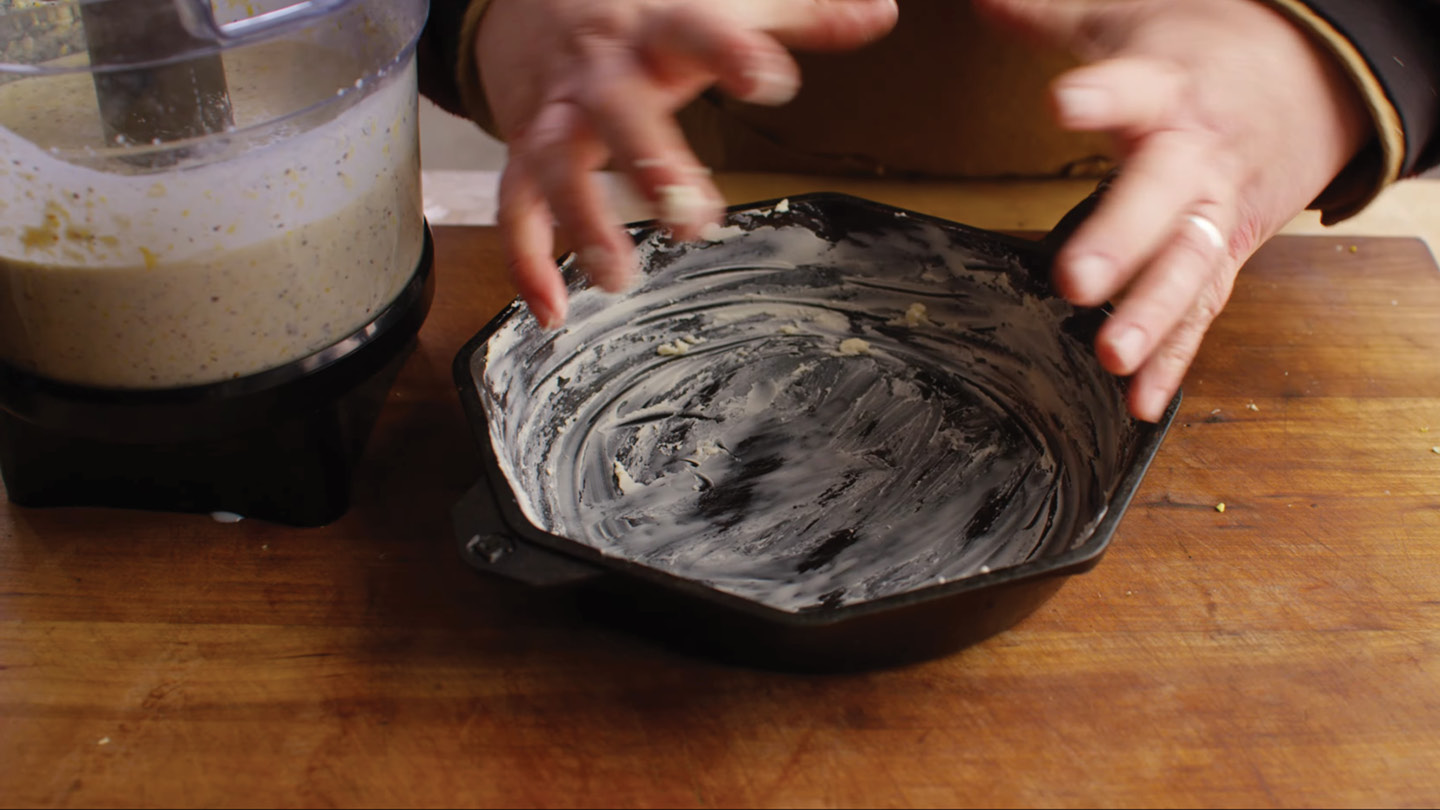
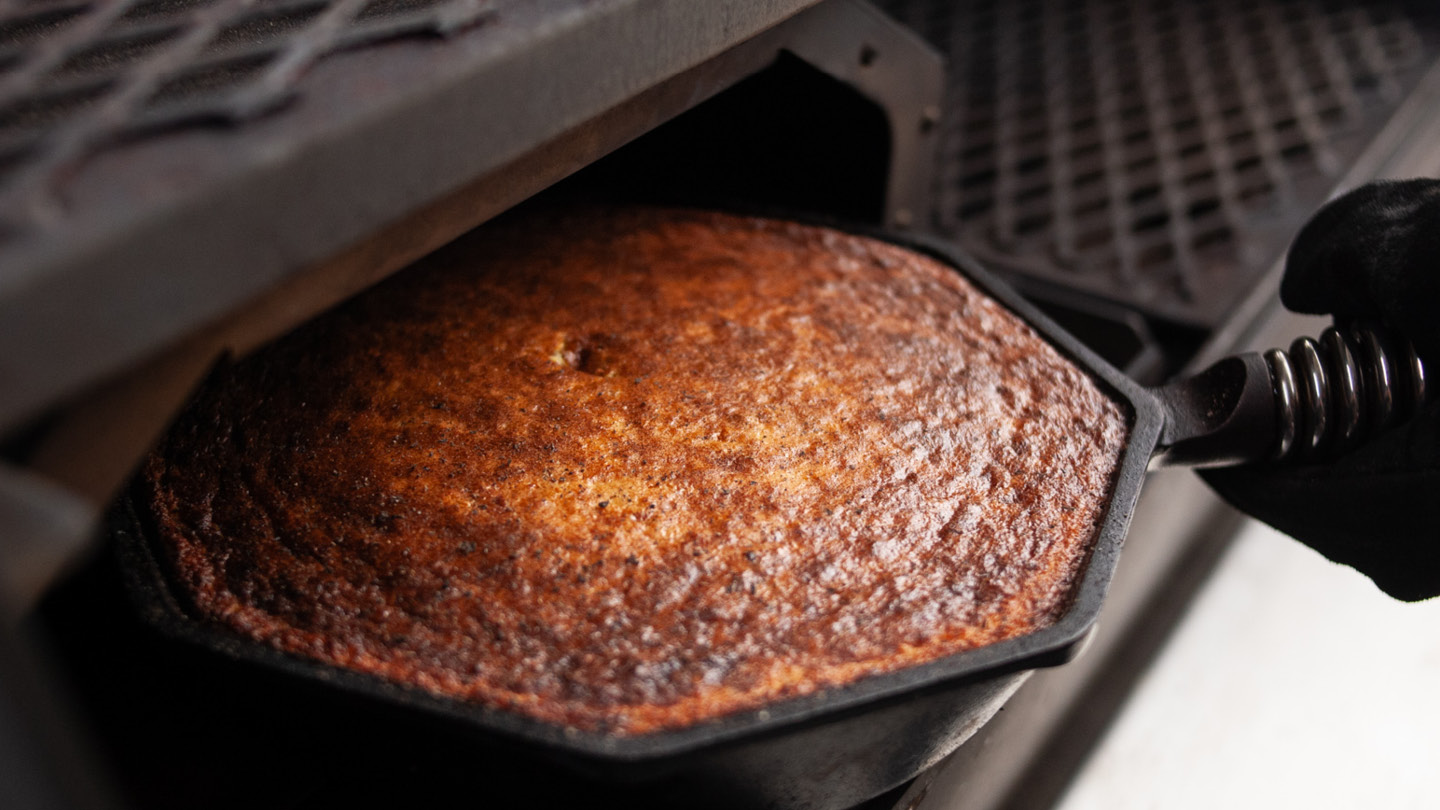
Grease the Finex skillet thoroughly before adding the batter: Direction Step 4 specifies greasing with butter or oil. Corn pudding sticks aggressively to ungreased or under-greased cast iron because of its egg and cream content — the proteins bond to the surface during baking. Coat the entire interior surface of the Finex 10" Cast Iron Skillet generously, including the sides. A well-greased skillet produces a pudding that releases cleanly; a poorly greased one tears at the edges when served.
Don't open the oven during the first 15 minutes of the bake: Corn pudding is a custard-style dish — it sets by coagulation of the eggs as the temperature rises. Opening the oven or grill lid during the early bake phase causes a temperature drop that interrupts this coagulation, potentially producing a pudding with an uneven set (firm edges, unset center). Let it bake undisturbed for at least 15 minutes before checking; start thermometer checks at the 20-minute mark.
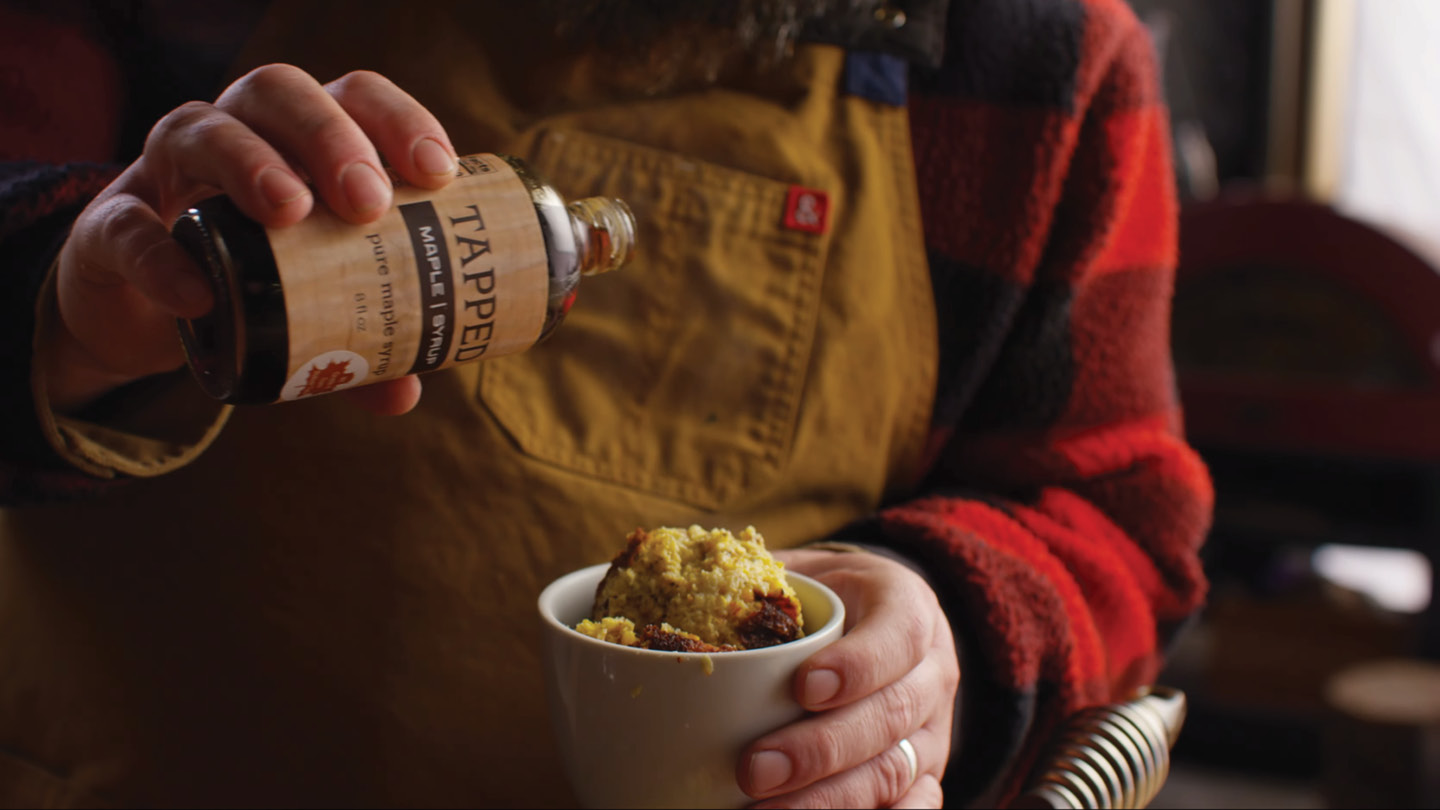
Add the maple syrup drizzle immediately before serving — not before slicing: Direction Step 6 specifies serving topped with Tapped Maple Syrup. The syrup should go on just before the dish is brought to the table — not during the rest period or after slicing. On a hot pudding fresh from the oven, the maple syrup flows into the top crust's surface irregularities and creates a caramelized glaze appearance. On a cooled or sliced pudding, it pools around the pieces rather than glazing the surface.
Recommended Recipes