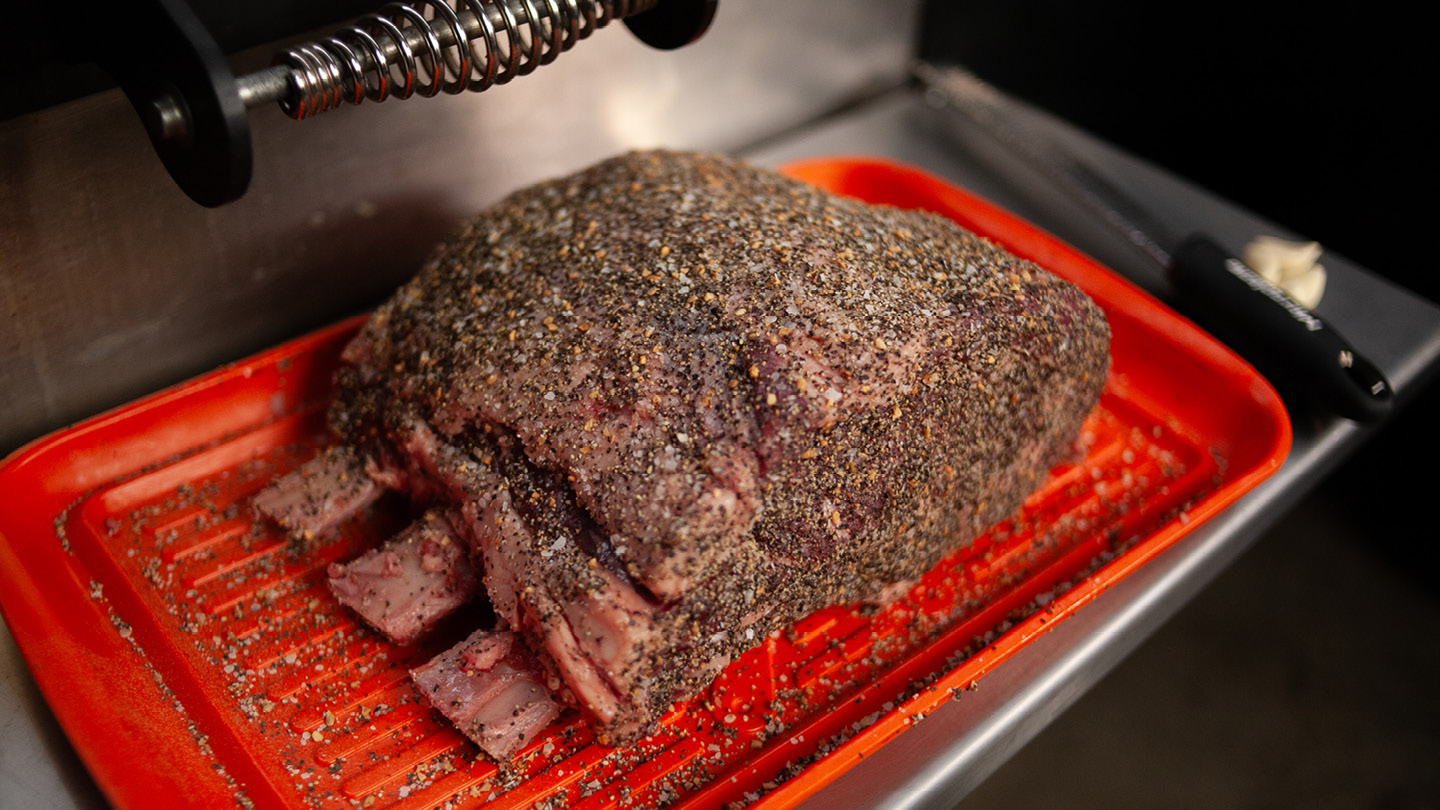
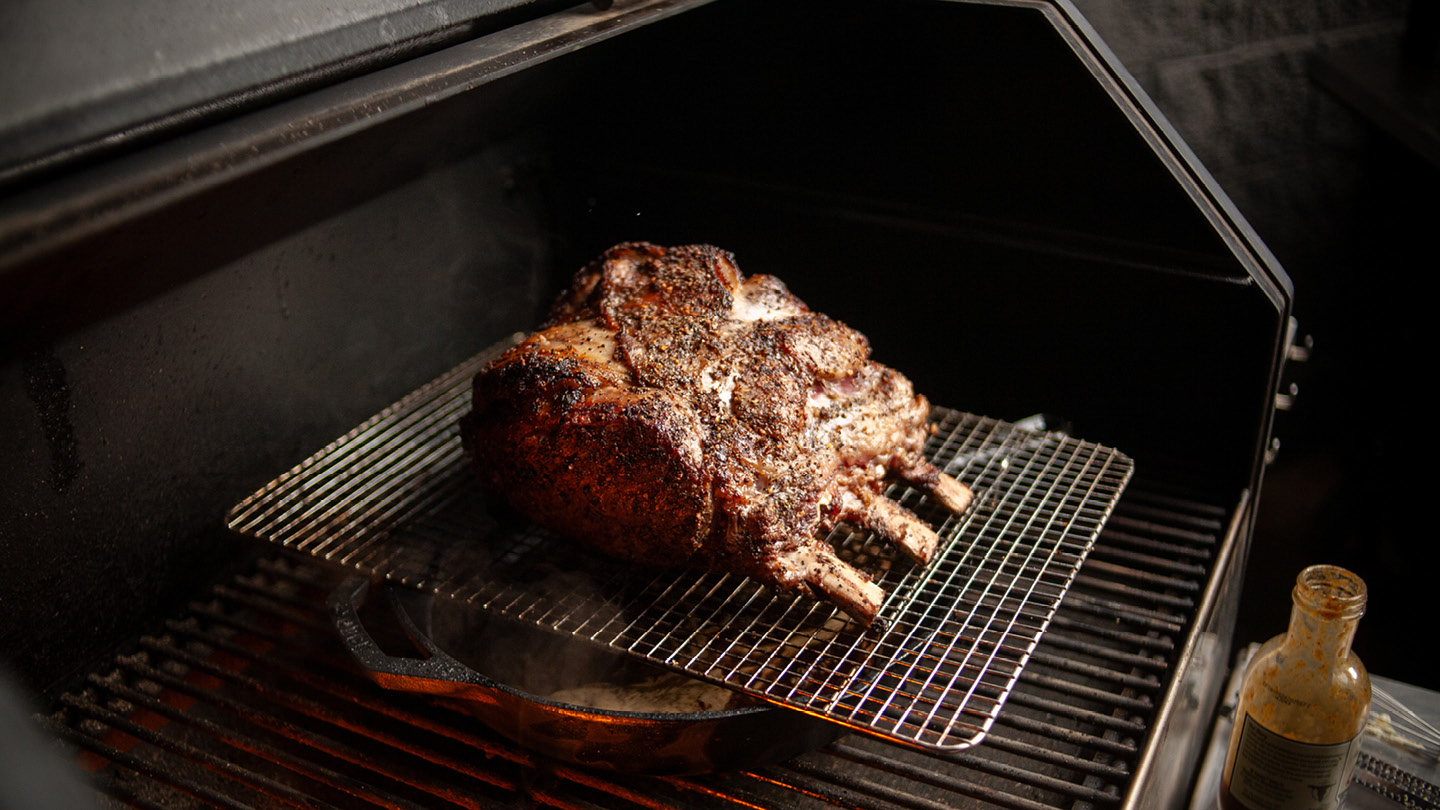
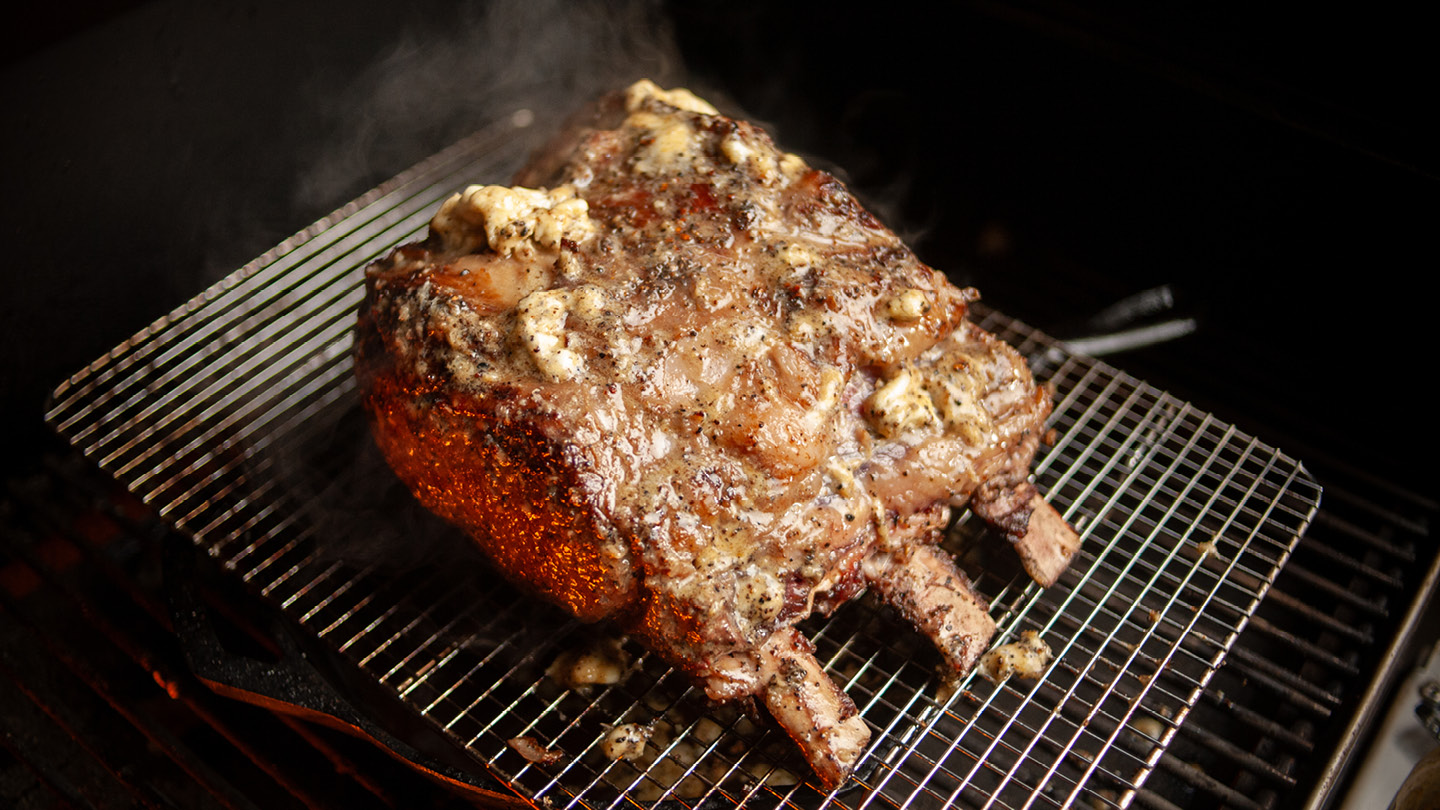
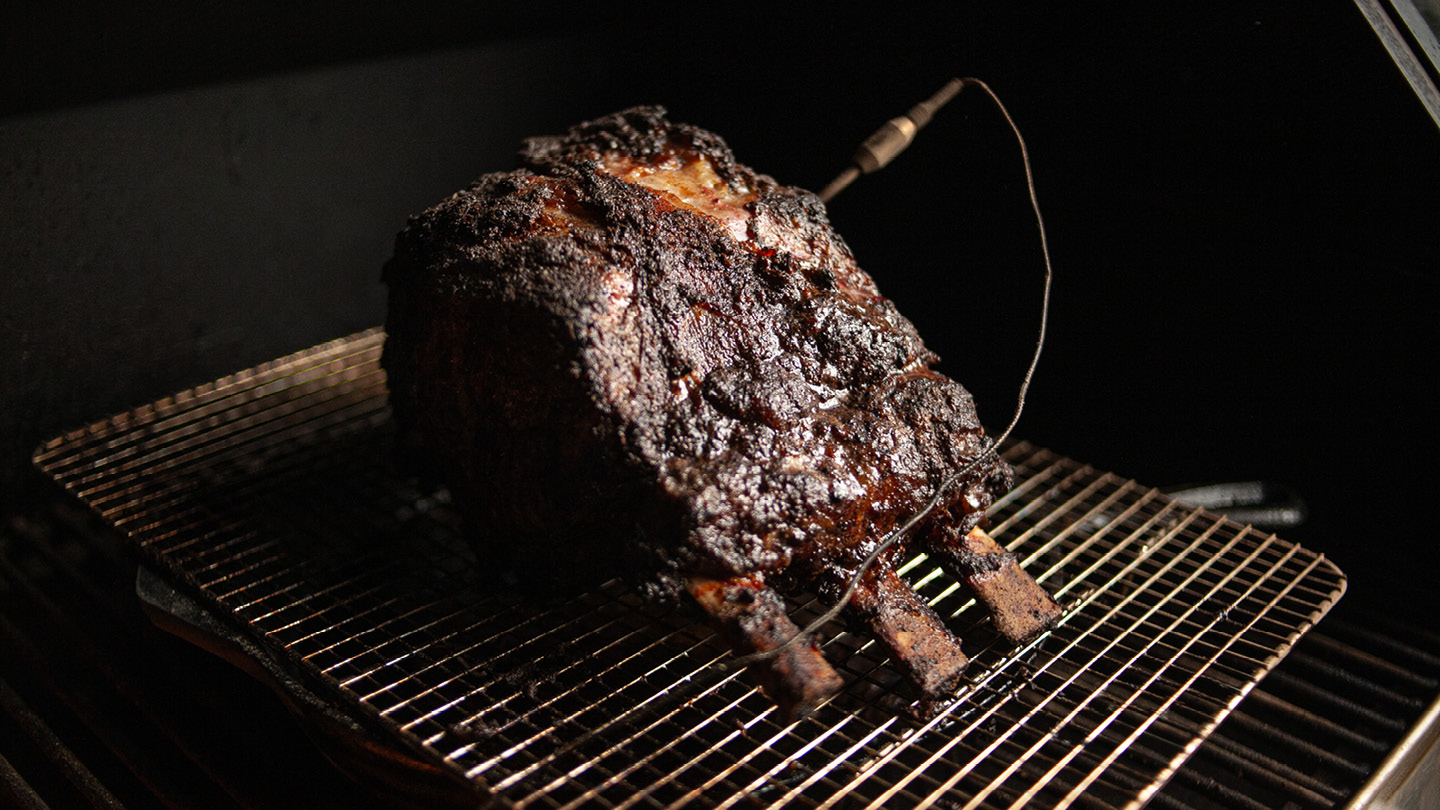
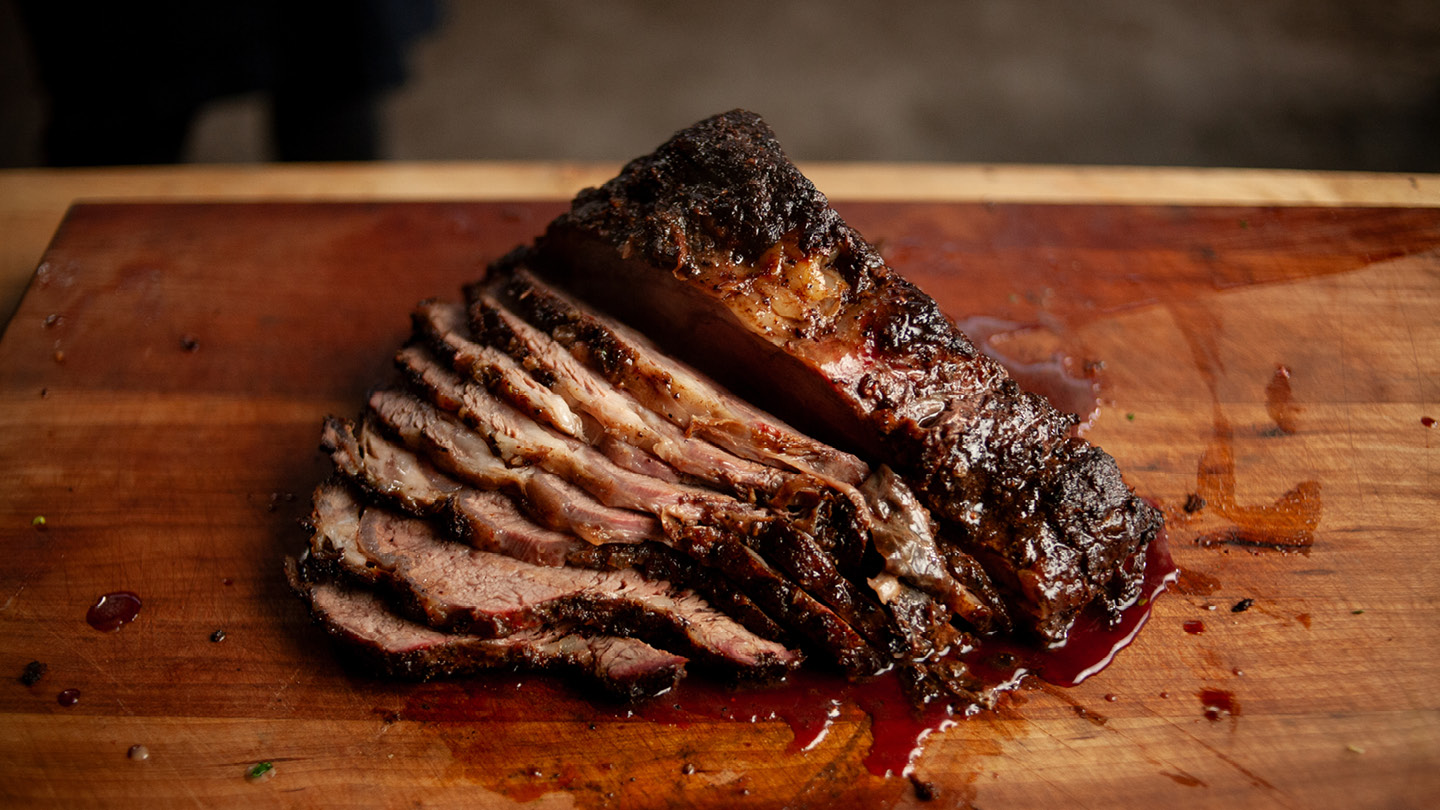
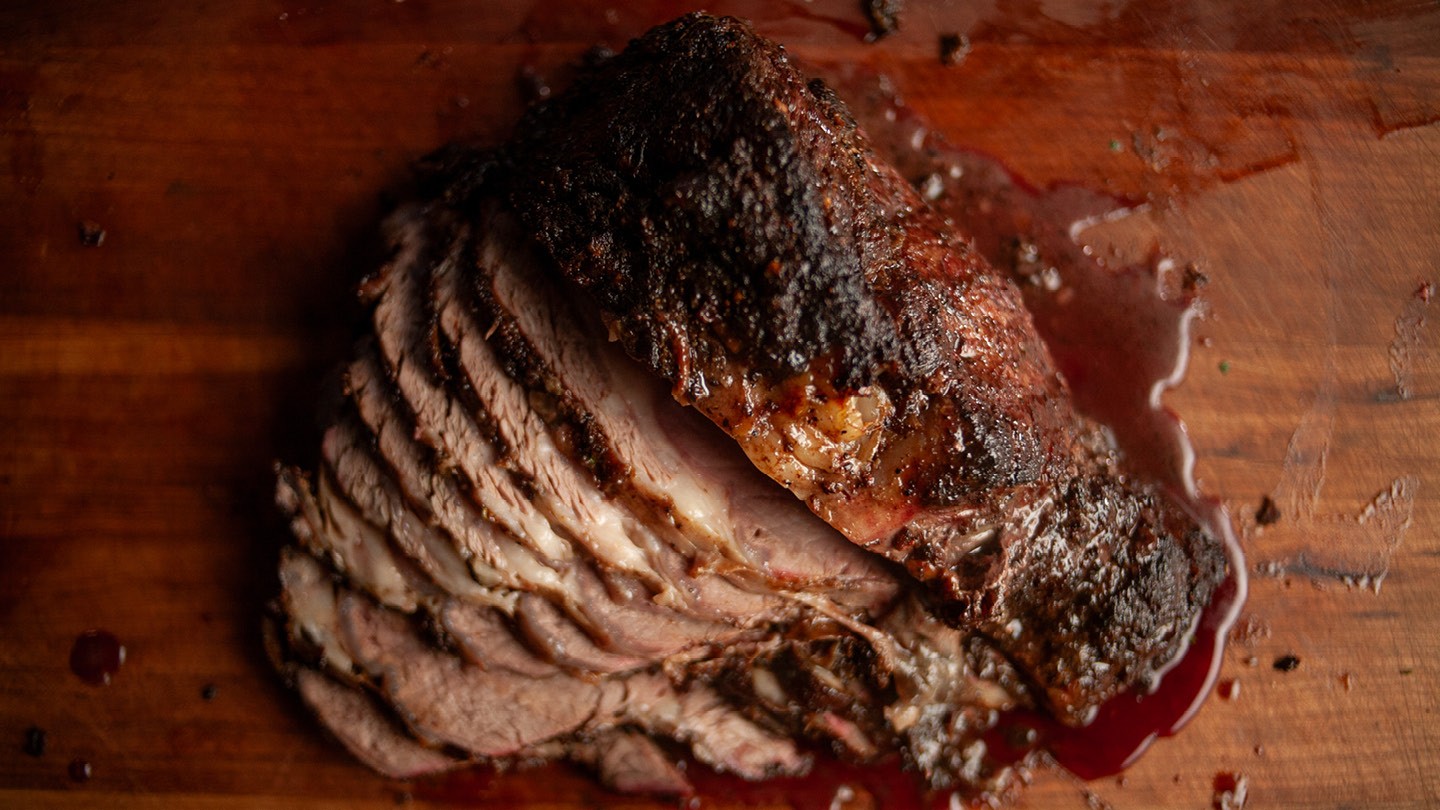
Indulge in the flavors of a Creekstone Farms 3-bone Prime Rib Roast, prepared with Bear & Burton's W Sauce. The roast is generously slathered with The W Sauce and adorned with the bold notes of Cattleman’s Grill Lone Star Brisket Rub. Searing to perfection in Cornhusker Kitchen Beef Tallow, the roast is then pampered with a rich butter baste, featuring a blend of unsalted butter, horseradish, garlic, and more W Sauce! Roasted directly over the flame on the Yoder Smokers YS640s Pellet Grill to an internal temperature of 130ºF ensures a melt-in-your-mouth experience. The finishing touch is an exquisite au jus crafted from a marriage of beef stock, red wine, and Bear & Burton’s W Sauce. Rested to let the juices redisperse, this prime rib is served with a side of the flavorful skillet sauce, inviting you to savor each sumptuous bite.
WHAT YOU'LL LOVE
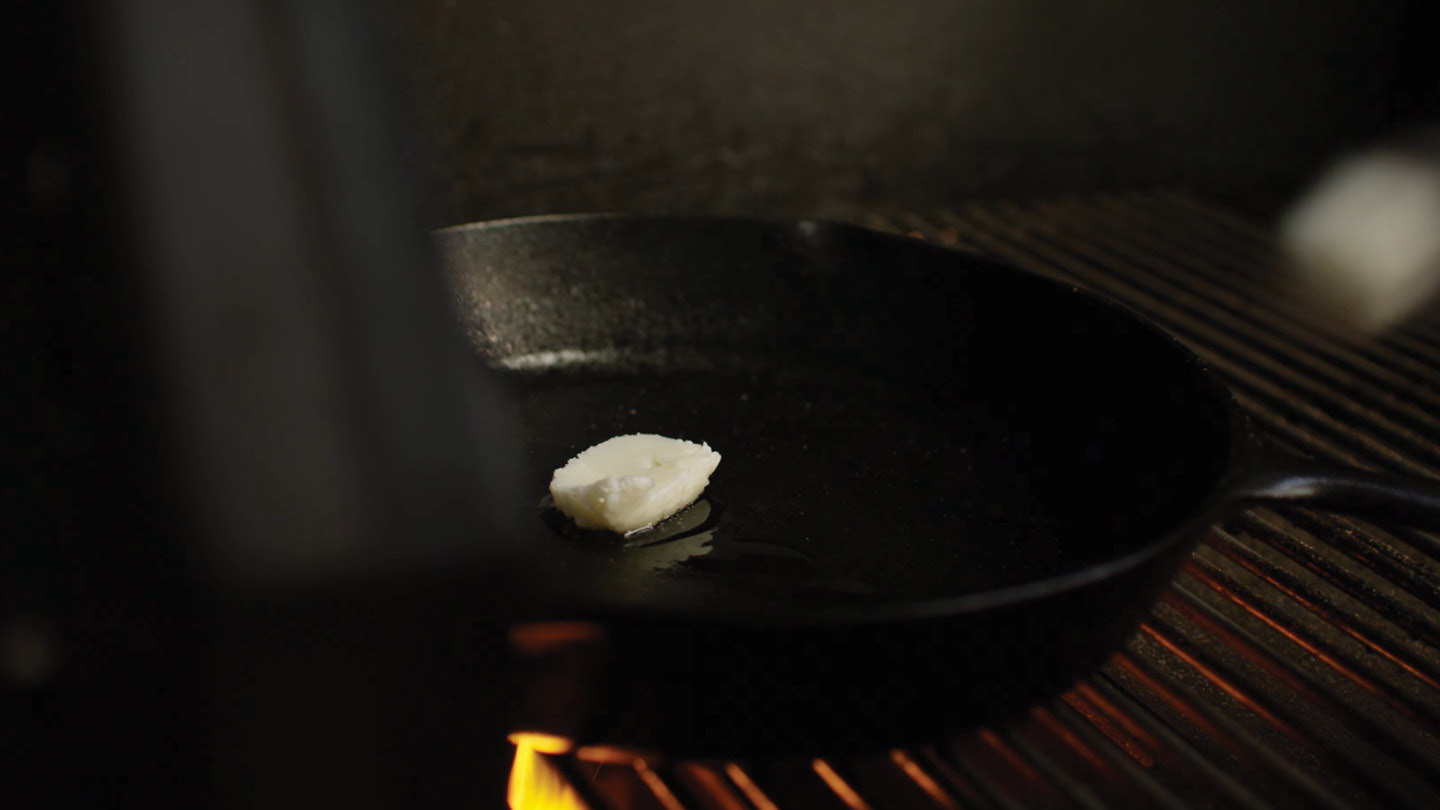
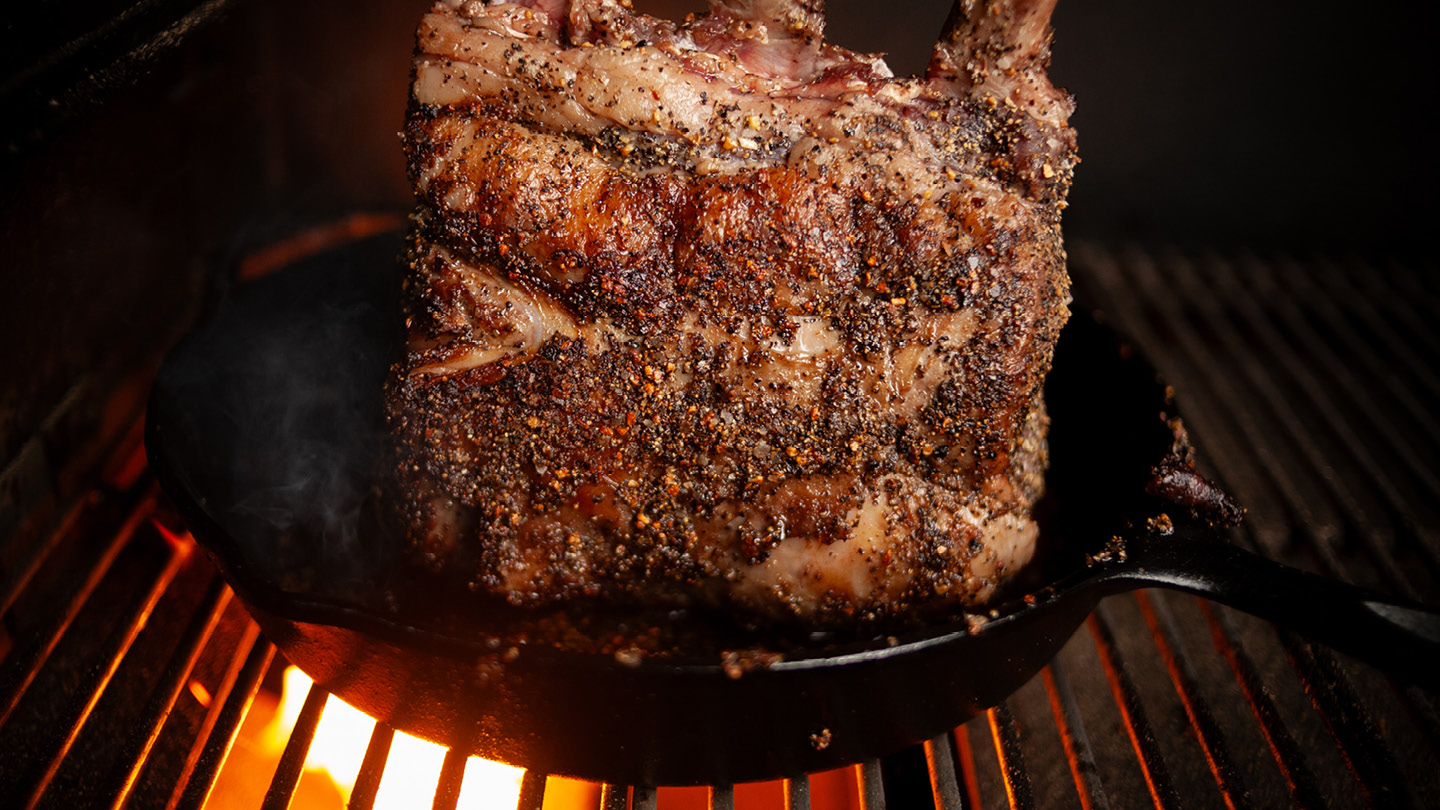
- Searing prime rib in beef tallow before roasting builds the crust that makes this recipe different from a standard oven prime rib: The Lodge Cast Iron Skillet in the YS640s firebox at 450°F reaches temperatures close to commercial searing equipment. Beef tallow's high smoke point (400°F+) allows the skillet to reach proper searing temperature before the fat breaks down, producing the deep Maillard crust that seals in the roast's moisture and adds caramelized flavor to the exterior. Butter at this temperature would smoke and burn before the sear is complete.
- The butter baste — applied after the sear and during the indirect cook — is what makes this recipe technically distinct from simple "prime rib on a pellet grill": A standard prime rib cook seasons the roast and puts it in the heat. This recipe adds a horseradish-garlic-W Sauce compound butter baste that continuously bastes the exterior during the 2-hour indirect cook. The butter melts and runs back over the surface on every basting pass, carrying horseradish sharpness and garlic depth into every surface area.
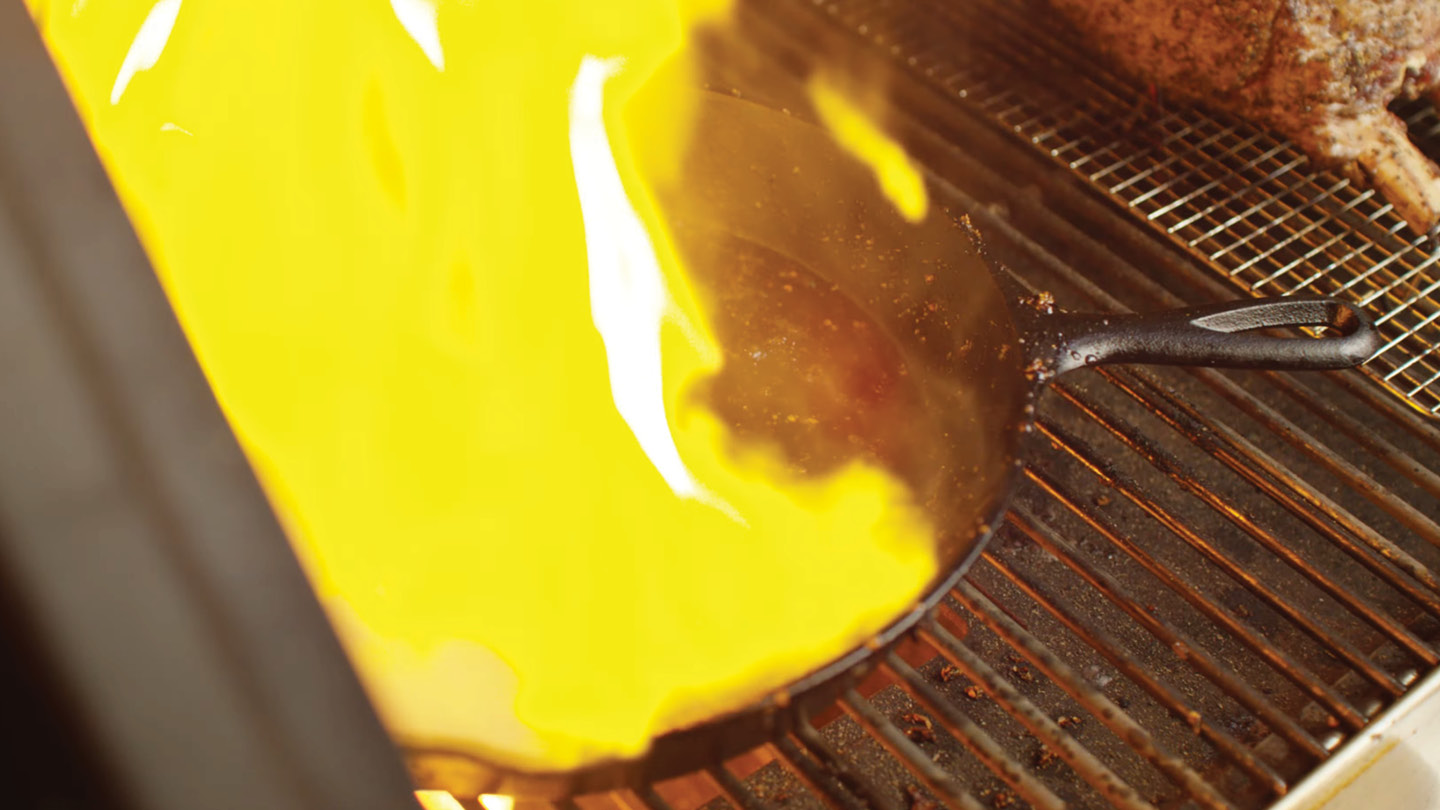
- The au jus builds in the same skillet as the sear — don't wash it: Direction Step 4 deglazes the skillet immediately after removing the seared roast. All the caramelized beef fond on the bottom of the skillet — the browned bits from the tallow sear — dissolve into the red wine deglaze and become the flavor base of the au jus. The W Sauce and beef stock go in on top. The roast then finishes on a wire rack over this skillet, dripping rendered fat and juices into the developing au jus below. By the time the roast reaches 130°F, the au jus has been enriched for 2 hours.
- A 20–30 minute rest before slicing is not optional for prime rib: Direction Step 7 specifies a 20–30 minute rest after pulling at 130°F. During this rest, the internal temperature rises 5–7°F through carryover (finishing at ~135–137°F for medium-rare), and — more critically — the juices redistribute from the center toward the exterior. Slicing immediately after pulling a prime rib releases a significant volume of juice onto the cutting board; a full rest keeps those juices in the meat where they belong.