Recipe Note
Recipe FAQ
Why use Plowboys Yardbird Rub on a sweet potato recipe?
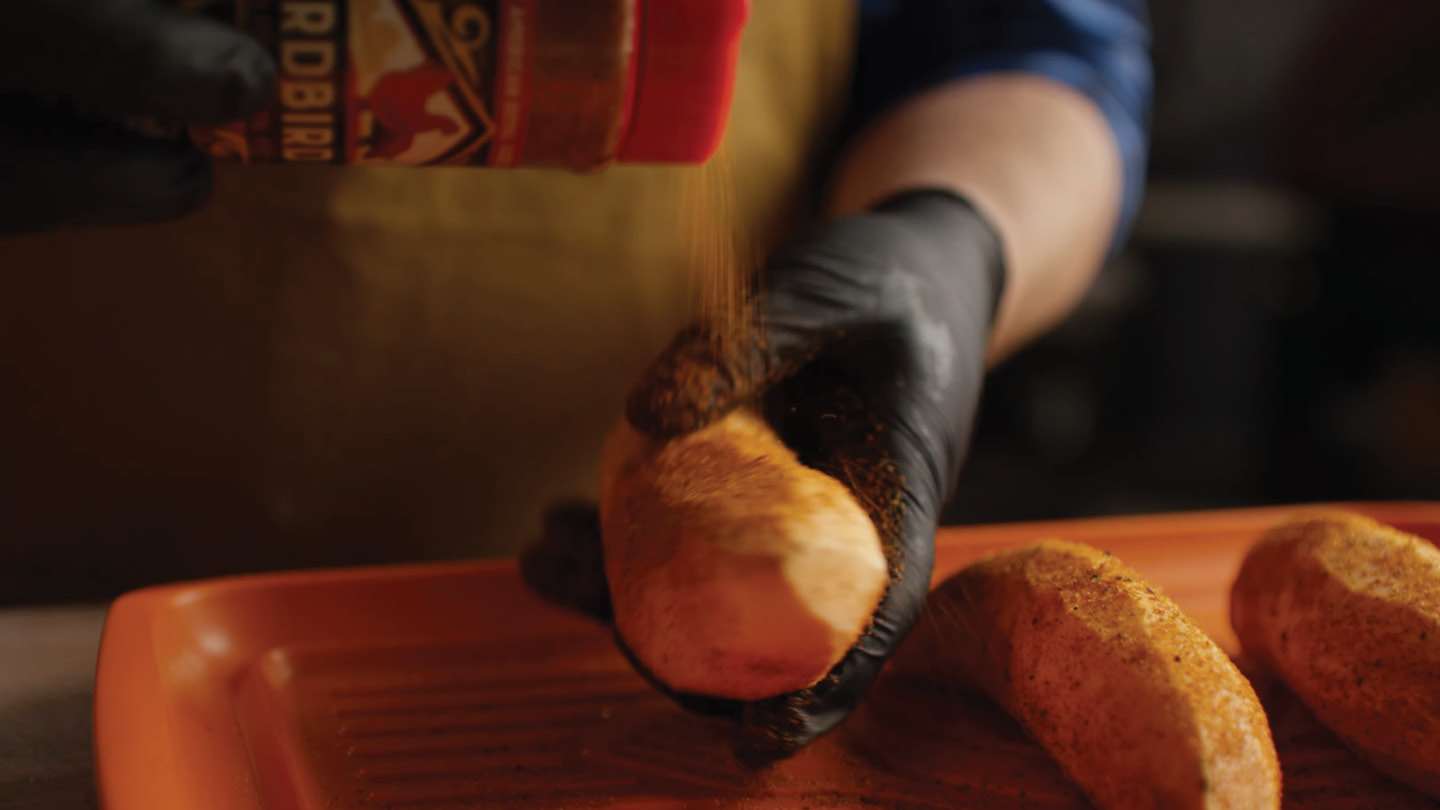
Plowboys Yardbird is a poultry rub built around herbs — thyme, rosemary, garlic, and a light sweetness. Applied to the sweet potato before the bacon wrap and lightly over the bacon exterior, the herb notes distribute throughout the rendered bacon fat during the 90-minute cook, adding savory complexity to what would otherwise be a purely sweet-and-salty profile. The herb character also complements the white miso glaze's fermented, yeasty notes. A beef rub would add too much competing pepper and smoke; a sweet BBQ rub would amplify the sugar further; Yardbird's herb-forward character provides balance.
What is white miso and why is it used in the glaze rather than other miso types?
White miso (shiro miso) is the mildest, sweetest variety of miso — fermented for a shorter period than red or brown miso, producing a lighter color and flavor. Its sweetness and delicate savory depth make it the right choice for a glaze where maple syrup is the primary sweet component. Red or brown miso would overpower the maple with a stronger, more assertive fermented character. White miso's umami contribution is background and complementary rather than dominant.
Why does the recipe use duck fat spray on the potato before the bacon wrap?
The duck fat spray on the peeled potato surface serves two purposes. First, it acts as a binder for the Plowboys Yardbird Rub — without a wet surface, dry rub falls off the smooth potato skin during handling. Second, duck fat's high smoke point and rich flavor contribute to the potato's exterior as the bacon renders — any areas between bacon wraps where the duck fat is exposed develop a slightly caramelized, rich exterior rather than a dry, starchy surface.
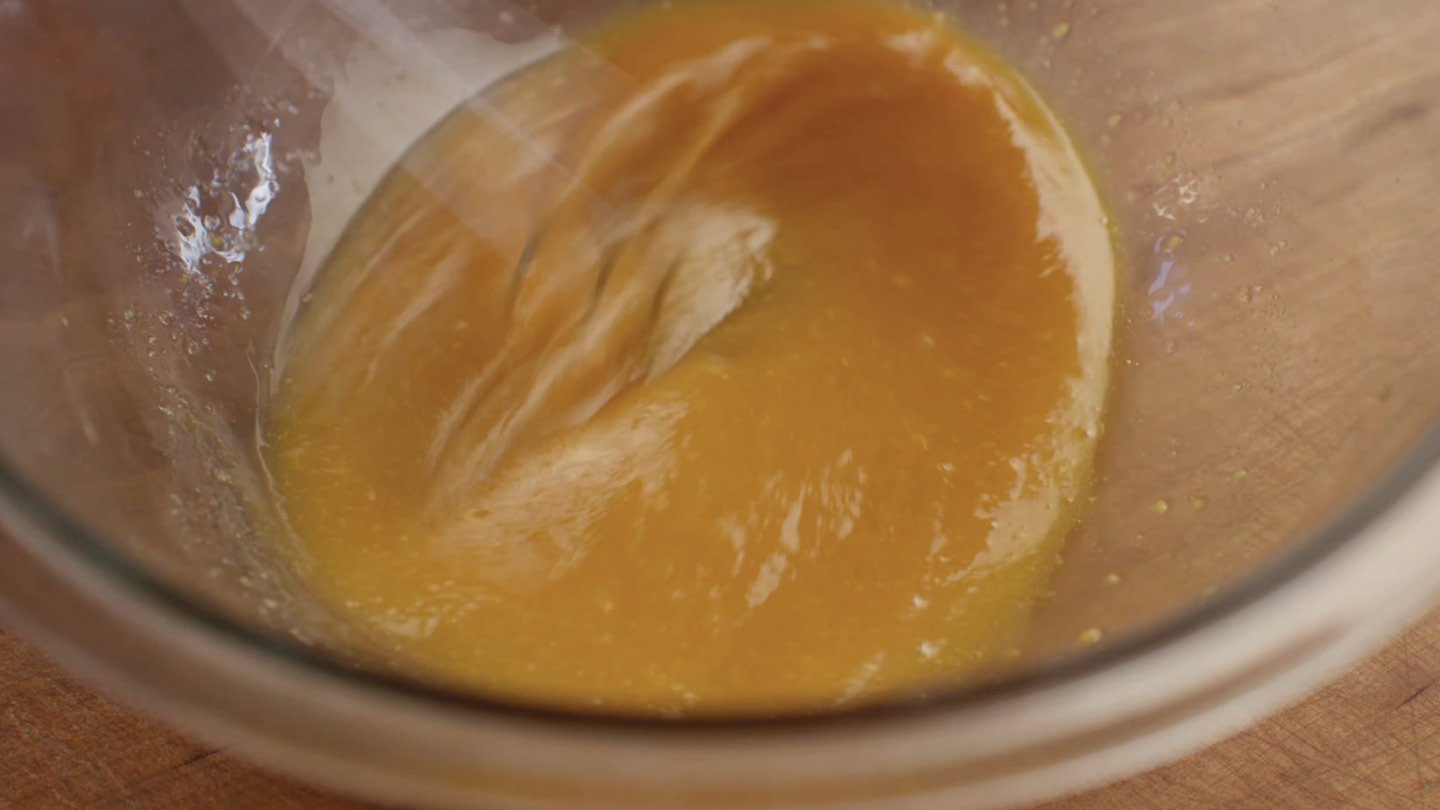
Can I use a different maple syrup?
Any pure maple syrup works — the Tapped Pure Maple Syrup is preferred for its clean, concentrated maple flavor without the corn syrup fillers that dilute the maple character in cheaper syrups. Grade A (medium amber) produces a more pronounced maple flavor than Grade A (golden/delicate) in a glaze application. Avoid "pancake syrup" products — they're corn syrup based and produce a flatter, one-dimensional sweetness without the complex caramel notes of real maple.
How do I know when the potatoes are done?
Direction Step 7 specifies "tender when probed with a toothpick, about 30 minutes" after the first glaze application (total 90 minutes). The toothpick should slide in and out of the center of the potato with almost no resistance — the same test as for a baked potato. If you feel any resistance at the core, give it 10 more minutes and retest. The internal temperature target for a fully cooked sweet potato is approximately 210°F; an instant-read thermometer in the thickest part is more reliable than the toothpick test for thick or irregularly shaped potatoes.
Can I make this indoors?
4 out of 5 — Great in the kitchen, better on the grill. A 400°F oven on a wire rack over a sheet pan (on the middle rack) reproduces the recipe step by step: same time, same glaze applications, same toothpick test. What you lose is the faint pellet smoke character from the YS640s during the 90-minute cook — a subtle background note that the bacon and miso-maple glaze largely mask anyway.
Recipe Highlights
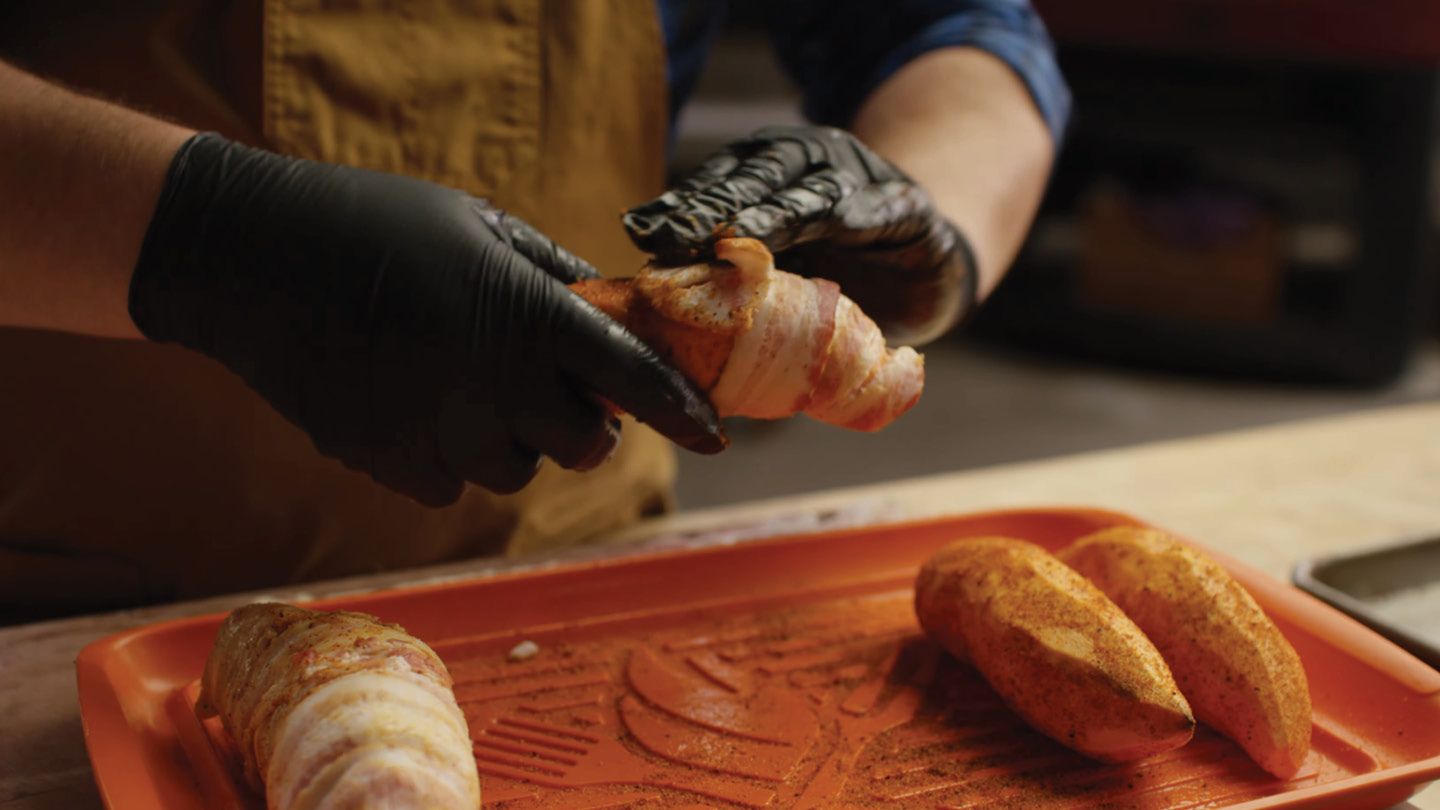
Spiral the bacon at an angle — don't wrap horizontally: Direction Step 3 says to wrap three slices covering the entire surface. The technique that achieves full coverage with exactly three slices is a spiral wrap starting at one end and overlapping each successive pass slightly. Horizontal wrapping (straight rings) leaves the top and bottom ends of the potato exposed; a diagonal spiral from end to end covers the full surface including the tips.
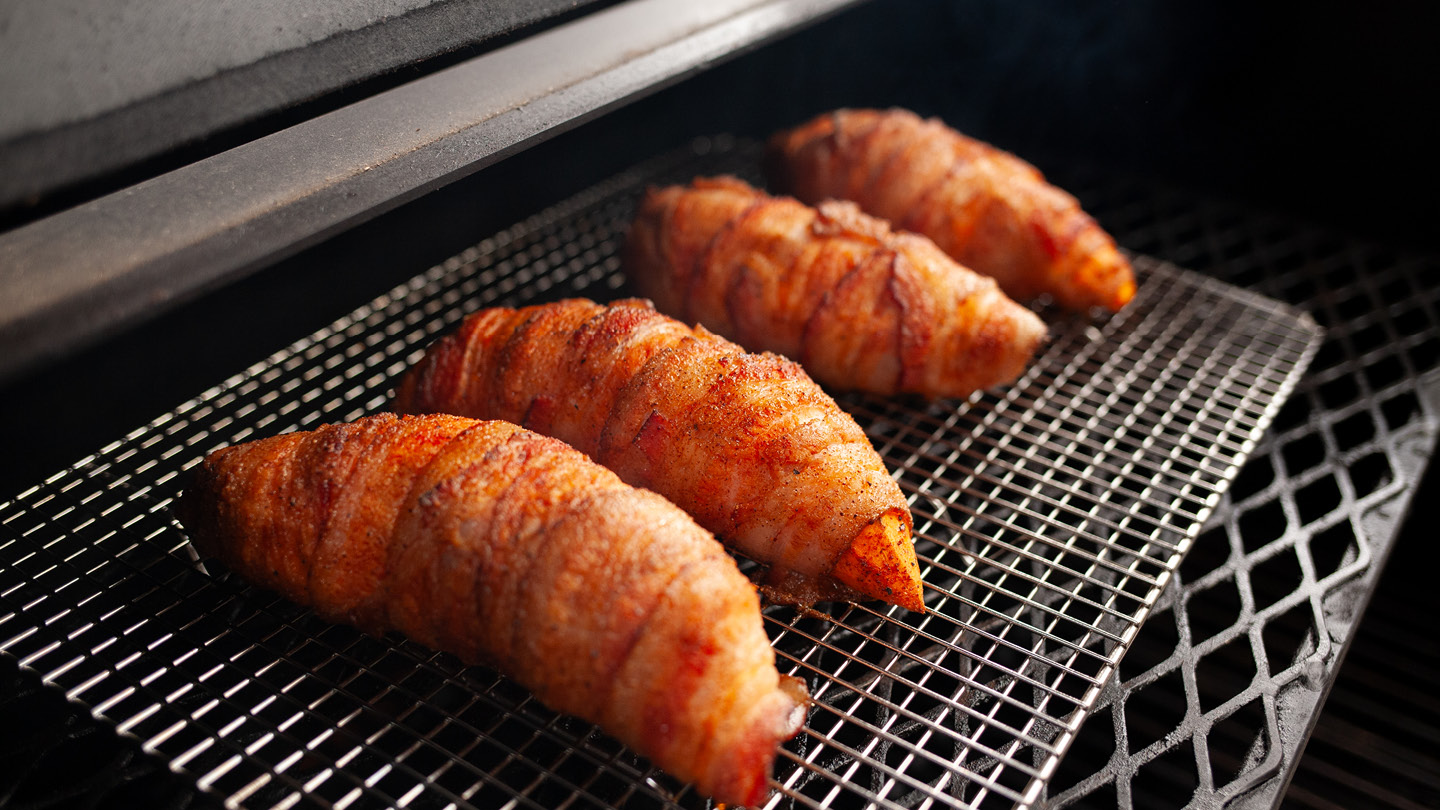
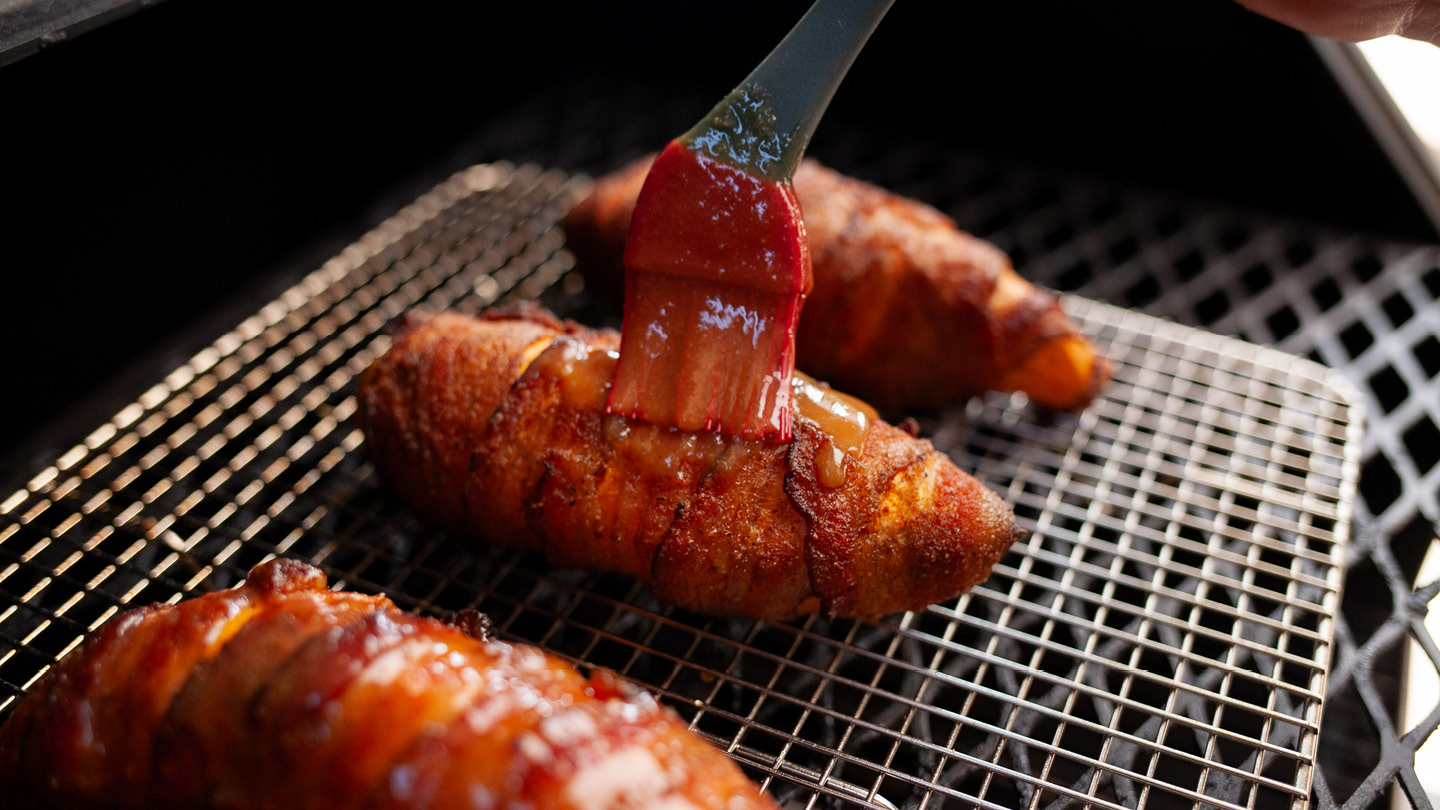
Use the jerky rack over a sheet pan for the glaze step — not the grill grate: Direction Step 6 specifies moving the rack over a sheet pan before glazing. This is essential: the miso-maple glaze drips as it's applied and as it heats. On the grill grate directly, the dripping glaze hits the hot diffuser and burns, creating bitter smoke. On the sheet pan, the drips collect harmlessly and the glaze sets evenly across the potato surface without smoke interference.
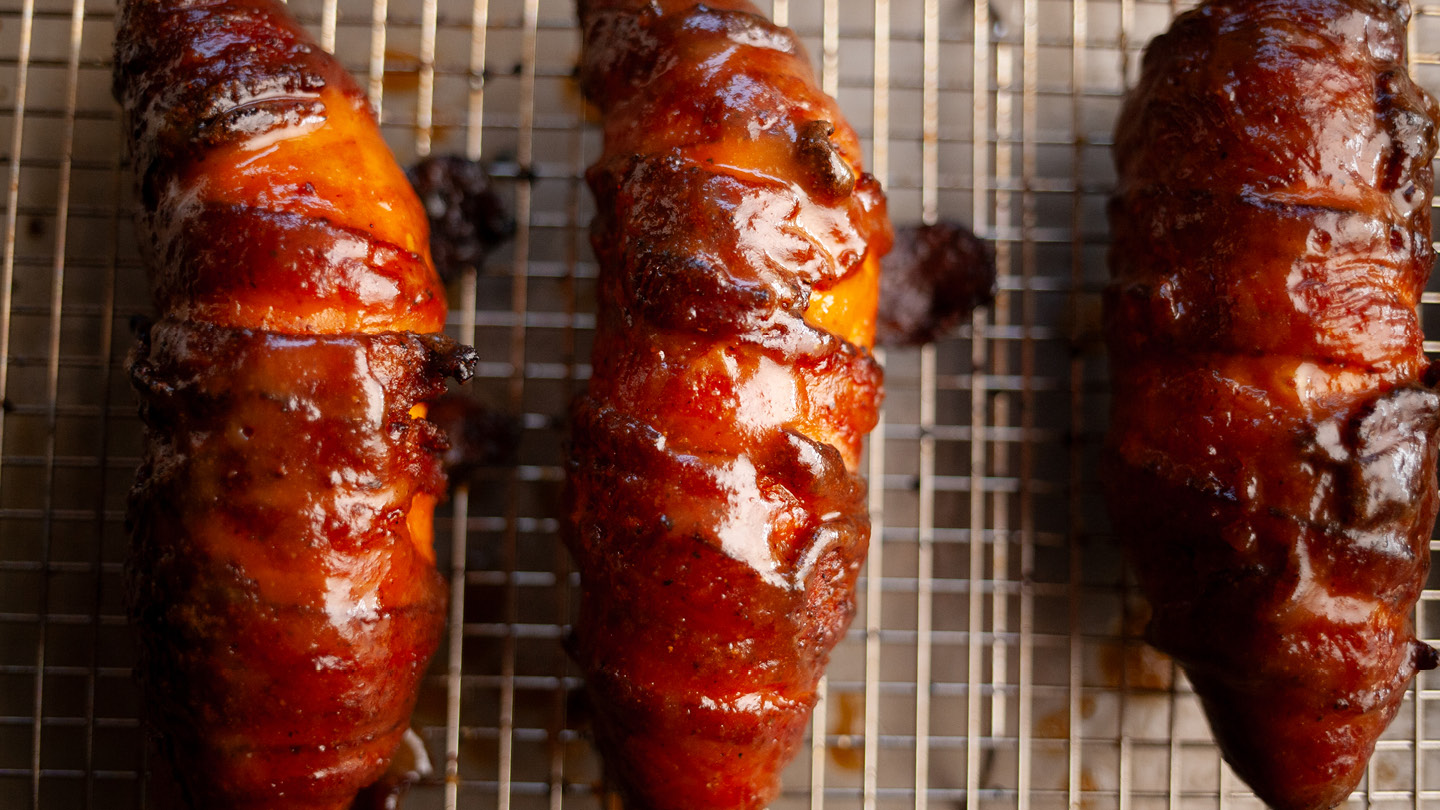
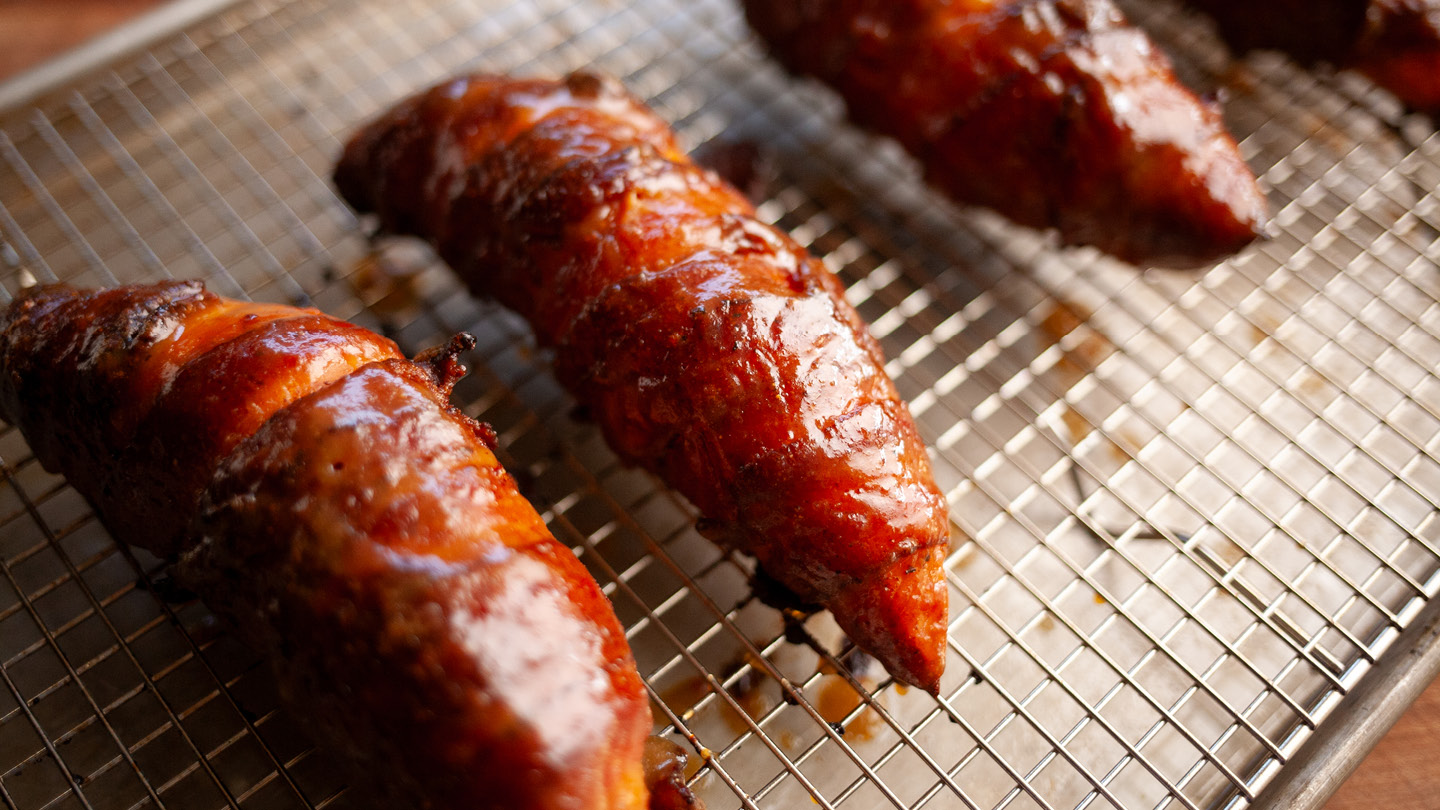
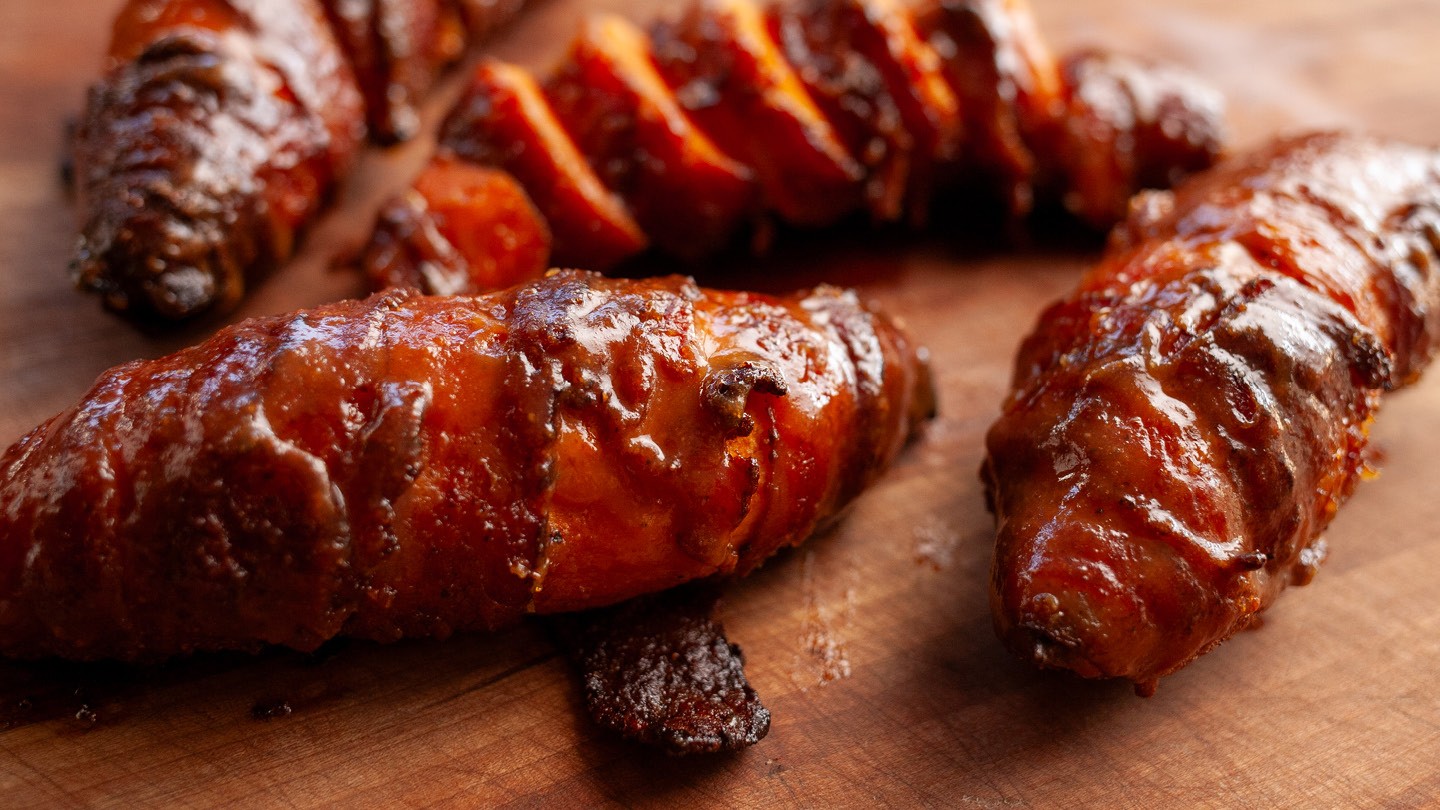
Apply the glaze generously in two coats — don't be conservative: Direction Steps 6 and 7 each apply a full layer of glaze. The 30-minute window between applications allows the first coat to reduce and caramelize into the bacon before the second coat goes on. A thin first coat evaporates before it sets; a generous first coat reduces to a concentrated, caramelized layer that the second coat lacquers on top. Two generous coats produce the glossy, sticky finish visible in the finished dish photos.
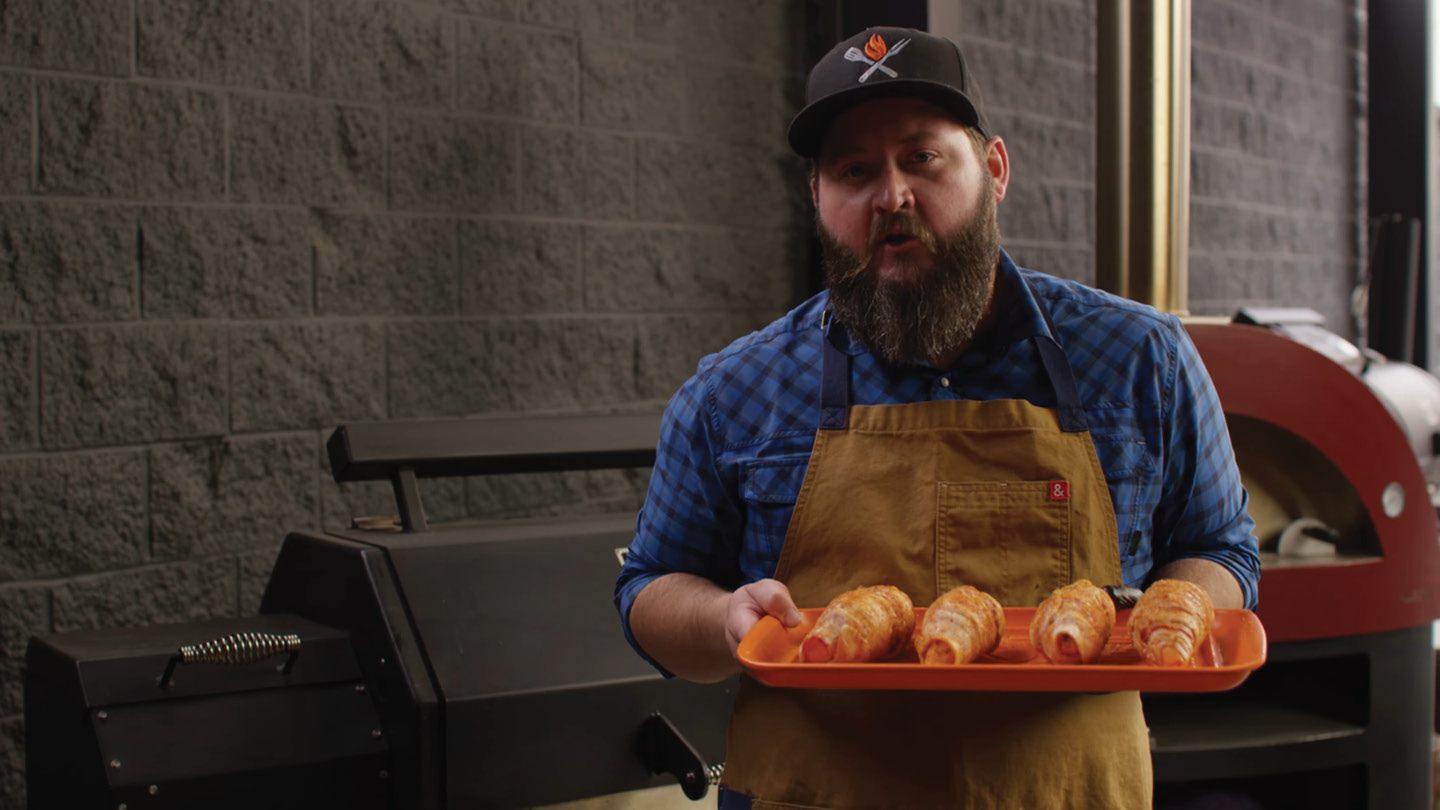
Serve within 10 minutes of pulling from the grill: Direction Step 8 says to serve whole or sliced into medallions. Bacon-wrapped sweet potatoes are at their best immediately off the grill: the bacon is at maximum crispiness, the glaze is set and glossy, and the sweet potato interior is steaming and tender. As they cool, the bacon softens from the moisture inside the potato and the glaze absorbs into the bacon surface. Serve immediately; reheat on a wire rack in a 400°F oven for 5–8 minutes if needed.
Recommended Recipes