

Lasagna on the Yoder Wood Fired Oven
Tom Jackson
Rated 4.8 stars by 9 users
Category
Pasta
Cuisine
Italian
Servings
12
Prep Time
45 minutes
Cook Time
45 minutes
Calories
974
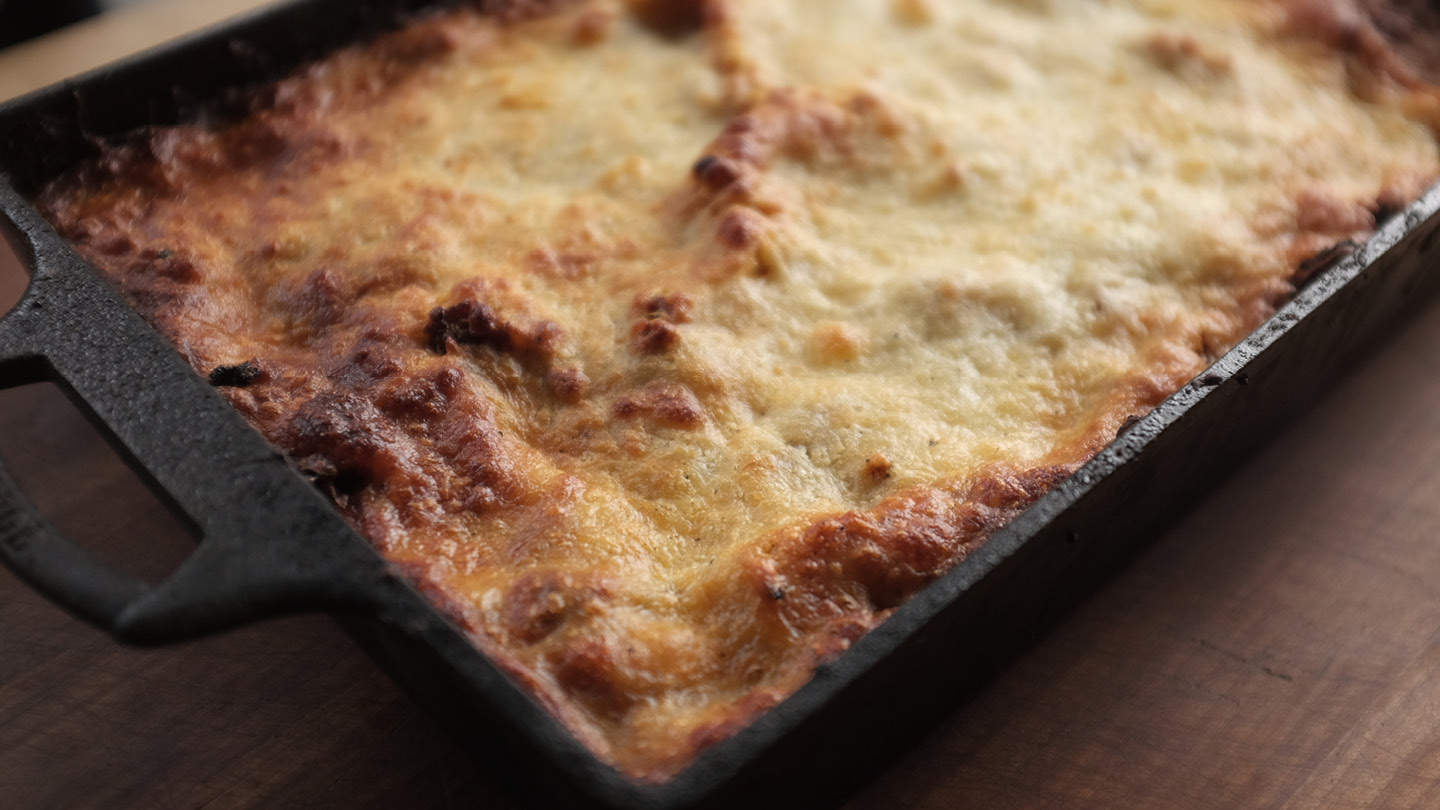
Prepare to indulge in a culinary delight with our mouthwatering Lasagna cooked to perfection in the Yoder Wood Fired Oven, serving up to 12 lucky diners. Begin by preheating your Yoder Smokers Outlander pellet grill to a toasty 450ºF, ensuring the ideal cooking environment with the wood fired oven installed. In a flavorful symphony of ingredients, heat extra virgin olive oil in a skillet and brown a tantalizing blend of ground beef, Italian sausage, and rough-chopped mirepoix. Once caramelized and reduced, blend in the robust flavors of San Ciao Marzano tomatoes and garlic, creating a hearty meatsauce that will tantalize the taste buds. Meanwhile, prepare the creamy béchamel sauce by melting unsalted butter in a skillet, whisking in all-purpose flour until golden, then gradually adding whole milk until luxuriously thickened. Stir in Parmesan cheese and a dash of Cattleman’s Grill Italiano Seasoning, infusing the sauce with a depth of flavor that will elevate every layer of the lasagna. Assemble the masterpiece by layering lasagna pasta, meatsauce, béchamel, and low moisture mozzarella in a Lodge casserole pan, repeating the layers three times for ultimate indulgence. Top with a generous blanket of mozzarella and slide into the wood fired oven, allowing it to work its magic until the lasagna emerges golden brown and bubbling with irresistible allure. Get ready to savor each delectable bite of this Lasagna, a testament to the art of wood fired cooking and the joy of gathering around the table with loved ones.
Ingredients
-
2 tbsp extra virgin olive oil
-
1 lb ground beef
-
1 lb Italian sausage
-
2 cups mirepoix, rough chopped
-
1 can Ciao San Marzano tomatoes
-
1 clove garlic
-
4 tbsp unsalted butter
-
6 tbsp all-purpose flour
-
4 cups whole milk
-
1/2 cup parmesan
-
1 tsp Cattleman’s Grill Italiano Seasoning
-
1 lb low moisture mozzarella
-
12 oz lasagna pasta
Meat Sauce
Béchamel
Directions
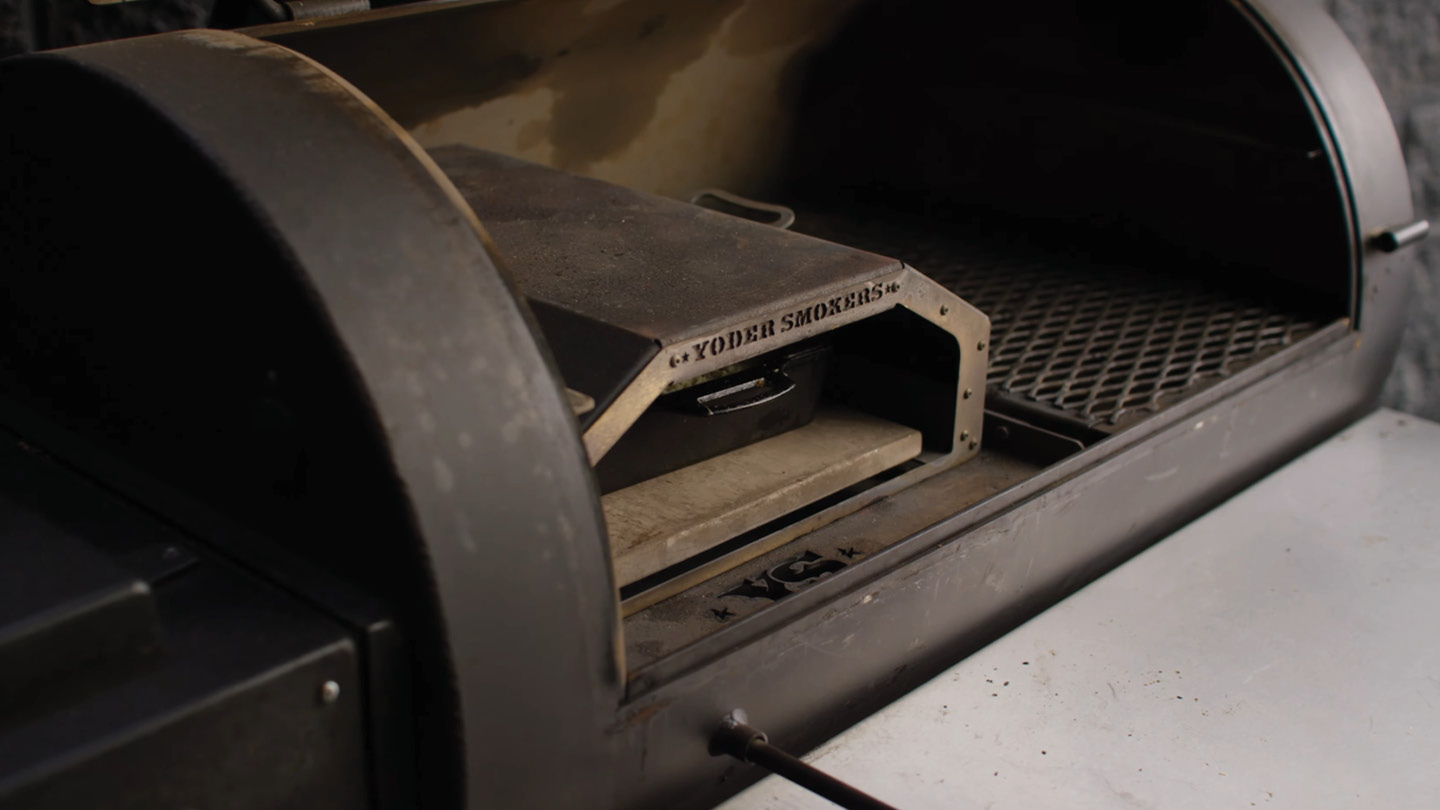
Preheat your Yoder Smokers YS640s pellet grill to 450ºF with the wood fired oven installed.
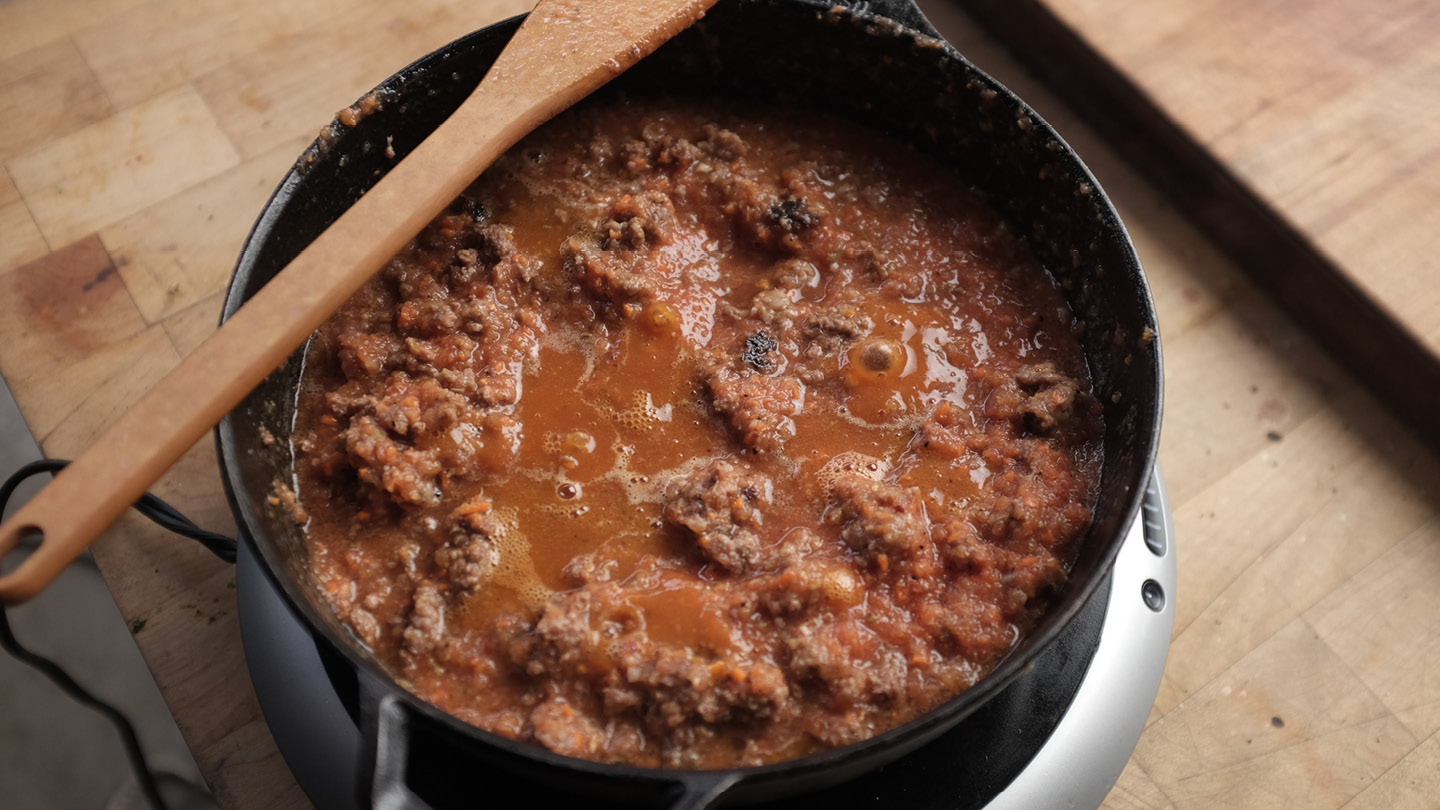
Blend the mirepoix and tomatoes to break them down super fine. Brown the meats in a skillet, then add the tomato mixture and cook until caramelized and reduced.
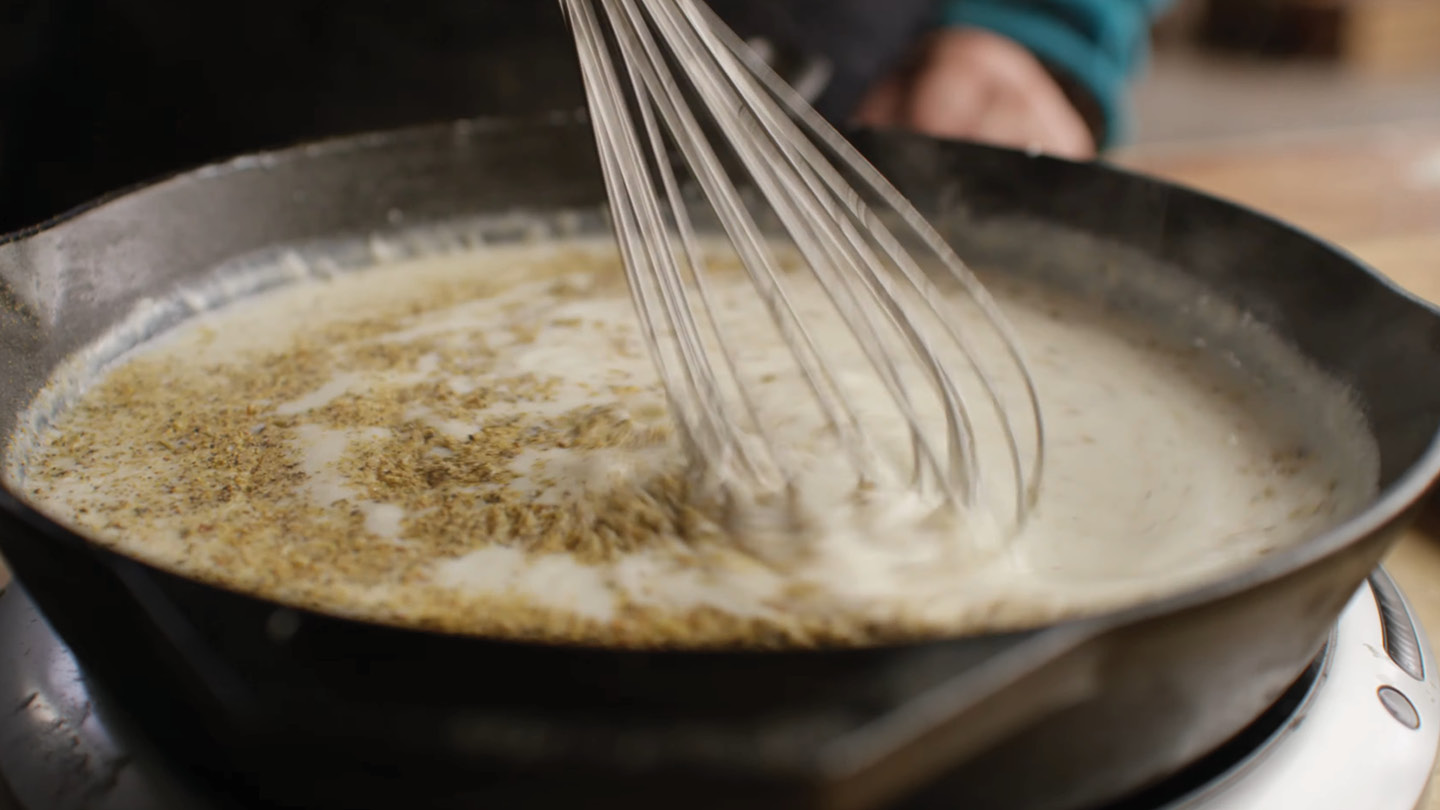
To make the béchamel, melt the butter in a skillet. Add the flour. Cook, whisking frequently. Add the milk and continue whisking until thickened. Add the parmesan and whisk until melted. Add the seasoning. Remove.
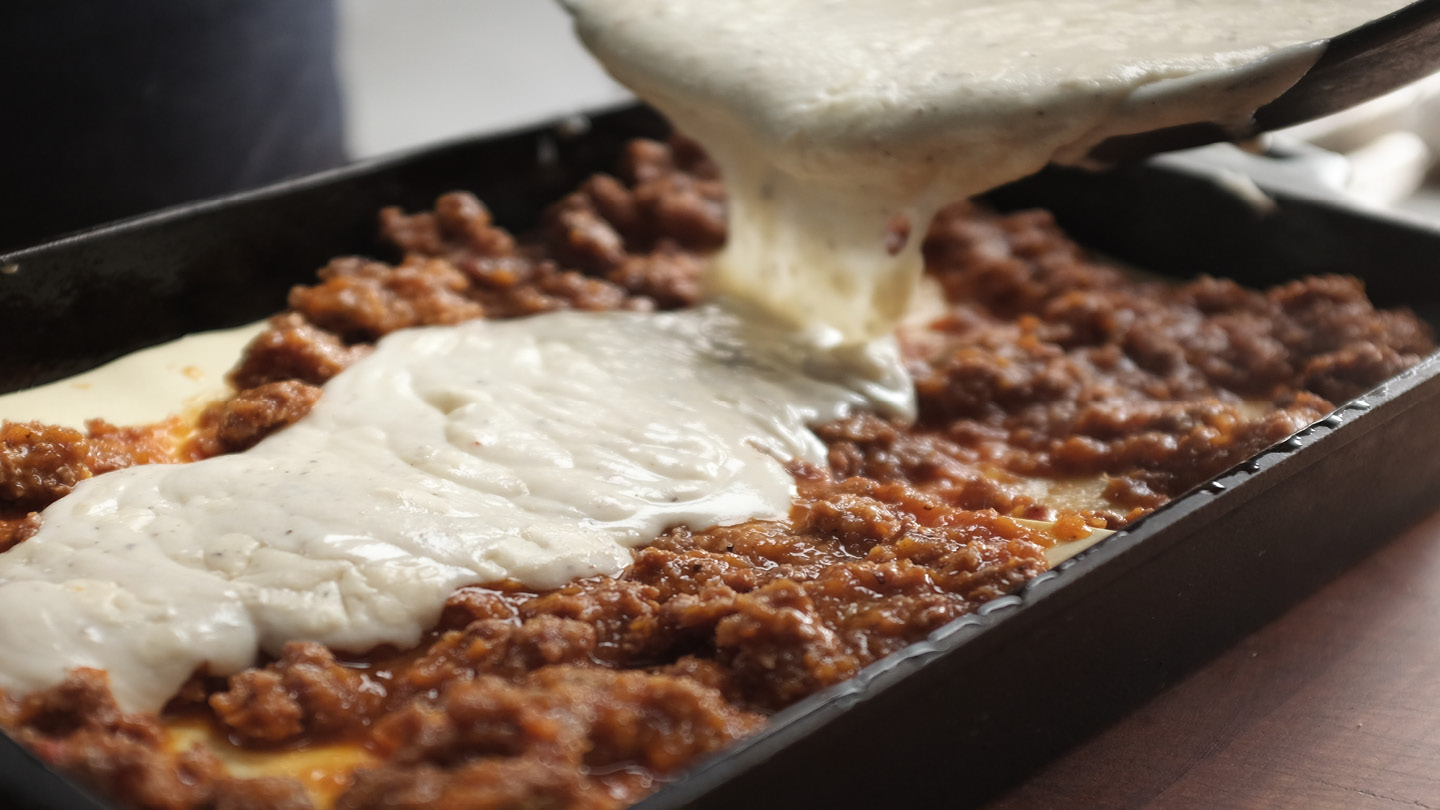
Spray the bottom of a Lodge casserole pan with oil. Add a layer of pasta, then meat sauce, then béchamel, then mozzarella, then repeat three times.
Top with mozzarella and place inside the wood fired oven. Cook until browned.

Recipe Note
Recipe FAQ
What is the history of lasagna?
Lasagna is one of the oldest documented pasta dishes in Italian culinary history, with origins in the Emilia-Romagna region of northern Italy. Early versions date to medieval manuscripts and bore little resemblance to the layered meat-and-cheese dish recognized today. The modern lasagna bolognese — layered with meat ragù, béchamel, and pasta — became codified in Bologna and was formally registered with the Italian Academy of Cuisine in 1982, with green spinach-infused pasta as the traditional standard. This recipe honors that northern Italian tradition by using béchamel rather than ricotta, a distinction that separates authentic Bolognese-style lasagna from the American adaptation most people know.
Why use béchamel instead of ricotta?
Béchamel is the traditional northern Italian choice and produces a fundamentally different result. Ricotta adds protein and density but can become grainy and dry during baking; béchamel remains smooth and creamy throughout the cook and flows between pasta layers rather than sitting as a discrete layer. The Parmesan incorporated into the béchamel also adds umami that ricotta's mild flavor doesn't contribute. If you've only made lasagna with ricotta, the béchamel version will taste noticeably lighter and more cohesive.
Why blend the mirepoix and tomatoes instead of leaving them chunky?
Blending the mirepoix and San Marzano tomatoes before adding them to the browned meat produces a smooth sauce where the vegetables contribute flavor and body without visible chunks. The mirepoix essentially dissolves into the meat as the sauce caramelizes and reduces, producing deeper vegetable flavor without the texture of cooked carrot and celery pieces. This technique is common in professional restaurant lasagna production and produces a more refined result than a chunky vegetable sauce.
Do I need to pre-cook the lasagna pasta?
The directions don't specify pre-cooking, which suggests using no-boil (oven-ready) lasagna pasta — the most common approach for baked lasagna. If using standard dried lasagna pasta that requires boiling, cook until just al dente (about 2 minutes less than package directions), drain, and lay flat on oiled parchment before assembling. Under-cooked standard pasta will absorb moisture from the sauce and béchamel during baking; over-cooked pasta will turn mushy.
How long should I rest the lasagna before cutting?
At least 15 minutes, ideally 20–30. Straight from the oven, the layers are held together by liquid sauce and molten cheese — cutting immediately produces a collapsed, soupy slice. Resting allows the béchamel and meat sauce to set partially, the cheese to firm, and the layers to bond. The internal temperature also equilibrates during the rest. A properly rested lasagna produces a clean, structured slice that holds its shape on the spatula.
Can I make this indoors?
3 out of 5 — Works indoors with adjustments. A home oven at 450°F with the Lodge casserole dish produces excellent lasagna. What you lose is the radiant heat from the Yoder Wood Fired Oven dome that browns the mozzarella top from above and the ambient pellet smoke character. To replicate the top browning indoors, switch to broil for the final 3–5 minutes once the lasagna is cooked through — watch closely to avoid burning.
Recipe Highlights
Brown the meat before adding the blended tomato-mirepoix mixture: Direction Step 2 specifies browning the meats first, then adding the tomato mixture. Browning the ground beef and Italian sausage before adding liquid develops the Maillard crust on the meat that provides the deep savory base of the sauce. Adding the tomato mixture to raw or under-browned meat produces a boiled meat flavor rather than a caramelized one. Get genuine browning — not grey steaming — before adding any liquid.
Whisk the béchamel constantly once the milk goes in: Direction Step 3 says to add the milk and whisk until thickened. Once the milk is added to the butter-flour roux, the sauce will thicken quickly and unevenly if not constantly whisked — the bottom corners of the pan are where lumps form first. Add the milk gradually while whisking rather than all at once, and don't stop whisking until the sauce is fully smooth and thick enough to coat a spoon.
Spray the casserole pan before the first pasta layer: Direction Step 4 specifies spraying the bottom of the Lodge casserole pan with oil before the first pasta layer. This prevents the bottom pasta layer from bonding to the cast iron during the 45-minute bake at high heat. Cast iron at 450°F without lubrication will fuse the pasta to the pan surface — the bottom portion of the lasagna becomes impossible to serve cleanly.
Finish with a mozzarella-only top layer — no meat sauce: Direction Step 5 specifies topping with mozzarella before placing in the oven. The final layer is cheese only, not a full sauce-and-cheese layer. This produces the golden, blistered mozzarella top surface that is the visual signature of the dish. A top layer covered in meat sauce would prevent the cheese from browning directly under the oven dome heat and produce a flat, grey top rather than the golden crust the recipe is designed around.
Recommended Recipes
Nutrition
Nutrition
- Nutrition Serving Size
- 1 serving
- per serving
- Calories
- 974
- Fat
- 57 grams
- Saturated Fat
- 26 grams
- Cholesterol
- 122 milligrams
- Sodium
- 559 milligrams
- Carbs
- 87 grams
- Fiber
- 4 grams
- Sugar
- 6 grams
- Protein
- 29 grams


