Recipe Note
Recipe FAQ
What is a roux and why does this recipe use one?
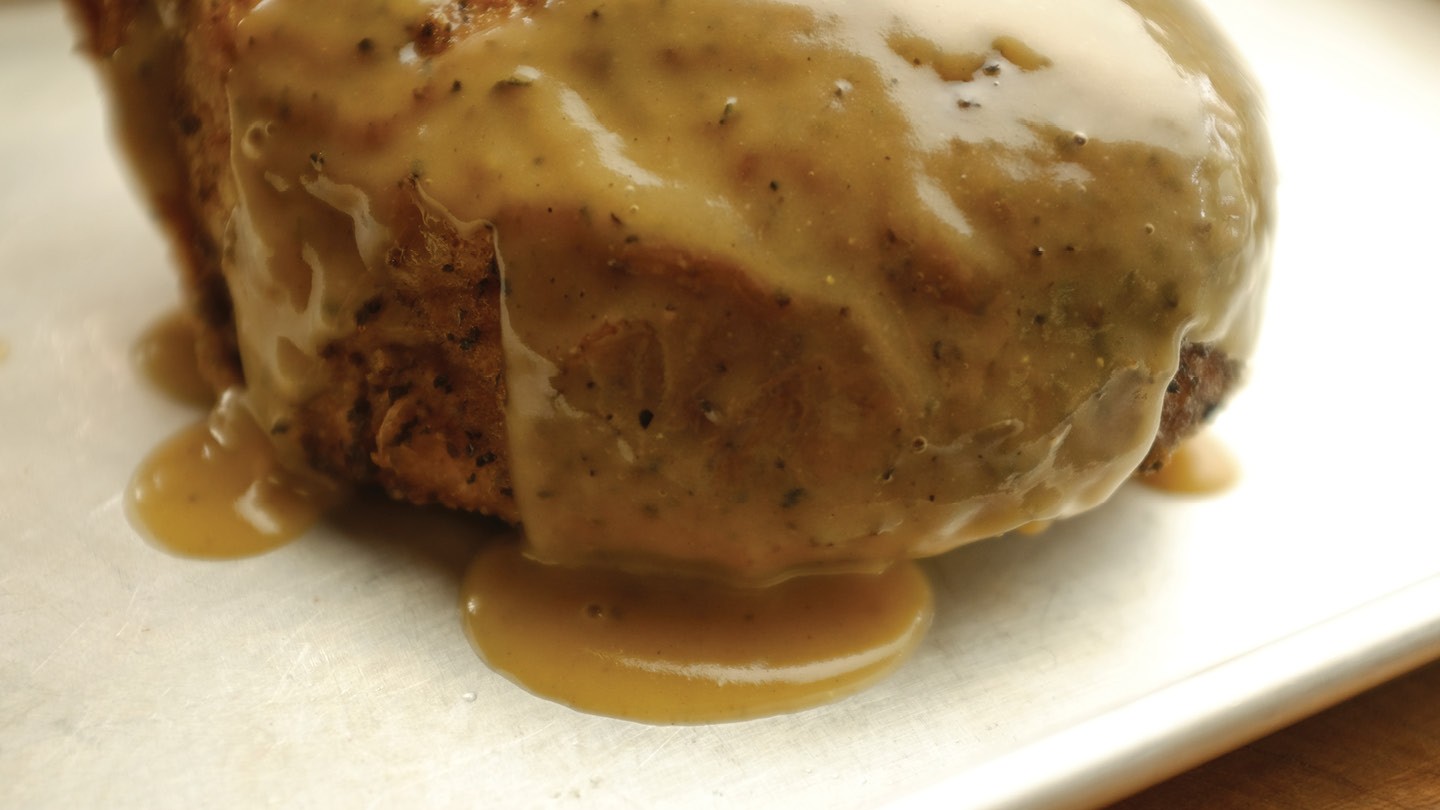
A roux is a cooked mixture of equal parts fat and flour — the foundational thickener in classical French and American cooking. In this recipe, turkey fat and butter are melted together, then flour is whisked in and cooked for about one minute until slightly browned and aromatic. The browning (Maillard reaction) develops a nutty, savory flavor that raw flour doesn't have. When the warm turkey stock is added, the starch granules in the roux hydrate and swell, thickening the gravy. A roux-based gravy is more stable than cornstarch-thickened gravy — it holds its consistency through reheating without breaking or going watery.
What if I don't have enough turkey drippings?
Top off to a full quart with warmed turkey stock. The drippings provide the concentrated turkey fat and fond flavor; the stock provides the volume. If you have very little in the way of drippings (under 1/4 cup), add an extra tablespoon of butter to the roux fat to compensate for the lost richness, and use all turkey stock for the liquid. The flavor will be slightly lighter but still excellent.
How do I fix lumpy gravy?
Whisk continuously while adding the stock, and if lumps form, strain the gravy through a fine mesh sieve before serving. Lumps typically form when cold stock is added too quickly to the hot roux — the starch granules seize unevenly before they can be fully incorporated. Prevention: warm the stock before adding it, and pour slowly in a steady stream while whisking vigorously. If the lumps are small and numerous, an immersion blender run directly in the skillet for 30 seconds will smooth them out.
Can I make this ahead?
Yes — turkey gravy can be made 2–3 days ahead and refrigerated. Gently reheat in a saucepan over medium-low heat, whisking in warmed turkey stock a splash at a time if the gravy has thickened in the refrigerator. Gravy thickens significantly when cold; thin to serving consistency before plating. The gravy also freezes well for up to 3 months.
How do I adjust the thickness?
Direction Step 2 specifies cooking to "desired consistency." To thicken: continue simmering uncovered, stirring frequently, until the gravy coats the back of a spoon and holds a line when you run your finger through it. To thin: add warmed turkey stock in small increments (2–3 tbsp at a time), whisking each addition fully before adding more. The final consistency should flow easily from a ladle but coat whatever it lands on — neither water-thin nor paste-thick.
Can I make this indoors?
5 out of 5 — Perfect for indoor or outdoor cooking. The Lodge 12" Cast Iron Skillet on a stovetop burner is the standard method. No grill equipment is required at any step.
Recipe Highlights
Cook the roux for the full minute before adding stock — don't rush it: Direction Step 1 specifies whisking the roux "for about one minute, until slightly browned and aromatic." This minute is the difference between a raw-flour taste and a proper gravy flavor. The browning develops the Maillard compounds that give the gravy its characteristic savory depth. Pale roux added to stock immediately produces a gravy that tastes of raw flour; browned roux produces a gravy that tastes of turkey and toasted grain. Watch for the color to shift from pale yellow to light tan and the aroma to shift from raw flour to nutty.
Warm the stock before adding it — cold stock causes lumps: Direction Step 2 specifies adding warmed stock. The temperature differential between hot roux (~350°F) and cold stock (~40°F) causes the starch granules at the contact point to seize unevenly, forming lumps before the whisk can dissolve them. Warm stock at near-simmering temperature hydrates the starch granules gradually and evenly. Warm the stock in a separate saucepan or microwave before the turkey comes off the grill, so it's ready when the roux is done.
Add the stock in a slow stream, not all at once: Direction Step 2 says "slowly pour." Pouring the full quart of stock into the hot roux at once drops the pan temperature dramatically and overwhelms the roux's ability to absorb and thicken the liquid evenly. A slow stream — about 1/4 cup at a time initially, then a steady pour once the roux has loosened — maintains the temperature and produces smooth, even thickening from the start.
Season at the end — not at the beginning: Direction Step 3 seasons after the gravy has reached its final consistency. Turkey drippings and stock both contain salt from the seasoning applied during the turkey cook; the concentration of salt increases as the gravy simmers and reduces. Seasoning at the beginning can produce an over-salted gravy by the time it reaches serving consistency. Taste at the end and adjust from there.
Recommended Recipes