Recipe Note
Recipe FAQ
What is the difference between smashed and mashed potatoes?
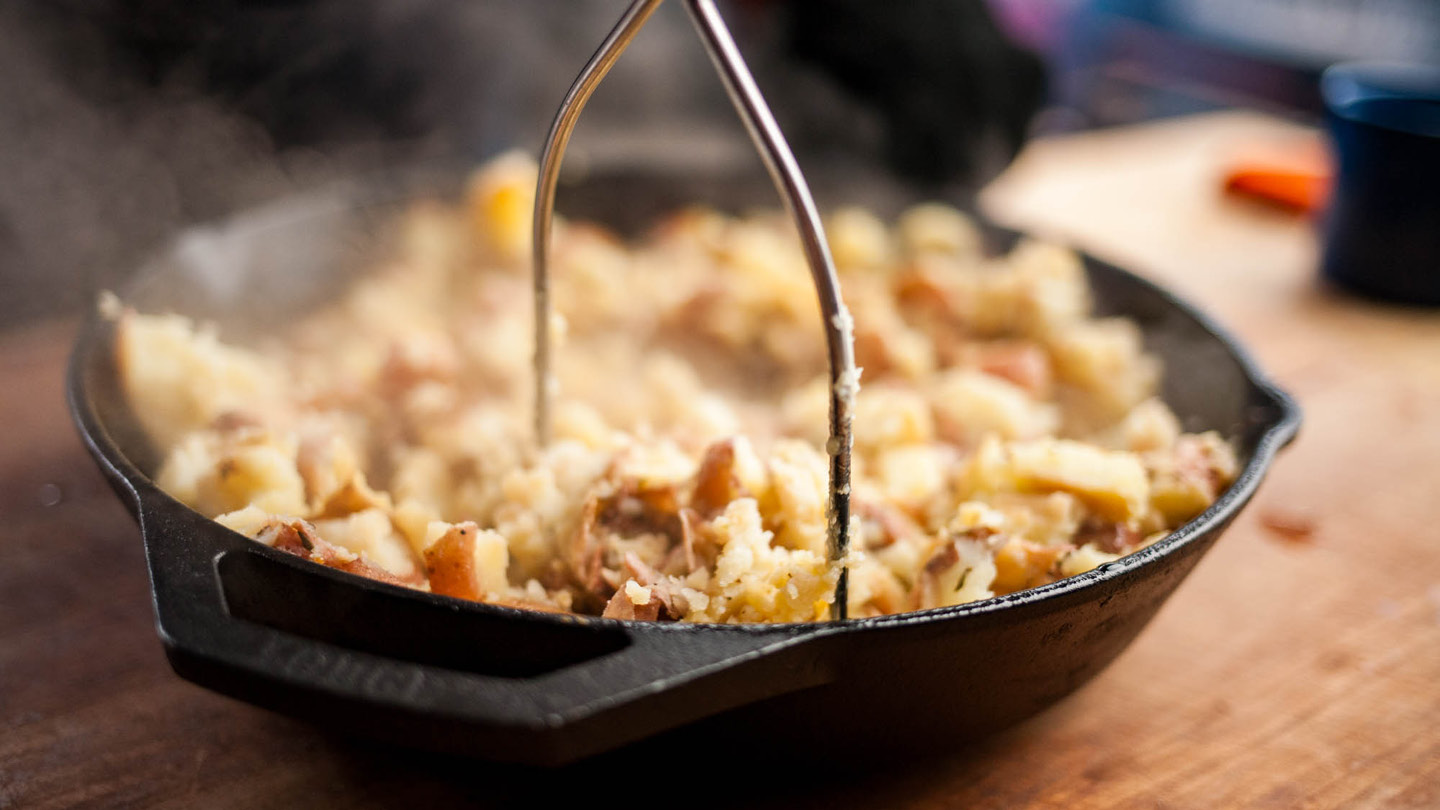
Mashed potatoes are typically boiled or steamed until fully soft, then mashed to a smooth, creamy consistency — the goal is uniformity. Smashed potatoes are cooked until tender but not as soft, then pressed with a masher to break them apart while retaining some texture variation — chunks, skin pieces, and irregular surfaces remain. This recipe produces smashed potatoes: the baby red potatoes cook covered in the cast iron skillet until just tender enough to break apart, then a hand masher creates an intentionally rustic, textured result rather than a smooth purée.
Why cook the potatoes covered in a cast iron skillet rather than roasting them open?
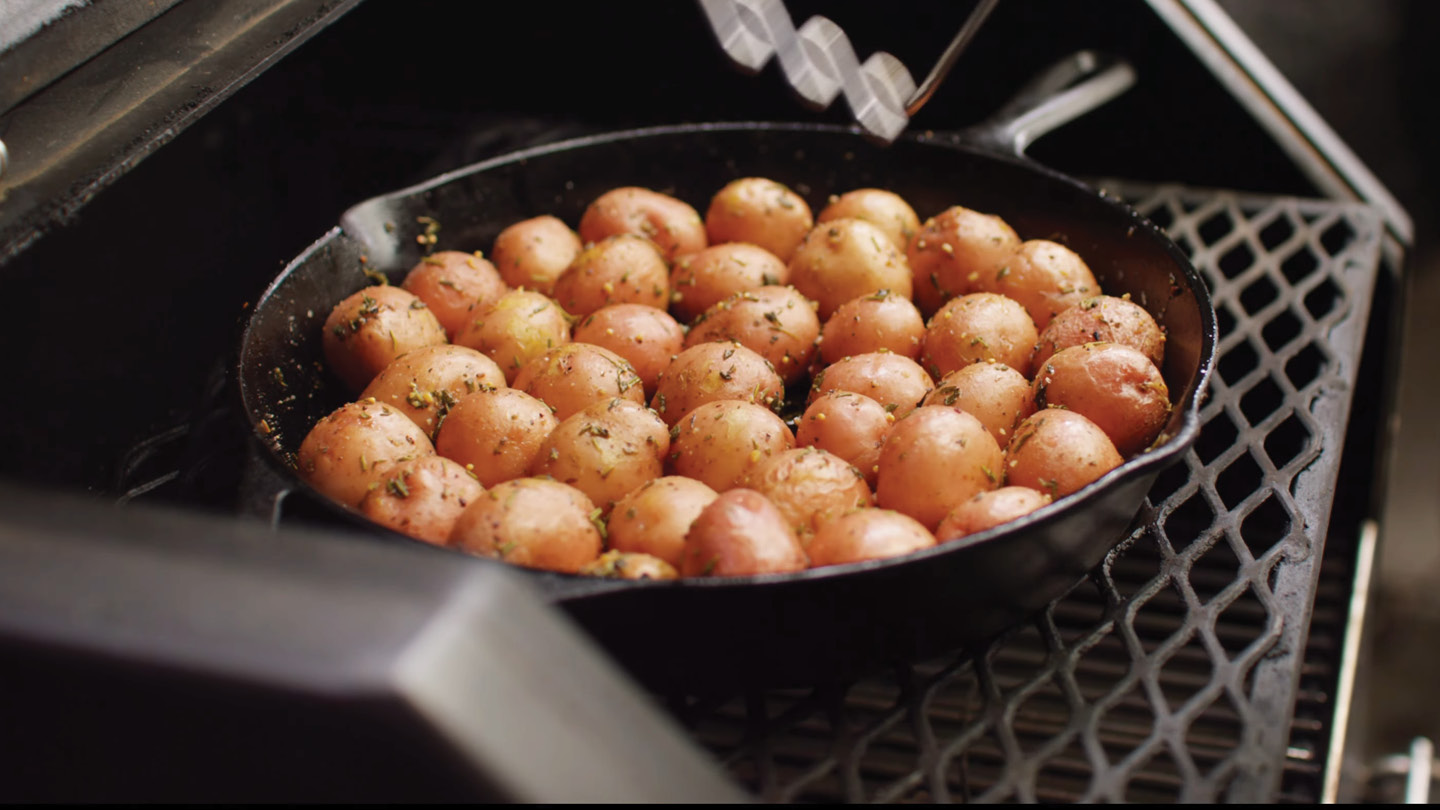
The cast iron lid traps steam from the potatoes and olive oil at 425°F, creating a pressurized cooking environment inside the skillet. The potatoes simultaneously roast from the cast iron contact heat and steam from the trapped moisture — this combination cooks them through faster and more evenly than dry roasting alone. After one hour covered, the potatoes are fully tender at the core and have a golden, slightly crispy bottom surface from the cast iron contact.
Why use baby red potatoes specifically?
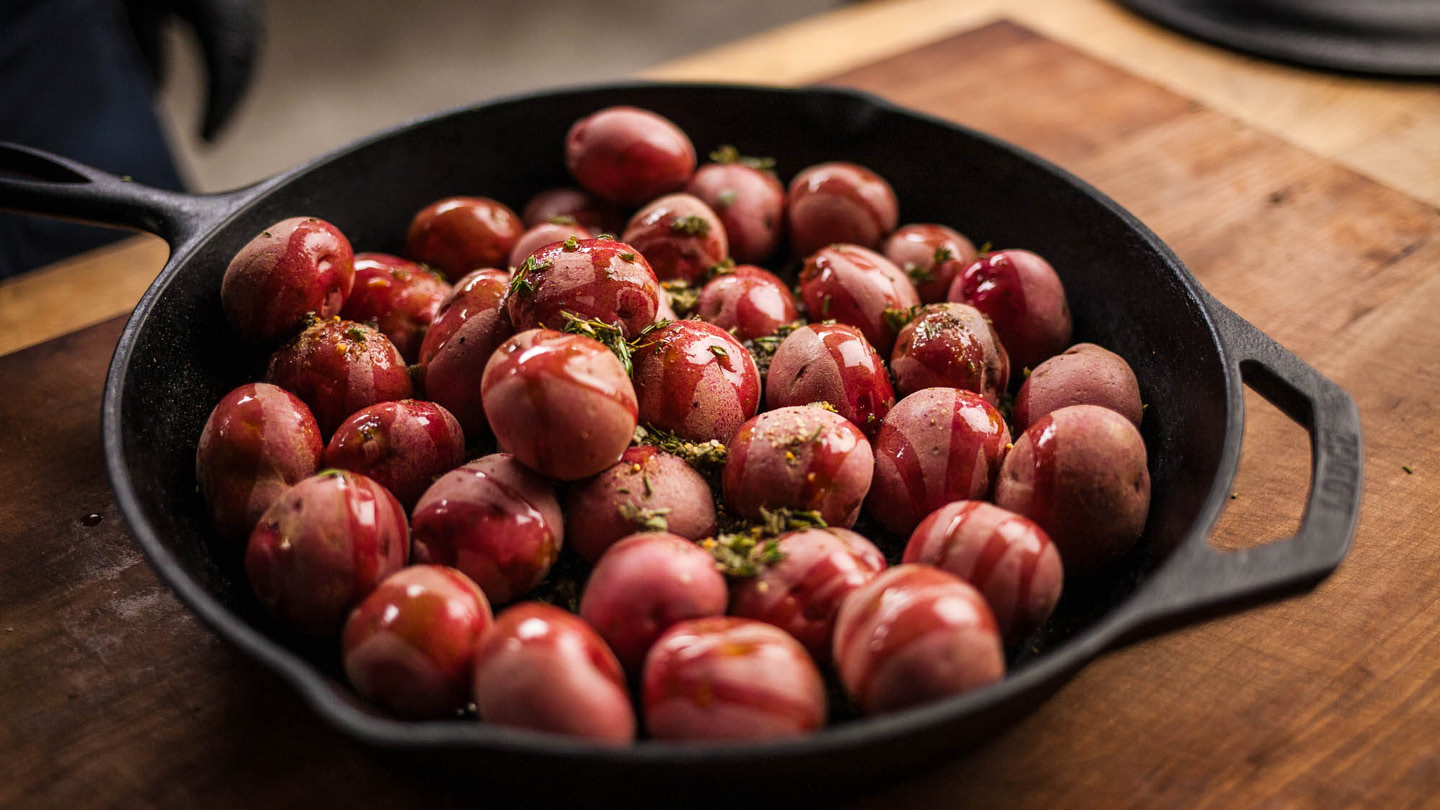
Baby red potatoes have thin, tender skin that doesn't need peeling and contributes texture and color to the smash. Their waxy flesh (lower starch, higher moisture than russets) holds together better during smashing — they produce the rough, chunky texture that defines smashed potatoes rather than breaking down into the smooth purée that russets produce. Their small size also means they fit in the Lodge 12" skillet without cutting and cook more evenly than large potatoes.
Why add butter after cooking rather than before?
Direction Step 5 adds the butter after the potatoes are cooked and just before smashing. Butter added before cooking would melt and separate during the 1-hour covered cook at 425°F, contributing less richness and potentially burning at the cast iron contact surface. Added after cooking to hot potatoes, the butter melts into the smash immediately and uniformly — each potato piece is coated in warm melted butter during the mashing action. The olive oil does the cooking work; the butter provides the richness at service.
Can I substitute vegan butter?
Yes — the recipe card notes this explicitly. Any high-quality vegan butter (Miyoko's, Earth Balance, or similar) works as a 1:1 substitute. The result is virtually identical in texture and richness. The finishing salt and herbs are already vegan. If keeping the recipe fully vegan, verify that the Cattleman's Grill Trail Dust contains no animal-derived ingredients — most savory all-purpose rubs are plant-based.
Can I make this indoors?
4 out of 5 — Great in the kitchen, better on the grill. A home oven at 425°F with the Lodge 12" Cast Iron Skillet and lid produces results nearly identical to the YS480s. The cast iron lid does most of the work; the grill adds only a faint ambient smoke note during the covered cook that the lid significantly reduces. This is one of the most oven-compatible recipes in the ATBBQ catalog.
Recipe Highlights
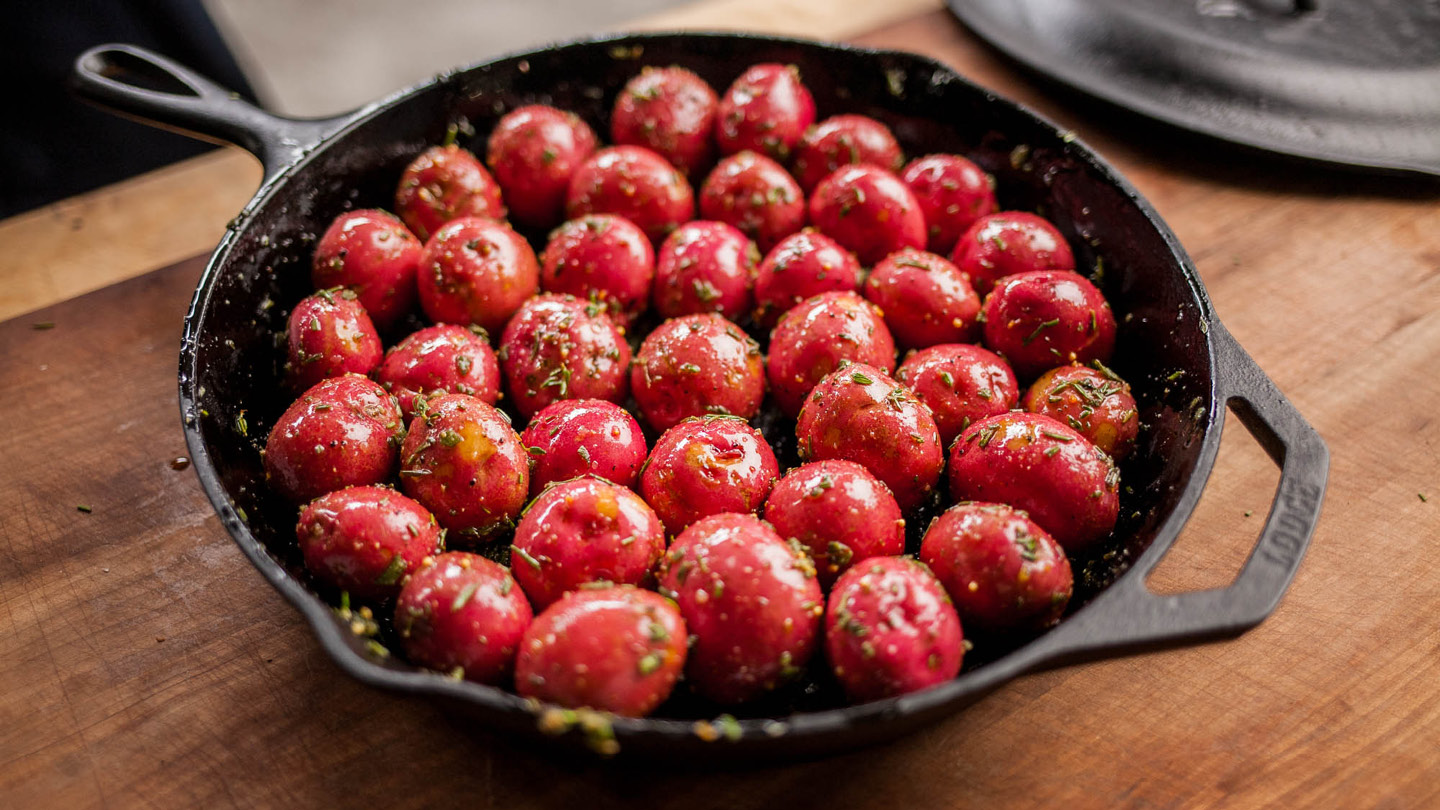
Mince the herbs finely — don't leave large pieces: Direction Step 3 says to add minced herbs. Rosemary, sage, and thyme have woody, assertive flavors that require fine mincing to distribute evenly throughout the dish. Large herb pieces provide intense flavor hits in individual bites rather than consistent flavor throughout. A sharp knife and a few passes over the minced pile produce herbs fine enough to distribute evenly when tossed with the potatoes and olive oil.
Toss the potatoes in the oil and herbs in the skillet, not in a separate bowl: Direction Step 3 adds the oil and herbs directly to the potatoes in the Lodge skillet. Tossing in the skillet saves a bowl and, more practically, distributes the olive oil into the textured surface of the cast iron before the lid goes on — the skillet bottom is already pre-coated when the potatoes settle. This prevents sticking at the base of the skillet during the 1-hour covered cook.
Check tenderness before smashing — a toothpick or fork should meet no resistance: Direction Step 4 specifies cooking "until the potatoes are tender and smash-able, about one hour." Baby red potatoes vary in size within a 3 lb bag; smaller potatoes will be ready before larger ones. Test the largest potato in the skillet — if it yields to a toothpick with no resistance at the center, all potatoes are ready. If there's any firmness at the core of the largest potato, give them another 10 minutes before testing again.
Add the finishing salt at the table, not in the kitchen: Direction Step 5 specifies seasoning with Noble Saltworks Pecan Smoked Finishing Salt "to taste." Finishing salt added immediately before serving preserves its crunch and visual impact — large flaked salt dissolves into the hot potatoes within minutes of contact. Adding at the table also allows individual portions to be seasoned to preference, which is especially useful if some diners want less salt.
Recommended Recipes