Recipe Note
Recipe FAQ
What is the history of the donut burger?
The smash burger technique itself dates to early 20th century American diners, where cooks pressed beef patties onto flat-top grills to develop a caramelized crust. The donut burger concept — using a glazed donut as the bun — is a more recent innovation, popularized in American food culture in the mid-2000s. Paula Deen featured a version called the "Lady's Brunch Burger" in 2006, which brought the sweet-bun burger concept to a national audience. County fairs, food trucks, and competitive eating events have since made the donut burger a recurring indulgence in American food culture. This recipe elevates the concept with a proper smash technique, quality brisket blend beef, and ingredients chosen to bridge the sweet-savory gap deliberately.
Why use Krispy Kreme specifically?
Krispy Kreme's original glazed donut has a thin, airy structure and a light glaze that caramelizes cleanly when toasted in bacon fat. Thicker, cake-style donuts have too much structural density and sweetness to balance a savory patty. The Krispy Kreme glazed donut is also approximately 3.5 inches in diameter — close enough to a standard slider bun to allow a properly smashed patty to cover the surface. Substitute any similar light glazed donut if Krispy Kreme is unavailable; avoid filled or heavily frosted varieties.
What pickles are in this recipe?
The recipe uses Jan's Sweet Garlic Dill Pickles. The sweet garlic character of Jan's pickles complements the maple mustard and glazed donut without adding sharp vinegar acidity that would compete with the sweetness — a deliberate ingredient choice that supports the overall sweet-savory balance of the burger.
Can I cook this without a pellet grill griddle?
Yes — a cast iron skillet or heavy flat griddle pan over high heat on a stovetop replicates the technique completely. Preheat the pan until a drop of water evaporates immediately on contact before adding any fat. The smash technique requires a hard, flat surface and high direct heat; a properly preheated cast iron skillet is functionally equivalent to the Yoder griddle for this recipe.
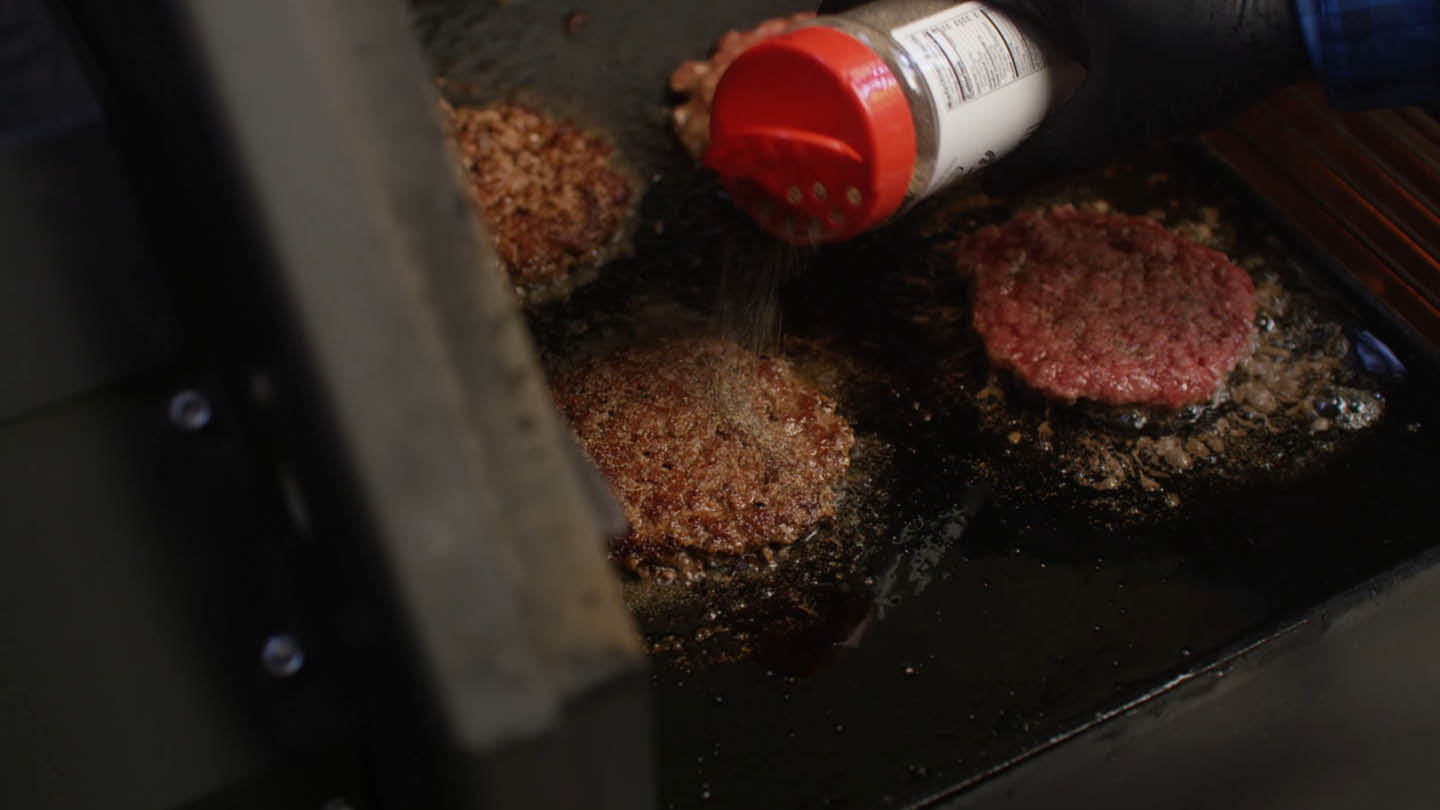
Why season after smashing rather than before?
Seasoning before smashing drives the seasoning into the patty's interior as it's compressed, which reduces surface concentration. Seasoning immediately after smashing — when the patty surface is hot and slightly tacky — allows the seasoning to adhere to and form part of the crust rather than becoming incorporated into the interior. The double application (after smash and after flip) ensures both crust faces are seasoned.
Can I make this indoors?
4 out of 5 — Great in the kitchen, better on the grill. A cast iron skillet over high heat handles the smash technique, the donut toasting, and the bacon cook equally well. What you trade is the ambient smoke character from the pellet grill and the wide flat surface of the YS640s griddle — minor for a recipe this technique-forward.
Recipe Highlights
Remove the diffuser plate and install the griddle directly over the firebox: Directions Step 1 specifies removing the diffuser plate so the griddle sits over the direct heat of the firebox rather than the indirect heat zone. This produces a griddle surface hot enough for a proper smash sear — 450°F on the grill translates to a significantly hotter griddle surface temperature over direct fire. A griddle over indirect heat won't achieve the same crust development.
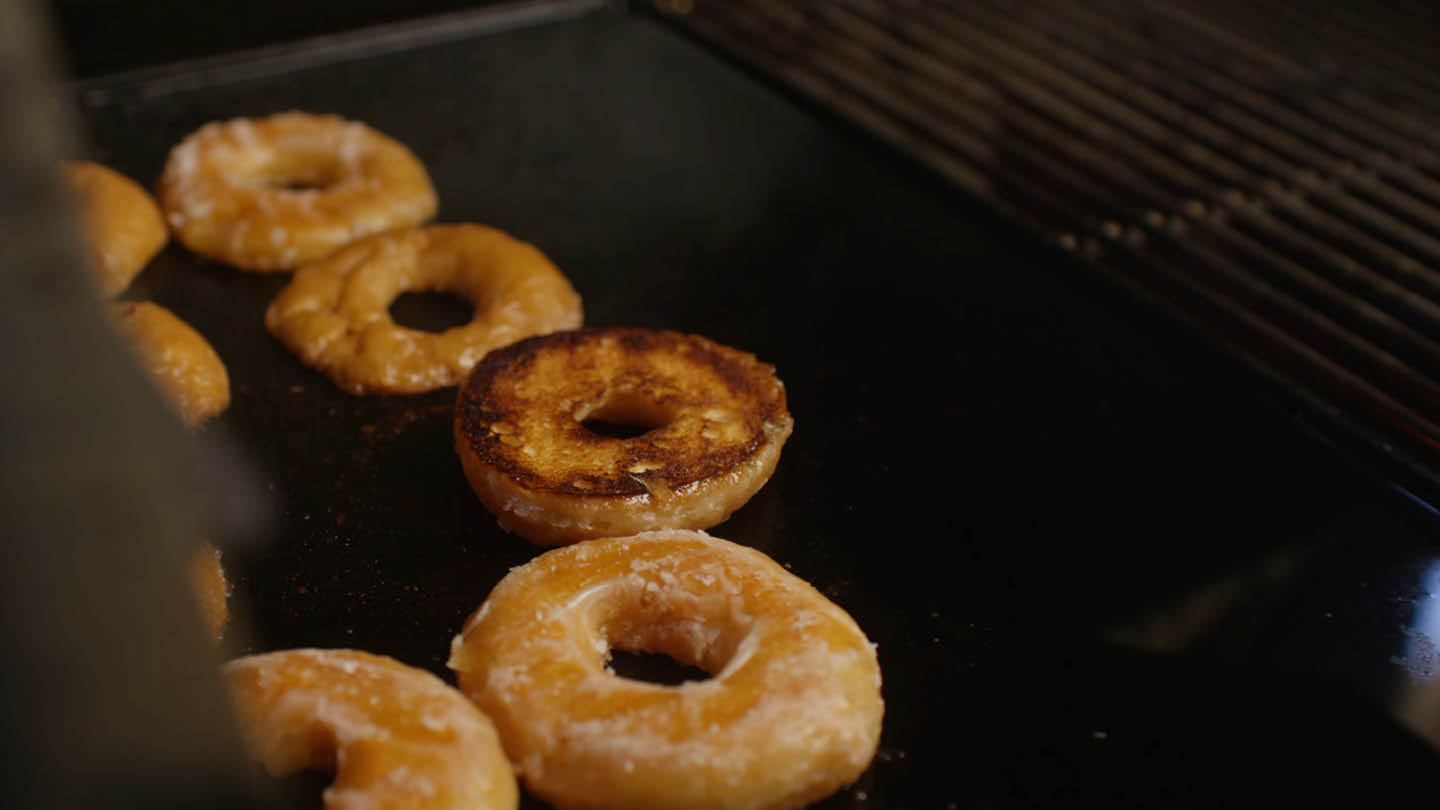
Toast the donut cut-side down only — don't flip it: Directions Step 3 specifies toasting the donut halves in bacon fat without any mention of flipping. The goal is a toasted, caramelized cut face and a soft, yielding outer surface. Flipping would toast the glazed exterior, burning the sugar and creating a bitter crust rather than the sweet-savory complement the recipe is built around.
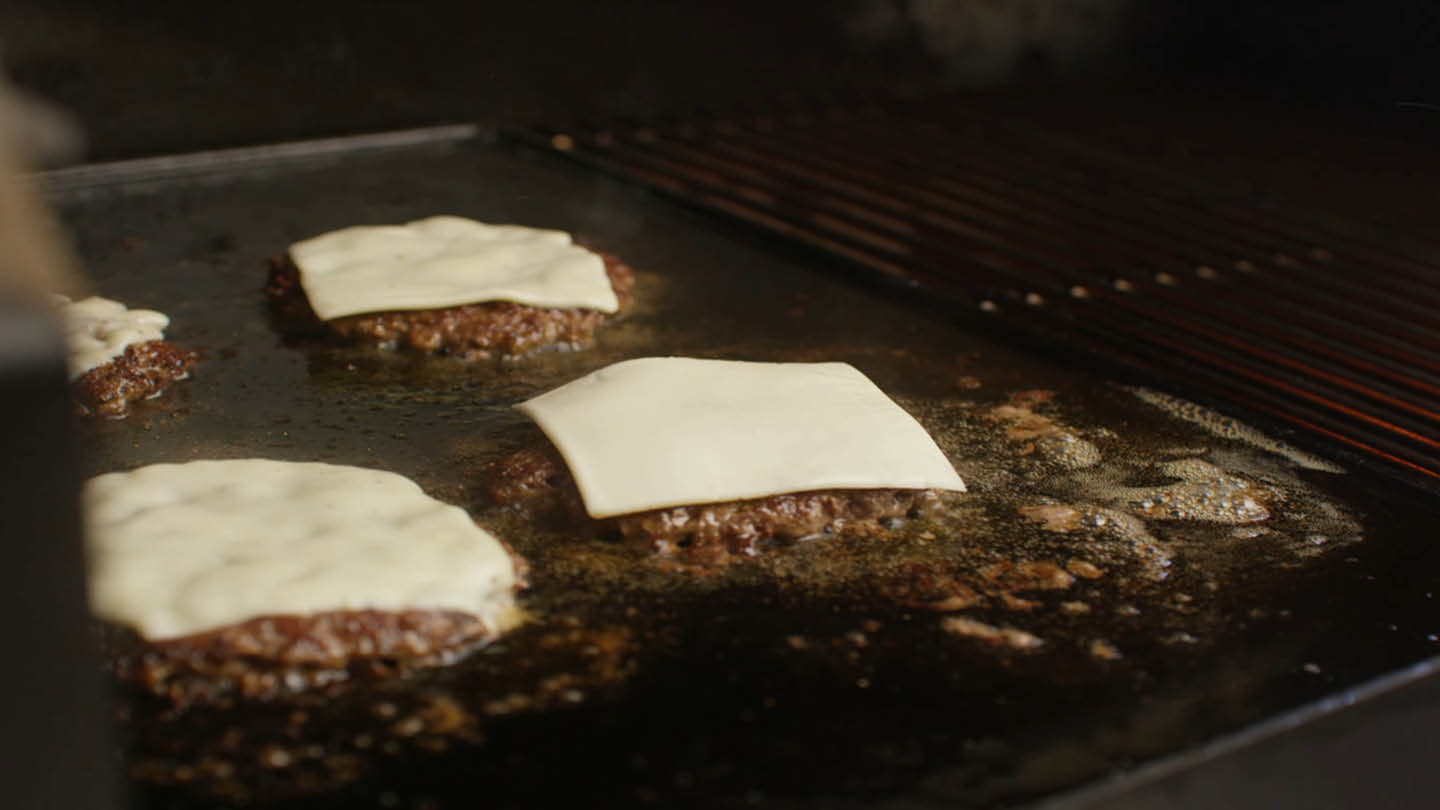
Leave the grill door open while cooking the patties: Directions Step 5 explicitly says to leave the door of the grill open. With the diffuser removed and the griddle over direct fire at 450°F, closing the grill lid would trap heat and steam the patties rather than searing them. Open-door cooking maintains the dry, direct heat environment that produces the Maillard browning crust.
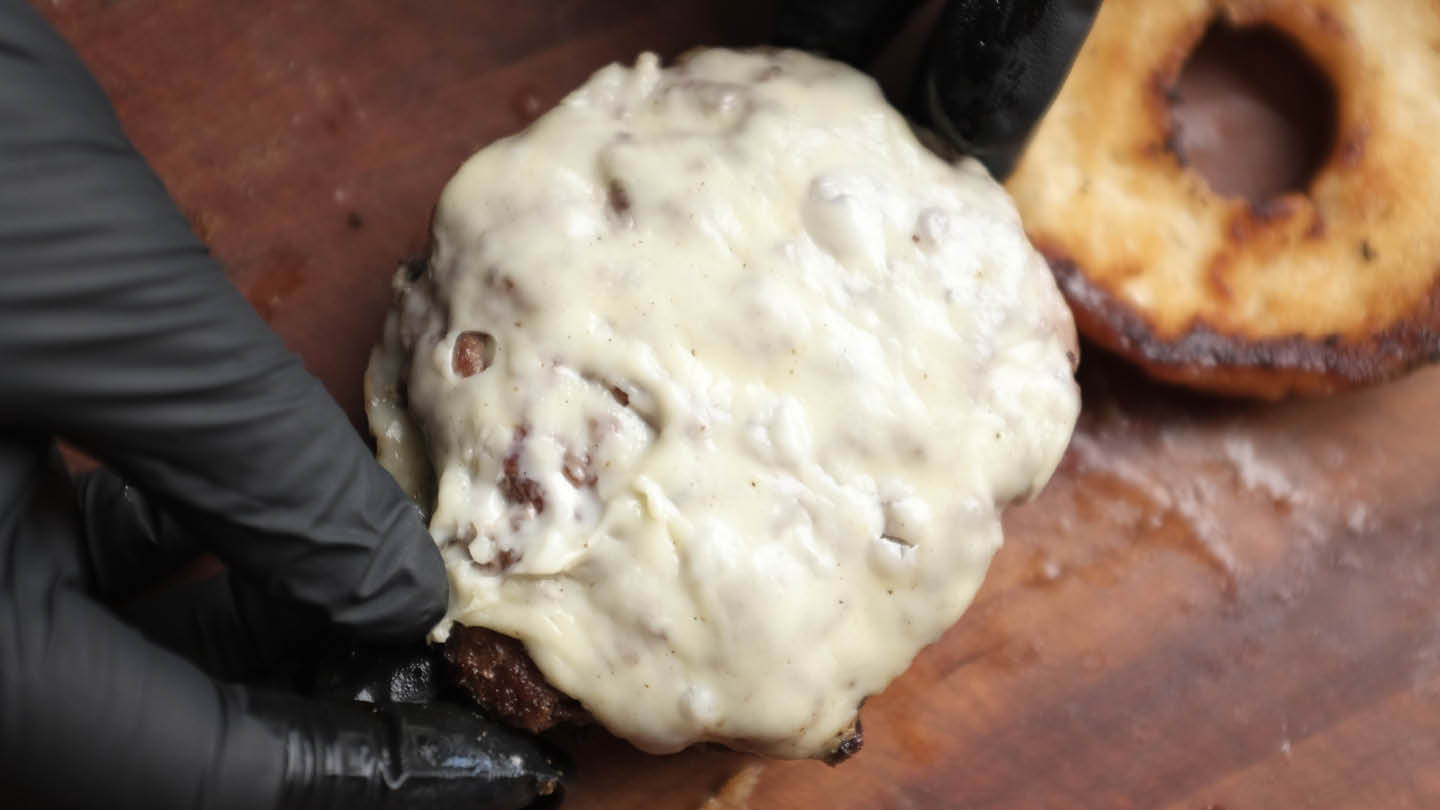
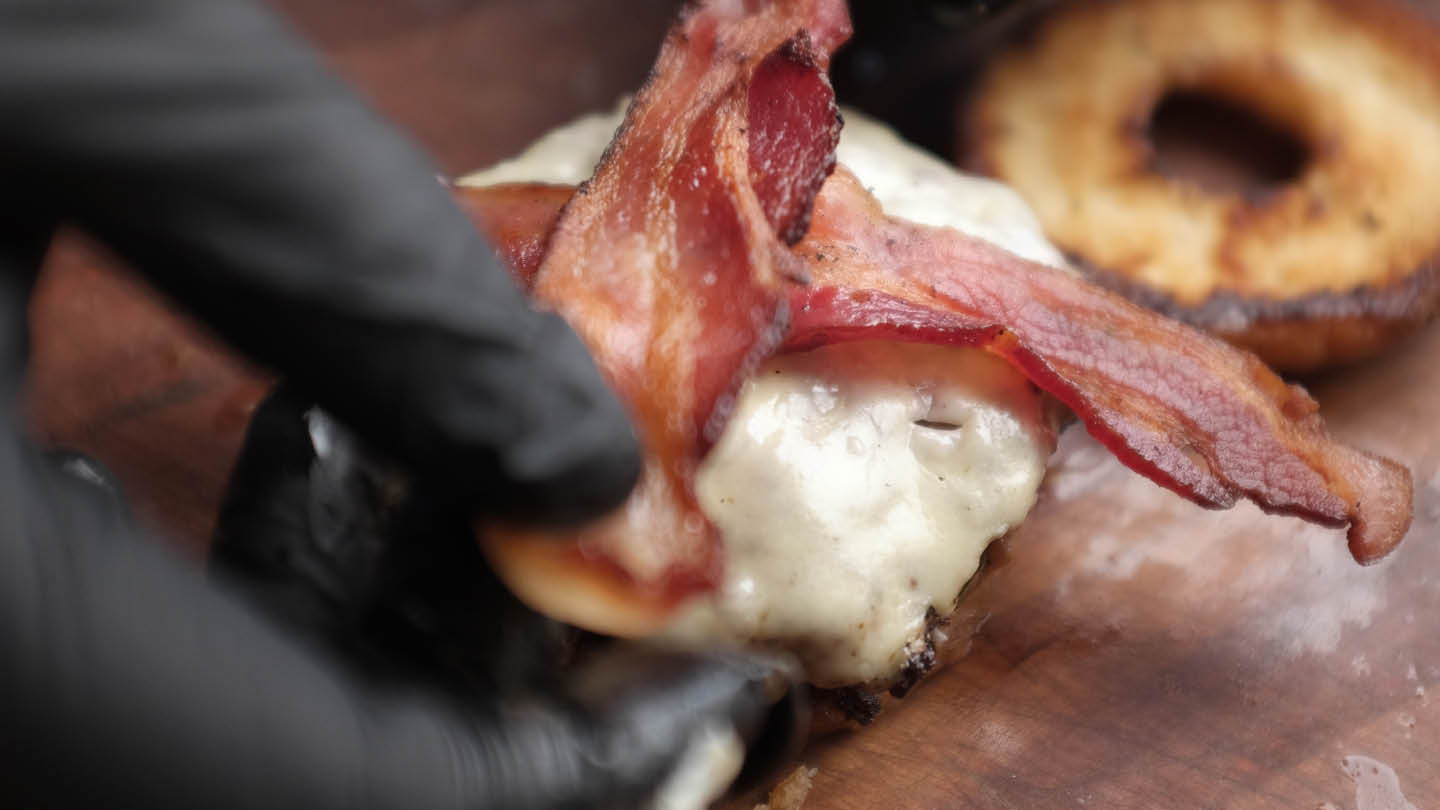
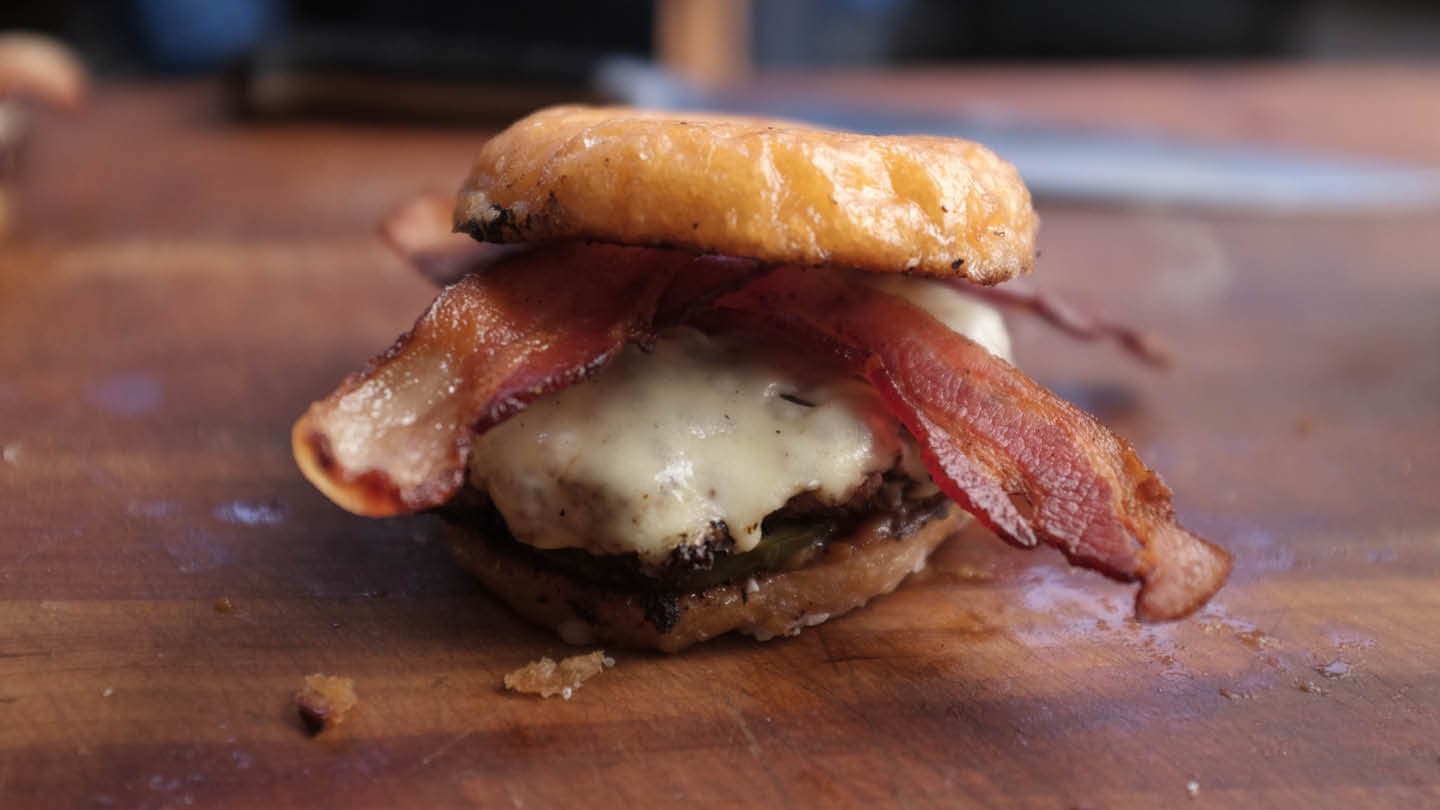
Build the burger immediately — don't rest the smash patty: Unlike thick burgers that benefit from a rest period, smash patties are thin enough that they cool quickly once off the griddle. Build immediately: bottom donut, maple mustard, pickles, cheesy patty, two bacon slices, top donut. Resting a smash patty produces a soft, flaccid crust rather than the crispy exterior that defines the technique.
Recommended Recipes