

Indulge in the tantalizing flavors of Chimichurri Pulled Pork, a mouthwatering dish that combines the richness of slow-smoked Boston Butt pork shoulder with the zesty freshness of chimichurri sauce. Perfect for gatherings or a cozy night in, this recipe promises to take your barbecue game to new heights.
WHAT YOU'LL LOVE
- Wrapping with chimichurri instead of butter or apple juice is the flavor decision that makes this recipe distinctly its own: Most pulled pork wrap protocols use butter, apple juice, or a simple BBQ glaze to build moisture during the braise phase. Using half a cup of chimichurri as the wrap liquid means the pork braises in herb-garlic-vinegar-oil for several hours — the flavors penetrate the interior of the shoulder in a way that surface application after pulling simply can't.
- Starting at 190°F overnight is the temperature choice that maximizes smoke absorption and bark development: At 190°F, the pork spends 8–12 hours in the smoke window before reaching the wrap temp. Low and slow gives the smoke more time to penetrate and the surface more time to develop the bark that holds the chimichurri glaze during the wrap phase. Pushing the cook at higher temperatures compresses this window significantly.
- The chimichurri made here is the full from-scratch version — not a jar sauce: Shallot, fresh cilantro, fresh parsley, fresh oregano, garlic, capers, red wine vinegar, olive oil, and a touch of Lone Star — this is the same chimichurri from the dedicated How to Make Chimichurri recipe on ATBBQ. Making it from scratch takes 10 minutes and produces something categorically different from store-bought alternatives.
- Pineapple juice in the wrap adds both moisture and enzymatic tenderizing: The bromelain enzyme in pineapple juice breaks down collagen more aggressively than apple juice or other fruit juices, contributing to the exceptionally tender, pull-apart texture at 205°F. Combined with the chimichurri's acidity, the wrap creates a highly active tenderizing environment during the final braise phase.
Chimichurri Pulled Pork
Tom Jackson
Rated 4.4 stars by 20 users
Category
Pork
Servings
24
Prep Time
15 minutes
Cook Time
14 hours
Calories
293
Prepare to embark on a mouthwatering journey with our tantalizing Smoked Boston Butt Pork Shoulder, infused with the robust flavors of Cattleman’s Grill Lone Star Brisket Rub and complemented by a vibrant Chimichurri sauce. Begin by crafting the Chimichurri: a blend of shallots, cilantro, parsley, oregano, garlic, capers, red wine vinegar, extra virgin olive oil, and a touch of Cattleman’s Grill Lone Star Brisket Rub, all expertly combined in a food processor until reaching the perfect consistency. Next, preheat your Yoder Smokers YS640s Pellet Grill to a gentle 190ºF, setting the stage for slow and flavorful smoking. Trim the Boston Butt pork shoulder and generously season it with the savory Cattleman’s Grill Lone Star Brisket Rub before placing it on the second shelf of the grill to smoke overnight, allowing the rich flavors to develop over 8-12 hours. Once the pork reaches an internal temperature of roughly 160ºF and a delectable bark has formed, remove it from the grill to wrap. Slathered in a luscious layer of Chimichurri and bathed in pineapple juice, tightly wrap the pork in heavy-duty foil before returning it to the grill to continue cooking until it reaches a tender 205ºF and the blade bone effortlessly slides out. Finally, shred the succulent pork and serve it topped with a generous spoonful of Chimichurri, delivering a symphony of flavors that will tantalize your taste buds with every savory bite. Get ready to savor the irresistible combination of smoky pork and vibrant Chimichurri—a culinary masterpiece that will leave you craving more.
Ingredients
-
1 Boston Butt pork shoulder
-
Cattleman’s Grill Lone Star
-
1/2 cup pineapple juice
-
6 tbsp (2 oz) shallot, chopped
-
3/4 cup fresh cilantro, chopped
-
3/4 cup fresh parsley, chopped
-
2 tbsp fresh oregano
-
3 cloves garlic, crushed, peeled
-
2 tbsp capers
-
3 tbsp red wine vinegar
-
6 tbsp extra virgin olive oil
-
1 tsp Cattleman’s Grill Lone Star Brisket Rub
Chimichurri
Directions
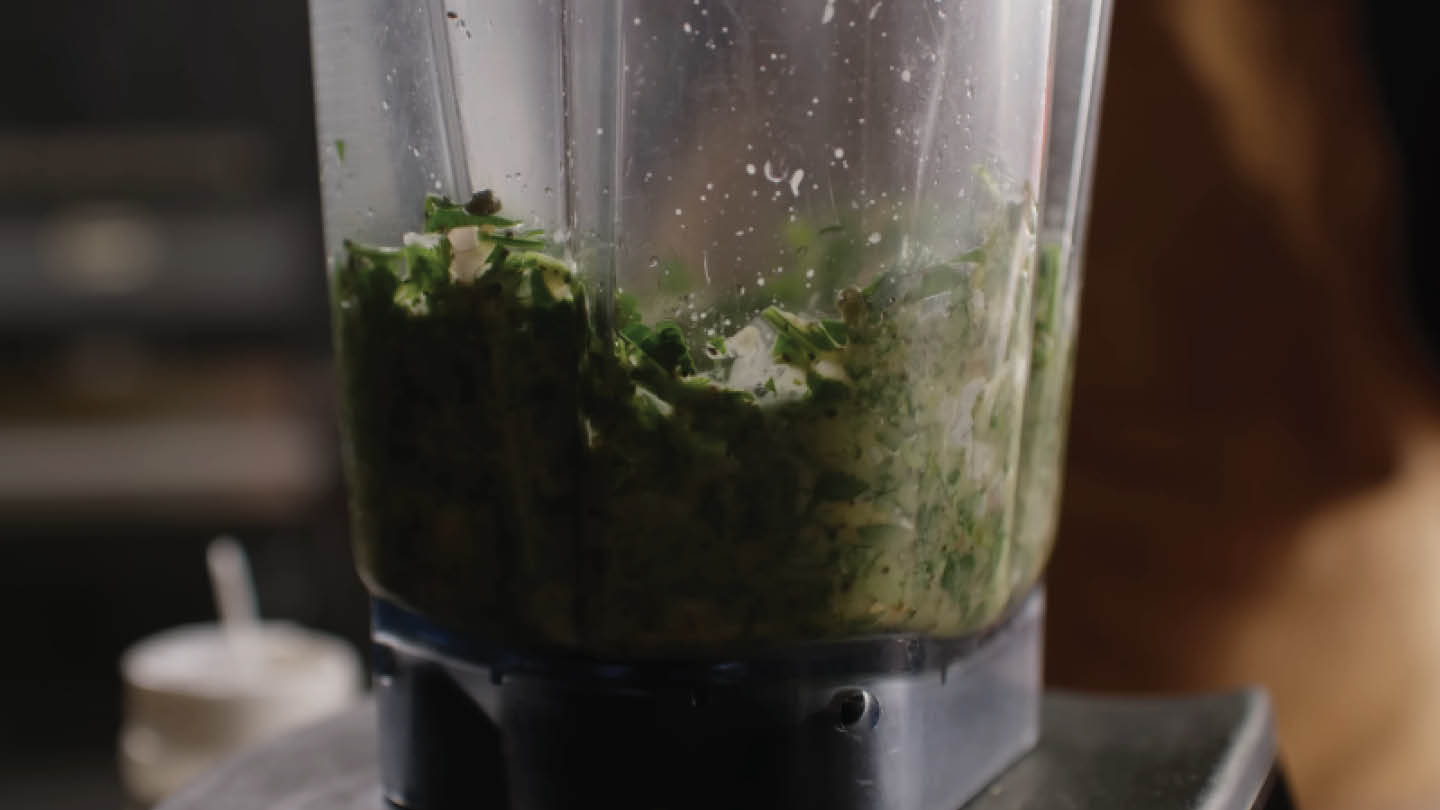
To make the chimichurri, combine all ingredients in a food processor and blend to desired consistency.
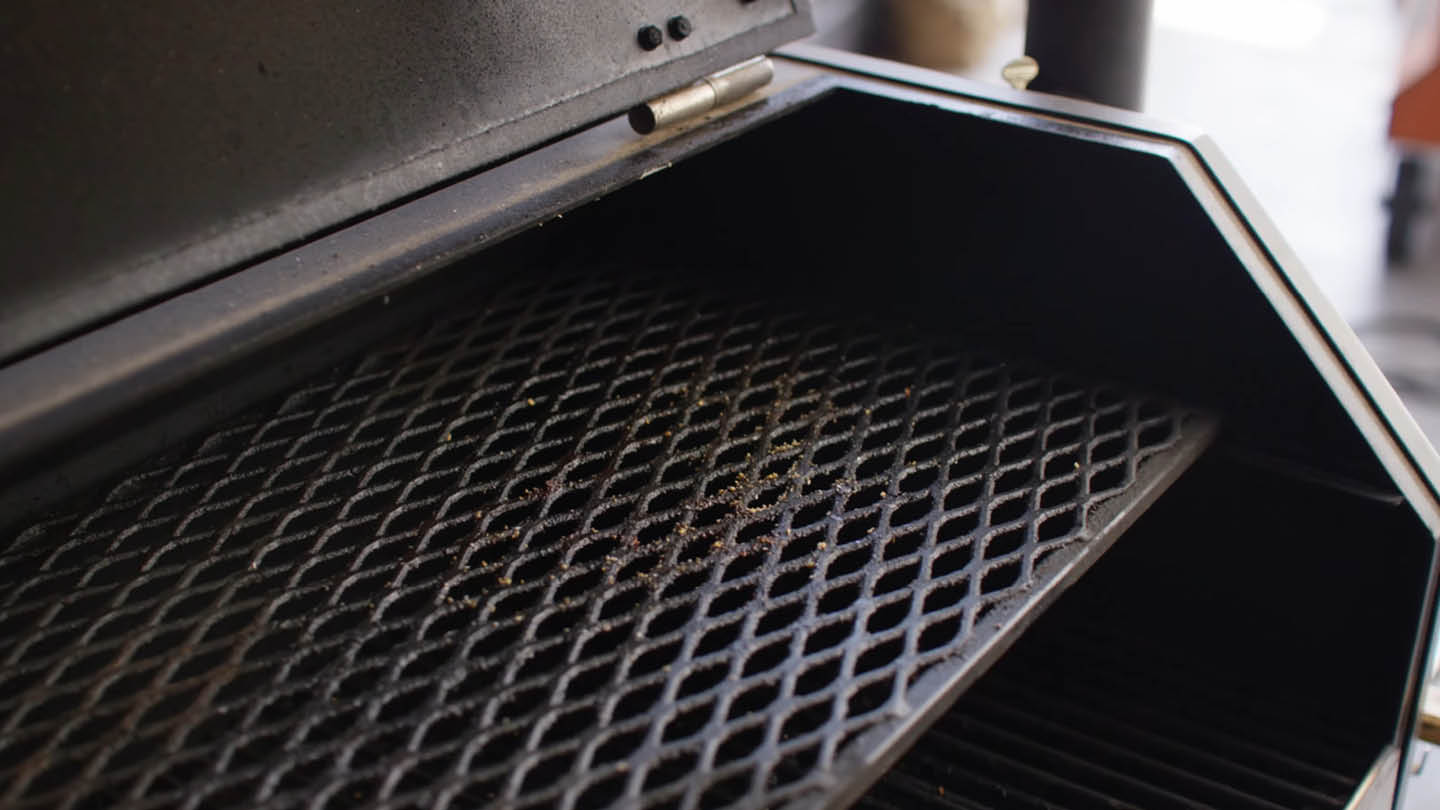
Preheat your Yoder Smokers YS640s Pellet Grill to 190ºF.
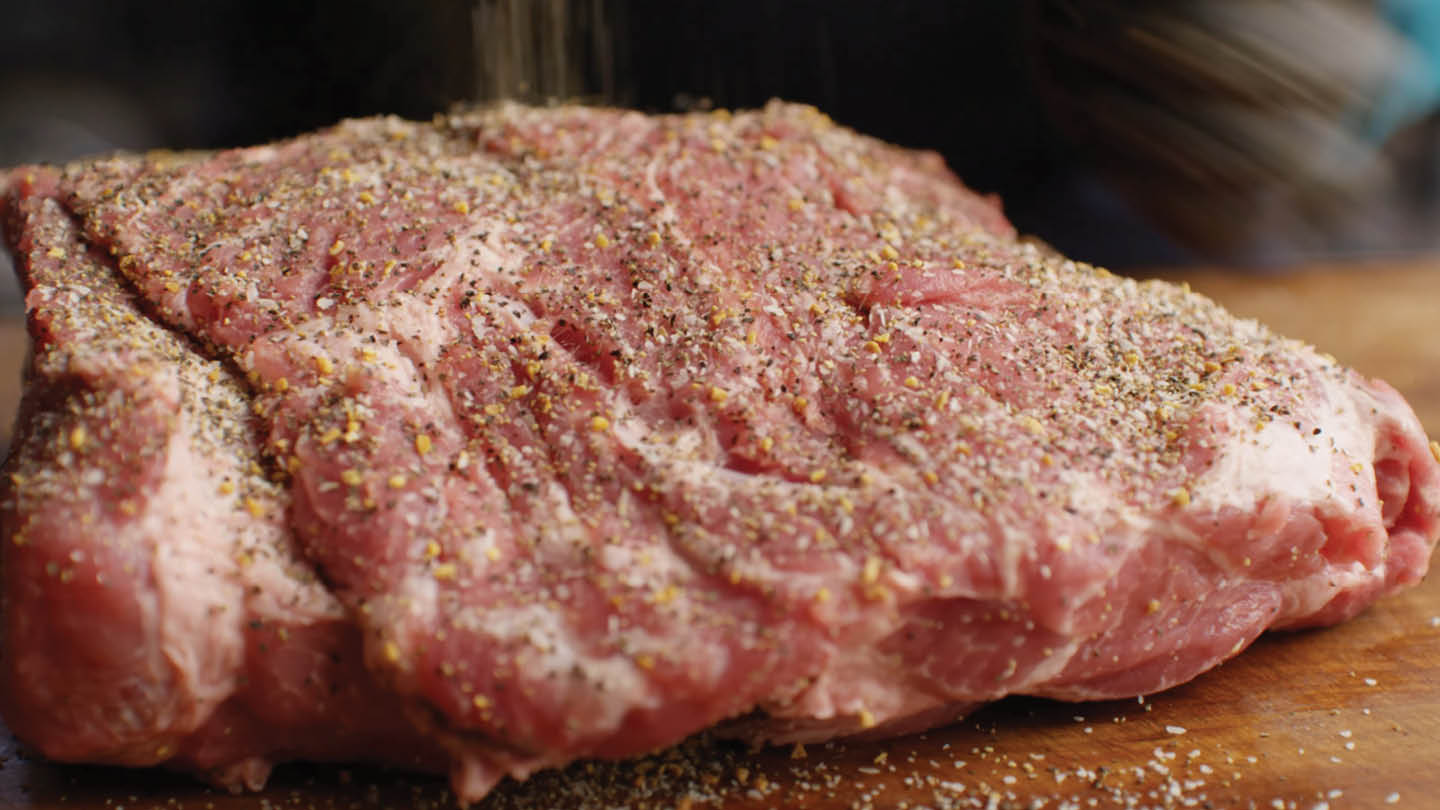
Trim your pork butt, then season with the Cattleman’s Grill Lone Star Brisket Rub.
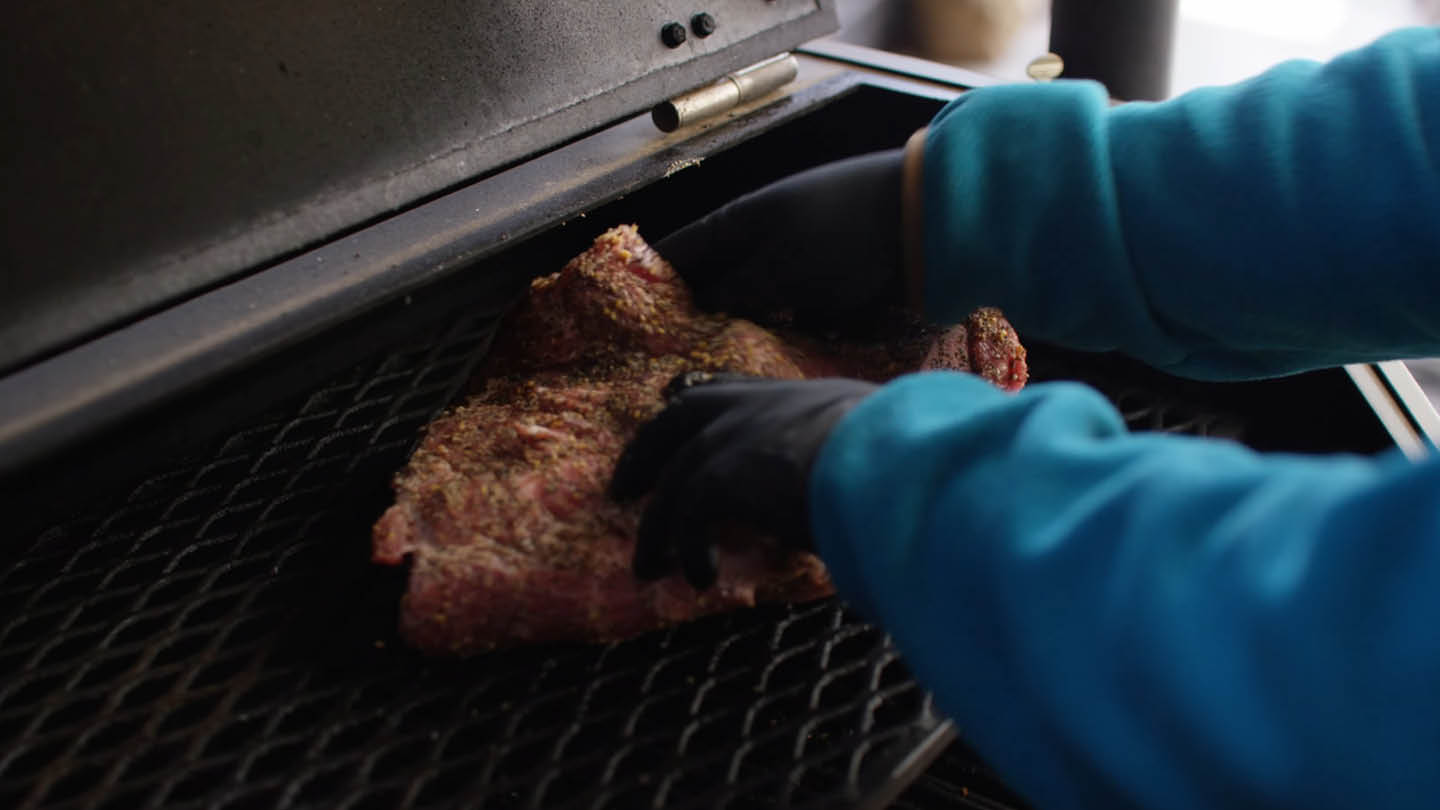
Place the pork butt on the second shelf of the grill and smoke overnight (8-12 hours).
When the internal temperature reaches roughly 160ºF and a bark is set, remove from the grill to wrap.
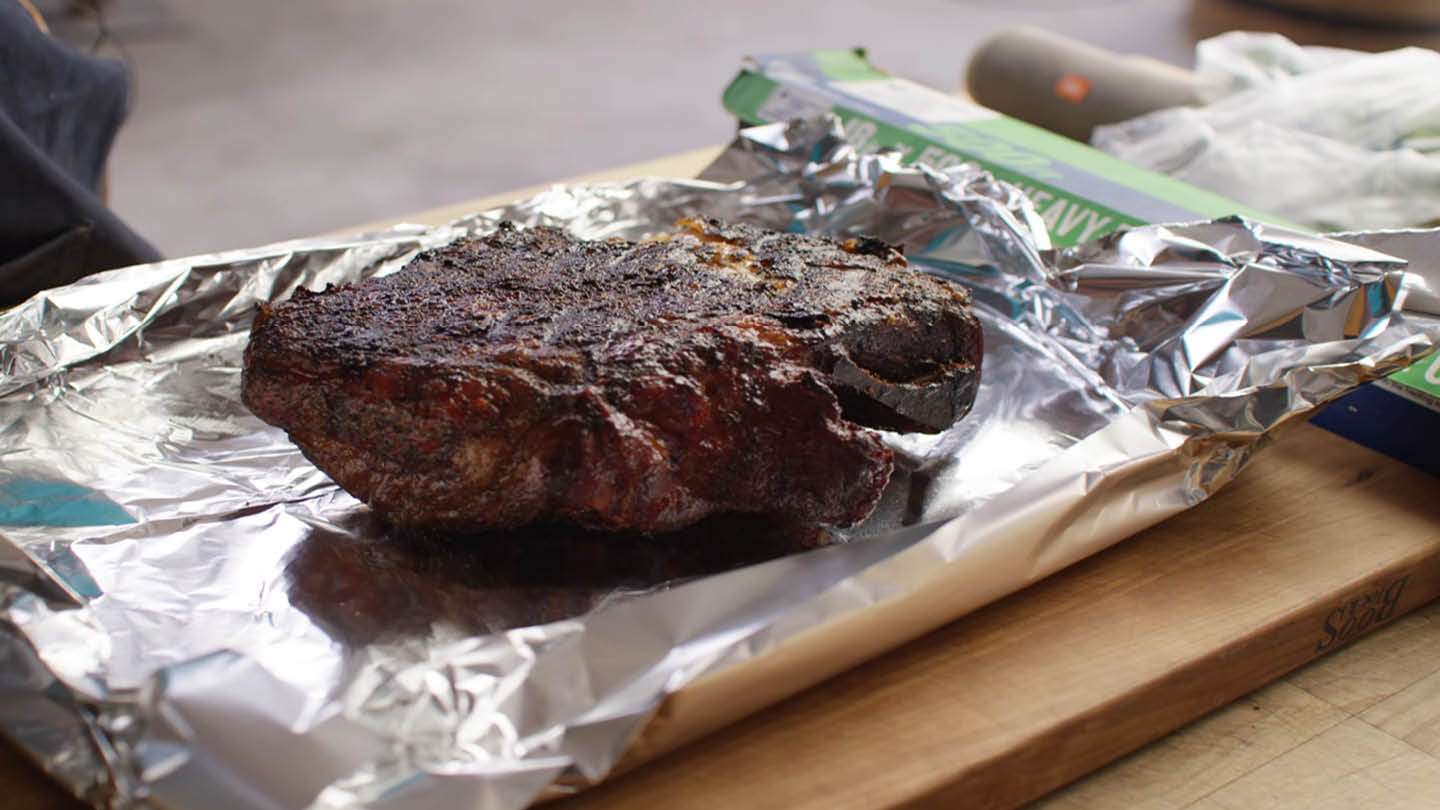
Place the pork on two sheets of heavy-duty foil and turn up the edges of the foil. Slather the pork in about one-half cup of the chimichurri (the rest can be reserved for later) and add the pineapple juice. Wrap tight in the foil.
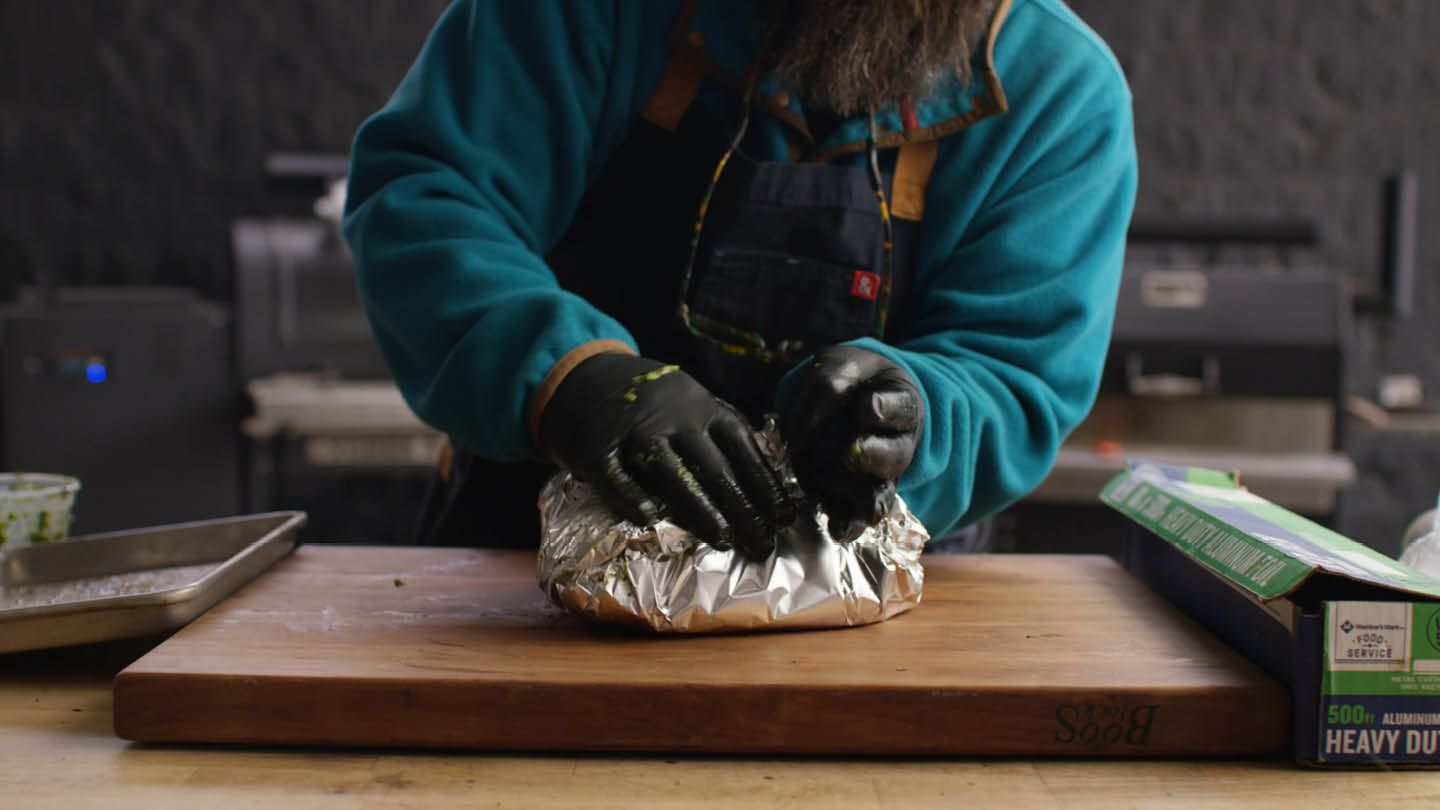
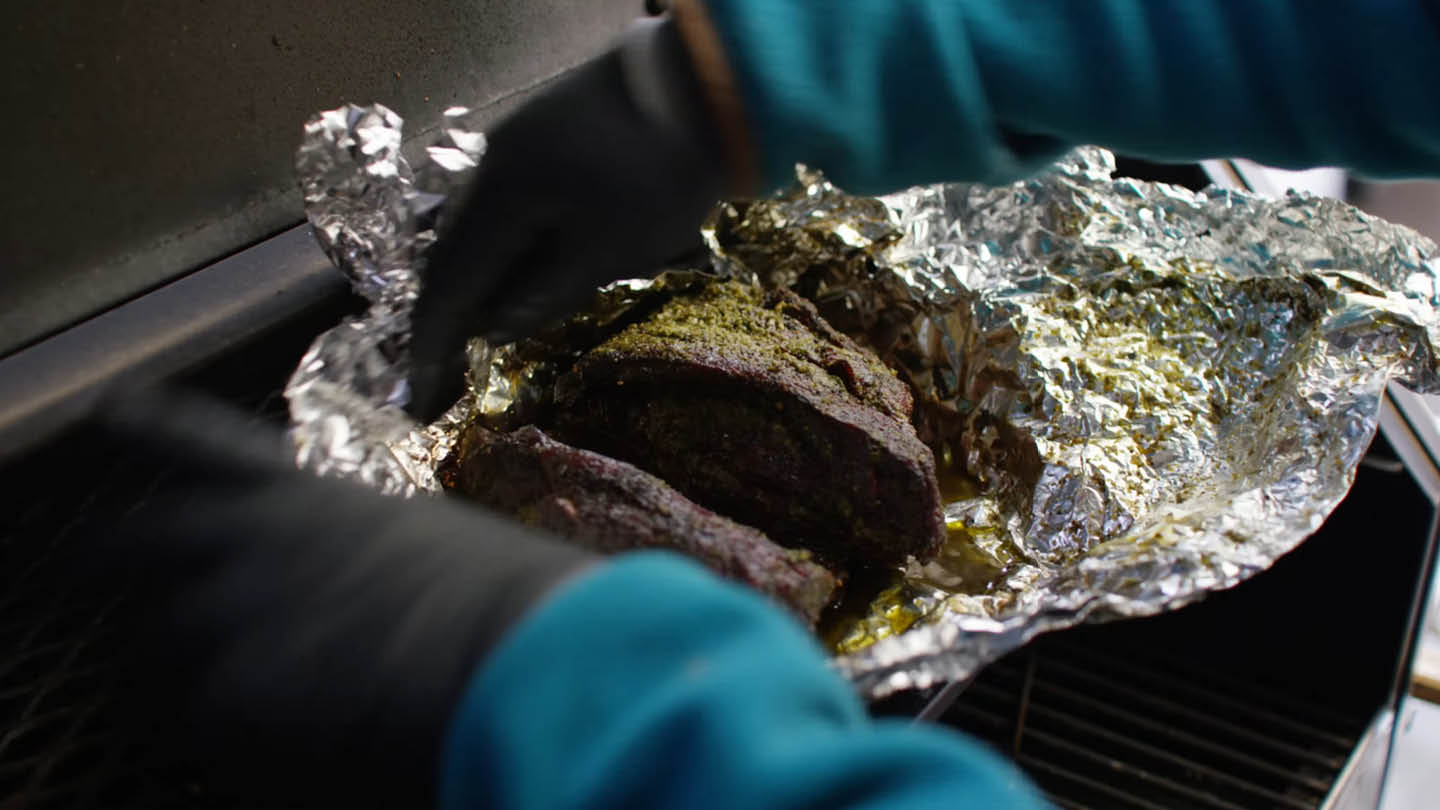
Raise temp to 275. Return to the grill and continue cooking until the pork is over 205ºF and the blade bone easily slides out.
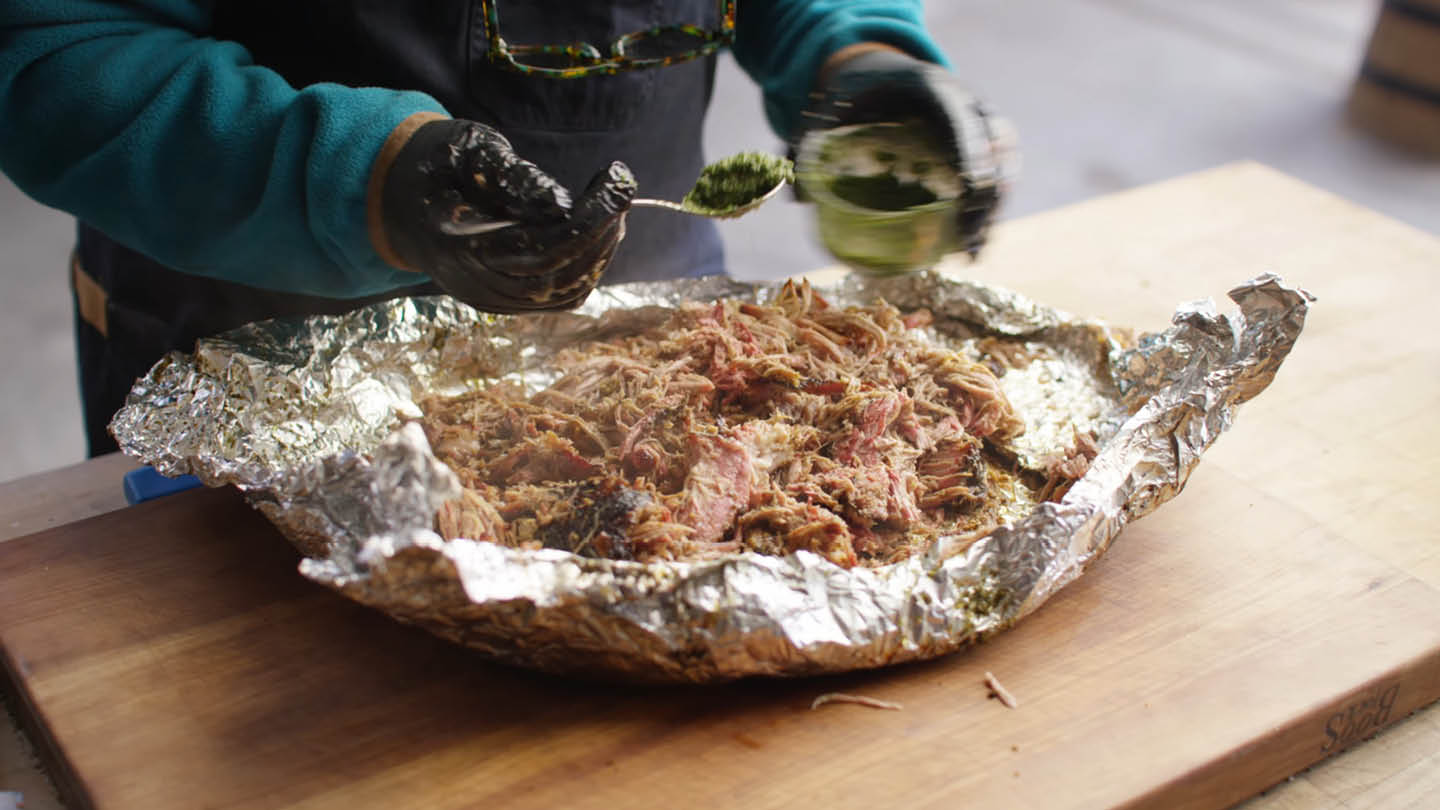
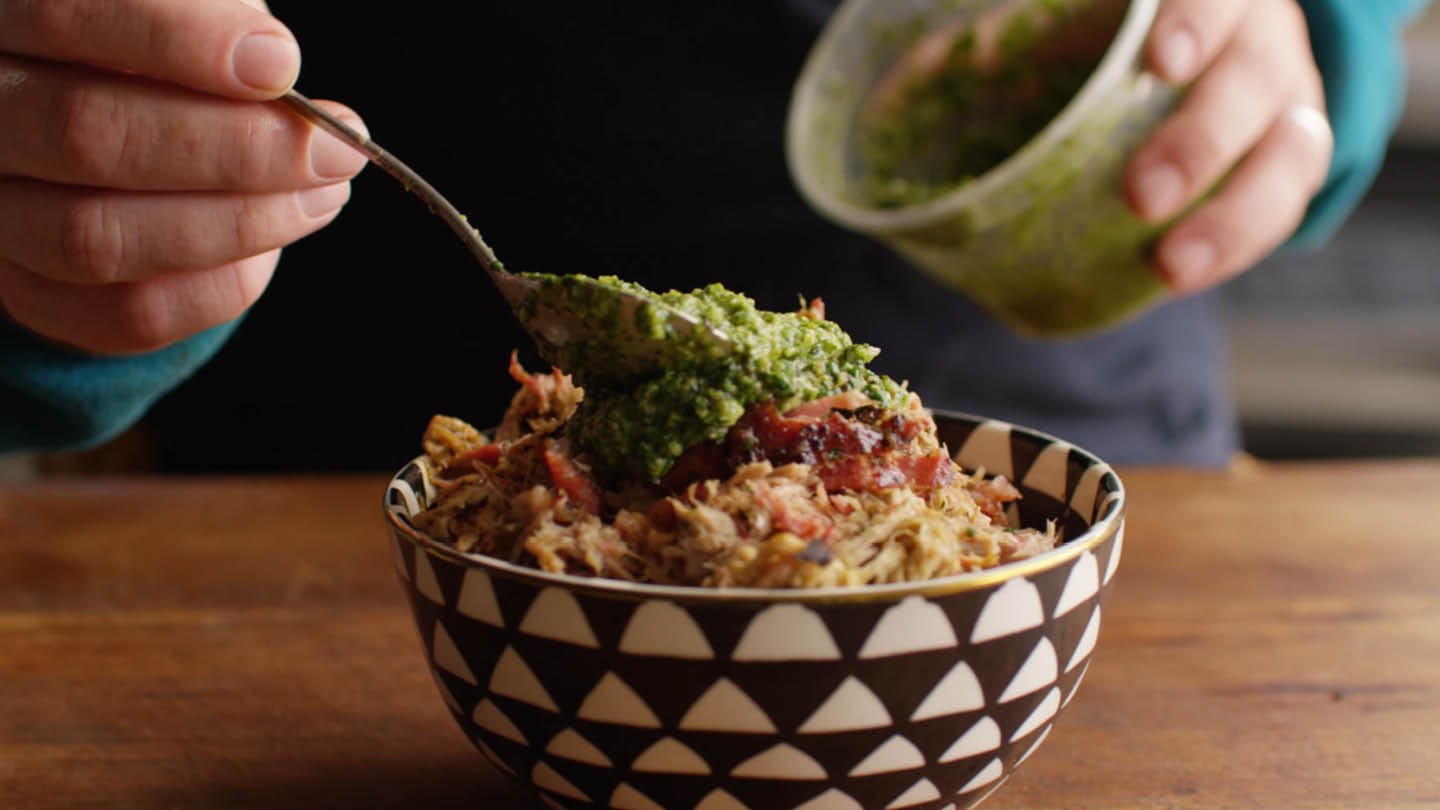
Shred the pork and serve topped with more chimichurri.
Recipe Note
Recipe FAQ
Why use chimichurri as a wrap liquid instead of butter or apple juice?
Most pulled pork wraps use butter, apple juice, or a simple glaze to add moisture during the braise phase. Using chimichurri instead serves two functions: the acidity from the red wine vinegar and the fat from the olive oil both contribute to tenderizing during the covered braise, and the herb and garlic flavors penetrate the interior of the shoulder during the hours it cooks wrapped. Surface application after pulling adds flavor only to the exterior; the chimichurri wrap distributes it throughout.
Why start at 190°F instead of the more common 225–250°F?
190°F is an extended low-and-slow approach that prioritizes bark development and smoke absorption over speed. At this temperature, the pork spends more time in the smoke window before reaching the 160°F wrap point — typically 8–12 hours overnight. This produces deeper smoke penetration and a more fully developed bark than cooking at higher temperatures. The tradeoff is time: plan for a full overnight cook before wrapping the following morning.
What does pineapple juice do in the wrap?
Pineapple juice contains bromelain, a natural enzyme that breaks down collagen — the connective tissue in pork shoulder that requires extended cooking to convert to gelatin. Adding it to the wrap accelerates this process during the final braise phase, contributing to the pull-apart tenderness at 205°F. Combined with the chimichurri's acidity, the wrap creates an active tenderizing environment. Avoid fresh-squeezed pineapple juice — canned or bottled is preferred because the bromelain in fresh juice can break down the meat too aggressively if left in contact too long.
How do I know when the bark is set enough to wrap?
Direction Step 5 specifies wrapping when the internal temperature reaches roughly 160°F and a bark is set. The visual cue is more reliable than the temperature alone: the exterior should be dark mahogany to near-black, dry to the touch, and firm when pressed with a gloved finger. A set bark will not smear when touched; an unset bark will. If the temperature hits 160°F but the bark still feels soft or tacky, give it another 30–60 minutes before wrapping.
How do I know when it's done after wrapping?
Direction Step 7 specifies over 205°F and the blade bone slides out easily. The bone test is the most reliable indicator of pull-ready tenderness — if the bone requires any force to remove, the collagen hasn't fully converted and the pork won't shred cleanly. Probe tenderness at multiple points with an instant-read thermometer: the probe should slide in with zero resistance everywhere, not just at the temperature probe site. If any spots resist, close the foil and continue cooking 15–30 minutes more.
Can I make this indoors?
2 out of 5 — Can be done inside, loses key flavor. A pork shoulder rubbed with Lone Star, placed in a Dutch oven with the chimichurri and pineapple juice, and cooked covered at 275°F for 6–8 hours produces excellent pulled pork. What you lose is the smoke ring, the mahogany bark from the overnight smoke phase, and the pellet smoke character that defines the recipe. Adding smoked paprika or a small amount of liquid smoke to the rub partially compensates, but the result is a braised pulled pork rather than a smoked one.
Recipe Highlights
Make the chimichurri first — before anything else: Direction Step 1 places the chimichurri before the preheat and trim for a reason. The chimichurri needs time to rest before it's used as a wrap liquid — at least 30 minutes allows the garlic and vinegar to mellow and the herb oils to infuse into the olive oil base. Made fresh and used immediately, chimichurri is sharper and more acidic; rested chimichurri is more cohesive and balanced. Making it first while the grill preheats (Step 2) is the correct sequence.
Place the pork on the second shelf — not the main grate: Direction Step 4 specifies the second shelf of the YS640s. The second shelf sits above the main cooking grate in the indirect convection zone, away from the firebox. At 190°F, the upper shelf position ensures the pork is exposed to clean circulating smoke rather than concentrated heat from the left side of the grill. This promotes even, gentle overnight cooking and prevents the bottom surface from over-rendering before the interior reaches temperature.
Use two sheets of heavy-duty foil, not one: Direction Step 6 specifies two sheets. A single sheet of heavy-duty foil is prone to puncture from the blade bone or crispy bark edges during the wrap, which allows the chimichurri and pineapple juice to leak out and the pork to steam rather than braise. Two overlapping sheets create a double-thickness barrier that holds the liquid throughout the final hours of cooking.
Reserve half the chimichurri for serving — don't use it all in the wrap: Direction Step 6 specifies using approximately half a cup of chimichurri for the wrap and reserving the rest for serving. The chimichurri that wraps the pork mellows significantly during the braise — it picks up rendered pork fat and loses its raw herb brightness. Fresh reserved chimichurri spooned over the finished pulled pork provides the sharp, verdant contrast that defines the dish. Using all the chimichurri in the wrap eliminates this contrast.
Recommended Recipes
Nutrition
Nutrition
- Nutrition Serving Size
- 24
- per serving
- Calories
- 293
- Fat
- 19 grams
- Saturated Fat
- 6 grams
- Cholesterol
- 53 milligrams
- Sodium
- 307 milligrams
- Carbs
- 14 grams
- Fiber
- 4 grams
- Sugar
- grams
- Protein
- 15 grams


