

Smoking Texas Style Brisket on a wood-fired offset smoker is a right of passage for amateur and pro pitmasters alike. Chef Tom shows you how to trim, season, and smoke this fantastic cut of meat from start to finish on the Yoder Smokers Wichita Offset Smoker.
WHAT YOU'LL LOVE
- A warming log system that keeps the fire steady. Rotating a pre-warmed split into the coal bed every 45 minutes maintains temperature without the spikes a cold log would cause.
- Trimmed for a long cook, not just for looks. Shaving the fat cap to 1/4" and rounding corners keeps thin edges from charring to waste over 7+ hours of smoke.
- Paper, not foil, for the wrap. Butcher paper lets the bark stay firmer through the stall instead of steaming it soft the way foil would.
- Two rest options for two schedules. A quick 2-hour room-temp rest or a long 4-8 hour cooler rest both work — pick whichever fits your timeline.
Best Texas Style Brisket
Tom Jackson
Rated 4.1 stars by 21 users
Category
Barbecue
Cuisine
American
Servings
17
Prep Time
30 minutes
Cook Time
15 hours
Calories
964
Experience the smoky, succulent flavors of a Texas-style brisket in your own backyard. Learn from Chef Tom the techniques to perfectly trim, season, and smoke this delicious cut of meat just like the pros on your own offset smoker! Unlock the flavor and aroma of a true Texas pitmaster’s delight!
Directions
- Light a chimney of lump charcoal in the fire box of the Yoder Smokers Loaded Wichita Offset Smoker. When the coals burn red to the top, dump in the back half of the fire box. Lay 2-3 splits of oak wood on top to immediately burn and lay one more split against the front wall of the fire box to warm for later.
- Adjust the airflow to stabilize the temperature around 250ºF. Roll the warming log over onto the coal bed about every 45 minutes to maintain the 250ºF temperature, replacing the warming log with a new log each time.
- Trim your brisket, removing any hard fat from the surface. Shave the soft fat down to about 1/4” thickness across the fat cap. Trim any fat and silver skin from the meat side of the brisket. Round corners and remove thin areas that will char up during the smoking process.
- Rub the brisket with a very thin layer of melted tallow. Season generously on all sides with Cattleman’s Grill Lone Star Brisket Rub. Press the rub into the meat and allow to tack up.
- Place the brisket on the smoker, point side (fat end) toward the fire box, and fat cap up (flat on bottom, point on top).
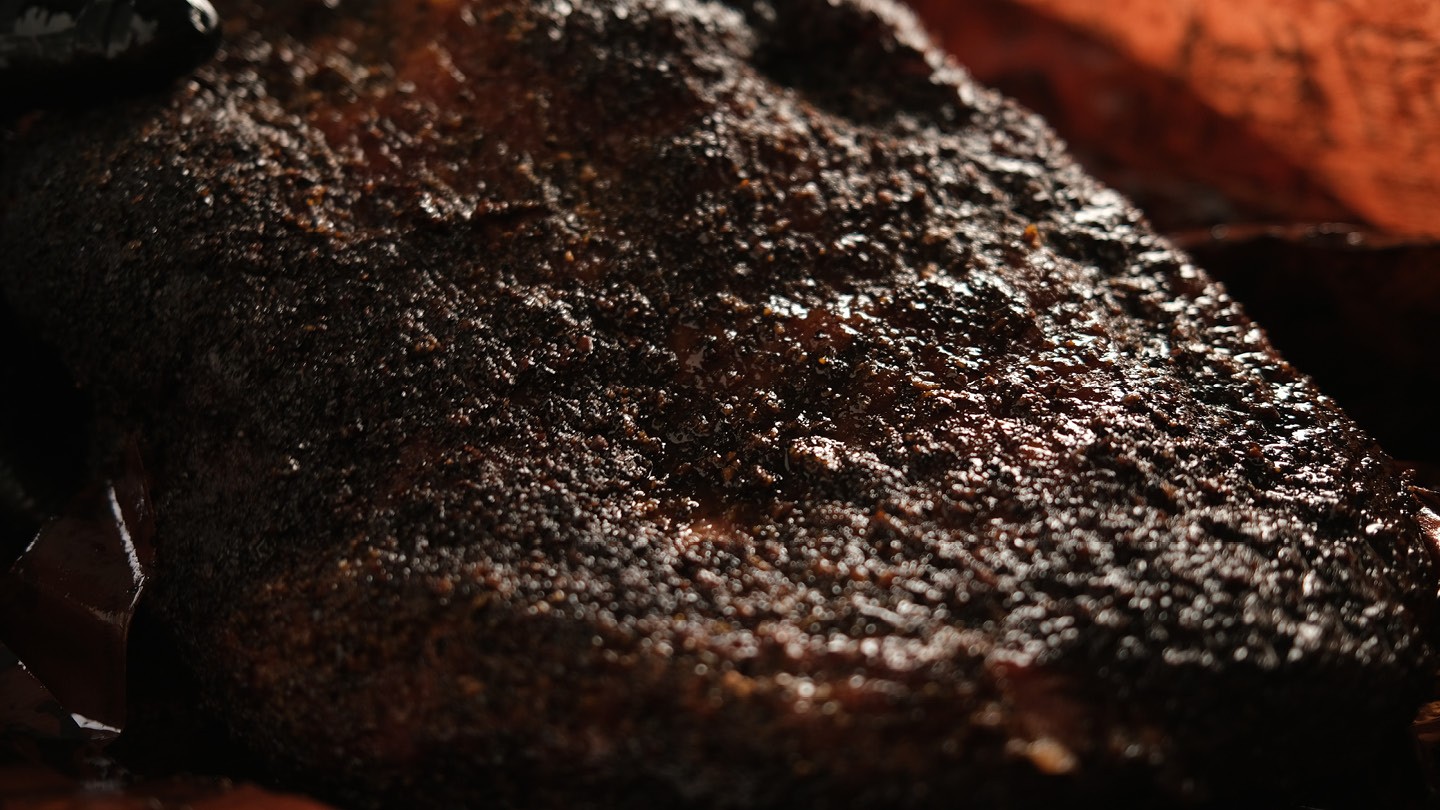
- Smoke until a dark crisp bark is formed and the internal temperature surpasses 165ºF, about 7-8 hours.
Remove the brisket from the smoker and transfer to two long (5 foot) sheets of butcher paper laid out to overlap one another width-wise in the center. Spread a layer of beef tallow under the brisket and on top of the brisket. Fold over the end of the paper to cover the top of the brisket, then fold in the sides of the paper to wrap the edges. Roll tightly to fully encase the brisket in butcher paper.
- Return the brisket to the smoker, still cooking fat side up.
- You may now run a slightly hotter fire, but keep it below 300ºF. Continue cooking until the brisket offers very little resistance when probed with a thermometer and the internal temperature surpasses 205ºF.
- Remove the brisket from the smoker and rest it inside the wrap.
For a quick rest, let it sit at least two hours at room temperature, fully wrapped. The internal temperature should come down into the 150ºF.
- For a long rest, wrap in foil and a towel and rest in a cooler 4-8 hours before slicing.
Slice and serve with Plowboys BBQ KC Crossroads BBQ Sauce, pickled onions, Holmes Made Dad's Spicy Dill Pickles, and white bread.
Recipe Note
Recipe FAQ
Why trim the fat cap to 1/4" instead of leaving it thicker?
A thinner, even fat cap renders more evenly over the long smoke and helps the rub and smoke actually reach the meat, rather than just sitting on a thick layer of fat.
Why wrap in butcher paper instead of foil?
Butcher paper is more breathable than foil, which helps push through the stall while keeping the bark firmer — foil tends to steam the surface soft.
How do I know when the brisket is actually done?
Look for "probe tender" — a thermometer should slide into the thickest part with very little resistance, usually once it's past 205ºF internal.
Should I do a quick rest or a long rest?
A quick 2-hour room-temp rest works if you're short on time; a 4-8 hour cooler rest (wrapped in foil and a towel) gives the juices more time to redistribute for a slightly more tender slice.
Why keep a warming log in the fire box?
Rotating in a pre-warmed log every 45 minutes keeps the fire's temperature steady — a cold log would cause a temperature dip and a puff of thick, bitter smoke.
How indoor-friendly is this recipe?
1 out of 5 — best on the grill. This recipe is built entirely around a wood-fired offset smoker; there's no meaningful indoor substitute for the multi-hour smoke and bark this technique produces.
Recipe Highlights
A warming log keeps the fire stable: Direction Step 2 rotates a pre-warmed oak split into the coal bed roughly every 45 minutes — that rotation is what maintains a steady 250ºF without temperature swings.
Trimmed to survive a long cook: Step 3 shaves the fat cap to about 1/4" and rounds the corners, which keeps thin, exposed areas from charring away over many hours of smoke.
Wrapped in paper, not foil: Steps 7–8 wrap the brisket in butcher paper once bark forms, letting it push through the stall while staying more breathable than a foil wrap would.
Pulled by feel, not just by number: Step 9 confirms doneness by checking for very little resistance when probed, alongside the 205ºF internal temperature — using both cues together rather than relying on temperature alone.
Recommended Recipes
Nutrition
Nutrition
- Nutrition Serving Size
- 4 oz
- per serving
- Calories
- 964
- Carbs
- 8 grams
- Protein
- 152 grams
- Fat
- 32 grams
- Sodium
- 1421 milligrams


