

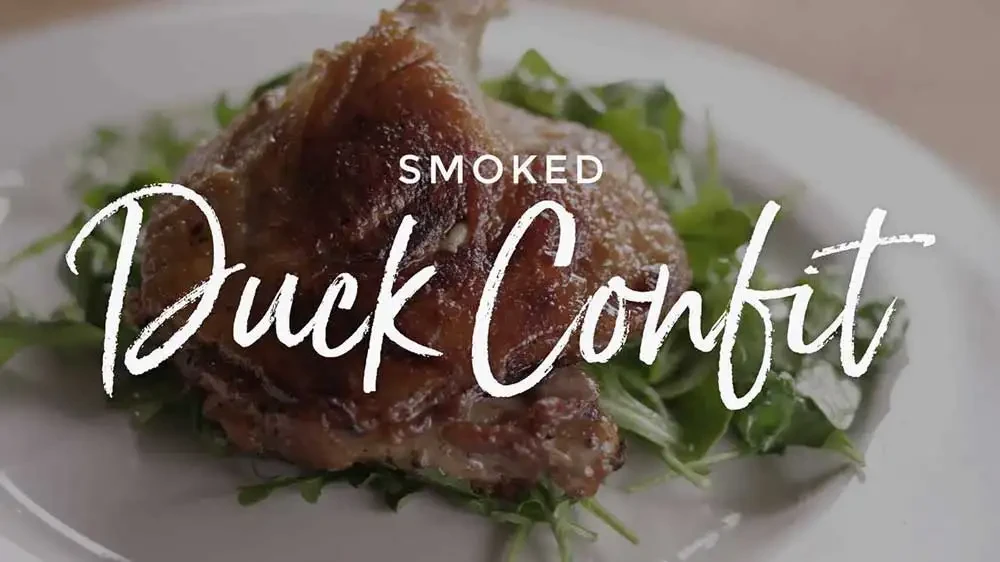
Make your a culinary classic, Smoked Duck Confit! Enjoy this smoky twist on a French favorite and tantalize your taste buds with its velvety texture and salted herbaceous flavor.
WHAT YOU’LL LOVE
- Cold-smoked and cured overnight: One hour of cherry and pecan smoke on salted legs, then a night in the refrigerator with garlic, thyme, bay leaf, and juniper massaged in, seasons the duck all the way through.
- Slow-cooked submerged in duck fat: Searing the skin first and then covering the legs in melted duck fat in a Dutch oven at 300°F cooks them until the meat is nearly falling off the bone, at around 195°F.
- Rested in the fat: Chilling the duck in its fat for two days lets the flavors settle before serving.
- Seared to serve: A hot skillet crisps the skin and reheats the leg, leaving the meat velvety under a crackling surface.
Smoked Duck Confit
Tom Jackson
Rated 2.9 stars by 19 users
Category
Entree
Cuisine
French
Servings
20
Prep Time
1 hour 15 minutes
Cook Time
1 hour 45 minutes
Calories
455
Check out this smoky spin on one of our favorite French classics. This Smoked Duck Confit, cold smoked and cooked on the Yoder Smokers Pellet Grill, has an incredibly velvety texture and wonderful salty herbaceous flavor!
Ingredients
- 4 duck leg quarters
-
Noble Saltworks Flaked Smoked Finishing Salt
- Black pepper
- 6 cloves garlic, crushed
- 6 sprigs fresh thyme
- 3 bay leaves, torn into pieces
- 2 tbsp juniper berries
-
2 quarts duck fat, melted
Directions
Turn on your Yoder Smokers YS640 Pellet Grill, but do not press the “start” button. This will allow the fans to run without producing any heat. Fill an A-Maze-N Tube Smoker with cherry and pecan pellets. Place on the main cooking grate, on the left side. Light with a torch. Close the lid on the smoker.
Season the duck legs generously with the Noble Saltworks Flaked Smoked Finishing Salt and freshly cracked salt. Place the seasoned duck legs on the second shelf of the grill. Cold smoke the duck legs for one hour. Remove from the grill. Place in a baking dish with the garlic, thyme, bay leaves and juniper berries. Massage the seasonings into the duck legs. Wrap tightly with plastic wrap. Place in the refrigerator overnight; up to 24 hours.
- Preheat the Yoder Smokers YS640 Pellet Grill to 300°F, set up for indirect grilling.
Remove the duck legs from the baking dish. Brush off the excess salt. Preheat a Lodge 7 Quart Dutch Oven. Melt a few tablespoons of duck fat in the dutch oven. Sear the skin side of the duck legs until browned. Add the seasonings from the baking dish, and enough duck fat to fully submerge the duck legs. Cover with the lid. Transfer to the grill.
Cook until the meat is very tender, and nearly falling off the bone. The internal temperature of the meat will be around 195°F. Remove from heat. Cool, with the lid off, to room temperature. Place the lid on top and transfer to the refrigerator. Let sit two days.
- Remove the duck from fat. Sear in a hot skillet to reheat.
- Strain the solids from the fat. Reserve the clean fat for future use.
Recipe Note
Recipe FAQ
What is duck confit?
Confit is a French method of cooking meat slowly while it's submerged in fat. The classic version uses duck legs, which cook in duck fat until very tender and can be stored in the fat.
Why cold smoke the duck before cooking it?
Running the grill's fans without heat, with a smoke tube burning, adds smoke flavor without cooking the duck. Because the duck is raw, keep it cold: use this step only in cool weather, and keep the total time the raw legs spend above 40°F under 2 hours (1 hour if it's above 90°F).
Why cure the duck overnight with herbs?
Salt, garlic, thyme, bay leaf, and juniper massaged into the legs season them deeply and draw out some moisture, which concentrates the flavor and firms the meat.
Why brush off the excess salt before cooking?
Brushing off the loose salt keeps the cured duck from turning too salty once it's cooked in fat, while the cure has already seasoned the meat.
Why sear the skin before submerging the legs in fat?
Searing in a hot Dutch oven browns the skin and renders some fat, which builds flavor before the slow cook.
What internal temperature should the duck reach?
Poultry is safe at 165°F. Confit is cooked well past that, to about 195°F, when the meat is very tender and nearly falling off the bone.
How should I cool the confit?
A large pot of fat holds heat for a long time. Let it cool uncovered for no more than about 2 hours in total, then cover it and refrigerate. For faster cooling, transfer the legs and fat to a shallower container.
Why rest the duck in the fat for two days?
The fat seals out air, and the flavors mellow and spread through the meat as it sits. Keep it fully submerged and refrigerated at 40°F or below the whole time.
How do I reheat the confit?
Lift the legs out of the fat and sear them skin side down in a hot skillet until the skin is crisp and the meat is hot, to 165°F in the center.
What should I do with the leftover duck fat?
Strain out the solids through a fine sieve and refrigerate the clean fat in a covered container. Use it within about 2 weeks, or freeze it for longer storage.
How indoor-friendly is this recipe?
3 out of 5. A 300°F oven can cook the legs in fat in the same Dutch oven, and the cure and sear work the same way, but you'd lose the cold smoke.
Recipe Highlights
Cold smoke and overnight cure: Season the duck deeply.
Slow cook in duck fat: Makes the meat velvety and tender.
Two-day rest in the fat: Lets the flavors mellow.
Skillet sear: Crisps the skin before serving.
Recommended Recipes
Nutrition
Nutrition
- Nutrition Serving Size
- 4 oz
- per serving
- Calories
- 455
- Carbs
- 2 grams
- Protein
- 52 grams
- Fat
- 25 grams
- Sodium
- 145 milligrams


