

Experience the succulent taste of Duck à l'Orange like never before, from the Grill! Revel in the juiciness and crisp texture of this classic French-style dish - sizzling hot and packed with flavor!
WHAT YOU’LL LOVE
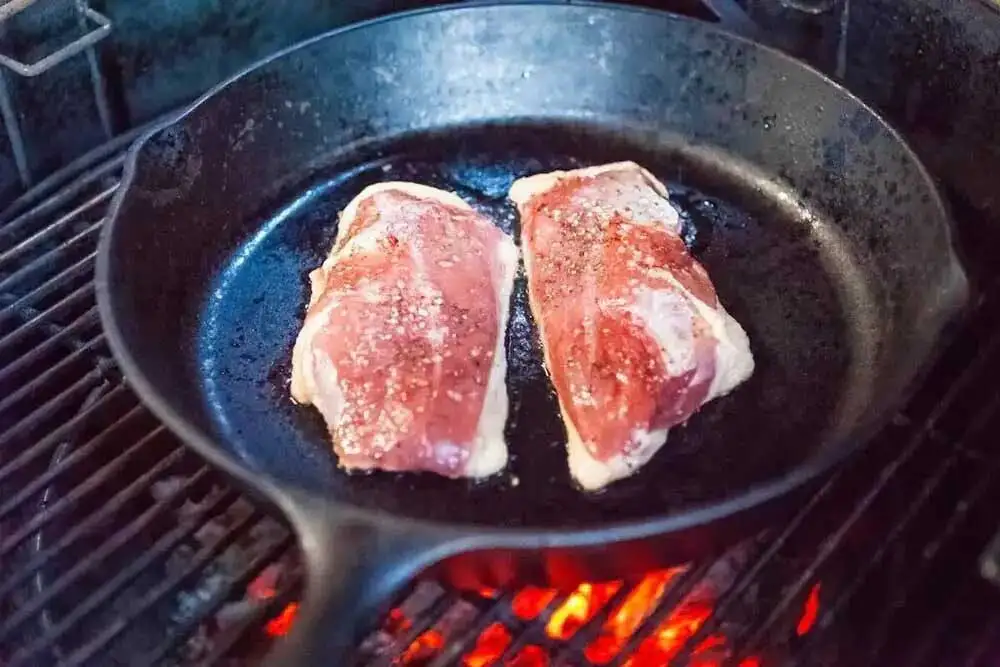
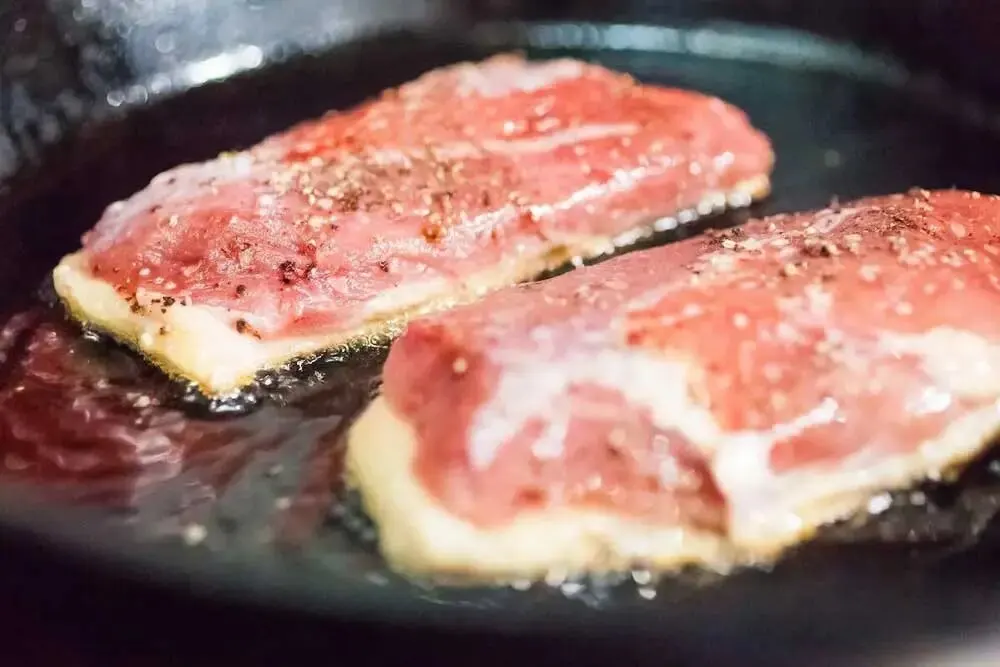
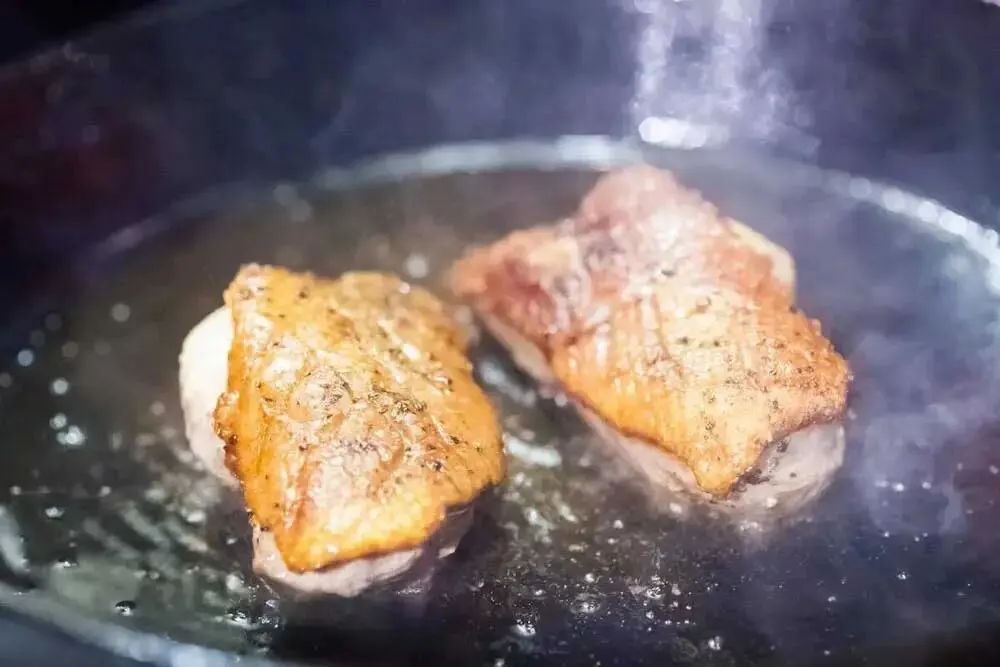
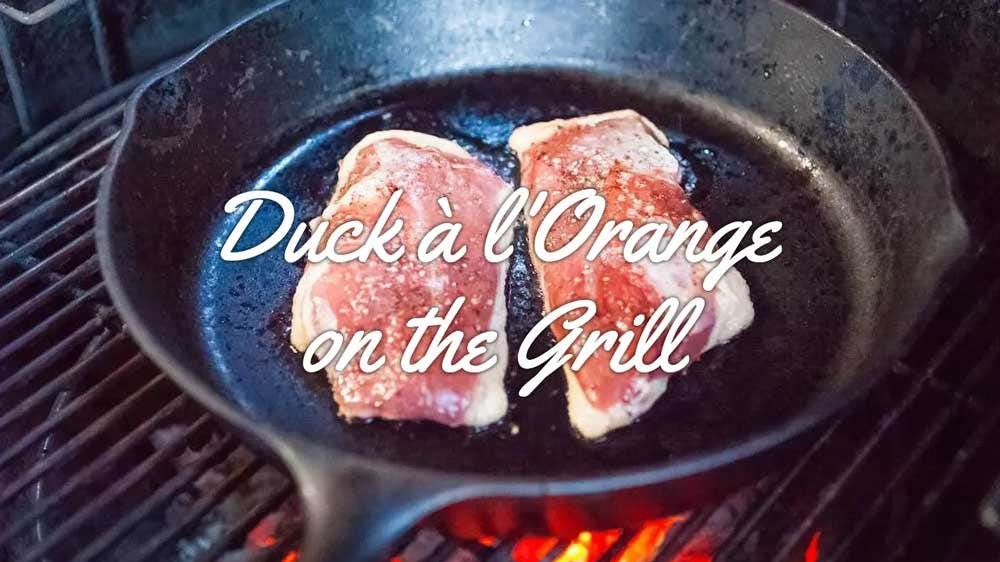
- Skin-side-down sear in cast iron: Starting the breasts skin side down in a preheated 12" skillet renders the fat and browns the skin, which turns crisp and golden.
- Hickory smoke over a hot fire: Hickory chunks on the coals at 400°F with the lid closed flavor the duck while it finishes cooking.
- Pan sauce from the drippings: Sugar and vinegar caramelized in a small skillet, then orange liqueur, stock with the pan drippings, orange juice, and lemon juice, reduce into a glossy sauce.
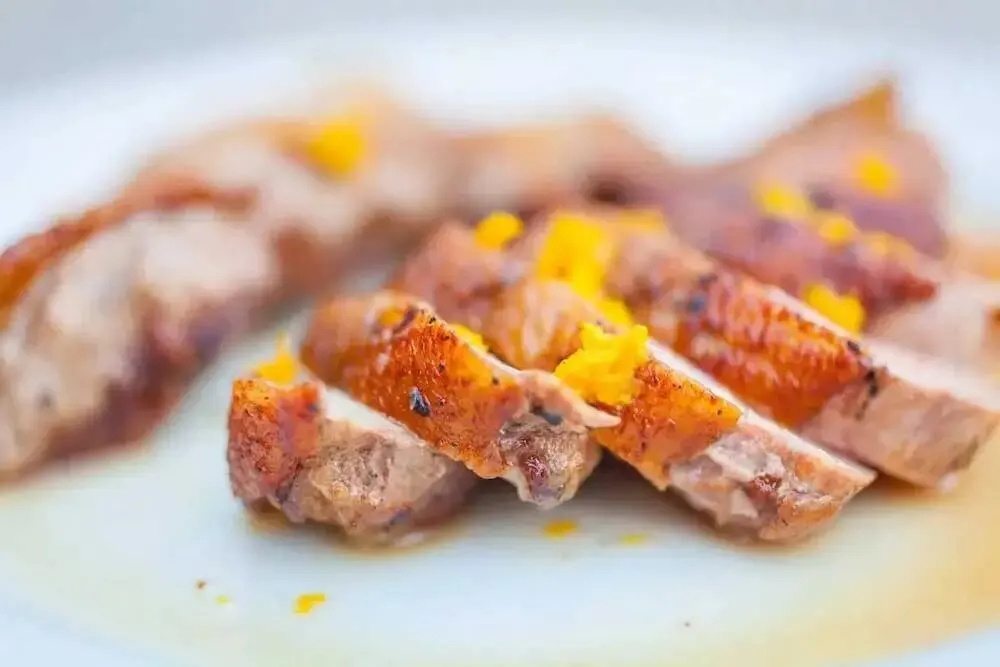
- Butter and zest to finish: Swirling in a tablespoon of butter and straining the sauce gives it a silky texture, and fresh orange zest on the sliced duck adds a bright aroma.
Duck à l'Orange on the Grill
Tom Jackson
Rated 5.0 stars by 1 users
Category
Entree
Cuisine
French
Servings
2
Prep Time
40 minutes
Cook Time
15 minutes
Calories
319
Experience the classic French-style dish of Duck à l'Orange like never before with a sizzling BBQ Grill! Deliciously juicy and perfectly crisp, your taste buds will savor the flavors of this traditional dish.
Ingredients
- 2 duck breasts
- 1 cup duck or chicken stock
- 1 tbsp white sugar
- 1 tbsp champagne or white wine vinegar
- 2 tbsp orange liquor
- 1 1/2 cup orange juice
- juice of 1 small lemon
- 1 tbsp unsalted butter
- 1 tbsp orange zest
Directions
Preheat your charcoal grill for high heat (400°F) direct grilling. Place 3-4 fist-sized chunks of hickory wood on the coals. Place a Lodge 12” Cast Iron Skillet on the cooking grate to preheat.
- Place the duck breasts skin side down in the skillet. Cook until seared and browned, flip and close the lid of the grill. Continue cooking until the internal temperature reaches 150°F. Remove the breasts from the skillet, cover and put in a warm place.
- Deglaze the skillet that the breasts were cooked in with the duck/chicken stock. Scrape up the fond from the bottom of the skillet with a wooden spoon. Remove from the grill.
Place a smaller cast iron skillet on the grill. Add the sugar and vinegar and cook until the sugar begins to caramelize. Remove from the heat and whisk in the orange liquor. Return the skillet to the heat. Add the stock, pan drippings, and orange and lemon juices. Cook until the sauce is slightly thickened; about 10 minutes. Remove from the heat. Add the butter and swirl until incorporated. Strain the sauce.
- Slice each duck breast and top with the orange zest. Ladle the sauce over the top to serve.
Recipe Note
Recipe FAQ
Why start the duck breasts skin side down?
Duck skin has a thick layer of fat underneath. Starting skin side down in a hot skillet renders that fat slowly and crisps the skin, while the meat cooks gently from the other side.
What should I do with the rendered duck fat?
Duck breasts release a lot of fat in the skillet. Spoon off most of it, leaving about a tablespoon of the drippings and the browned bits to flavor the sauce. Save the extra fat for roasting potatoes.
Why add hickory wood to the coals?
The chunks smolder with the lid closed and add a smoky flavor that suits the richness of the duck.
What internal temperature should the duck reach?
USDA's minimum for poultry, including duck, is 165°F. This recipe pulls the breasts at 150°F and rests them covered, which gives a medium, slightly pink center that many cooks prefer for duck breast. Anyone who prefers to follow USDA guidance should cook the breasts to 165°F.
Why rest the duck covered in a warm place?
Resting lets the juices settle back into the meat, and covering it keeps the breasts warm while the sauce finishes.
Why caramelize the sugar with vinegar first?
Cooking the sugar and vinegar together until the sugar begins to caramelize makes a sweet-sour base, called a gastrique, that gives the sauce depth and balances the orange juice.
Why take the pan off the heat before adding the orange liqueur?
Liqueur added to a very hot pan, especially over a live fire, can flare up. Taking the skillet off the heat first lets you whisk it in safely.
Why swirl in the butter and strain the sauce?
Butter swirled in off the heat gives the sauce a glossy, silky finish, and straining removes any bits so it's smooth.
How thick should the sauce be?
It should be slightly thickened, about 10 minutes of simmering, so it lightly coats a spoon without turning syrupy.
What can I use in place of orange liqueur?
Grand Marnier or Cointreau both work. For an alcohol-free sauce, use a little extra orange juice with a pinch of zest.
How should I store leftovers?
Refrigerate the duck and the sauce within 2 hours of cooking. They keep for about 3-4 days, and the sauce reheats gently on the stovetop.
How indoor-friendly is this recipe?
5 out of 5. A cast iron skillet on the stovetop sears the breasts, a 400°F oven finishes them, and the sauce is a stovetop recipe. You'd lose the hickory smoke.
Recipe Highlights
Skin-side-down sear: Renders the fat and crisps the skin.
Hickory smoke: Adds flavor while the duck finishes.
Orange pan sauce: Builds sweet, tart depth from the drippings.
Butter and zest finish: Add gloss and aroma.
Recommended Recipes
Nutrition
Nutrition
- Nutrition Serving Size
- 4 oz
- per serving
- Calories
- 319
- Carbs
- 27 grams
- Protein
- 18 grams
- Fat
- 10 grams
- Sodium
- 1580 milligrams


