

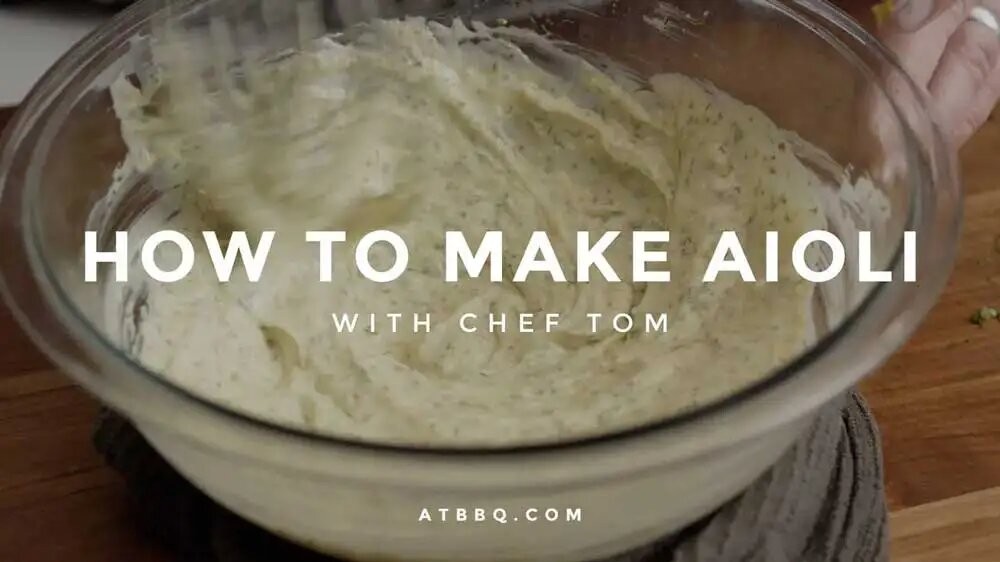
Chef Tom walks us through the process of making a modern aioli. This Grilled Lemon Dill Aioli is a hybrid of the classic aioli and mayonnaise, and with the kiss of char from the Napoleon Grills Prestige P500, it’s a perfect condiment for everything from seafood to burgers to grilled veggies and more!
WHAT YOU'LL LOVE
- Roasting the garlic in a sealed foil pouch with olive oil softens it fully while keeping all the oil contained, rather than losing it to the grill below
- Charring the lemon halves over direct flame before juicing adds a smoky depth to the citrus that plain, unroasted lemon juice wouldn't have
- Combining the reserved roasting oil with vegetable oil for the emulsion means the garlic's roasted flavor carries into the oil itself, not just the minced cloves
- Starting the oil drizzle in single drops before speeding up builds a stable emulsion gradually, rather than risking the aioli breaking from oil added too quickly at the start
Grilled Lemon Dill Aioli
Tom Jackson
Rated 5.0 stars by 1 users
Category
Condiment
Cuisine
American
Servings
20 tablespoons
Prep Time
30 minutes
Cook Time
30 minutes
Calories
97
Chef Tom guides us through a modern Grilled Lemon Dill Aioli! Combining the traditional aioli with mayonnaise, this rich and creamy condiment will enhance any dish with its zesty, vibrant flavor.
Ingredients
-
1/4 cup extra virgin olive oil
- 6 cloves garlic
- 3/4 cup vegetable oil
- 1 whole lemon
- 1 egg yolk
-
2 tbsp Kozlik’s Dijon Classique Mustard
- 1 tbsp malt vinegar
- 2 tbsp baby dill, minced
-
Noble Saltworks Hickory Smoked Salt, to taste
Directions
- Set up your Napoleon Grills Prestige P500 gas grill with direct and indirect zones, igniting and turning half of the burners to high heat, and leaving the other two off.
Create a foil pouch/bowl. Place the garlic and extra virgin olive oil in the foil and crimp closed, taking care not to let the oil leak out.
- Place the pouch on the indirect side of the grill, away from direct flame, and cook until the garlic is softened, about 15 minutes.
- At the same time, remove the zest from the lemon with a microplane grater. Save the zest for later. Slice the lemon in half. Grill both halves over direct flame to char the surface.
- When the lemon has cooled, juice half of the lemon. Reserve the other half for garnish.
- When the garlic is softened, remove from the grill and open the pouch slightly to let the garlic cool. When the garlic is cooled, remove the papery skins of the garlic and discard. Finely mince the softened flesh of the garlic.
Add the extra virgin olive oil from the pouch to the 3/4 cup vegetable oil.
- Place your egg yolk in a medium mixing bowl. Whisk in one tablespoon of grilled lemon juice, as well as the minced roasted garlic.
- While constantly whisking, drizzle the oils into the mixing bowl with the yolk and lemon juice, very slowly; starting with just drops at a time. The mixture should emulsify as you whisk in more of the oil.
- *If the oil appears to be separated, start the process over with a new yolk, slowly drizzling in the broken aioli into the yolk, and then the oil.
- As you add more oil to the emulsification, you can can increase the speed and quantity of the oil being added. Continue whisking constantly until all of the oil is incorporated.
- At this point you can whisk in the Kozlik’s Dijon Mustard, malt vinegar and minced baby dill. Season with Noble Saltworks Hickory Smoked Salt, to taste.
Recipe Note
Recipe FAQ
Why roast the garlic in a sealed foil pouch instead of directly on the grill?
Crimping the foil closed around the garlic and olive oil keeps the oil fully contained as it cooks, rather than letting it leak out and burn on the grates below.
Why char the lemon halves over direct flame before juicing them?
Grilling the cut sides first adds a smoky depth to the lemon juice that plain, unroasted citrus wouldn't carry into the finished aioli.
Why combine the reserved roasting oil with the vegetable oil for the emulsion?
Using the oil the garlic roasted in means its flavor carries into the base of the aioli itself, not just through the minced garlic cloves mixed in separately.
Why start the oil drizzle in single drops before increasing the speed?
Adding it drop by drop at first lets the emulsion begin forming gradually and reliably. Pouring the oil in too quickly from the start risks the mixture breaking and separating instead of thickening into a stable aioli.
Is the aioli safe to eat given the raw egg yolk?
The egg yolk here is never cooked — it's whisked raw to build the emulsion, which carries a small salmonella risk similar to other classic raw-egg sauces like mayonnaise or hollandaise. If you'd rather avoid that, look for a pasteurized egg yolk instead.
How indoor-friendly is this recipe?
4 out of 5 — a broiler or stovetop cast iron skillet can char the lemon halves and roast the garlic in place of the grill; the emulsion itself comes together entirely with a whisk and bowl.
Recipe Highlights
Sealed-pouch garlic roasting: Softens garlic while keeping the oil contained.
Grill-charred lemon: Adds smoky depth to the citrus juice.
Reused roasting oil: Carries garlic flavor into the emulsion base.
Gradual oil incorporation: Builds a stable emulsion without breaking.
Recommended Recipes
Nutrition
Nutrition
- Nutrition Serving Size
- 0.75 oz
- per serving
- Calories
- 97
- Carbs
- grams
- Protein
- 70 grams
- Fat
- 30 grams
- Sodium
- 313 milligrams


