

Enjoy Valentine's Day with a feast of flavor! Yoder Smokers YS640s Pellet Grill makes it easy to prepare a succulent Surf & Turf dinner with the perfect balance of tender, butter-poached lobster and a juicy, dry-aged ribeye.
WHAT YOU'LL LOVE
- Starting the butter sauce while the steaks are still cooking: Beginning the white wine butter sauce as soon as the ribeyes hit the grill means both components finish around the same time, instead of the steak sitting and cooling while the sauce comes together.
- Building the emulsion one pat of butter at a time: Adding butter gradually and stirring constantly creates a stable emulsion instead of a broken, oily sauce, which would happen if all the butter went in at once.
- Poaching the lobster in the same sauce it's served in: Basting the tails directly in the butter sauce as they cook infuses the meat with that flavor throughout, rather than cooking the lobster separately and adding sauce only at the end.
- Watching the sauce temperature, not just the heat setting: Keeping the butter sauce between 160-180°F while poaching prevents it from simmering and breaking, which would ruin the emulsion the recipe just built.
Dry Aged Ribeye & Butter Poached Lobster
Tom Jackson
Rated 5.0 stars by 1 users
Category
Entree
Cuisine
American
Servings
2
Prep Time
20 minutes
Cook Time
27 minutes
Calories
538
Chef Tom fires up the Yoder Smokers YS640s Pellet Grill for a Valentine's Day Surf & Turf Recipe with Grilled Dry Aged Ribeye & Butter Poached Lobster!
Ingredients
- 2 Dry Aged Creekstone Farms Prime Ribeye Steaks
-
Cattleman’s Grill California Tri-Tip Seasoning
- 2 lobster tails, meat removed from shells
-
1 tbsp EVOO
- 1/3 cup shallots, minced
- 1/4 cup white wine
- 2 cloves garlic, sliced
-
1 tbsp Cattleman’s Grill California Tri-Tip Seasoning
- 1/2 lb (2 sticks) cultured butter
For the Butter Poached Lobster:
Directions
- Preheat your Yoder Smokers YS640s Pellet Grills to 450ºF, set up for direct grilling (diffuser door or entire diffuser removed), with GrillGrate grilling panels installed over the fire box.
- Season the steaks with the Cattleman’s Grill California Tri-Tip Seasoning, loaded into a spice grinder for a finer texture.
- Place the steaks on the GrillGrates. Close the door and immediately begin cooking the white wine butter sauce for the poached lobster. Flip the steaks and rotate until the internal temperature reaches 125ºF-130ºF in the center, then remove and cover with foil until ready to serve.
- To make the white wine butter sauce, start by warming the oil in a Lodge 8” Cast Iron Skillet over medium heat. Add the shallot, sliced garlic and Cattleman’s Grill California Tri-Tip Seasoning. Cook until the shallots are softened and translucent.
- Add the white wine to the skillet and reduce until nearly all of the liquid is gone. Then slowly add two tablespoons of butter and stir constantly until the butter is gone. This will begin to create a temporary emulsion. As the butter melts, add more butter, one pat at a time, stirring constantly. Continue this process until all butter is incorporated and the sauce is formed.
- Add the lobster to the skillet. Cook over low heat, frequently basting the top of the lobster tails with the butter sauce. If the sauce begins to simmer, turn off the heat to cool the temperature. Ideally, the temperature of the sauce should be between 160ºF-180ºF as the lobster cooks.
When the lobster reaches 135ºF, remove from the skillet. Slice each tail in half lengthwise for service.
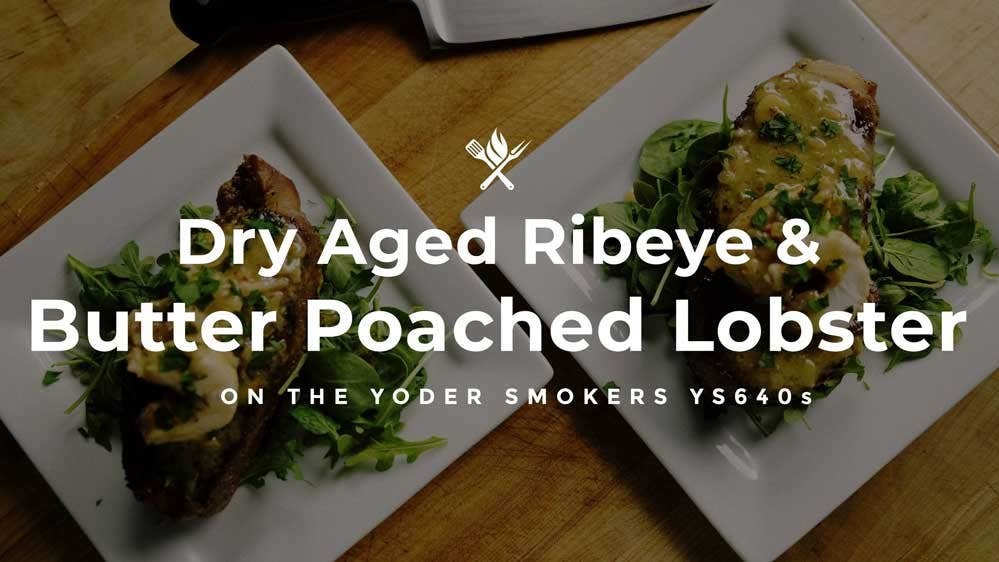
- Serve each grilled dry aged ribeye steak topped with a lobster tail and more of the white wine butter sauce spooned over the top.
Recipe Note
Recipe FAQ
Why start the butter sauce as soon as the steaks hit the grill?
Beginning the white wine butter sauce right away means both components finish around the same time, instead of the steak sitting and cooling while you build the sauce afterward.
Why add the butter gradually instead of all at once?
Adding one pat at a time while stirring constantly builds a stable emulsion. Dumping in all the butter at once would likely break the sauce into something oily and separated instead of smooth and glossy.
Why poach the lobster directly in the butter sauce instead of cooking it separately?
Basting the tails in the sauce as they cook lets that flavor infuse the meat throughout, rather than cooking the lobster plain and only adding sauce as a topping at the end.
Why watch the sauce's temperature instead of just a heat setting?
Keeping the butter sauce between 160-180°F prevents it from simmering hard enough to break the emulsion you just built — turning off the heat briefly if it starts to bubble protects the sauce's texture.
What internal temperature should the lobster actually reach?
This recipe pulls it at 135°F, but USDA's minimum safe internal temperature for shellfish is 145°F. Cook the lobster to at least 145°F to make sure it's fully safe before serving.
What internal temperature should the ribeye actually reach?
This recipe pulls it at 125-130°F, a rare-to-medium-rare finish. As a whole-muscle cut of beef, this is safe and standard practice — there's no minimum cook temperature requirement the way there is for ground meat or shellfish.
How indoor-friendly is this recipe?
3 out of 5 — a hot cast iron skillet handles both the steak sear and the butter-poaching step just as well as the grill setup; the grill mainly adds a touch of char to the ribeye.
Recipe Highlights
Parallel cooking: Starting the butter sauce while the steaks grill keeps both components finishing together.
Gradual butter emulsion: Adding butter one pat at a time keeps the sauce smooth instead of broken.
Basted poaching: Cooking the lobster directly in the sauce infuses flavor throughout, not just on top.
Temperature-watched sauce: Staying below a simmer protects the emulsion from breaking.
Recommended Recipes
Nutrition
Nutrition
- Nutrition Serving Size
- 14.79 oz
- per serving
- Calories
- 538
- Carbs
- 7 grams
- Protein
- 80 grams
- Fat
- 22 grams
- Sodium
- 712 milligrams


