

Experience the rich flavor of butter-roasted lobster in record time with the Kamado Joe Classic III! Chef Eric Gephart's Quick & Easy Butter Roasted Lobster Tail recipe will tantalize your taste buds and leave you wanting more!
WHAT YOU'LL LOVE
- Diamond-scoring the tail meat: Cutting a crosshatch pattern into the loins after loosening the meat from the shell increases the surface area exposed to heat and butter, so more of the lobster picks up roasted, buttery flavor than a plain whole tail would.
- Fanning the meat out over the shell: Laying the scored meat over the sides of the shell instead of leaving it tucked inside shortens the cooking time and gives the tail a dramatic, restaurant-style presentation.
- Roasting in butter inside cast iron: Cooking the tail directly in butter in a hot skillet bastes the meat continuously while it roasts, instead of leaving butter as a separate dip added only at the end.
- Reusing the pan drippings as a dipping butter: Swirling the remaining butter through the fond left in the skillet after the lobster comes out turns pan drippings into a richer dipping sauce than plain melted butter alone.
Quick & Easy Butter Roasted Lobster Tail
Eric Gephart
Rated 5.0 stars by 1 users
Category
Entree
Cuisine
American
Servings
2
Prep Time
20 minutes
Cook Time
13 minutes
Calories
225
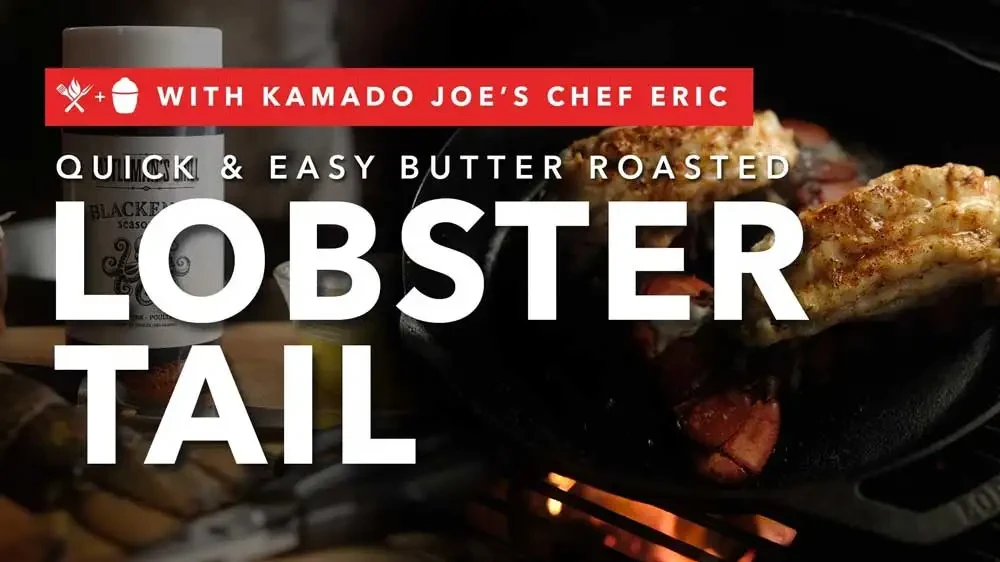
Chef Eric Gephart fires up the Kamado Joe Classic III for Quick & Easy Butter Roasted Lobster Tail. This method increases the surface area for more roasted lobster butter flavor, decreases cooking time and makes for a beautiful presentation!
Ingredients
- 2 (6 - 8 oz) lobster tails
- 1/4 cup drawn butter, unsalted
-
Cattleman’s Grill Blackening Seasoning
- 1/4 bunch fresh parsley, for garnish
- 1 lemon wedge
Directions
- Using Shun shears, cut down the center of the top of the tail down to the base but not into the tail fin fan. With the shell in your palm and the cut in the shell facing up, squeeze the shell to break the abdomen. Break off a bit of the top of the shell on the left and right just before the fan of the tail. This will allow the meat to lay flat when pulled out.
- Use your fingers to gently work the meat out of the shell but keep it attached at the fan. Using a sharp knife, score the top of the meat down middle of both loins- enough to be able to lay the meat over the sides of the shell. Now diamond score the entire tail fanning it out further. This increases the surface area for roasting as well as speeds the cooking process a bit.
- Stabilize your Kamado Joe Classic III at 500ºF. (I choose direct but feel free to go indirect)
- Season the fabricated tail with butter and Cattleman’s Grill Blackening Seasoning. Set the prepped tail in a Lodge cast iron skillet. Transfer the pan with the lobster tail on the grill grate (be sure to fan the tail out as much as possible, however you have the tail is how it will set. It is a better presentation if it is fanned out.)
- Close the grill lid and cook for 12 to 15 minutes until you reach an internal temperature of 155ºF - 160ºF, or until it is firm and sliceable.
- Remove the tails from the pan and pour the remaining drawn butter into the cast iron, swirl it around so it can accept the lobster fond on the bottom of the pan then transfer the butter to a dipping ramekin.
Tear off the tail from the shell, slice the lobster into bite size pieces, add a touch of fresh squeezed lemon juice and dip in the lobster butter. Enjoy!
Pro Tip: If you want a firmer tail, you can rip the cooked tail from the shell and place the tail directly on the grill grates for 1 additional minute.
Recipe Note
Recipe FAQ
Why diamond-score the lobster meat before cooking it?
Cutting a crosshatch pattern into the loins increases the surface area exposed to heat and butter, so more of the meat picks up roasted, buttery flavor than a plain, unscored tail would.
Why fan the meat out over the shell instead of leaving it tucked inside?
Laying the loosened meat over the sides of the shell shortens the cooking time since more surface is directly exposed to heat, and it also makes for a more dramatic presentation on the plate.
Why roast the tail directly in butter in a cast iron skillet?
Cooking the lobster right in butter bastes the meat continuously as it roasts, building flavor throughout the cook instead of leaving butter as a separate dip only added at the end.
Why swirl the leftover butter through the pan drippings before serving it as a dip?
The fond left behind in the skillet after the lobster cooks carries concentrated roasted flavor. Swirling the butter through it turns plain melted butter into a richer dipping sauce.
What internal temperature should the lobster tail actually reach?
This recipe targets 155-160°F, which is above the USDA minimum of 145°F for shellfish — a safe target. If you prefer a more traditional, slightly more tender lobster texture, you can pull it closer to 145°F and still be fully safe.
Why place the cooked tail directly on the grill grates for an extra minute if you want it firmer?
Removing the tail from the buttery pan and finishing it directly on the hot grate drives off a bit more moisture and firms up the texture, for those who prefer a less delicate bite.
How indoor-friendly is this recipe?
4 out of 5 — a hot cast iron skillet under a broiler or on the stovetop can replicate the roasting and butter-basting; the kamado grill mainly adds a touch of char to the finished dish.
Recipe Highlights
Diamond-scored meat: Increases surface area for more roasted, buttery flavor.
Fanned presentation: Speeds cooking and makes for a striking plate.
Butter-roasted in cast iron: Bastes the meat continuously instead of dipping only at the end.
Fond-enriched dipping butter: Turns pan drippings into a deeper-flavored sauce.
Recommended Recipes
Nutrition
Nutrition
- Nutrition Serving Size
- 6.5 oz
- per serving
- Calories
- 225
- Carbs
- 2 grams
- Protein
- 37 grams
- Fat
- 7 grams
- Sodium
- 915 milligrams


