

Kosmo's Q Wing Dust helps you create a deliciously flavorful experience with wings. Get ready to share the best chicken wings you've ever tasted; savory, smoky, and sure to impress. With a carefully crafted blend of spices, this dust unlocks a new level of flavor for any adventure in wings.
WHAT YOU'LL LOVE
- Cooking the wings completely plain before seasoning, rather than brining or rubbing them first, lets the dust itself be the only flavor added, with nothing competing against it
- Taking the wings to 175°F instead of stopping at the 165°F minimum renders more of the fat and connective tissue in the bony wing, making them more tender to eat
- Tossing the hot wings with the dust in a bowl lets the chicken's own rendered juices combine with the seasoning, forming a light sauce that clings to the wing rather than sitting as dry powder on top
- Applying the same "cook naked, then dust" method across every Wing Dust flavor keeps the technique identical regardless of which seasoning is used, so there's only one method to learn for the whole product line
Nashville Hot Wings
Britt Shoffner
Rated 5.0 stars by 1 users
Category
Appetizer
Cuisine
American
Servings
10
Prep Time
10 minutes
Cook Time
30 minutes
Calories
159
Who doesn’t love wings? Actually, I hate to ask that rhetorical question, because, quite frankly, I don’t want to know who doesn’t like wings. Not liking wings is akin to not enjoying music or films. Of course, there’s plenty of people out there who have yet to have a great chicken wing. And luckily, with Kosmo’s Q Wing Dust, it doesn’t get any easier to achieve just that.
Directions
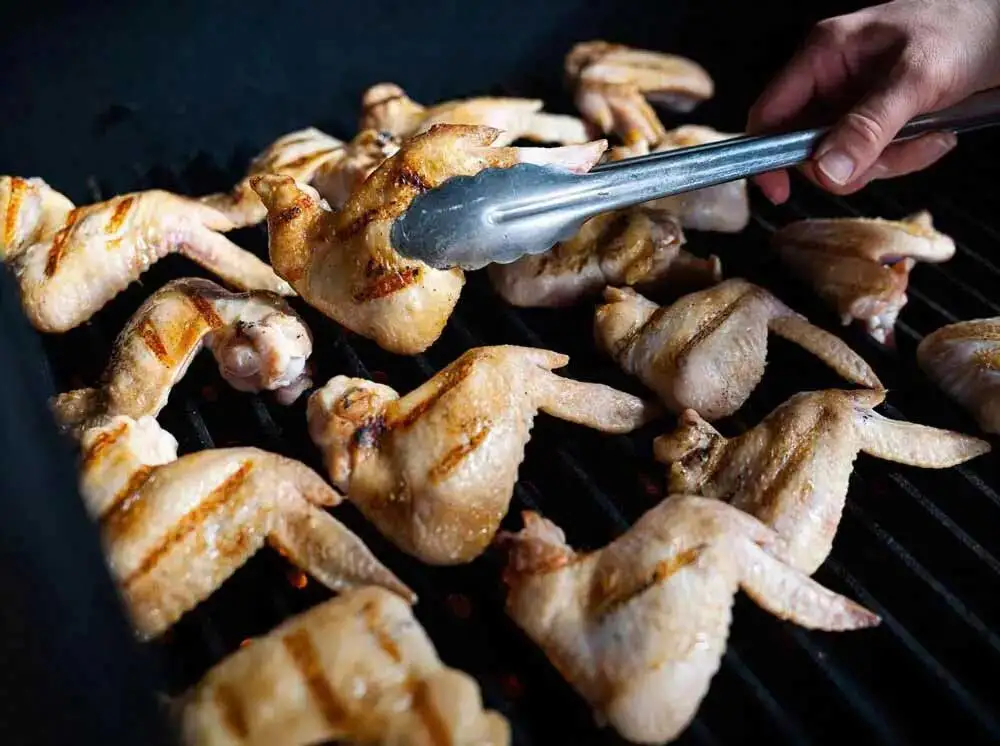
The instructions for making wings with Wing Dust is incredibly easy. Simply cook your wings naked (no seasoning, no brine, etc), remove from the grill, sprinkle on the dust, toss the wings, and watch the magic happen. Below I’ve got whole wings being seared over direct heat on the Yoder Smokers YS640s Pellet Grill. I simply took the wings out of the package and threw them whole on a hot grill, turning and rotating them to get an even cook until they reach a minimum internal temperature of 165°F. And because wings are so bony and fatty, they get a little more tender if you take them up to 175°F.
After they’re properly cooked with the color and grill marks I like (that took all of 10 minutes, maybe?), I get a big bowl together and sprinkle on as much Wing Dust as I prefer. It really doesn’t take much to get a big flavor impact. In fact, one bag is enough for over 100 wings! That is potential, y’all!
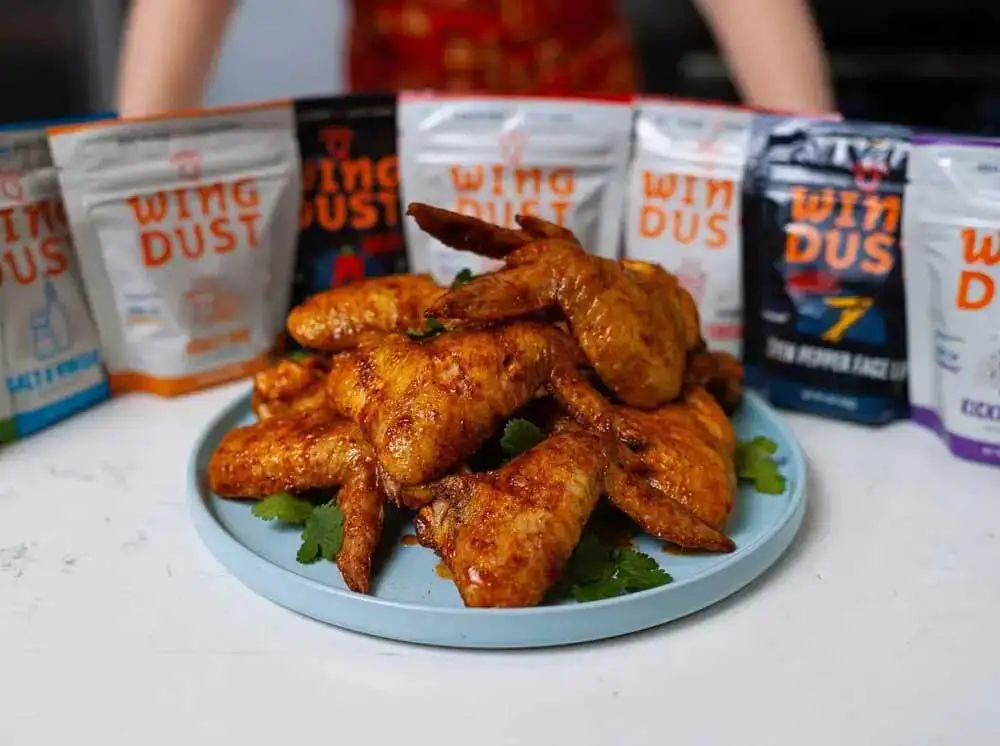
Once you start tossing the wings, the natural fatty juices coming off the chicken begin combining with the dust, creating a sauce that perfectly adheres to the wing. The Nashville Hot flavor has a really great, creeping heat level and combines sweetness with a buttery edge.
Luckily, the same principle and theory apply to all of Kosmo’s Q Wing Dust flavors. Simply “Cook ’em naked!” and “Dust ’em up!” Even better, each flavor comes with great recipe suggestions to expand outside the realm of wings. Because this product dissolves and melds so well into anything with a little moisture, it is extremely versatile.
Recipe Note
Recipe FAQ
Why cook the wings with no seasoning or brine at all before adding the dust?
Grilling them "naked" means the Wing Dust is the only flavor applied to the chicken, letting it stand on its own rather than competing with a brine or rub already on the meat.
Why take the wings to 175°F instead of stopping at the 165°F minimum?
Because wings are bony and fatty, carrying them a bit further renders more of that fat and connective tissue, making the finished wing more tender than pulling it right at the minimum temperature.
Why toss the wings with the dust in a bowl immediately after they come off the grill?
Tossing them while hot lets the chicken's own rendered juices combine with the dust, forming a light, clinging sauce rather than leaving the seasoning as dry powder sitting on the surface.
Why does the same "cook naked, then dust" method work across every Wing Dust flavor?
Keeping the technique identical regardless of flavor means there's only one method to learn for the whole product line — only the seasoning itself changes from wing to wing.
What internal temperature should the wings actually reach?
This recipe cooks them to a minimum of 165°F, matching the USDA minimum for poultry, and often takes them to 175°F for extra tenderness.
How indoor-friendly is this recipe?
4 out of 5 — a broiler or air fryer can cook the wings to the same internal temperature; you'll lose some of the char and grill marks a live grill produces.
Recipe Highlights
Unseasoned pre-dust cooking: Lets the Wing Dust stand alone as the only flavor.
Extended cook to 175°F: Renders more fat for a more tender wing.
Hot-toss application: Combines rendered juices with dust into a clinging sauce.
Consistent method across flavors: One technique works for the entire product line.
Recommended Recipes
Nutrition
Nutrition
- Nutrition Serving Size
- 4 oz
- per serving
- Calories
- 159
- Carbs
- 5 grams
- Protein
- 9 grams
- Fat
- 10 grams
- Sodium
- 199 milligrams


