Recipe Note
Recipe FAQ
What is mirepoix and why does this recipe use it?
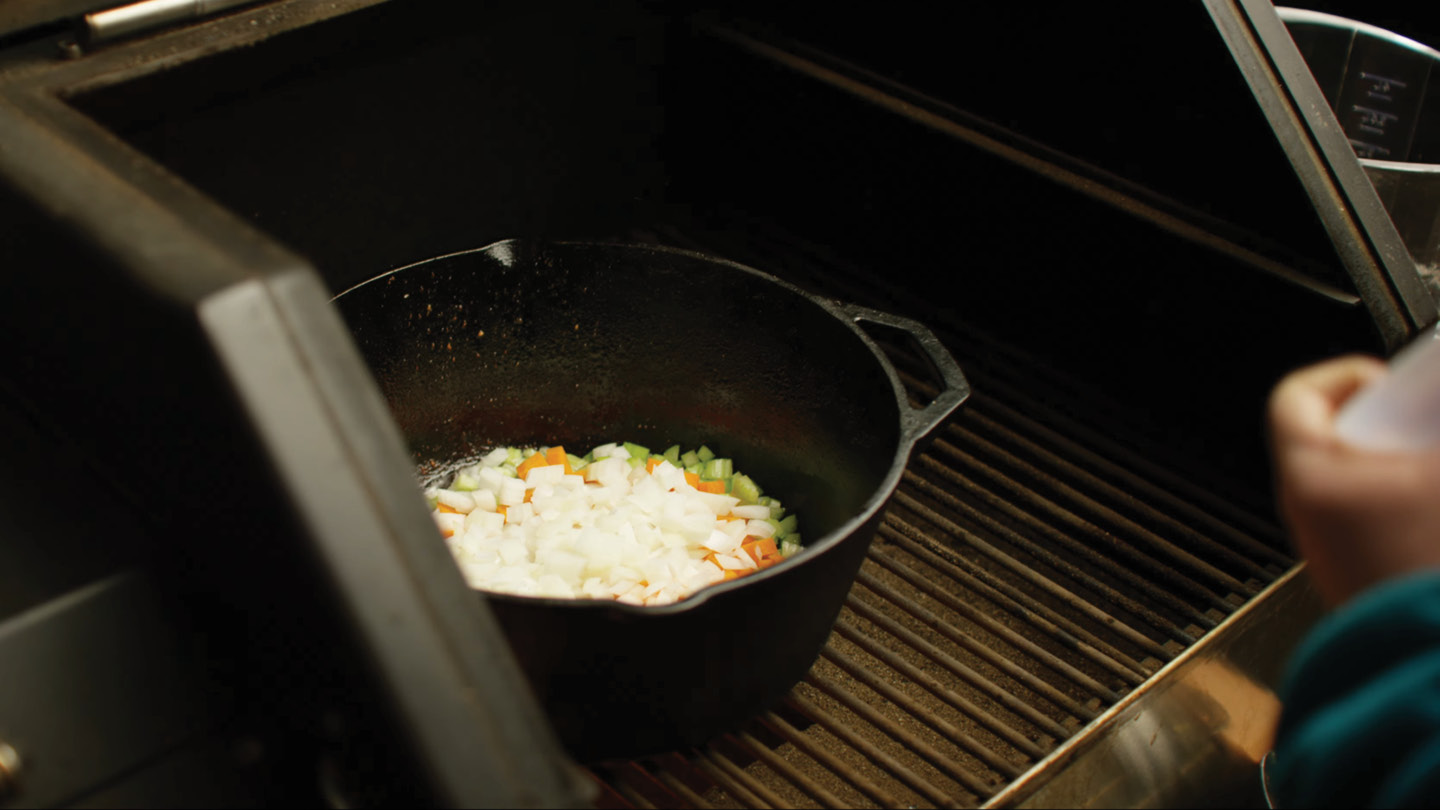
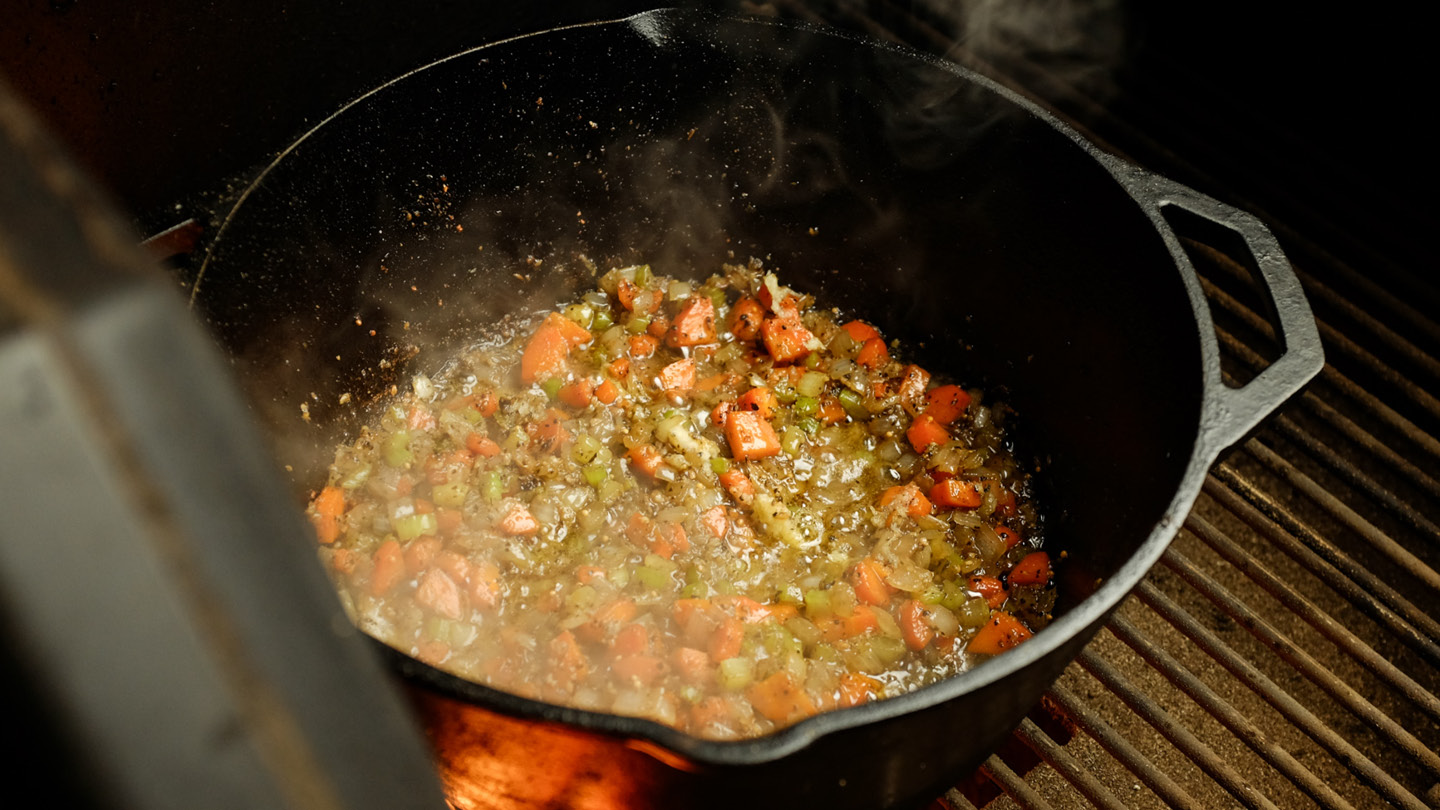
Mirepoix is a classic French culinary base of onion, carrot, and celery — typically in a 2:1:1 ratio — cooked in fat until softened. It provides the aromatic foundation of the soup's flavor: the onion adds sweetness and depth, the carrot adds subtle sweetness and color, and the celery adds a slightly bitter, herbal note that balances the richness of the bacon and cream. In this recipe, all three are cooked in rendered bacon fat with Cattleman's Grill Trail Dust, which means the seasoning blooms in the fat and integrates with the vegetables during their caramelization phase rather than just dissolving into the liquid later.
Why blend only half the soup rather than all of it?
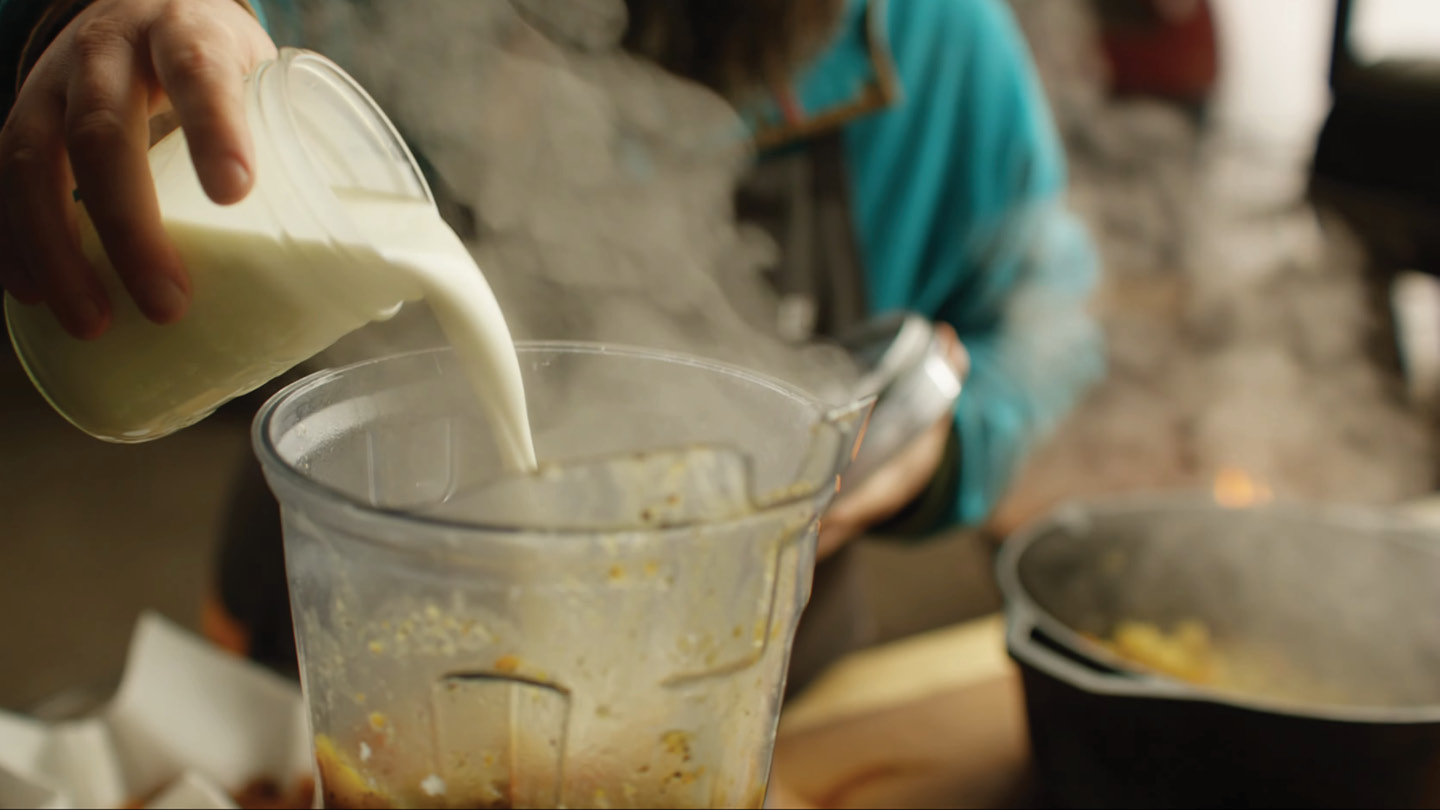
Blending all of the soup produces a uniform potato bisque — creamy but with no textural variation. Leaving half unblended preserves potato chunks and vegetable pieces that provide something to chew in each bowl. The blended half (combined with the half-and-half) becomes a velvety, creamy base that coats the unblended pieces. The combination produces what "loaded potato soup" should be: a rich, creamy broth with substantial potato chunks throughout, rather than a silky purée.
Why cook the soup on the grill rather than the stovetop?
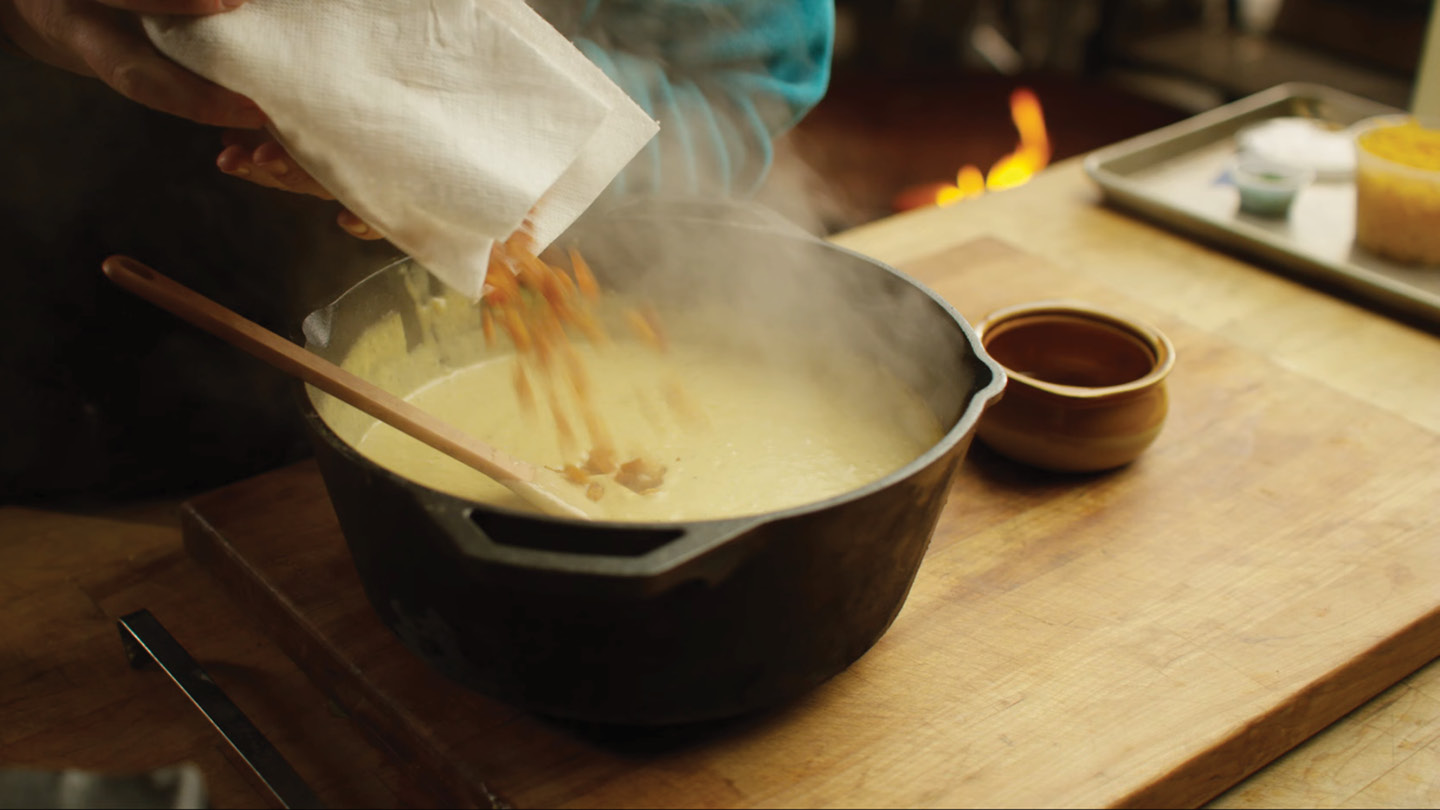
Direction Step 1 sets the YS480s to 450°F with the diffuser door removed for direct-flame cooking. At this temperature, the Dutch oven placed over the firebox behaves like a high-BTU commercial burner — the bacon renders and browns (rather than just rendering slowly), the mirepoix caramelizes, and fond develops on the Dutch oven's bottom that contributes flavor to the finished soup. A stovetop produces an excellent result, but the direct-flame environment on the YS480s produces more Maillard browning at the initial steps.
Why preheat the chicken stock before adding it?
Direction Step 4 specifies adding preheated chicken stock. Cold stock added to hot vegetables and fond drops the Dutch oven's temperature significantly, which temporarily interrupts the cooking process and can make the fond stick rather than dissolve into the stock. Preheated stock maintains temperature continuity — the soup returns to a simmer faster and the fond releases cleanly into the liquid rather than sticking and potentially burning before it can dissolve.
Can I make this ahead of time?
Yes — this soup actually improves overnight. The flavors deepen as the potato starch continues to integrate with the creamy base. Refrigerate covered for up to 3 days; reheat over medium-low heat on the stovetop, stirring gently to prevent the cream base from scorching. The soup will thicken significantly when cold; thin with a small amount of chicken stock on reheating. Add the garnishes fresh when serving, not before refrigerating.
Can I make this indoors?
4 out of 5 — Great in the kitchen, better on the grill. A large Dutch oven on the stovetop over high heat produces nearly identical results. The only meaningful difference is the browning intensity during the bacon rendering and mirepoix steps — a gas or high-BTU stovetop burner comes closest to the direct-flame character of the YS480s setup. Electric stovetops work but produce slightly less caramelization at those initial steps.
Recipe Highlights
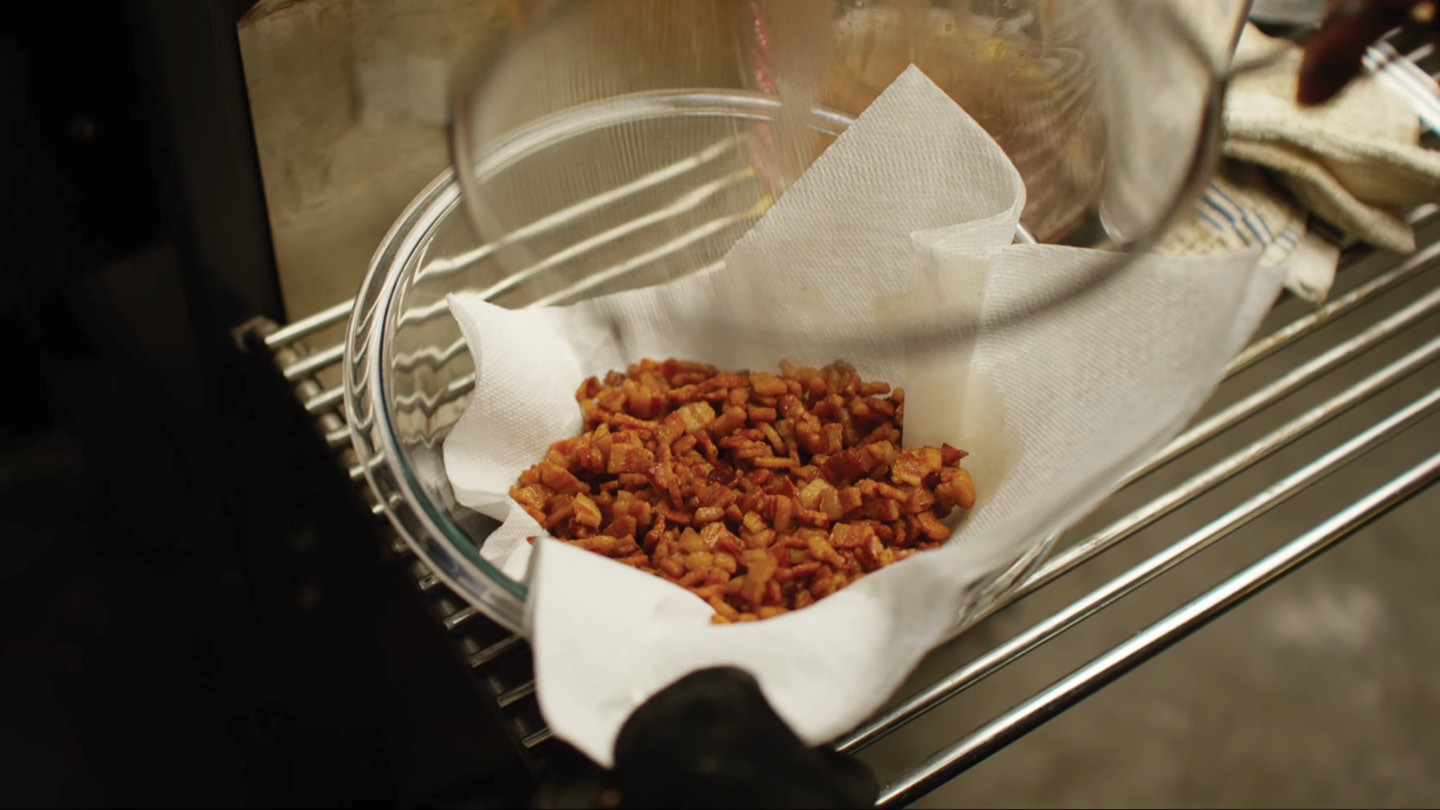
Render the bacon until browned — not just cooked through: Direction Step 2 specifies rendering until "browned and slightly crispy." Bacon cooked to just cooked-through yields pale, soft pieces and mostly clear rendered fat; bacon browned to slight crispiness yields caramelized pieces with deeper flavor and rendered fat with more complex color. The browned fat is what gives the mirepoix its depth when cooked in it. The browned bacon pieces reserved for garnish also provide better textural contrast.
Keep only 2–3 tbsp of bacon fat — pour out the rest: Direction Step 2 specifies pouring out all but 2–3 tablespoons. 1 lb of thick-cut bacon renders approximately 1/2 cup of fat — far more than the recipe needs. Cooking the mirepoix in the full amount of rendered fat produces an excessively greasy soup that the cream can't balance. 2–3 tablespoons is exactly right to caramelize the vegetables without making the finished soup greasy.
Add the garlic after the mirepoix, not with it: Direction Step 4 adds garlic separately after the mirepoix has cooked. Garlic burns quickly at high temperatures and turns bitter when overcooked — adding it too early produces harsh, acrid garlic flavor rather than the sweet, nutty depth of properly cooked garlic. Adding it after the vegetables are already softened means it cooks for just one minute before the liquid goes in, which is exactly enough time to mellow without burning.
Reserve half the bacon for garnish — don't add it all to the soup: Direction Step 6 adds half the bacon back to the soup and reserves the other half for topping. The bacon in the soup softens during the final 10-minute warm, adding flavor throughout the broth. The reserved bacon stays crispy for the garnish, providing textural contrast that in-soup bacon can't provide. Both textures are part of the recipe's design — don't skip the garnish bacon.
Recommended Recipes