

If you're looking to recreate that iconic deli-style pastrami in your backyard, this recipe breaks it all down. Start with a brisket flat, brine it in a bold pickling spice blend, smoke it to deep mahogany, and finish with a steam that softens the crust into tender perfection.
WHAT YOU'LL LOVE
- This is the recipe that earns genuine bragging rights: Most BBQ recipes are one-session affairs; homemade pastrami is a 4–7 day project — brine for 3 days, dry overnight, smoke 8–12 hours, steam to finish. The result is something that tastes nothing like anything from a store and everything like what you'd get at a serious New York deli.
- The brine does the flavor work that no rub alone can accomplish: Three days in a pickling spice brine — coriander, mustard seeds, allspice, cloves, bay, ginger, mace — builds seasoning from the interior out. The rub crust comes later. This is seasoning in depth, not just on the surface.
- Two-stage cooking is what separates pastrami from smoked brisket: Smoking to 205°F produces excellent brisket; smoking to 160°F, wrapping, finishing to 205°F, then steaming 1–2 hours in a Dutch oven produces pastrami — the steam softens the bark and loosens the collagen in a way that dry heat alone cannot, producing the signature moist, yielding texture that makes deli pastrami what it is.
- The peppercorn-coriander rub is the visual identity of pastrami: The coarsely ground black pepper and coriander crust that forms during the smoke is what makes a sliced pastrami unmistakable on a plate — it's not just seasoning, it's the defining aesthetic. Toasting and coarsely cracking the spices rather than grinding them fine is what produces that craggy, textured exterior.
Homemade Pastrami Recipe
Tom Jackson
Rated 4.1 stars by 7 users
Category
Entree
Cuisine
American
Servings
4
Prep Time
45 minutes
Cook Time
4 hours
Calories
180
This is heritage cooking at its best—using time, patience, and smoke instead of shortcuts. Follow Chef Tom Jackson’s recipe to take your barbecue game from average to legendary with pastrami that rivals any New York deli.
Ingredients
-
1 beef brisket flat
- 1 tbsp coriander seeds
-
1 tbsp black peppercorns
- 1 tbsp mustard seeds
- 1 tbsp red chile flakes
- 1 tbsp allspice berries
- 1 tbsp whole cloves
- 1 tsp ground ginger
- 1 tsp ground mace
- 1 small cinnamon stick, crushed
- 2 bay leaves, broken in to pieces
- 1 gallon water
- 3/4 cup kosher salt
- 1/2 cup sugar
- 2 tsp pink salt (sodium nitrite)
- 5 cloves garlic, crushed
- 2 tbsp pickling spice
- ***Depending on the size of your brisket, and the container in which you are brining, you may need to multiply this recipe. You will need enough brine to cover the brisket in the brining container.
-
1/4 cup black peppercorns, toasted, coarsely ground
- 1/4 cup coriander seeds, toasted, coarsely ground
Pickling Spice
Brine
Rub
Directions
Pickling Spice for Pastrami
Heat a dry skillet over high heat and add the coriander, peppercorns, and mustard seeds. Toast them until fragrant, being careful not to burn them.
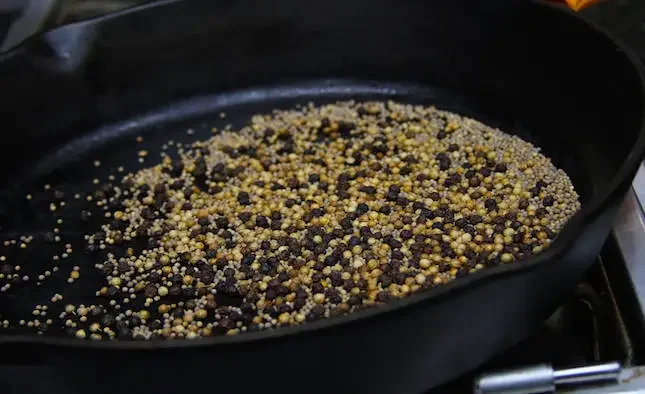
Once toasted, transfer the spices to a cutting board and crack them using a heavy pan.
Combine the cracked spices with the remaining spices.
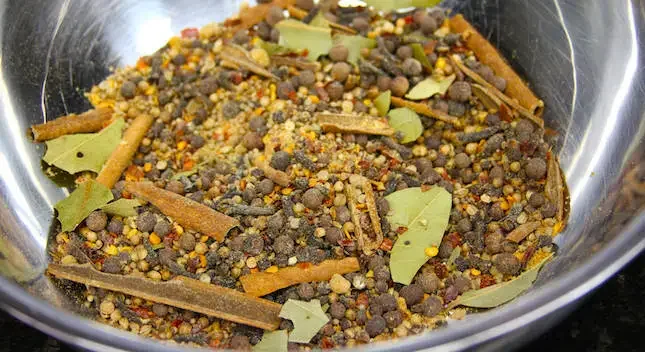
Store the spice mixture in a sealed container for later use.
Brining Pastrami
In a large pot, combine all brine ingredients.
Bring the mixture to a boil, stirring until the salt and sugar are fully dissolved.
Allow the brine to cool to room temperature, then refrigerate until thoroughly chilled.
Once the brine is chilled, place the brisket in the brining liquid, ensuring it is fully submerged. Use plates to weigh it down if needed.
Refrigerate the brisket in the brine for 3 days.
After 3 days, remove the brisket from the brine and rinse it thoroughly under cold water.
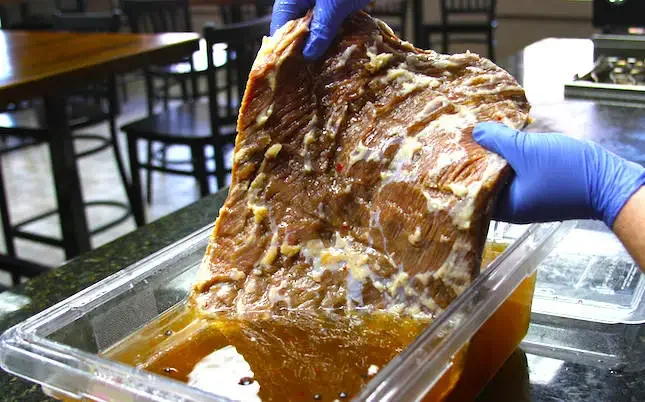
Pat the brisket dry with paper towels.
Coat the brisket with the rub, ensuring it is evenly covered.
Store the brisket uncovered in the refrigerator overnight to allow the flavors to meld.
Smoke the Pastrami
Prepare your Yoder Smokers YS640 Pellet Smoker for indirect cooking and set the temperature to 250°F.
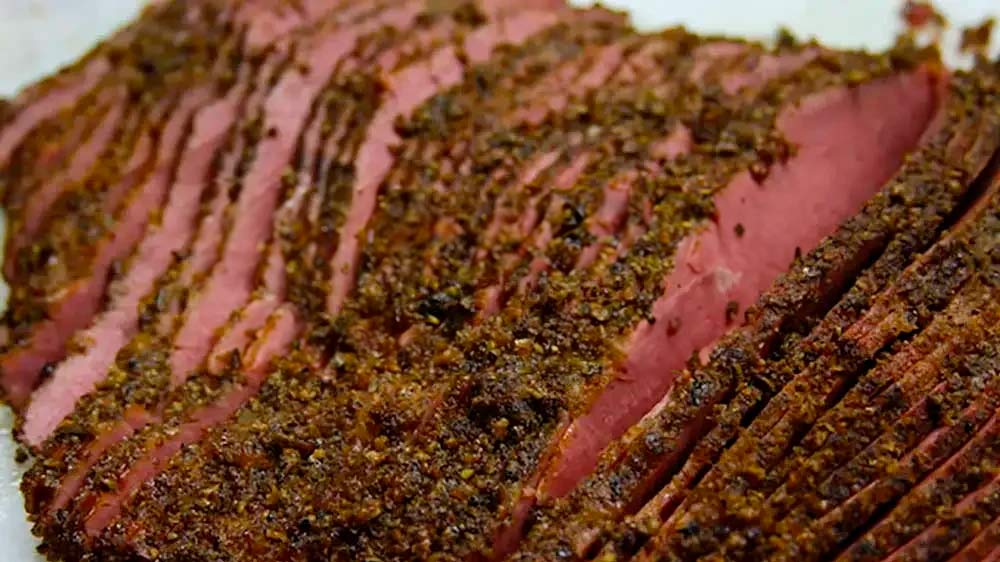
Smoke the brisket until the internal temperature reaches 160°F. Use an instant-read thermometer to check the internal temperature.
Once the brisket reaches 160°F, double wrap it in foil or butcher's paper.
Continue smoking the brisket until the internal temperature reaches 205°F.
Once cooked, allow the brisket to rest for half an hour.
After resting, slice the brisket thinly and serve.

Recipe Note
Recipe FAQ
What is the history of pastrami?
Pastrami evolved from pastramă, a Romanian and Turkish method of curing and drying meat — typically mutton or goat — to preserve it before refrigeration. Jewish immigrants from Romania and Eastern Europe brought the technique to New York City in the late 19th century, adapting it to beef brisket, which was abundant and inexpensive in American markets. The Lower East Side deli culture of the early 20th century refined the method into the smoked, spice-crusted form recognized today. Katz's Delicatessen, open since 1888, is the most famous standard-bearer of the New York pastrami tradition this recipe pays homage to.
How long does the full process take?
Plan for 4–7 days total. The brine takes 3 days minimum (up to 6 for a thicker flat). After brining, the brisket rests uncovered overnight in the refrigerator to form a pellicle — the tacky surface that helps smoke adhere. The smoke itself runs approximately 8–12 hours at 250°F. An optional 1–2 hour steam finish after smoking adds the final tenderness. This is a weekend project, not a weeknight cook.
What is pink salt and is it necessary?
Pink salt (sodium nitrite, sold as Prague Powder #1 or Instacure #1) is the curing agent that gives pastrami its characteristic pink interior color and contributes to the distinctive cured flavor. It also inhibits bacterial growth during the multi-day brine. It is not the same as Himalayan pink salt. For a traditional result, it's necessary — omitting it produces a grey interior and a flavor profile closer to smoked brisket than pastrami. Use precisely the amount specified; sodium nitrite is safe at recipe quantities but should not be increased.
Can I substitute store-bought corned beef?
Yes — skip directly to the rub and smoke steps. Pre-brined corned beef already contains the curing salts and pickling spice flavors. Rinse it thoroughly to reduce excess salt before applying the peppercorn-coriander rub and smoking. The result is good; homemade brining delivers a more complex, balanced flavor because you control the spice blend and salt concentration, but corned beef is a legitimate shortcut.
Should I steam the pastrami after smoking?
Strongly recommended. Smoking to 205°F produces excellent results, but 1–2 hours of steaming in a covered Dutch oven with a small amount of water after the smoke adds the final tenderness that defines deli-style pastrami. The steam softens the bark, relaxes the collagen further, and produces the moist, yielding slice that is pastrami's signature texture. Set up the Dutch oven in a 275°F oven after the smoke, add ½ inch of water, seal tightly with a lid or foil, and steam until a probe slides in with zero resistance.
Can I make this indoors?
3 out of 5 — Works indoors with adjustments. After brining, apply the rub and cook the brisket in a 275°F oven, wrapping tightly in foil after the first 2 hours, then continuing until probe-tender. Finish with the Dutch oven steam. What you lose is the smoke ring, the mahogany bark, and the live-fire character from the pellet smoke — the oven version is tender and well-flavored but produces a braised result rather than a smoked one.
Recipe Highlights
Toast and crack the spices — don't grind them fine: Directions Pickling Spice Steps 1–2 specify toasting the coriander, peppercorns, and mustard seeds, then cracking them with a heavy pan. Fine grinding produces a paste-like crust when applied to the brisket; coarse cracking produces the craggy, textured exterior that is visually and texturally distinctive to pastrami. The cracked spices also toast more evenly during the smoke, producing bolder flavor than pre-ground versions.
Keep the brisket fully submerged for all 3 days: Directions Brining Step 4 specifies using plates to weigh the brisket down. Any part of the brisket that breaks the surface of the brine will not cure evenly, producing grey patches in the finished interior. Check the brisket daily and re-submerge if needed. A large zip-lock bag with the brine inside, sealed around the brisket, is an alternative that eliminates the submersion problem entirely.
Rest uncovered in the refrigerator overnight after brining: Directions Brining Step 9 specifies storing the rub-coated brisket uncovered overnight. This forms the pellicle — a slightly tacky, dried surface layer that smoke adheres to far more effectively than a wet or freshly dried surface. Skipping this step produces a less pronounced smoke ring and a less developed bark during the cook.
Wrap at 160°F, not before: Directions Smoke Steps 3–4 specify wrapping after the brisket reaches 160°F internal. This temperature is the approximate stall point — where evaporative cooling slows the cook significantly. Wrapping at the stall traps moisture and steam, pushing through the stall efficiently while preserving the bark that formed during the first phase of the smoke. Wrapping too early steams the bark before it fully sets.
Recommended Recipes
Nutrition
Nutrition
- Nutrition Serving Size
- 4 oz
- per serving
- Calories
- 180
- Carbs
- 10 grams
- Protein
- 99 grams
- Fat
- 63 grams
- Sodium
- 3728 milligrams


