Recipe Note
Recipe FAQ
What is the history of the Crunchwrap?
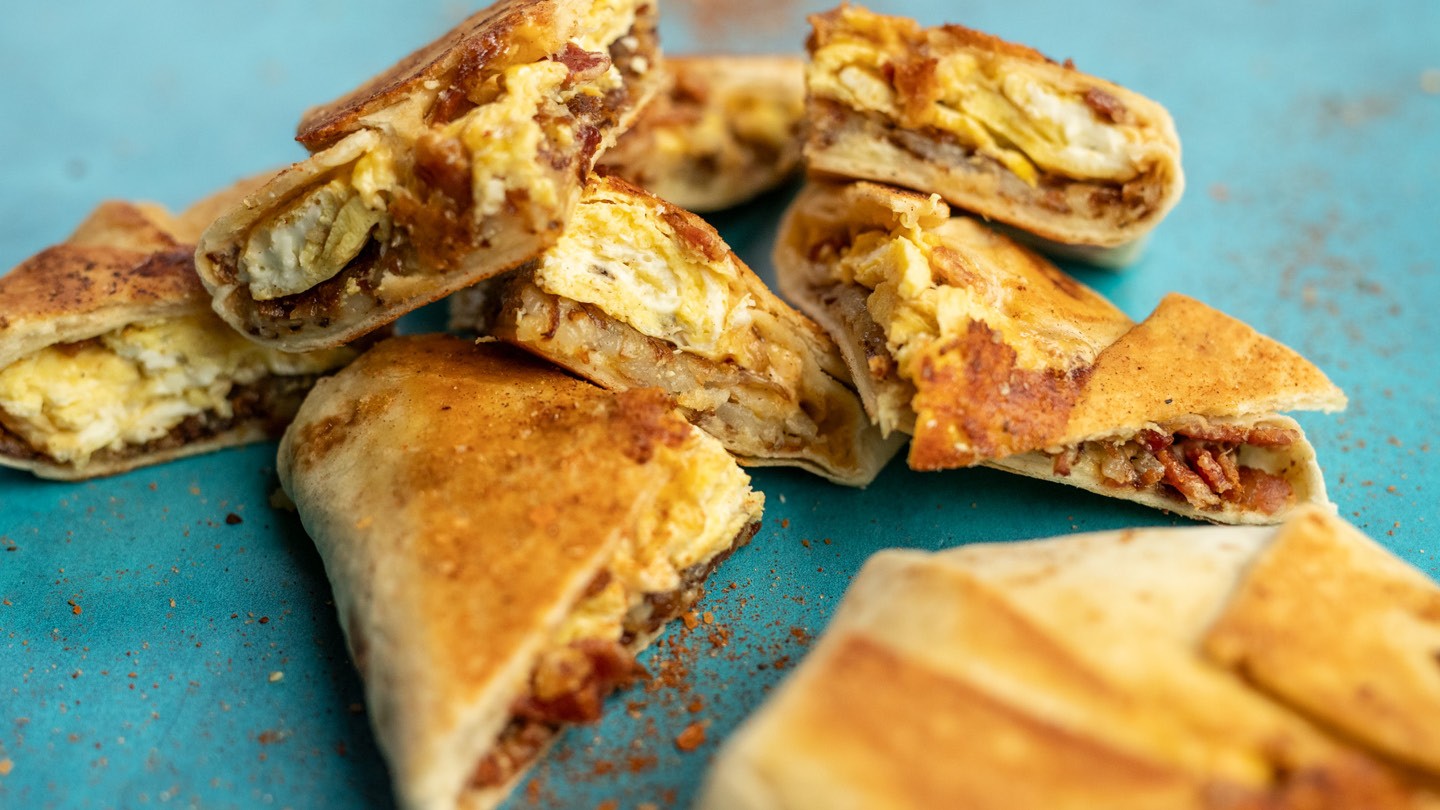
The Crunchwrap Supreme was introduced by Taco Bell in 2005 as a way to combine the portability of a burrito with the crunch of a tostada. Its distinctive hexagonal fold — which encloses a flat tostada chip inside a flour tortilla — became one of the most recognizable formats in fast food. The Breakfast Crunchwrap followed as a morning variant, replacing the seasoned beef with eggs, bacon or sausage, and hash browns. This ATBBQ version rebuilds the concept from scratch using a Le Griddle flat top, from-scratch hash browns, fresh scrambled eggs, and a homemade sauce — the same structural concept with substantially better ingredients.
Why squeeze the liquid out of the shredded potato?
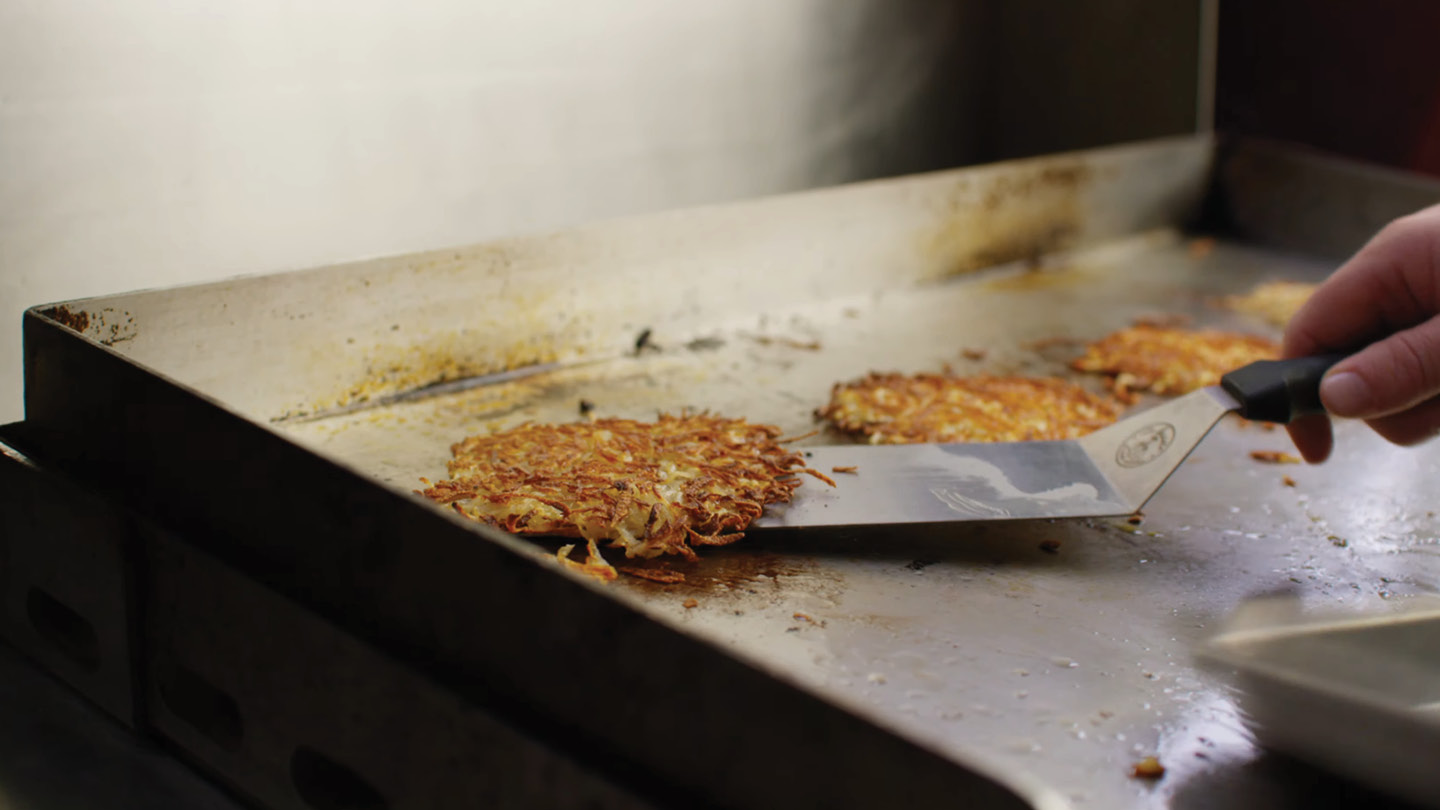
Raw shredded russet potato contains a large amount of water. Without squeezing, the water releases into the cooking surface on contact with the hot griddle and steams the potato rather than frying it — producing pale, soft hash browns rather than golden, crispy ones. A thin cloth or cheesecloth twisted firmly to expel as much liquid as possible is the correct tool. Paper towels can work but are less effective. The drier the potato before griddle contact, the better the crust formation.
Why cook the eggs slightly underdone before assembly?
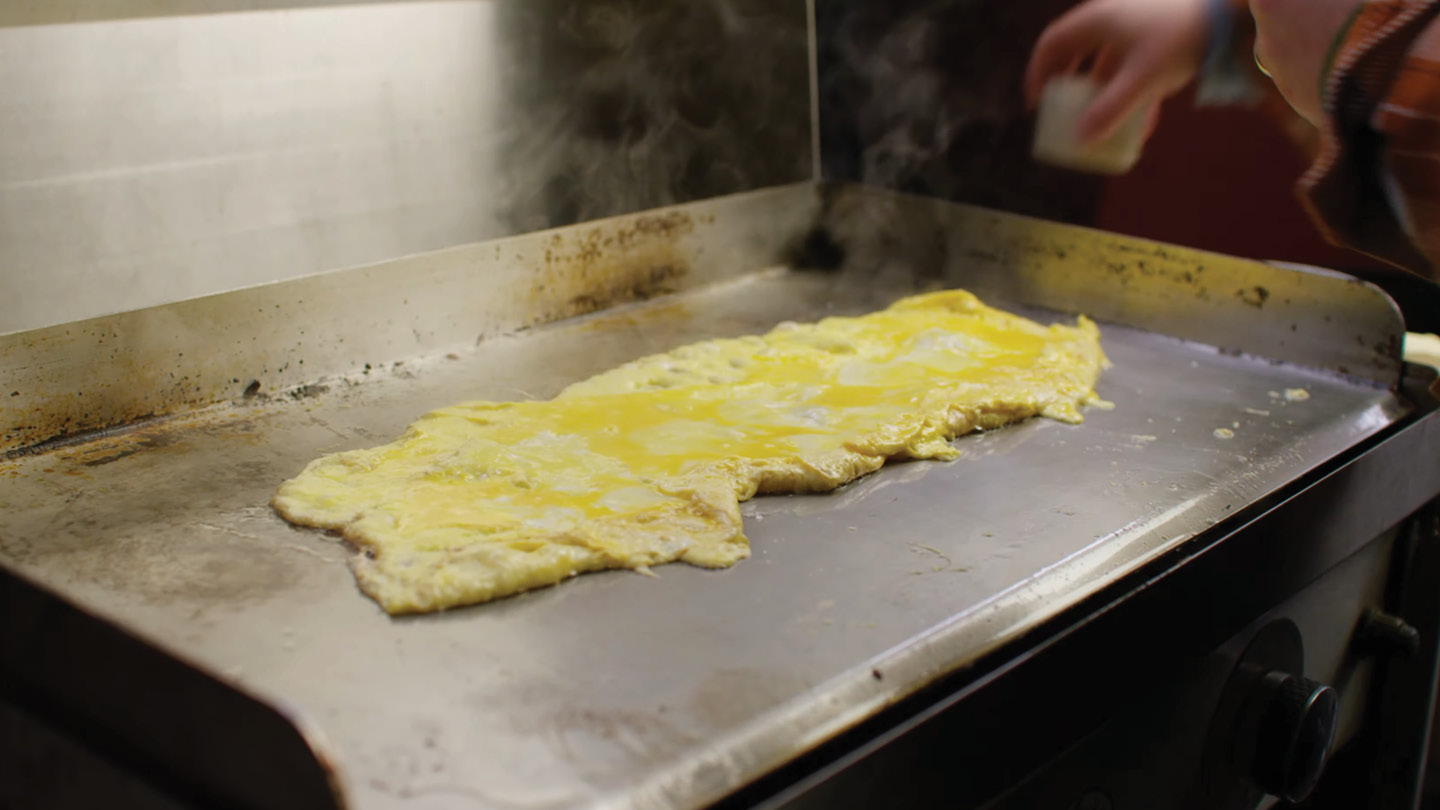
Direction Step 6 explicitly notes that it's okay to leave the eggs slightly soft because they'll be cooked again inside the assembled crunchwrap during the final griddle step. Fully scrambled eggs at this point will overcook during the final toast and become rubbery. Pulling them 30–60 seconds early means they finish perfectly during the crunchwrap's final 3–4 minutes on the griddle. This applies to any stuffed wrap recipe — the filling continues cooking inside the wrap, so ingredients that are temperature-sensitive should be pulled slightly early.
What is the correct fold technique for a hexagonal crunchwrap?
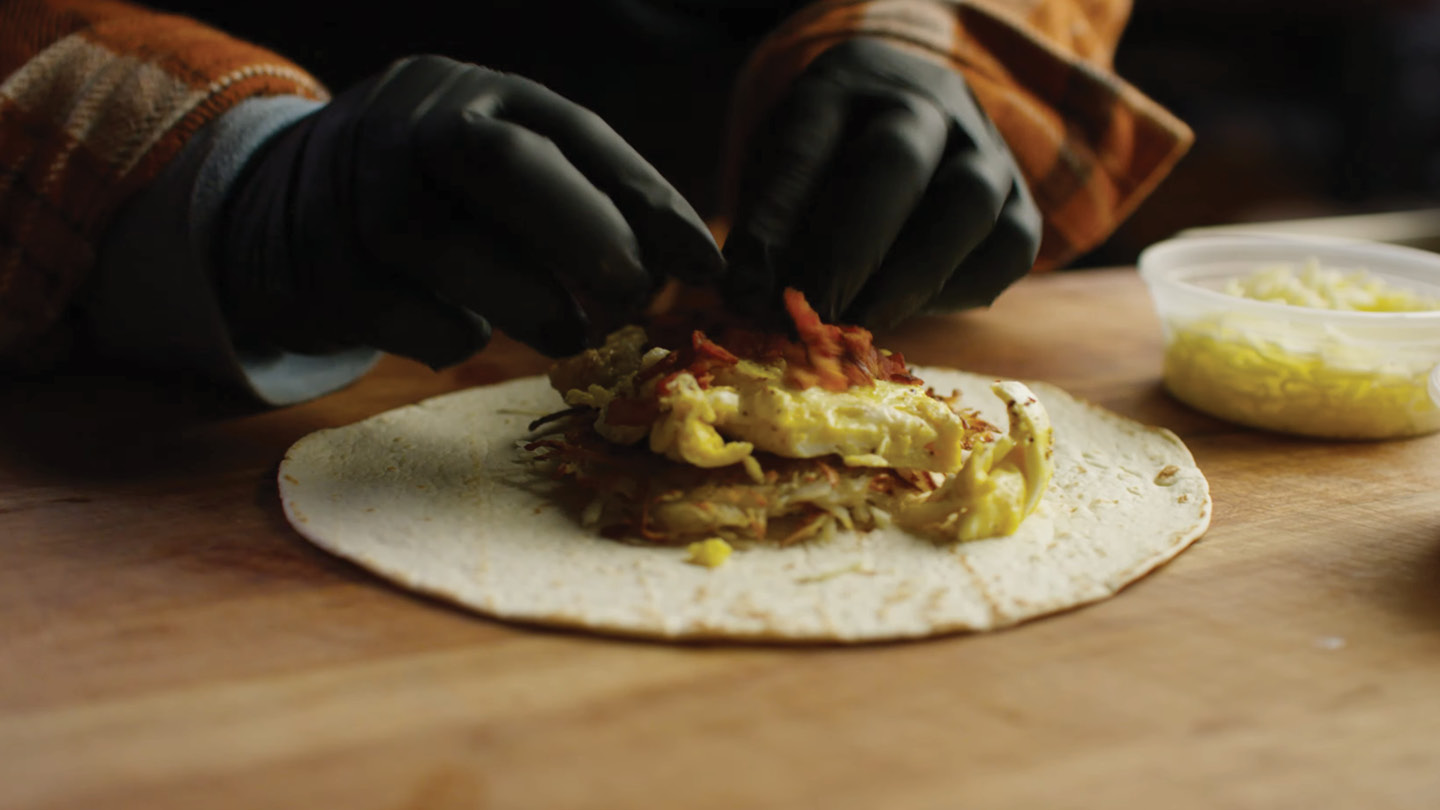
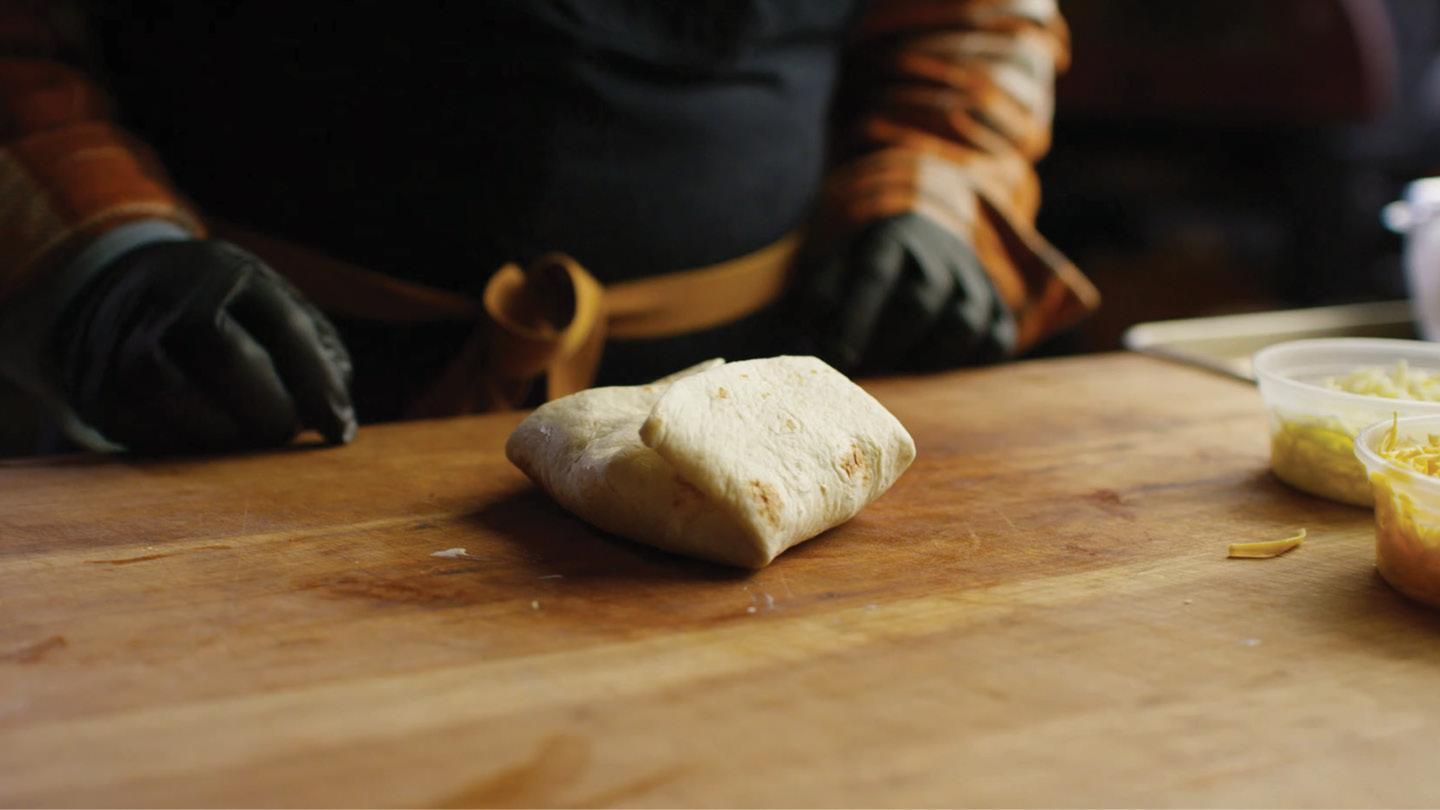
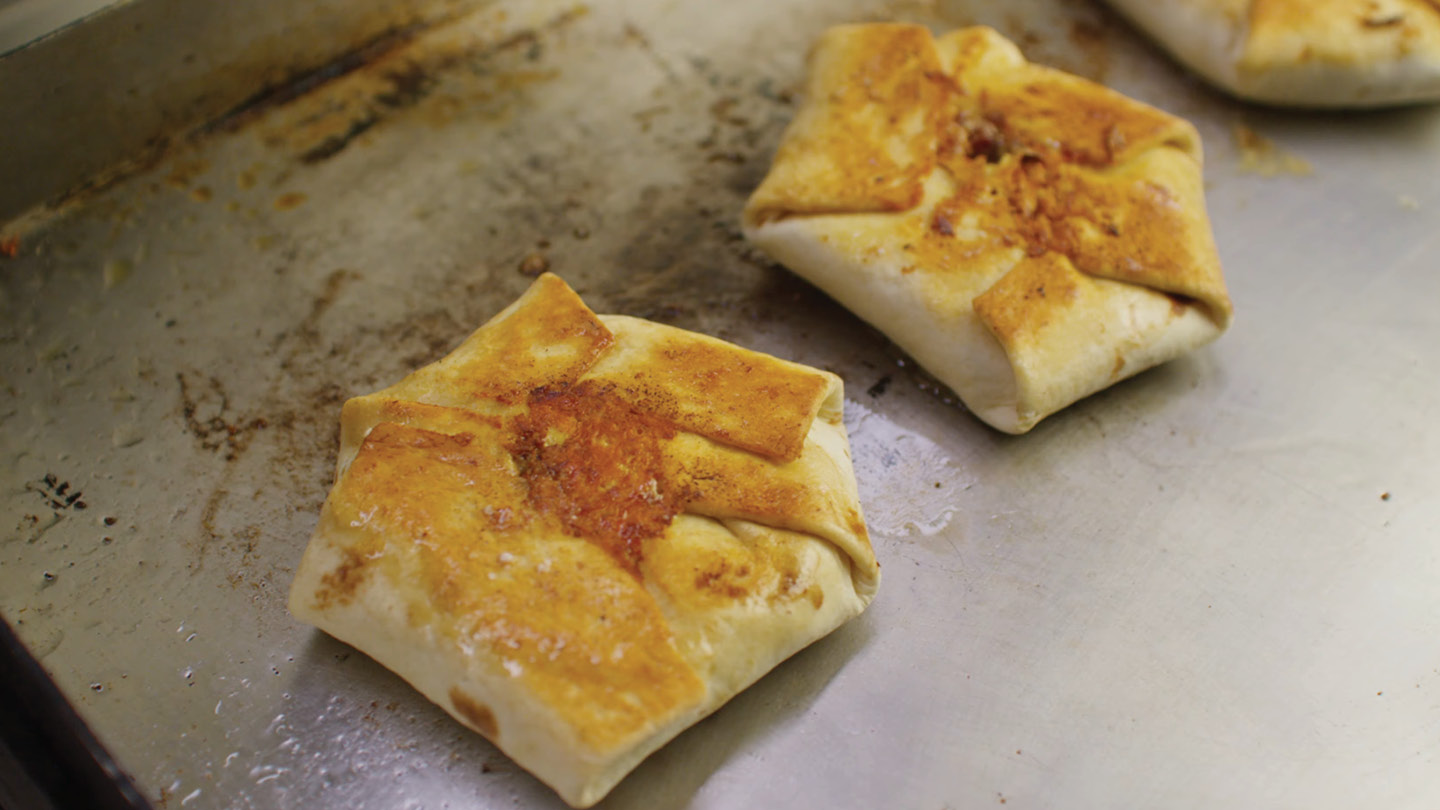
Starting from one edge, fold the tortilla over the filling in a series of overlapping pleats around the circumference — typically 5 to 6 folds. Each fold overlaps the previous one by about an inch, which is what creates the distinctive hexagonal shape and seals the filling inside. The key is keeping the folds tight and even — loose folds allow the seams to open on the griddle. Place the wrap seam-side down immediately after folding and press gently with a spatula for the first 30 seconds to set the folds before flipping.
Can I substitute the Le Griddle with a standard griddle or skillet?
Yes — a cast iron skillet or flat griddle pan over medium heat produces essentially identical results. The Le Griddle's large, evenly heated flat surface makes cooking all four crunchwraps simultaneously straightforward, but a standard skillet produces the same golden crust on the tortilla exterior. You may need to cook the crunchwraps in batches of one or two rather than all at once.
Can I make this indoors?
4 out of 5 — Great in the kitchen, better on the grill. Every step of this recipe — bacon, hash browns, scrambled eggs, and griddle toasting — is fully stovetop-compatible. A cast iron skillet or flat griddle pan produces equivalent results. What you lose is the specific cooking surface character and simultaneous multi-item capacity of the Le Griddle outdoor flat top.
Recipe Highlights
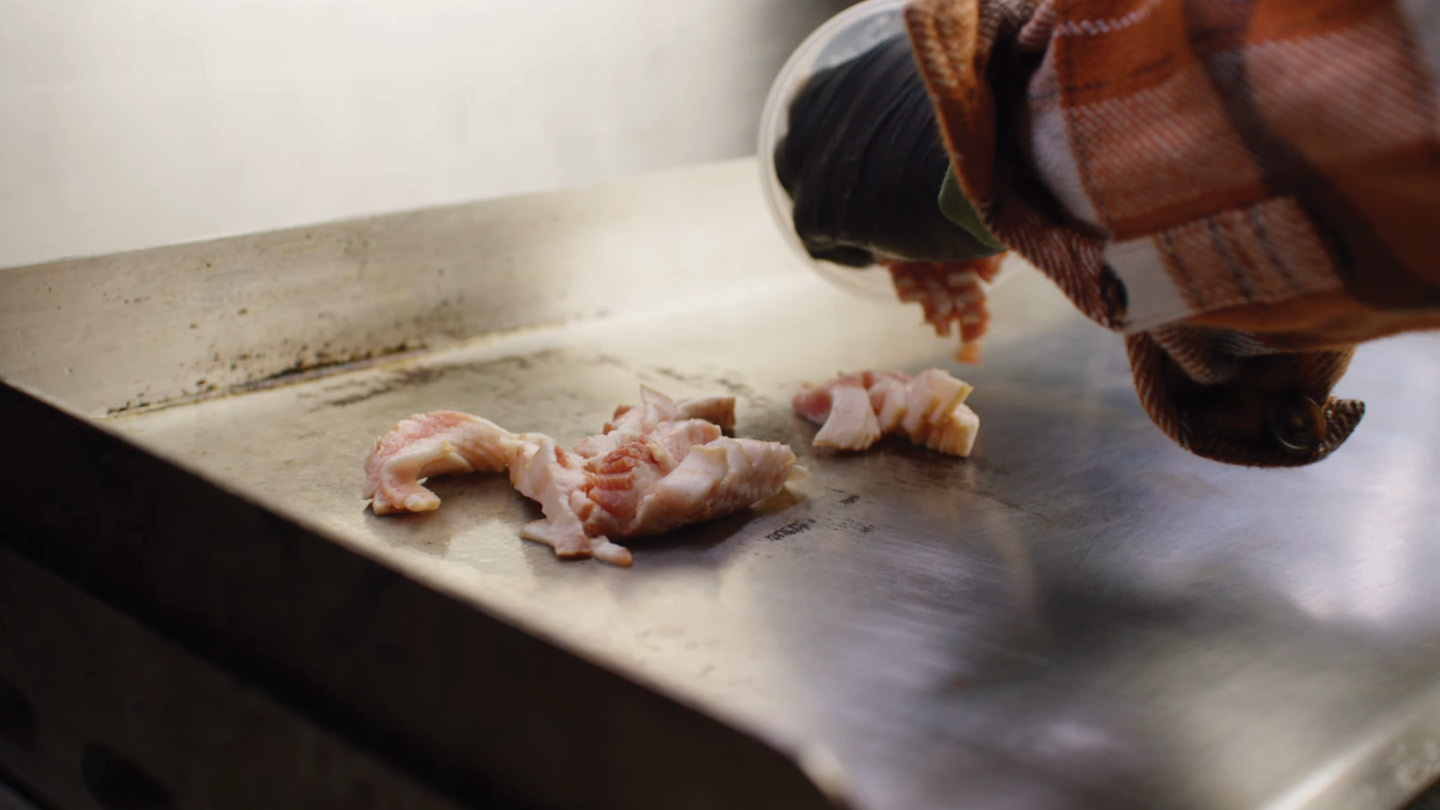
Use the bacon fat from Step 3 to cook the hash browns — don't drain it: Direction Step 5 says to place hash brown portions onto the bacon fat left on the griddle after the bacon is removed. The bacon fat is seasoned, flavored fat that produces a better-tasting hash brown than fresh butter or oil. Don't wipe the griddle between the bacon and hash brown steps — the residual fat is the cooking medium for the next step. Add two tablespoons of butter just before flipping for additional richness and color on the second side.
Warm the tortilla before assembly — cold tortillas crack when folded: Direction Step 7 specifies microwaving the tortilla with a wet paper towel for 20–30 seconds. A cold flour tortilla is stiff and will crack along the fold lines rather than pleating smoothly. The steam from the wet paper towel softens the gluten, making the tortilla pliable enough to fold into the hexagonal shape without tearing. An alternative: 30 seconds on the warm griddle surface achieves the same result without the microwave.
Place the crunchwrap seam-side down first — not fold-side down: Direction Step 9 specifies placing seam-side down onto the buttered griddle. This sequence seals the folds before flipping — the heat from the griddle melts the tortilla surface slightly and bonds the overlapping folds together. If you place fold-side down first, the seam can open during cooking and the filling will begin to escape before the structure is set. Seam-side down first, then flip to the fold-side to develop the golden color.
Press gently with a spatula during the first 30 seconds on the griddle: The assembled crunchwrap is slightly domed where the filling creates height in the center. Gentle pressure with a flat spatula flattens the wrap and ensures full contact between the tortilla bottom and the griddle surface. Full contact produces even golden browning rather than the uneven browning pattern of a wrap that is toasting only at the edges. Don't press hard enough to squeeze filling out — just enough to flatten the dome.
Recommended Recipes