

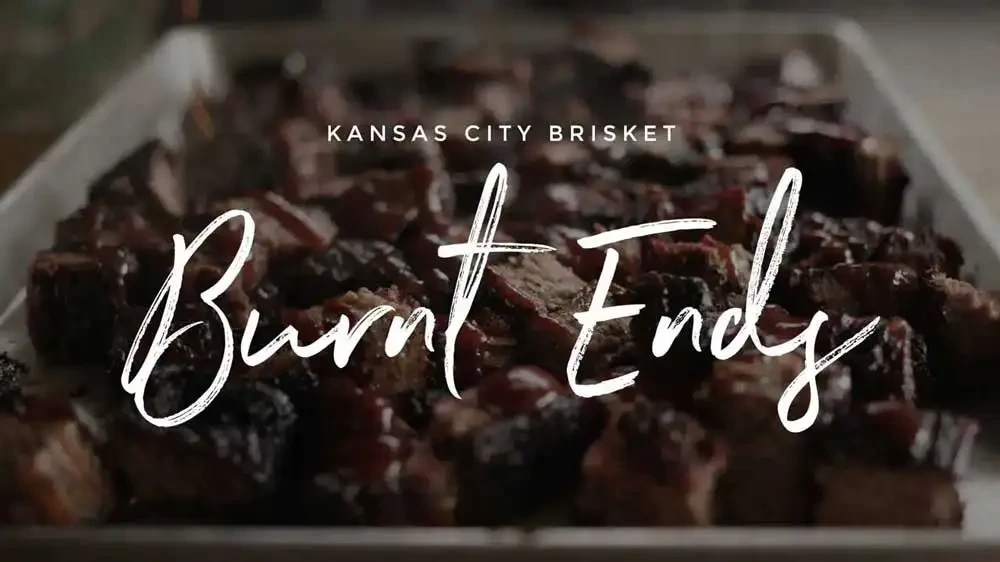
Enjoy Chef Tom's delicious recipe to make Kansas City Brisket Burnt Ends and treat your taste buds to an unforgettable culinary experience. Perfectly smoky, with a hint of sweetness, you won't believe how good it tastes!
WHAT YOU'LL LOVE
- Butterflying the thick end of the point evens out its thickness, so the whole piece cooks and smokes at a consistent rate rather than the thinner sections finishing well before the thick end
- Smoking to a target color rather than a fixed temperature focuses the first stage on building bark, since the internal temperature range during this phase is wide and secondary to how the meat looks
- Wrapping the point with red chile sauce and beef stock midway through braises the meat in a flavorful liquid for the second half of the cook, rather than smoking it dry the entire time
- Returning the sauced, cubed point to the cooker for a final 20-30 minutes lets the barbecue sauce tack up and set into a sticky glaze, rather than staying wet right off the sheet pan
KC Brisket Burnt Ends
Tom Jackson
Rated 4.3 stars by 4 users
Category
Entree
Cuisine
American
Servings
12
Prep Time
30 minutes
Cook Time
1 hour 15 minutes
Calories
405
How do we celebrate a big win? With amazing food! Chef Tom channeled his excitement for the Chiefs with this recipe for Kansas City Brisket Burnt Ends.
Ingredients
- Brisket point
-
Big Rick’s Jalapeño Honey Mustard
-
Plowboys BBQ Bovine Bold
-
Cattleman’s Grill Smoky Chipotle Coffee Steak Rub
-
Flavolcano Smoky Red Pepper Sauce
- Beef stock
-
Smoke on Wheels KC Bootleg BBQ Sauce
Directions
- Trim all excess fat from the outside of the point. Butterfly the thick end of the point to make all the meat about the same thickness. Rub the surface of the meat with a thin layer of Big Rick’s Jalapeño Honey Mustard. Season first with the Plowboys BBQ Bovine Bold, then the Cattleman’s Grill Smoky Chipotle.
Preheat your Yoder Smokers YS640s Pellet Grill to 250ºF. Fill an A-MAZE-N Tube Smoker with cherry and pecan pellets. Place on the main cooking grate on the left side of the grill. Light the ends of the tube with a torch. Let the flame burn out.
- Transfer the meat to the second shelf of the smoker. Smoke until you reach your desired color. You’re looking for a dark mahogany color. This can take 3.5- 4.5 hours. The internal temperature of the meat may range from 150ºF-170ºF. These are rough guidelines. This part of the cook is about achieving a desired color.
- Remove the meat from the cooker and place on top of a sheet of heavy-duty foil. Pour about two tablespoons Flavolcano Smoky Red Chile Sauce and a quarter cup of beef stock over the meat. Wrap tightly with the foil. Return to the cooker.
- Continue cooking until the meat offers little resistance when probed with an instant read thermometer. It should be like probing room temperature butter. You are cooking to a feel, not a temperature, but most of the time the temperature is between 200ºF-210ºF when the meat is finished. It will likely be a 1-2 hours after wrapping. At this point you’ll want to rest the meat, wrapped in foil for 30 minutes.
Dice the point into 1” cubes. Place the cubes on a sheet pan. Toss the cubes in just enough Smoke on Wheels KC Bootleg BBQ Sauce to coat the surface of the cubed brisket and spread out on the sheet pan. Place the pan back on the cooker for 20-30 minutes to allow the sauce to set up.
Recipe Note
Recipe FAQ
Why butterfly the thick end of the brisket point before seasoning it?
Opening up the thickest section evens out the overall thickness of the point, so the whole piece smokes at a more consistent rate rather than the thinner areas finishing well ahead of the thick end.
Why smoke the point to a specific color instead of a specific internal temperature?
This stage is about building a dark mahogany bark, and the internal temperature range during that window (150-170°F) is wide and secondary — color is the actual signal for when to move to the next stage.
Why wrap the point with red chile sauce and beef stock partway through the cook?
Wrapping it in that liquid braises the meat for the second half of the cook, rather than leaving it exposed to dry heat the entire time, which helps it become tender enough to probe easily.
Why return the sauced, cubed point to the cooker for a final 20-30 minutes?
That extra time on the grill lets the barbecue sauce tack up and set into a sticky glaze on the cubes, rather than leaving them wet right off the sheet pan.
What internal temperature should the brisket point actually reach?
This recipe cooks to a feel rather than a fixed number — probing like room-temperature butter — which typically lands between 200-210°F, well above the USDA minimum of 145°F for whole-muscle beef.
How indoor-friendly is this recipe?
1 out of 5 — this is a multi-hour cook built entirely around a pellet grill's low, steady wood smoke. An oven can render the point tender, but you'll lose the bark and smoke flavor this recipe is built around.
Recipe Highlights
Butterflied point: Evens out cooking across the whole piece.
Color-targeted smoking: Prioritizes bark development over a fixed temperature.
Mid-cook liquid wrap: Braises the meat for the second half of the cook.
Final sauce-setting stage: Builds a sticky glaze on the cubed burnt ends.
Recommended Recipes
Nutrition
Nutrition
- Nutrition Serving Size
- 4 oz
- per serving
- Calories
- 405
- Carbs
- 3 grams
- Protein
- 42 grams
- Fat
- 23 grams
- Sodium
- 219 milligrams


