

Tantalize your taste buds with Chef Tom's recipe for smoky Salmon Burnt Ends created in the outdoor kitchen with the Yoder Smokers Loaded Wichita Offset Smoker. Enjoy the savory, mouth-watering flavor with each juicy bite!
WHAT YOU'LL LOVE
- A two-stage smoke builds the glaze in. Pulling the salmon at 125°F to coat it in glaze, then returning it to the smoker to finish at 140°F, lets the sauce actually cook onto the surface instead of just sitting on top as a raw coating.
- Cubing before smoking maximizes surface area. Cutting the salmon into large cubes rather than smoking it whole means more of the fish gets direct contact with smoke and glaze, giving every piece that classic "burnt ends" bark.
- The wire rack keeps smoke moving on all sides. Spacing the cubes out on a rack instead of laying them directly on a grate lets smoke circulate underneath each piece too, not just from above.
- The glaze comes together right on the smoker. Building the BBQ sauce, butter, maple syrup, and hot sauce glaze in a skillet set on top of the firebox means it's ready exactly when the salmon needs its first coat, no separate stove trip required.
Salmon Burnt Ends
Tom Jackson
Rated 4.2 stars by 12 users
Category
Main Course
Cuisine
American
Servings
6
Prep Time
20 minutes
Cook Time
1 hour
Calories
234
Chef Tom creates delicious, smoky Salmon Burnt Ends in the Yoder Smokers Loaded Wichita Offset Smoker. These delicious cubes of salmon will have your mouth watering.
Ingredients
- 2 lb salmon, skin off, diced into large cubes
-
Lane’s BBQ Q-Nami Seasoning
-
1/2 cup Smoke on Wheels Kansas City Bootleg BBQ Sauce
- 2 tbsp unsalted butter
-
2 tbsp maple syrup
- 1 tbsp Yellow Bird Blue Agave Sriracha Hot Sauce
Glaze
Directions
- Light a chimney of lump charcoal in the fire box of the Yoder Smokers Loaded Wichita Offset Smokers. When the charcoal is hot to the top of the chimney dump the charcoal in the back half of the fire box. Add a couple of splits of cherry wood to the charcoal. Adjust the airflow to stabilize the temperature around 250ºF.
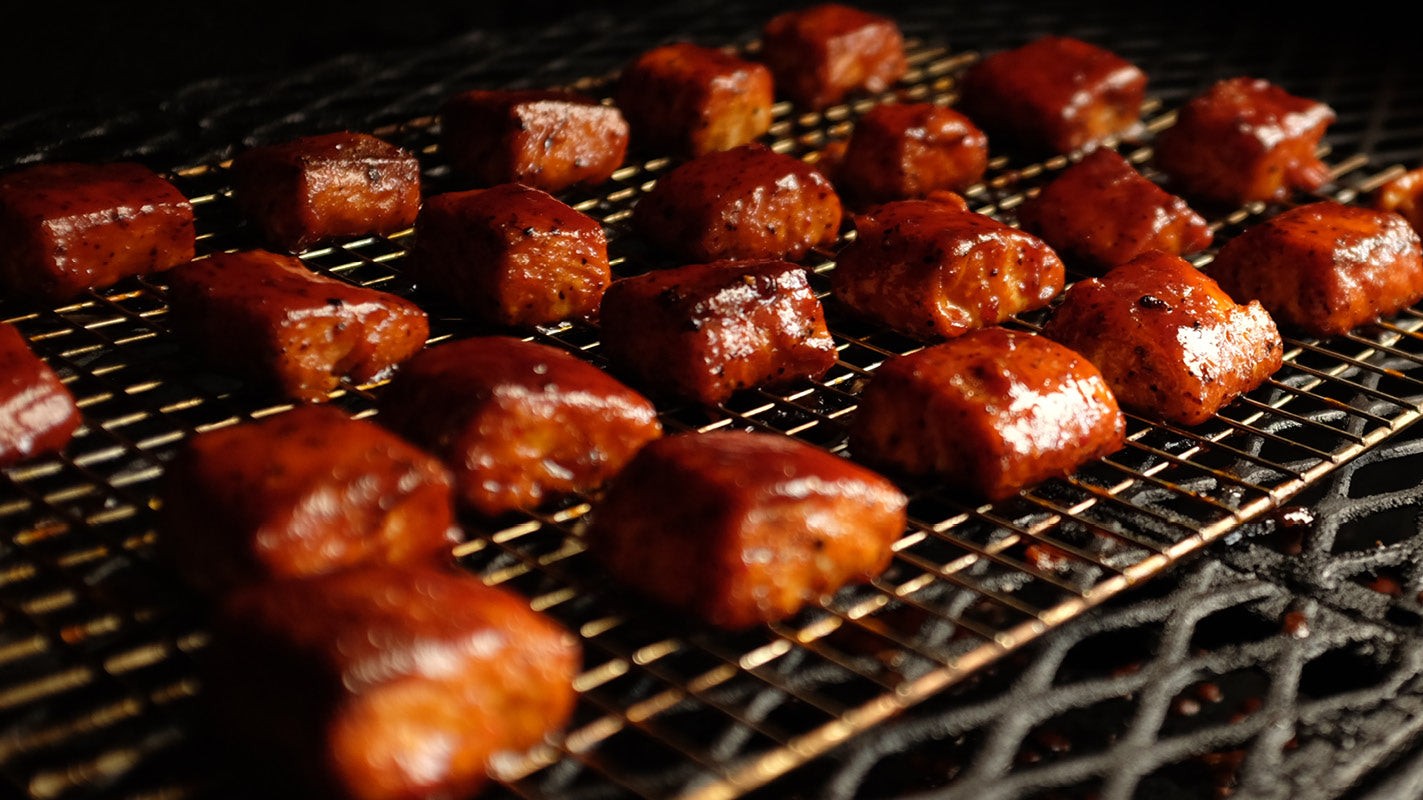
- Season the cubed salmon on all sides with Lane’s BBQ Q-Nami Seasoning. Place the cubed salmon on a wire rack and space evenly to allow smoke to flow around each piece of salmon.
- Transfer the rack of cubed salmon to the smoker. Smoke until the salmon reaches an internal temperature of 125ºF.
- While the salmon smokes, combine the glaze ingredients in a Lodge 8” Steel Skillet. Place on top of the fire box of the smoker. As the sauce heats up, whisk to combine all ingredients.
When the salmon reaches an internal temperature of 125ºF, remove the rack from the smoker. Gently place the cubed salmon in a bowl and pour the glaze over the top. Gentle coat each cube of salmon in the sauce. Return the cubed salmon to the rack and return the rack to the smoker.
Continue smoking until the salmon reaches an internal temperature of 140ºF. Remove from the smokers and serve your Salmon Burnt Ends warm.
Recipe Note
Recipe FAQ
Why smoke the salmon in two stages instead of one?
Pulling the salmon at 125°F to apply the glaze, then returning it to finish at a higher temperature, lets the glaze actually set and caramelize onto the surface rather than just being brushed on at the very end.
Why cut the salmon into large cubes before smoking?
Cubing increases the surface area exposed to smoke and glaze, which is what gives these "burnt ends" their characteristic bark and concentrated flavor compared to smoking a whole filet.
Why use a wire rack instead of smoking directly on the grate?
A rack lets smoke and heat reach the cubes from underneath as well as on top, so every side gets even color and smoke penetration instead of just the exposed surfaces.
What internal temperature should the salmon actually reach?
This recipe finishes the salmon at 140°F, which is below the FDA's general 145°F minimum for finfish. Cooking to at least 145°F internal is the safer target if food safety is your main concern.
Why build the glaze in a skillet on the smoker instead of on a stovetop?
Making the glaze right on top of the firebox means it's warm and ready exactly when the salmon needs its first coating, without an extra trip inside or a second heat source.
How indoor-friendly is this recipe?
2 out of 5 — the glaze can be made on any stovetop, but the smoked flavor and bark on the salmon cubes really depend on an actual smoker; an oven won't replicate the same result.
Recipe Highlights
Two-stage smoking with a mid-cook glaze: Pulling the salmon at 125°F to coat it, then finishing it back on the smoker, lets the glaze cook into the surface instead of sitting on top raw.
Cubing for more surface area: Cutting the salmon into large cubes before smoking exposes more surface to smoke and glaze than a whole filet would, building deeper bark and flavor.
Elevating on a wire rack: Spacing the cubes on a rack rather than a solid grate lets smoke circulate on all sides, giving more even color and flavor than direct contact with a grate.
On-smoker glaze building: Cooking the glaze in a skillet set right on the firebox keeps it warm and ready in sync with the salmon's cook time, without needing a separate stovetop step.
Recommended Recipes
Nutrition
Nutrition
- Nutrition Serving Size
- 1
- per serving
- Calories
- 234
- Fat
- 10 grams
- Saturated Fat
- 3 grams
- Cholesterol
- 58 milligrams
- Sodium
- 1434 milligrams
- Carbs
- 12 grams
- Fiber
- grams
- Sugar
- 9 grams
- Protein
- 22 grams


