

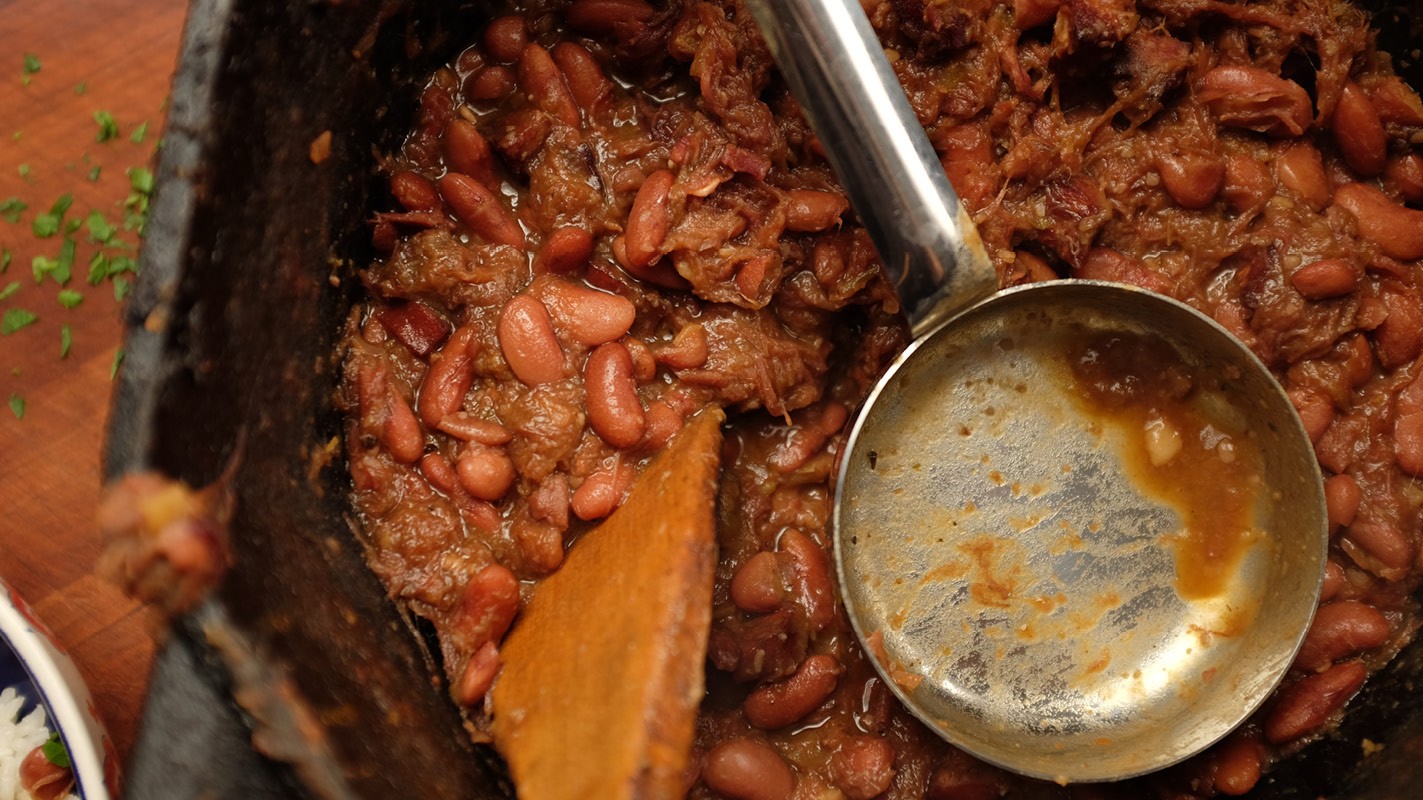
This Red Beans and Rice recipe takes you for a full Louisiana experience. Chef Tom starts off in the kitchen to put together a ham-hock stock a day earlier, then moves this creole delicacy to the Kamado Joe Classic Joe III. Take a trip down to the American South for this comfort food classic.
WHAT YOU'LL LOVE
- The ham hock stock is built a day ahead, on purpose. Simmering hocks, mirepoix, and herbs low and slow for four hours creates a genuinely rich base — one that a same-day stock could never match in depth.
- The same ham hocks that make the stock also become part of the dish. Shredding the meat off the bones after straining means nothing goes to waste; the same protein that flavored the stock ends up back in the finished beans.
- Beans finish cooking directly on the grill, not just the stovetop. Simmering them in a dutch oven over live coals with pecan wood lets them pick up a subtle smoke character a kitchen stove couldn't replicate.
- The rice gets seasoned after cooking, not before. Finishing it with chile oil and kosher salt once it's fluffed lets you control the seasoning precisely, rather than guessing how much salt the rice will absorb during cooking.
Red Beans & Rice (with Ham Hock Stock)
Tom Jackson
Rated 4.3 stars by 4 users
Category
Side
Cuisine
Cajun
Servings
4
Prep Time
45 minutes
Cook Time
1 hour 5 minutes
Calories
357
This Red Beans and Rice recipe takes you for a full Louisiana experience. Chef Tom starts off in the kitchen to put together a ham-hock stock a day earlier, then moves this creole delicacy to the Kamado Joe Classic Joe III. Take a trip down to the American South for this comfort food classic.
Ingredients
-
2-3 lb smoked ham hocks (or shanks)
-
2 onions, large dice
-
2 cups carrot, large dice
-
2 cups celery, large dice
-
4 sprigs fresh thyme
-
1 head garlic
-
3 bay leaves
-
2 tbsp Jacobsen Salt Co. Tellicherry Black Peppercorns, whole
-
1 bunch fresh parsley stems, tied with twine
-
1 lb dried red kidney beans
-
2 quarts cold water
-
2 tbsp Colonial Chile Oil
-
12 oz andouille sausage, diced
-
2 cups yellow onion, small dice
-
1 cup celery, small dice
-
1 cup green bell pepper, small dice
-
1/4 cup jalapeño, minced
-
3 tbsp Cattleman’s Grill Cajun Fusion Seasoning
-
1 tbsp garlic, minced
-
3/4 cups ham hock meat, shredded (from the ham hock stock)
-
1/4 cup Cattleman’s Grill Pit Fire Hot Sauce
-
2 quarts ham hock stock
-
Parsley leaves, minced, for garnish
-
1 part long grain white rice
-
2 parts water
-
Colonial Chile Oil, to taste
-
Jacobsen Salt Co. Kosher Sea Salt, to taste
Ham Hock Stock
Red Beans
Rice
Directions
To the make the Ham Hock Stock combine all ingredients in a stock pot. Fill with cold water to cover the ingredients (3-4 quarts). Bring almost to a simmer. Reduce heat. Cook just below a simmer for about 4 hours. Strain and cool the liquid.
Soak the beans in the two quarts of water overnight.
Build a large hot coal bed in the fire basket of the Kamado Joe Classic III Ceramic Charcoal Grill. Set up for direct high heat (500ºF) grilling. Set the grill grates at the highest setting. Add a fist sized chunk or two of pecan wood. Place a Lodge 7 Quart Dutch Oven on the grates to preheat for 5 minutes.
Add Colonial Chile Oil to the hot dutch oven. Add the andouille and cook, stirring occasionally until browned. Add the diced onion, celery and peppers. Season with Cattleman’s Grill Cajun Fusion Seasoning. Cook til softened, about 10 minutes, stirring occasionally. Add garlic. Cook one minute. Add Cattleman’s Grill Pit Fire Hot Sauce. Add drained beans and shredded ham hock/shank meat. Stir. Add 6 cups of ham hock stock (save the rest for later). Bring to a simmer. Close the airflow down to stabilize the grill temperature around 400ºF.
Cook, stirring occasionally until the beans are tender, about 1.5-2 hours. Add additional stock, as needed to keep the mixture from drying out, along the way.
Combine rice and water in a rice maker. When cooked, fluff with a fork and season with the Colonial Chile Oil and Kosher Sea Salt.
Serve the red beans with the rice. Top with minced fresh parsley and more Pit Fire Hot Sauce.
Recipe Note
Recipe FAQ
Why make the ham hock stock a day ahead?
A long, slow four-hour simmer extracts deep flavor from the hocks and vegetables that a quick same-day stock can't match — the extra time is what makes the base genuinely rich.
Why use the same ham hocks in both the stock and the finished beans?
Shredding the meat off the bones after straining the stock means the same protein that flavored the liquid also becomes part of the dish, so nothing from the hocks goes to waste.
Why finish cooking the beans on the grill instead of a stovetop?
Simmering them in a dutch oven over live coals with pecan wood lets the beans pick up a subtle smoke flavor that a kitchen stove can't replicate.
Why season the rice after it's cooked rather than in the cooking water?
Finishing with chile oil and salt once the rice is fluffed gives you precise control over seasoning, rather than guessing how much the rice will absorb during cooking.
Can I soak the beans for less than overnight?
An overnight soak is recommended for even cooking, but a quick soak (boiling briefly, then resting covered for an hour) can work in a pinch if you're short on time.
How indoor-friendly is this recipe?
3 out of 5 — the stock and beans can both be made entirely on a stovetop; the pecan wood smoke from the grill is the one flavor element you'd be missing indoors.
Recipe Highlights
The overnight ham hock stock: A long simmer builds a deeply flavorful base that a quicker stock couldn't achieve.
Reusing the ham hock meat: Shredding it back into the beans after making the stock means the same protein flavors both components.
Grill-finished beans: Simmering over live coals with pecan wood adds a smoke character a stovetop can't provide.
Post-cook rice seasoning: Finishing with chile oil and salt after cooking gives precise control over the final flavor.
Recommended Recipes
Nutrition
Nutrition
- Nutrition Serving Size
- 6.95 oz
- per serving
- Calories
- 357
- Carbs
- 19 grams
- Protein
- 8 grams
- Fat
- 28 grams
- Sodium
- 1343 milligrams


