

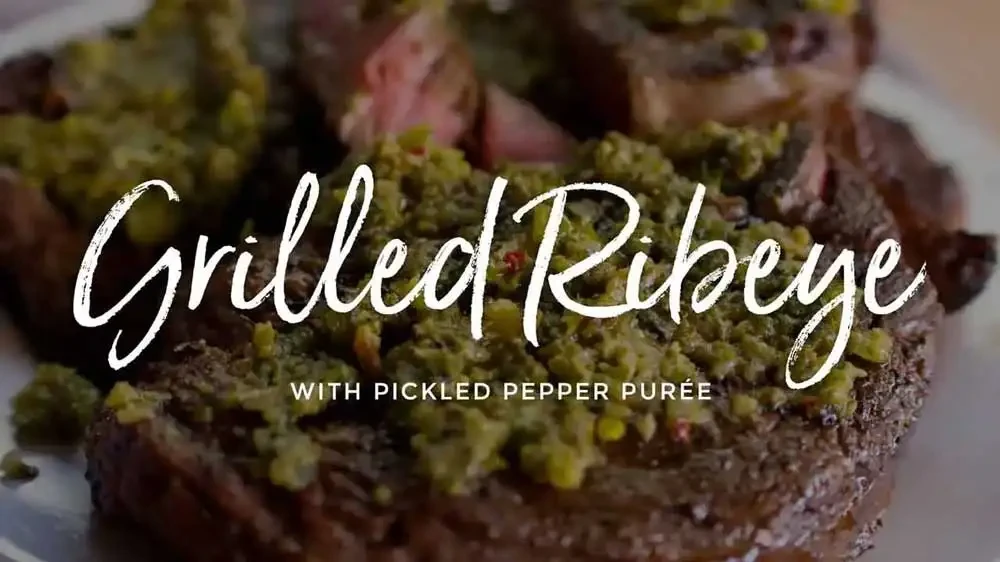
Treat yourself to an easy yet delicious dinner with this Grilled Ribeye with Pickled Pepper Purée! This flavorful dish will make your taste buds sing with its thick-cut ribeye steaks combined with a zesty Italian-influenced purée. Enjoy a no-fuss meal that'll make your week nights anything but boring!
WHAT YOU’LL LOVE
- Garlic confit purée: Twelve cloves simmered in olive oil until tender are pulsed with chopped pepperoncini, pickled jalapeños, fresh oregano, pesto, and Italiano seasoning into a tangy, herby topping.
- Hot charcoal sear with hickory: Lit lump charcoal at about 500°F, with a handful of hickory chips in the corner of the tray, chars the oiled, rubbed steaks while adding smoke.
- Finished on the cooler side: Searing both sides, then moving the steaks away from the coals and closing the lid, brings them to 130°F without burning the crust.
- Thick-cut ribeyes, split to serve: Two big 20 oz steaks, sliced and divided among four plates, let the rich marbling stand up to the sharp purée.
Grilled Ribeye with Pickled Pepper Purée
Tom Jackson
Rated 5.0 stars by 1 users
Category
Entree
Cuisine
American
Servings
4
Prep Time
15 minutes
Cook Time
10 minutes
Calories
1175
This week we’re bringing you a killer week night dinner option. This Grilled Ribeye with Pickled Pepper Purée is HUGE on flavor, but super easy to prepare. For the best flavor and texture, you’ll want to grab a couple monster, thick-cut, ribeye steaks and divvy them up to serve. The fattiness of the Grilled Ribeye steaks is perfectly complimented by the Italian influenced flavor profile of the Pickled Pepper Purée.
Ingredients
- 2 large (20 oz) ribeye steaks
-
Cattleman's Grill Lone Star Brisket Rub
-
1 cup olive oil
- 12 cloves garlic
- 1/4 cup pepperoncini, chopped
- 1/4 cup tamed pickled jalapeños, chopped
- 2 tbsp fresh oregano, minced
- 2 tbsp pesto
-
2 tsp Cattleman’s Grill Italiano Seasoning
For the Pickled Pepper Purée:
Directions
Heat the olive oil and garlic in a Lodge 8” Cast Iron Skillet over medium-low heat, and simmer until the garlic is tender. Lower the heat if the cloves begin to brown. Remove the garlic from the oil, place in a food processor with the remaining ingredients, plus 2 tbsp of oil from the skillet. Pulse until desired consistency is reached.
Set a cast iron charcoal tray in place in your Napoleon. Fill with lump charcoal and light using the two burners underneath the charcoal. When the charcoal is lit turn the burners off. Bring the heat up to about 500°F.
Spread a thin layer of oil on the surface of the steaks. Season with Cattleman's Grill Lone Star Brisket Rub.
Just before placing the steaks over the charcoal, place a handful of Cattleman’s Grill Hickory Smoking Wood Chips in the corner compartment of the cast iron charcoal tray. Grill the steaks with the lid closed until nice grill marks and char are established. Flip and repeat. Move to the opposite side of the grill, not over the charcoal. Close the lid and continue cooking until the internal temperature reaches 130ºF. Remove from the grill and rest 5 minutes.
- Serve the steaks topped with the pickled pepper purée.
Recipe Note
Recipe FAQ
Why simmer the garlic in olive oil first?
Gentle heat in oil softens the garlic and makes it sweet and mellow, so the purée tastes rich instead of sharp. Keep the heat low and lower it if the cloves start to brown.
How should I store the garlic oil and the purée?
Garlic held in oil can grow botulism bacteria at room temperature. Refrigerate the leftover garlic oil and the purée in covered containers and use them within about 4 days, or freeze them.
Why sear over lit charcoal at 500°F and then move the steaks?
Direct, intense heat builds the char and grill marks. Moving the steaks to the cooler side with the lid closed finishes them gently, so the center comes up to temperature without burning the outside.
Why add hickory chips to the charcoal tray?
The chips smolder and add a hickory smoke flavor to the steaks as they cook.
What internal temperature should the ribeyes reach?
This recipe pulls them at 130°F, and a 5-minute rest carries them to about 135°F, a medium-rare finish. As intact whole-muscle steaks, that is a common serving preference. USDA's general guidance for whole cuts of beef is 145°F, so anyone who prefers to follow that should cook them to that temperature.
Why rest the steaks for 5 minutes?
Resting lets the juices settle back into the meat and lets the temperature finish rising, so they stay juicy when sliced.
Why oil the steaks before seasoning?
A thin layer of oil helps the Lone Star Brisket Rub stick and promotes browning on the hot grill.
How do I split two big steaks among four people?
After resting, slice each steak off the bone (if bone-in) and cut it across the grain into thick slices, dividing them into four portions of about 10 oz each. Top each portion with the purée.
What do the pepperoncini and pickled jalapeños add?
They bring tang and mild heat that cut through the ribeye's richness. Using "tamed" jalapeños keeps the heat gentle.
How indoor-friendly is this recipe?
5 out of 5. A very hot cast iron skillet sears the steaks before they finish in a 400°F oven, and the purée is made on the stovetop and in a food processor.
Recipe Highlights
Garlic confit purée: Adds a tangy, herby topping.
Charcoal sear with hickory smoke: Builds char and flavor.
Indirect finish: Cooks thick steaks evenly.
Thick-cut ribeye: Stands up to the sharp, tangy purée.
Recommended Recipes
Nutrition
Nutrition
- Nutrition Serving Size
- 13.17 oz
- per serving
- Calories
- 1175
- Carbs
- 5 grams
- Protein
- 195 grams
- Fat
- 53 grams
- Sodium
- 849 milligrams


