

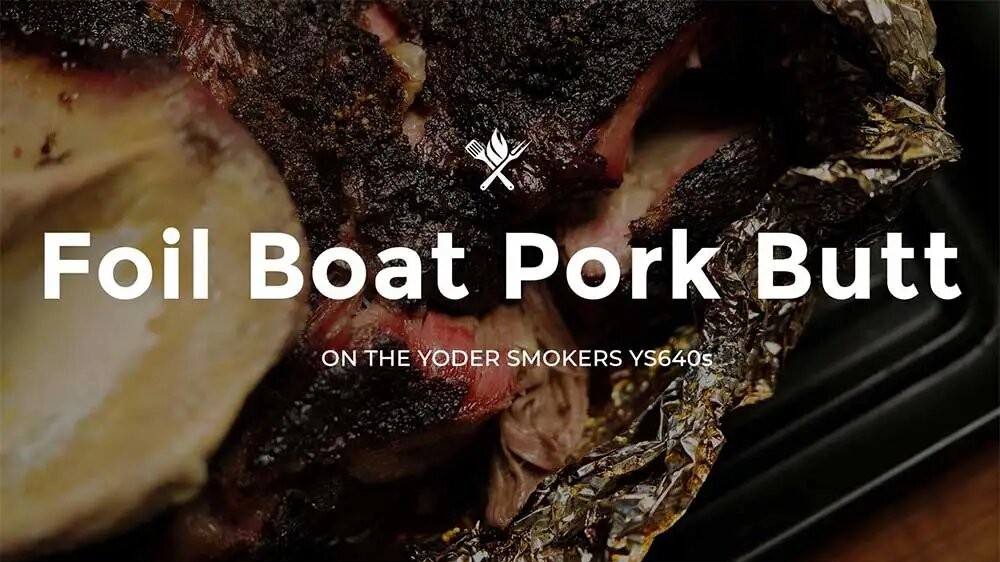
Chef Tom fires up the Yoder Smokers YS640s Pellet Grill and smokes a Creekstone Farms Duroc Pork Butt using the popular brisket cooking technique known as the "foil boat." This is Foil Boat Pork Butt.
WHAT YOU'LL LOVE
- Opening the muscle seam before seasoning: Cutting along the natural seam near the bone and trimming out fat and connective tissue from the inside lets seasoning reach surfaces that would otherwise stay bare, deep inside the roast.
- A two-stage smoke: bark first, then a foil boat: Smoking uncovered overnight builds bark on the exterior, and only then wrapping the base in foil with braising liquid protects that bark from turning soggy while still helping the meat push through the stall.
- Leaving the top two-thirds of the pork exposed in the foil boat: Containing the braising liquid around just the base instead of wrapping the whole roast keeps the bark on top intact and continuing to develop, unlike a full wrap that would steam the entire exterior.
- Judging doneness by the blade bone, not just a number: Checking that the bone pulls freely from the meat confirms the connective tissue has actually broken down, a more reliable sign of true pulled-pork tenderness than temperature alone.
Category
Entree
Cuisine
American
Servings
8
Prep Time
20 minutes
Cook Time
16 hours
Calories
1427
Chef Tom utilizes the Yoder Smokers YS640s Pellet Grill to smoke a Creekstone Farms Duroc Pork Butt using the highly-rated Foil Boat technique.
Ingredients
-
1 Creekstone Farms Bone-in Duroc Boston Butt Pork Roast
-
Plowboy’s BBQ Yardbird Rub
-
Lane’s BBQ Cubano Seasoning
- 6 tbsp pineapple juice
- 1/4 cup vegetable stock
- 1 tbsp tamari soy sauce
Directions
- Before beginning to trim the pork butt, feel around the roast and trim any small bone fragments or hard cartilage that may be left on the surface. Remove all of the fat cap to expose the meat. Flip the butt over and trim any excess fat on the surface. Find the seam near the bone side. Begin to pull the crevice open and carefully cut in-between the two muscles. Trim the excess fat, connective tissue and anything that is not meat from the inside of the opening.
- Rub the surfaces of the pork with a thin layer of oil (to bind the rub to the meat). Season first with Plowboy’s BBQ Yardbird Rub, then Lane’s BBQ Cubano Seasoning.
- Preheat your Yoder Smokers YS640s Pellet Grill to 190ºF, set up for smoking/indirect grilling.
- Place the pork butt on the second shelf of the grill, next to the smoke stack. Smoke overnight (about 10 hours).
- In the morning, remove the pork butt from the smoker. Increase the grill temperature to 275ºF.
- Place on top of two large sheets of foil. Turn up the edges of the foil to contain the braising liquid.
- Mix together the pineapple juice, vegetable stock and tamari soy sauce in a cup or marinade shaker. Pour into the foil. Form the foil tightly around the base of the pork butt, leaving the top 2/3 of the pork exposed.
- Return the foil boat pork butt to the smoker and cook until the pork is tender enough to pull, about 6 more hours). The internal temperature will be around 200ºF, and the blade bone inside the roast should easily pull out of the meat.
- Shred the meat with (cotton and nitrile) gloved hands and toss in the braising liquid in the bottom of the foil boat.
Recipe Note
Recipe FAQ
Why open the seam near the bone before seasoning the pork butt?
Cutting along the natural seam and trimming fat and connective tissue from inside lets seasoning reach surfaces that would otherwise stay bare deep inside the roast, seasoning it more thoroughly than the outside alone.
Why smoke the pork butt uncovered before wrapping it in a foil boat?
Smoking uncovered overnight builds bark on the exterior first. Wrapping too early would steam that bark before it has a chance to develop.
Why leave the top two-thirds of the pork exposed in the foil boat instead of wrapping the whole thing?
Containing the braising liquid around just the base protects the bark on top from turning soggy, letting it keep developing while the liquid still helps push the meat through the stall.
Why check the blade bone instead of just relying on a temperature reading?
Confirming that the bone pulls freely from the meat is a more reliable sign of true pulled-pork tenderness than temperature alone, since connective tissue breakdown can vary even at the same internal temperature.
What internal temperature should the pork butt actually reach?
This recipe finishes around 200°F, well above the USDA minimum of 145°F for whole-muscle pork. That higher target is what breaks down the tough connective tissue enough to pull, not a food safety requirement — it clears the safety bar much earlier in the cook.
How indoor-friendly is this recipe?
1 out of 5 — this is a 16-hour pellet-smoker cook built around low, steady wood smoke. An oven can render the pork tender, but you'll lose the bark and smoke flavor that define this dish.
Recipe Highlights
Seam-opened seasoning: Reaches interior surfaces a whole roast wouldn't expose.
Bark-first smoking: Builds crust before the foil boat stage begins.
Partial foil wrap: Protects bark on top while braising the base.
Blade-bone doneness check: A more reliable tenderness test than temperature alone.
Recommended Recipes
Nutrition
Nutrition
- Nutrition Serving Size
- 4 oz
- per serving
- Calories
- 1427
- Carbs
- 1 grams
- Protein
- 195 grams
- Fat
- 66 grams
- Sodium
- 1487 milligrams


