

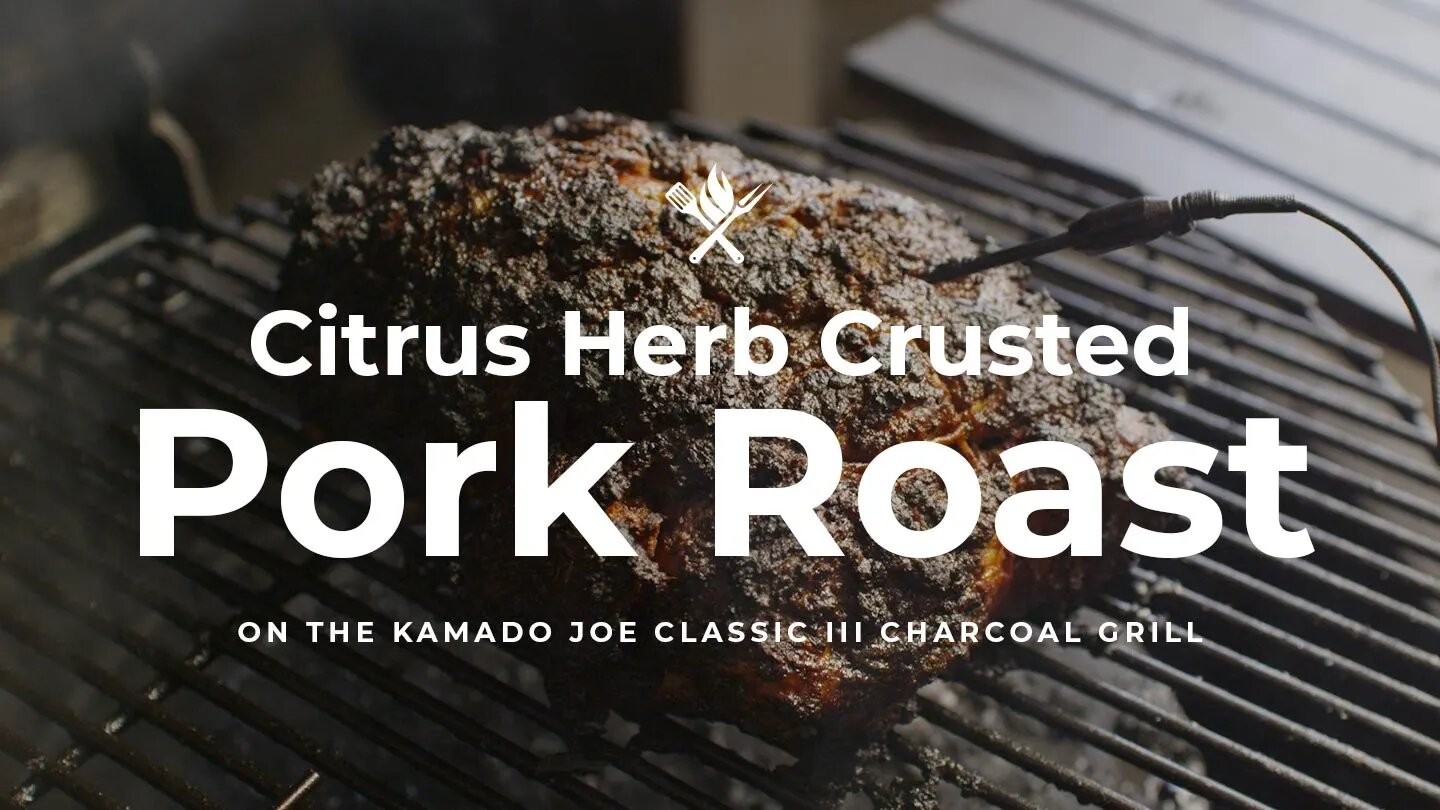
Chef Tom uses the Kamado Joe Charcoal Ceramic Grill to bring out the best in his recipe for Citrus Herb Crusted Pork Roast. Brined and loaded with bright citrus flavors, it's coated in a delicious garlic and herb paste to give it a smoky and flavorful finish. Try the deliciousness!
WHAT YOU'LL LOVE
- Butterflying the pork butt turns it into a canvas for the crust. Deboning and opening the roast flat means the citrus-herb-garlic paste can coat surfaces that would otherwise be sealed inside a whole roast.
- Trussing after seasoning locks the crust in place. Folding the roast back together and tying it with twine after slathering on the paste keeps the seasoning from washing away or falling off during the long cook.
- A single wood chunk added right before the roast goes on times the smoke correctly. Placing it on the coals just before transferring the pork means the smoke is already rolling by the time the meat needs it most.
- Resting for a full hour, covered, isn't optional. Given the size of this roast, the extended rest lets the internal juices redistribute fully before slicing, rather than losing them all onto the cutting board.
Category
Entree
Cuisine
American
Servings
24
Prep Time
20 minutes
Cook Time
3 hours 3 minutes
Calories
886
Chef Tom fires up the Kamado Joe Charcoal Ceramic Grill for Citrus Herb Crusted Pork Roast! This brined, boneless Boston Butt pork roast is packed full of bright citrus flavors and crusted in a garlic and herb paste that soaks up the smoke!
Ingredients
-
Creekstone Farms Duroc Pork Boston Butt, deboned, butterflied
- 1 bottle Sweetwater Spice Lemon Thyme Turkey Bath
-
1/2 cup Jacobsen Salt Co. Kosher Sea Salt
- 1 gallon water
- 1 cup garlic cloves, peeled
-
1/2 cup extra virgin olive oil
- 1/4 cup fresh rosemary leaves
- 1/4 cup fresh sage leaves
-
1/4 cup Cattleman’s Grill Lone Star Brisket Rub
- Juice & zest of 1 lemon
Citrus Herb Garlic Crust:
Directions
- Combine the Sweetwater Spice Lemon Thyme Turkey Bath concentrate with 1 gallon of water and 1/2 cup Jacobsen Salt Co. Kosher Sea Salt in an 8 quart Briner Bucket. Whisk well.
- Place your deboned pork butt in the brine bath. Lock the plate in place to keep the pork submerged. Brine in the refrigerator overnight.
- Set up your Kamado Joe Classic III Ceramic Charcoal Grill for indirect grilling/smoking. Build a hot bed of coals and stabilize the grill at 400ºF.
- Remove the pork from the brine. Pat dry with paper towels.
- Combine the ingredients for the Citrus Herb Garlic Crust in a food processor. Blitz until broken down into a paste.
- Slather all surfaces of the pork with the paste. Fold the butterflied roast back together into its original form. Truss with kitchen twine, so the roast can hold its shape. Touch up the paste to make sure you have good coverage.
- Before transferring the pork roast to the grill, first place a large chunk of smoking wood on the coal bed, to add smoke while roasting.
- Place the roast on the cooking grates, set to their highest setting. Roast until the internal temperature reaches 180ºF, about 3.5 hours.
- Remove from the grill and rest, covered, at least one hour.
- Remove the twine from the roast and slice to desired thickness.
Recipe Note
Recipe FAQ
Why debone and butterfly the pork butt before brining?
Opening the roast flat exposes more surface area, both for the brine to penetrate and later for the citrus-herb-garlic crust to coat evenly — something a whole, tied roast wouldn't allow.
Why truss the roast back together after adding the crust?
Folding it back into its original shape and tying it with kitchen twine holds the roast together during the long cook and helps keep the paste in place instead of falling off.
Why add the smoking wood right before the pork goes on the grill?
Timing the wood chunk to the moment the roast is transferred means the smoke is already building by the time the meat needs it, rather than smoldering out before the roast is even on.
What internal temperature should the pork roast reach?
180°F, which is well above USDA's 145°F minimum for whole pork — this higher target gives the roast a more tender, sliceable texture appropriate for a large cut like this.
Why rest the roast for a full hour before slicing?
A roast this size holds a lot of internal juice. A full hour, covered, gives that juice time to redistribute evenly, so it stays in the meat rather than running out the moment you cut into it.
How indoor-friendly is this recipe?
2 out of 5 — the brine and crust can be prepared in any kitchen, but the several-hour smoke on a ceramic charcoal grill is central to the flavor and can't really be replicated in an oven.
Recipe Highlights
Butterflying before brining and crusting: Opening the roast flat maximizes surface area for both the brine and the herb-garlic paste to reach.
Trussing after seasoning: Tying the roast back into shape locks the crust in place through the long cook.
Well-timed smoking wood: Adding the chunk right before the roast goes on ensures smoke is already rolling when the meat needs it.
The extended one-hour rest: Giving a roast this size ample resting time keeps the juices in the meat rather than lost on the cutting board.
Recommended Recipes
Nutrition
Nutrition
- Nutrition Serving Size
- 4.42 oz
- per serving
- Calories
- 886
- Carbs
- 2 grams
- Protein
- 80 grams
- Fat
- 60 grams
- Sodium
- 583 milligrams


