

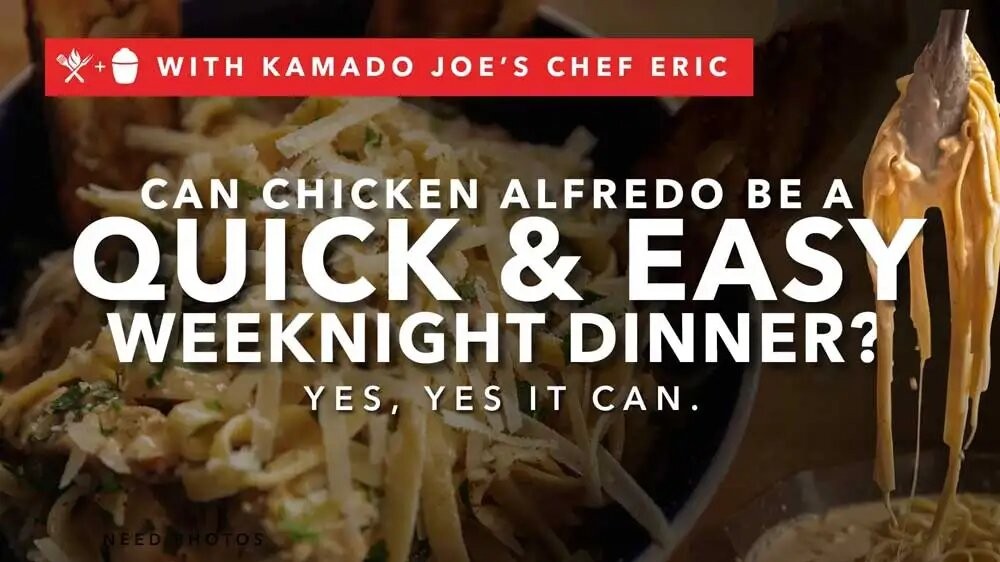
Chef Eric Gephart fires up the Kamado Joe Kettle Joe to make one of his favorite pasta dishes-- Chicken Fettuccine Alfredo. This dish is sure to impress!
WHAT YOU'LL LOVE
- Searing the chicken briefly, then finishing it in the sauce: Cooking the sliced chicken just 1 minute per side keeps it from drying out on its own, since it finishes cooking through later once it's added back into the hot cream sauce.
- Deglazing with wine before adding the cream: Reducing the Sauvignon Blanc by half first lifts the garlic and fond into the liquid, so the cream that follows builds on that flavor instead of diluting a still-raw wine taste.
- Adding a wood chunk directly to the sauce pan: Letting a chunk of pecan wood combust right next to the simmering sauce infuses it with real smoke flavor, something a stovetop version of alfredo could never replicate.
- Splitting the parmesan into two additions: Whisking in some cheese early to build the sauce, then adding the rest near the end, keeps the texture smooth throughout instead of risking a grainy sauce from dumping it all in at once.
Category
Main Course
Cuisine
Italian
Servings
4
Prep Time
15 minutes
Cook Time
30 minutes
Calories
671
This delicious Chicken Fettuccine Alfredo recipe by Chef Eric Gephart is a quick cook in a Kamado Joe for maximum flavor.
Ingredients
- 1 Pound Fettuccini Noodles, cooked
- 6-8 oz. Chicken Breast, seasoned, pounded & sliced into ¼” strips
-
1 TBSP Cattleman’s Grill Cajun Fusion
- 2 Teaspoons Garlic, minced fresh
- ¼ Cup Sauvignon Blanc
- 2 Cups Heavy Cream
- 1 ¼ Cup Parmesan, grated
- 2 Teaspoons Lemon Juice, fresh squeezed
- ¼ Teaspoon Kosher Salt
-
1 Chunk Pecan Wood
- 2 TBSP Parsley, Chopped
- ¼ Cup Parmesan Flakes
- Baguette, bias sliced ¼ inch thick and toasted
Directions
- Stabilize your grill at 500°F and set up grill for direct cooking. Pound and season the chicken breast and bring a grill safe can to temperature on the grill.
- Slightly oil your pan with Cornhusker Kitchen Duck Fat Spray to create a nonstick surface. Place the pounded and seasoned chicken breast in the pan and cook for 1 minute on each side then transfer to a cutting board, allow to rest for 2 minutes and slice into ¼ inch thick slices and reserve. Be careful not to overcook the chicken as it will be added to the hot sauce in the end to finish.
- Add your chopped garlic to the hot pan. Allow to cook for another minute, stirring as to not allow the garlic to brown. Deglaze with white wine and allow to reduce by half then follow with the heavy cream, mixing all ingredients as you pour it in. Keep stirring to help form the sauce. Let simmer for 1 minute.
- Add the wood chunk and allow the chunk to combust for clean smoke.
- Add ¼ up of parmesan to the sauce and whip it. Then add the boiled pasta, allow to cook and reduce with the lid down for a few minutes. Then add the grilled and sliced chicken. Using your tongs twist the pasta and ensure the noodles and chicken are fully coated. If needed, add a bit more wine and heavy cream.
- Close the dome and allow to smoke and reduce for 2 minutes.
- Open the lid and continue to twist the pasta, reducing the sauce until creamy. Add the rest of the parmesan cheese. Using your tongs, twirl in. Add ½ of the chopped parsley and incorporate. Toast bread.
- Sauce should begin to thicken. Add the fresh squeezed lemon juice and remove the pan from the heat. Twist a few more times and transfer to the presentation plate. Garnish with the rest of the chopped parsley, fresh grated parmesan flakes and garnish with toasted baguette.
Recipe Note
Recipe FAQ
Why sear the chicken for just 1 minute per side instead of cooking it through on the grill?
A brief sear keeps the chicken from drying out on its own. It finishes cooking through later once the sliced pieces go back into the hot cream sauce, so the final texture stays tender rather than overdone from two separate full cooks.
Why deglaze with wine before adding the heavy cream?
Reducing the Sauvignon Blanc by half first lifts the garlic and browned bits into the liquid. Adding the cream afterward builds on that flavor, rather than the cream diluting a wine that hasn't had a chance to reduce.
Why add a wood chunk directly to the pan while the sauce simmers?
Letting the pecan wood combust right next to the sauce infuses real smoke flavor into the alfredo, a layer of flavor a stovetop version of this dish couldn't replicate.
Why add the parmesan in two separate additions instead of all at once?
Whisking in some cheese early helps build the sauce's body, and adding the rest near the end keeps the texture smooth throughout, rather than risking a grainy sauce from dumping all the cheese in at one time.
What internal temperature should the chicken actually reach?
This recipe never states a target temperature — it relies on a quick sear followed by finishing time in the sauce. Chicken breast needs to reach a minimum internal temperature of 165°F to be safe; check with an instant-read thermometer once the sliced pieces have simmered in the sauce, rather than judging by time alone.
How indoor-friendly is this recipe?
3 out of 5 — the sauce and pasta come together entirely on the stovetop; the wood chunk for smoke flavor is the one component that requires an actual grill and can't be replicated indoors.
Recipe Highlights
Sear-then-finish chicken: Keeps the meat tender across two cooking stages.
Wine-deglazed base: Builds the sauce on lifted pan flavor.
In-pan wood smoke: Infuses the sauce with flavor a stovetop can't match.
Split parmesan additions: Keeps the sauce smooth instead of grainy.
Recommended Recipes
Nutrition
Nutrition
- Nutrition Serving Size
- 14.08 oz
- per serving
- Calories
- 671
- Carbs
- 34 grams
- Protein
- 39 grams
- Fat
- 40 grams
- Sodium
- 1173 milligrams


